Tenjin Matsuri
Osaka’s Tenjin Matsuri ranks as one of Japan’s three great festivals, along with Gion Matsuri in Kyoto and Kanda Matsuri in Tokyo. It has 1,000 years of history behind it and takes place every year on July 24 and 25. The main celebrations are on the 25th, when the land procession and the river procession build up to a fireworks show.
The festival’s religious center is Tenman Shrine, dedicated to Sugawara-no-Michizane, the patron god of the arts and learning. The festival also features various artistic performances, such as music and theater.
Contents
How the festival began
The Tenjin Matsuri started in 951, just two years after the shrine was founded, with the Hokonagashi ritual. A rough wooden spear was set adrift on the river, and the spot where it washed up became the place to welcome the spirit of Sugawara-no-Michizane.
People from the nearby neighborhoods went to that spot by boat to bring offerings, and that’s how the river procession was born. It’s still the high point of the festival today. At first it was a ritual to ward off epidemics, but the festival grew along with Osaka as a merchant city, and the merchants kept adding more boats and decorating them more and more.
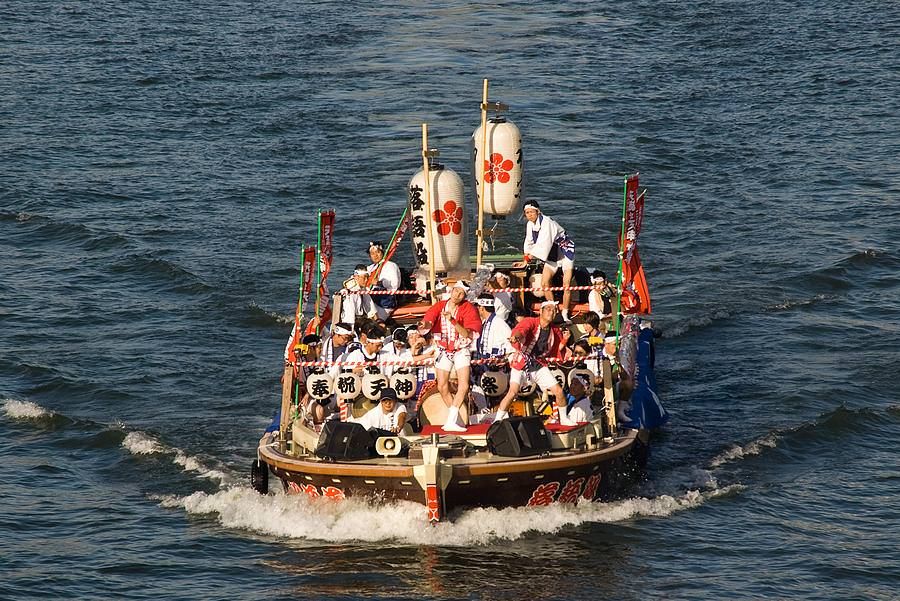
The highlights are a procession of about 3,000 people dressed in imperial-style costumes from the 8th to the 12th century, and the boat procession, when those same people board about 100 boats and parade along the river through the city. At sunset the lights of the boats reflect on the water, and it makes for a really atmospheric evening. Locals and tourists can watch it all from the riverbanks and stay on for the evening fireworks.
The festival officially opens on the 24th with a few rituals near the shrine. There’s the Hokonagashi, held on the bridge of the same name; the Shishi-Mai, or lion dance; and prayers to the river for the city’s peace and prosperity. In the afternoon, men in red hats beat drums to announce that all the preparations are done.
The drums that kick off the festival
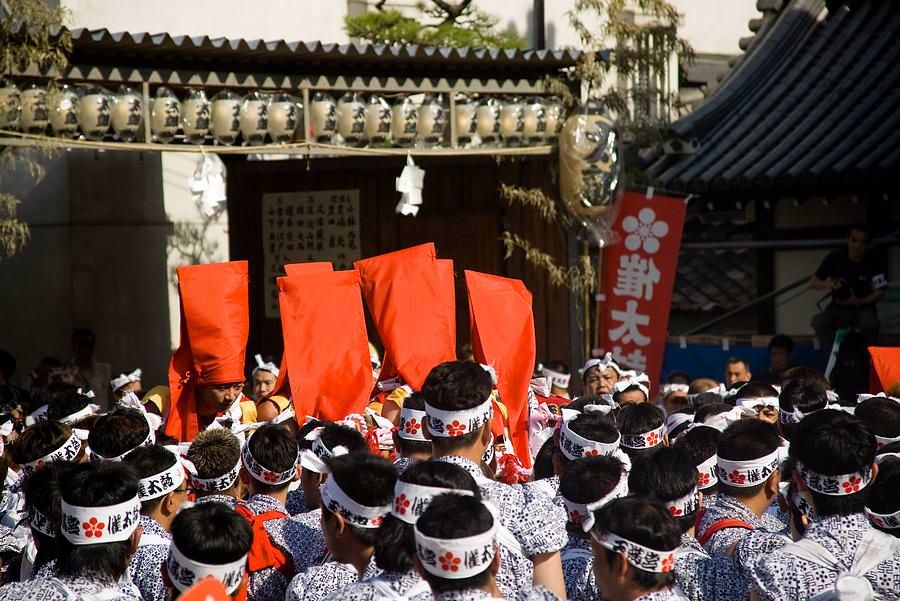
Those red hats aren’t just a bit of local color. The group is called moyoshi-daiko, and its drumming is the starting signal for the whole Tenjin Matsuri. The drummers stand together on a platform carried on people’s shoulders and pound a huge drum while the bearers rock the platform back and forth. The rhythm keeps changing, the drummers stay glued to the drum, and the crowd around them gets fired up.
You’ll see them again the next day at the head of the procession. When you hear that drumbeat getting closer, the procession is only a few minutes away.
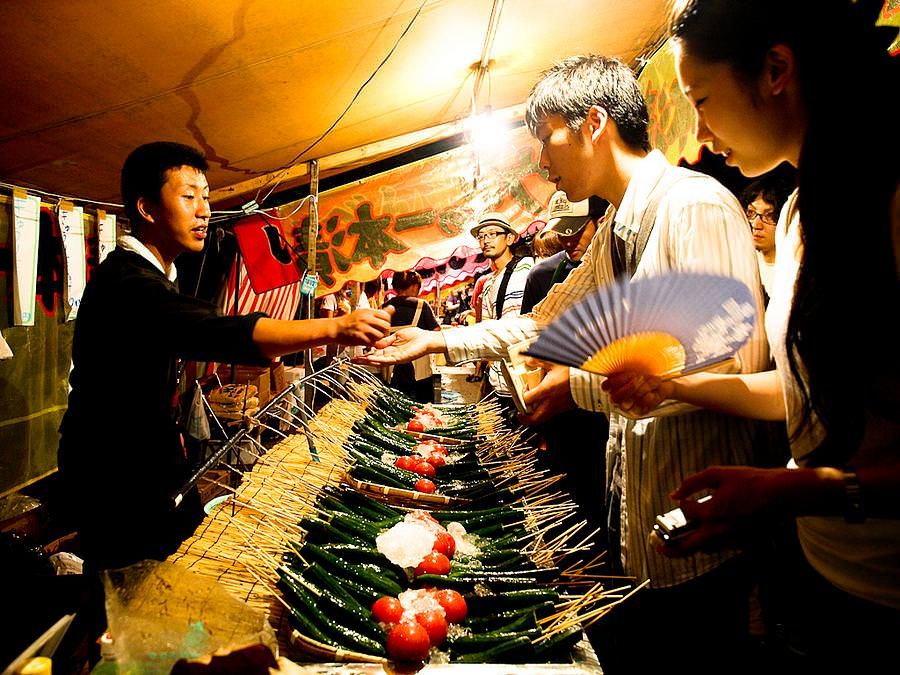
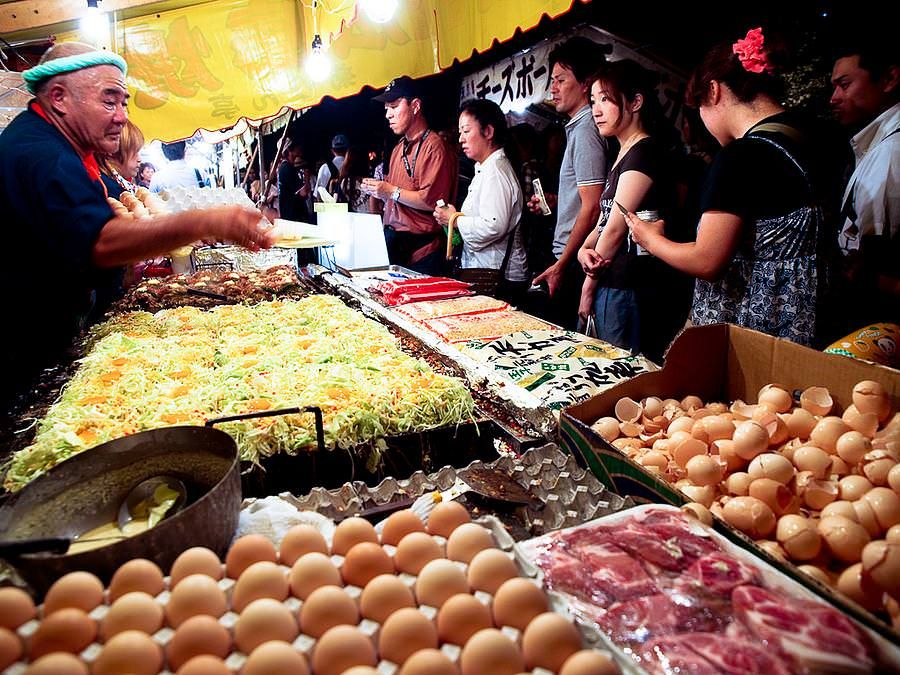
On the second day, the procession leaves the shrine at 15:30 and winds through the streets of Osaka with ceremonial floats, music, and dancing. Around 18:00 it reaches the Okawa River, where everyone boards the boats and the procession carries on along the river. Other boats sail alongside with traditional Noh and Bunraku performances on board. On the banks, endless rows of stalls keep locals and visitors entertained.
The boats in the river procession
The boats on the river aren’t all the same, and each one has a specific role. In the middle is the boat carrying the palanquin with the deity’s spirit, escorted by boats carrying worshippers and neighborhood associations. Then there are the dondoko-bune, which are rowed to the beat of drums, and the boats where the performances take place.
The best part is when two boats pass each other. One crew greets the other with the Osaka-jime, the rhythmic hand clap that’s typical of the city, and the other boat answers the same way. It happens dozens of times in one evening, and you can hear it clearly from the banks.
The river procession peaks around 19:00, when the fireworks start. They light up the city until 20:30. Around 22:00 everyone heads back to the shrine, and that’s the end of the festival.
The fireworks
The fireworks aren’t an extra show put on for tourists. They’re an offering to the deity, which is why they’re called hono hanabi. About 3,000 shells go up from two spots along the river while the lit-up boats keep moving along the water below.
The one to wait for is the kobai, shaped like a plum blossom. The plum tree is Sugawara-no-Michizane’s emblem, and when the kobai opens up in the sky, people on the banks start clapping. Fireworks overhead and lit-up boats on the river are what gave the Tenjin Matsuri its nickname, the festival of fire and water.
Photos
Creative Commons elmimmo
Creative Commons elmimmo
Creative Commons elmimmo
Creative Commons elmimmo
Creative Commons Chris Gladis
Creative Commons elmimmo
Creative Commons Robert Swier
Creative Commons Robert Swier