Things to Do in Kyoto at Night
People come to Kyoto mainly to visit some of Japan’s most famous temples and traditional neighborhoods. It’s a city of 1.5 million people, but Kyoto at night is completely different from other Japanese cities like Tokyo and Osaka. Kyoto has a feel all its own. Here are a few ideas for what to do once the sun goes down.
Contents
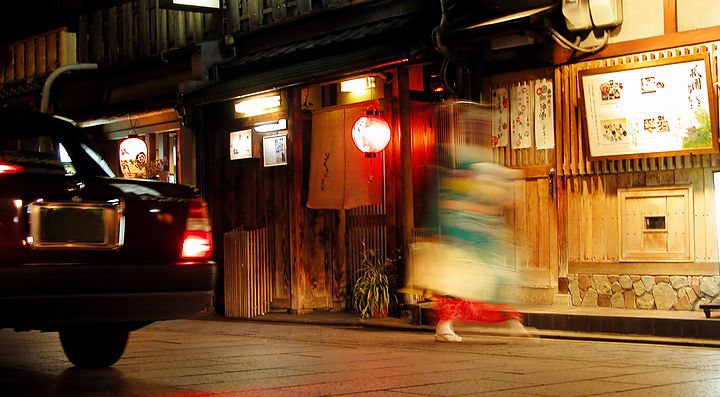
In this area, especially along the historic Hanamikoji Dori, you can see maiko and geisha on their way to work. I’d suggest coming between 17:45 and 21:00.
Yasaka Shrine is a short walk away, and it’s sure to catch your eye.
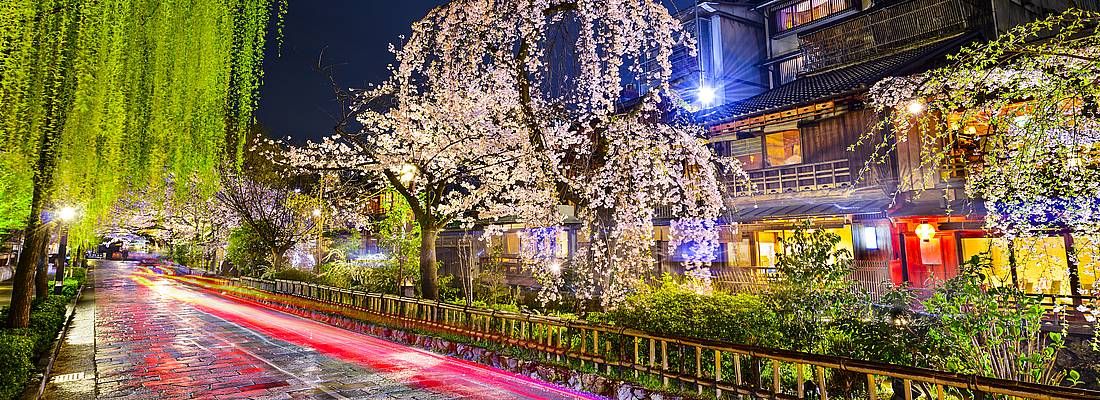
I strongly recommend a walk a little north of Hanamikoji Dori, along the small Shirakawa River. It’s a canal that runs beside a very quiet street full of character.
Higashiyama after dark
From Yasaka Shrine you can head south and make your way up Ninenzaka and Sannenzaka, the two stone-paved slopes that lead up to Kiyomizudera. During the day you’re walking shoulder to shoulder with everyone else. In the evening the shops pull down their shutters and all that’s left are the glowing lanterns outside the wooden houses, so it’s a whole different walk.
You’ll definitely stop where the Yasaka Pagoda, often lit up, comes into view at the top of the narrow uphill lane. There isn’t much to do besides walk, but this is when Kyoto looks most like the picture you have in your head.
Pontocho
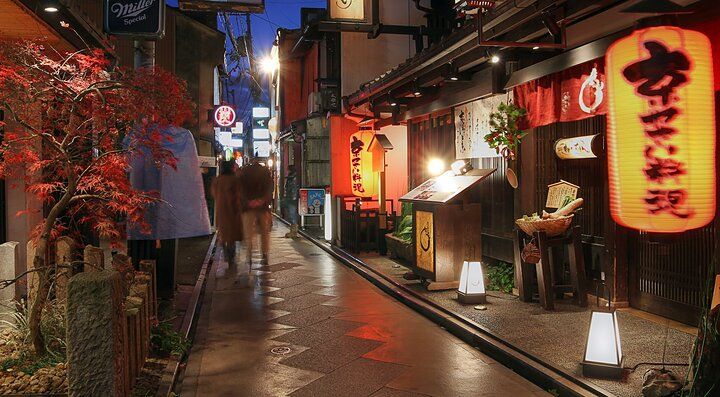
Pontocho is lined with small restaurants and has a really distinctive atmosphere. Eating here tends to be fairly expensive, so my advice is to walk the whole length of it, soak up the atmosphere, then keep heading north until you reach Sanjo Station. There’s a bit of life around there, and it’s a nice place to spend some time.
Kiyamachi
Just a few meters from Pontocho, Kiyamachi runs along the small Takase Canal. This is where people who actually live in Kyoto go out drinking, college students included. It’s much less formal than Pontocho, with izakaya, tiny bars and karaoke places one after another, so come here if you want somewhere a bit livelier.
Kiyamachi transforms in spring. The cherry trees along the canal are lit up, and the stretch between Shijo and Sanjo stays packed until late.
Kamo River
The Kamo River runs parallel to Pontocho, and Kyoto locals love walking along it in the evening, especially in the warmest months of the year. It’s a romantic spot too, and there’s often someone playing music or singing. In the warmer months the riverside looks completely different: restaurants overlooking the water put up wooden terraces raised above the bank, known as kawayuka, a Kyoto tradition that goes back centuries.
If you go down to the riverbank you’ll also notice couples sitting on the grass, evenly spaced along the bank, almost as if someone had measured the gaps. It’s a classic sight on a Kyoto evening.
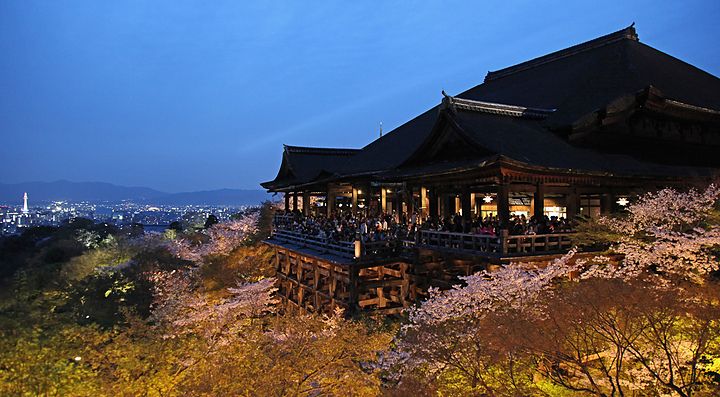
This is one of Kyoto’s most famous temples, and during cherry blossom season in spring and the fall foliage season it also opens in the evening and gets lit up. It’s beautiful and full of character, so if you’re here at those times of year I recommend coming back in the evening after your daytime visit. Just expect big crowds. On those nights a beam of blue light also shoots up into the sky from the temple, representing the compassion of the Kannon worshipped here. You can see it from much of the city, so you’ll know from far away that the lights are on.
Evening temple light-ups
Kiyomizudera isn’t the only one. In spring and fall several Kyoto temples stay open after dark for special light-ups, and each does it differently.
At Kodaiji, a short walk from Gion, the garden becomes the screen for a nighttime projection, while at Shoren-in the blue lights among the huge camphor trees have an otherworldly effect. If you love red maples, Eikando in the fall is the one that will stay with you longest, with the leaves reflected in the pond.
These special openings only run for a few weeks a year. The rest of the time, Kyoto’s temples close in the afternoon and you’ll spend your evenings wandering around the city.
Osaka
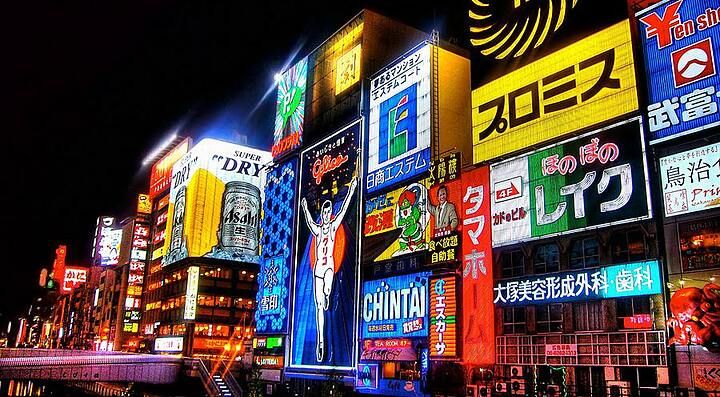
You can get from Kyoto to Osaka Station in about 30 minutes, and in roughly another 15 minutes you’re in Dotonbori, a street that’s perfect for a night out. You’ll find tons of restaurants, lots of young people and plenty of bars. I also recommend reading my article on things to do at night in Osaka.
Kyoto Station at night
If you’re heading back late or have half an hour to spare before bed, Kyoto Station is worth a stop. Once it gets dark the building lights up, and Japanese people come here just to see it.
The grand staircase is covered in LEDs that form different patterns depending on the season. From there you can go up to the Skyway, the glass walkway suspended high across the whole station, and to the rooftop garden, with a view over Kyoto lit up at night. Right outside, Kyoto Tower is lit up too, and it’s the first thing you’ll see when you walk out.
Fushimi Inari
A quick word about this area. Fushimi Inari is open 24 hours a day, but I don’t recommend coming after dark. The paths aren’t lit and the place loses all its charm. The only exception is the Motomiya Matsuri in July: for two evenings, thousands of stone and paper lanterns are lit along the whole climb, and the torii tunnel becomes something else entirely. It’s the only time of year when it’s worth coming here in the dark.