

 42 m
Sushi Ginza Onodera42 m
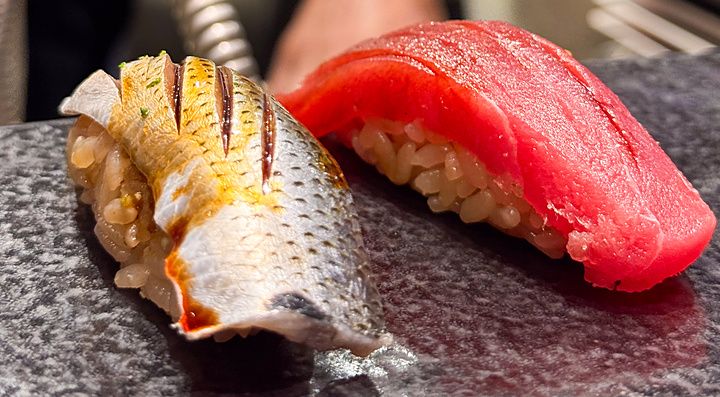
Chain with excellent sushi.

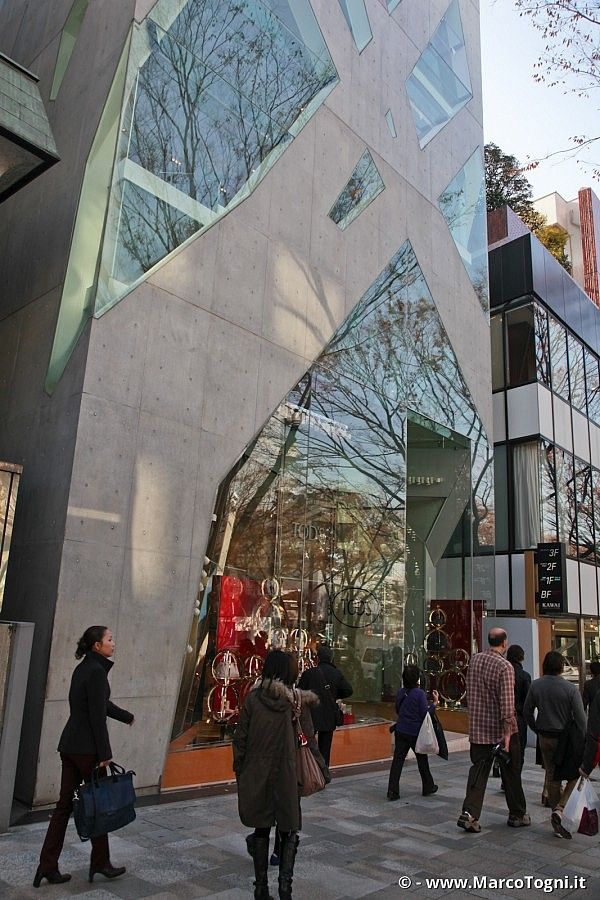
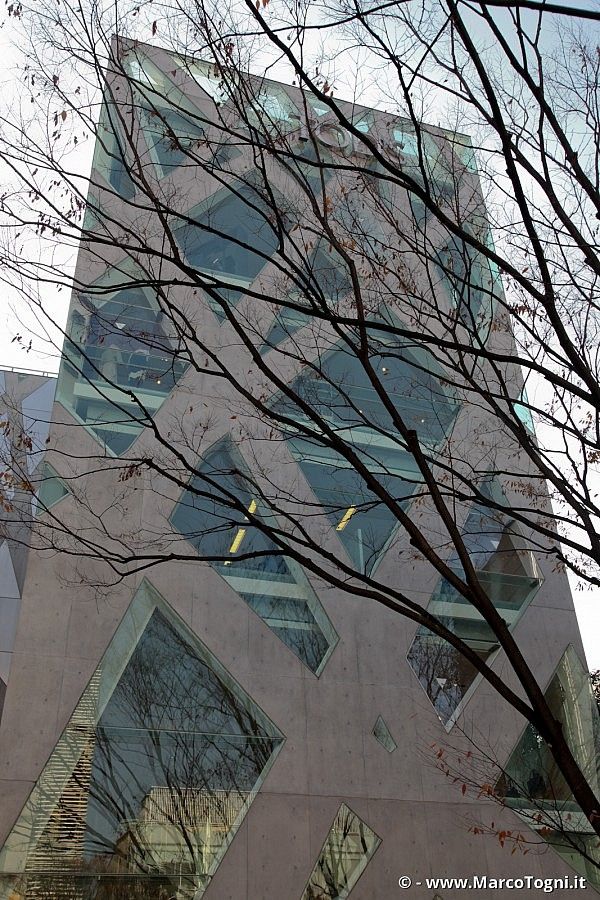
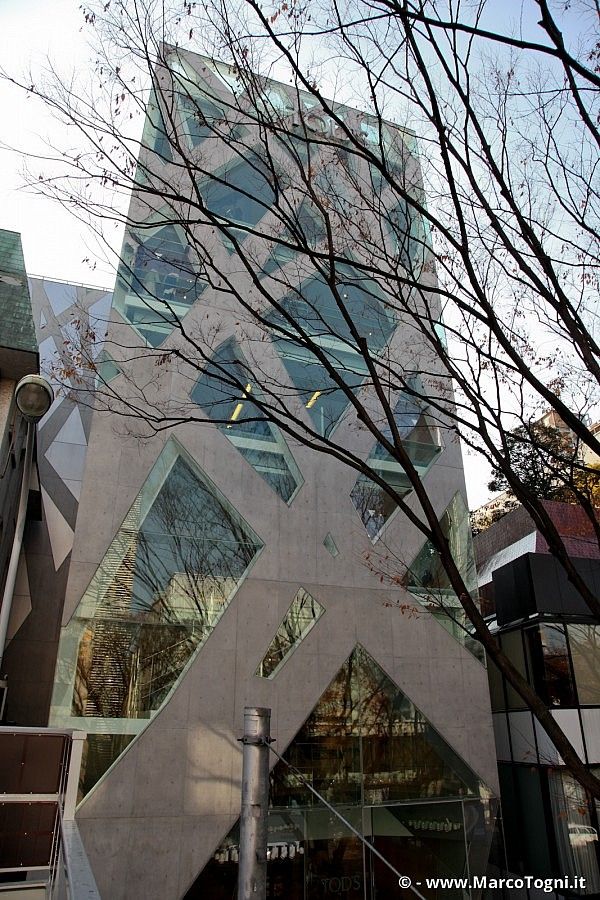
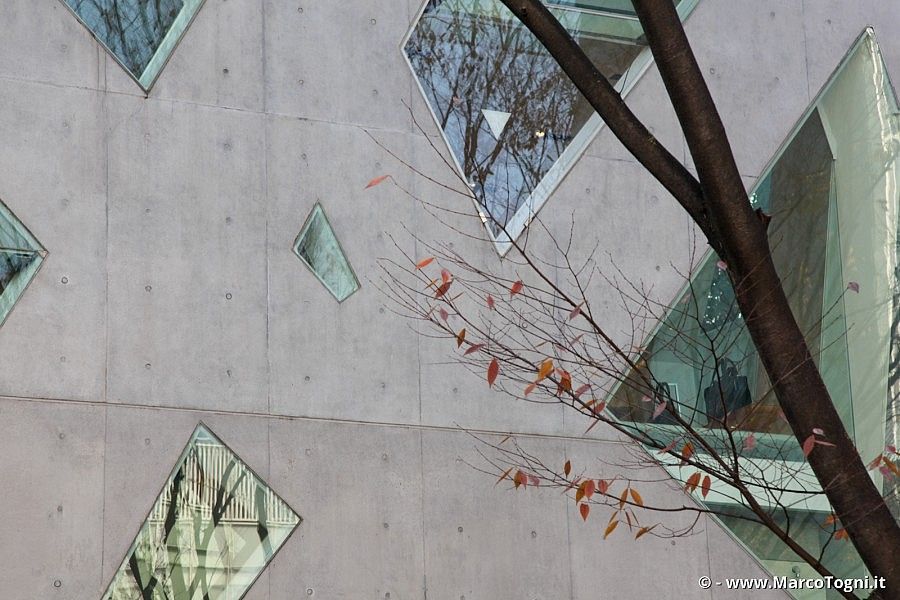
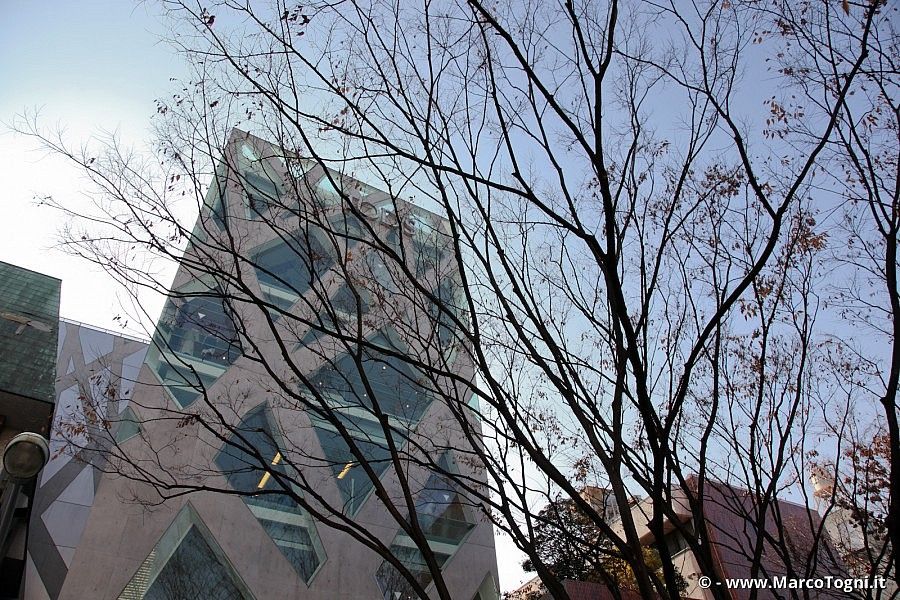
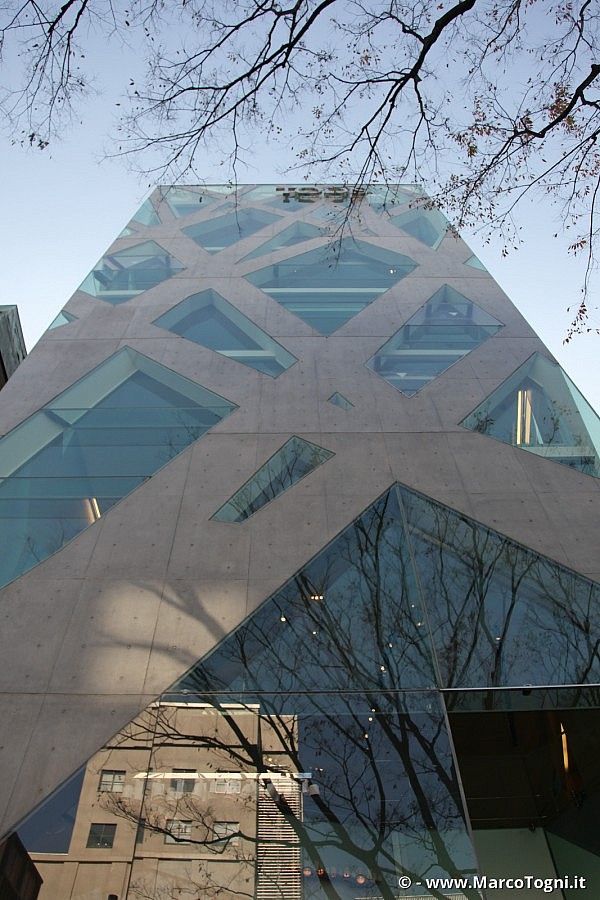
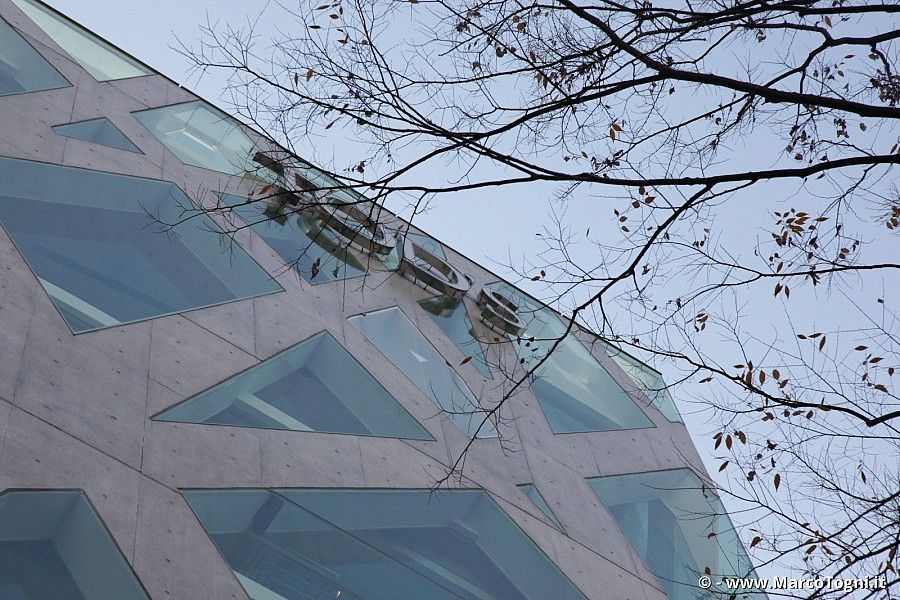
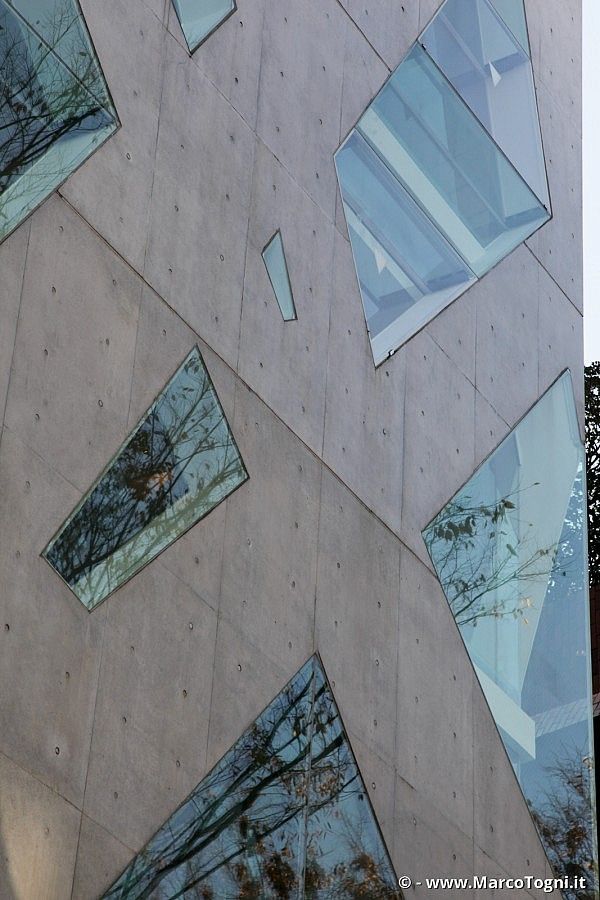
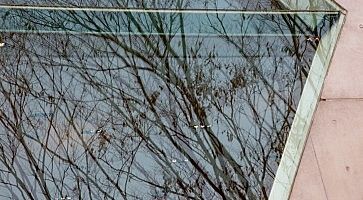
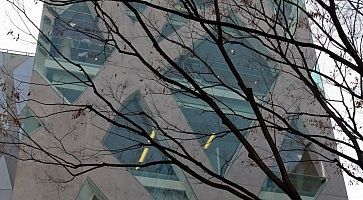
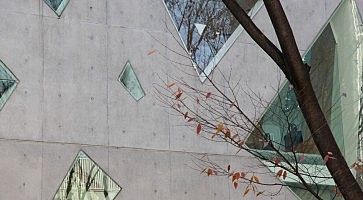
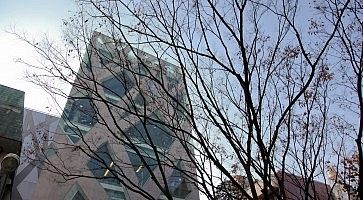
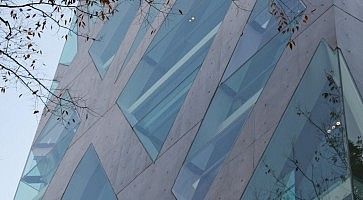
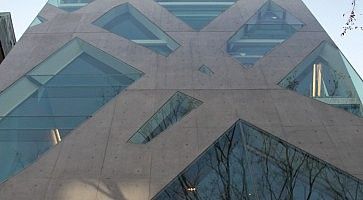
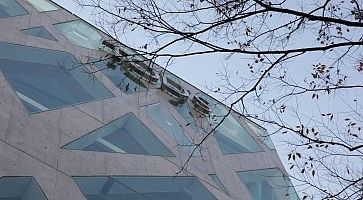
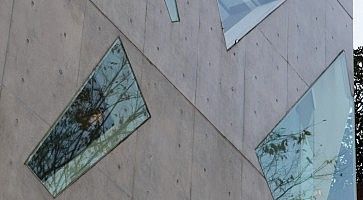
This Tods building on Omotesando was designed by Toyo Ito, and since 2004 it’s been one of the most recognizable buildings on the avenue. The facade is a concrete cage that traces the branches of the zelkova trees planted along the street, and the gaps between the branches are filled with frameless glass panels, each one a different shape.
There isn’t a single column inside, because the outer skin carries the load, and that’s why a concrete building manages to look so light. Go ahead and step in to browse the displays, but look at it from the outside first.
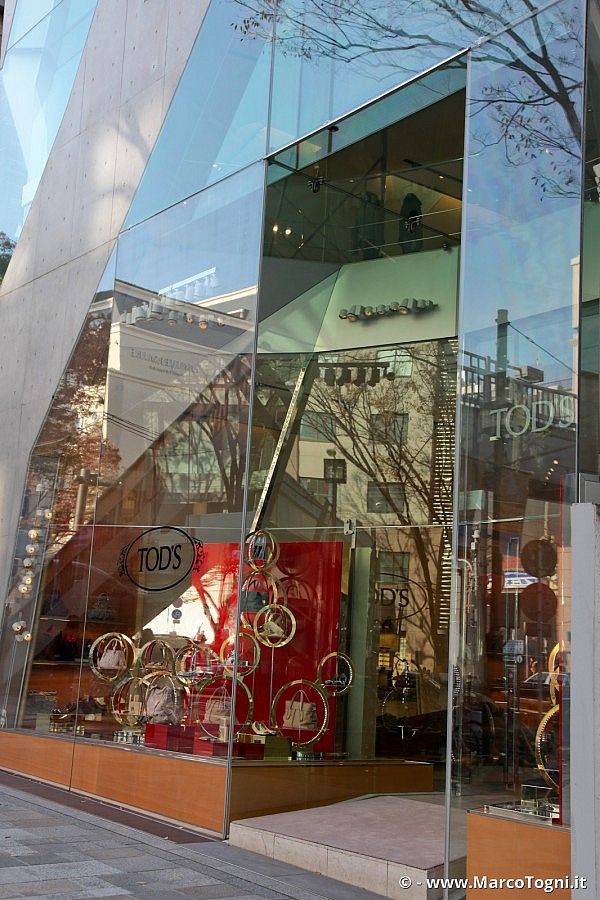
Only the lower part of the building is open to the public, and that’s where you’ll find the boutique itself, with shoes, bags and leather goods. Farther up, the middle floors are company offices, the sixth floor has an event hall with a ceiling more than five meters high, and a glass meeting room and a private dining room sit on the roof.
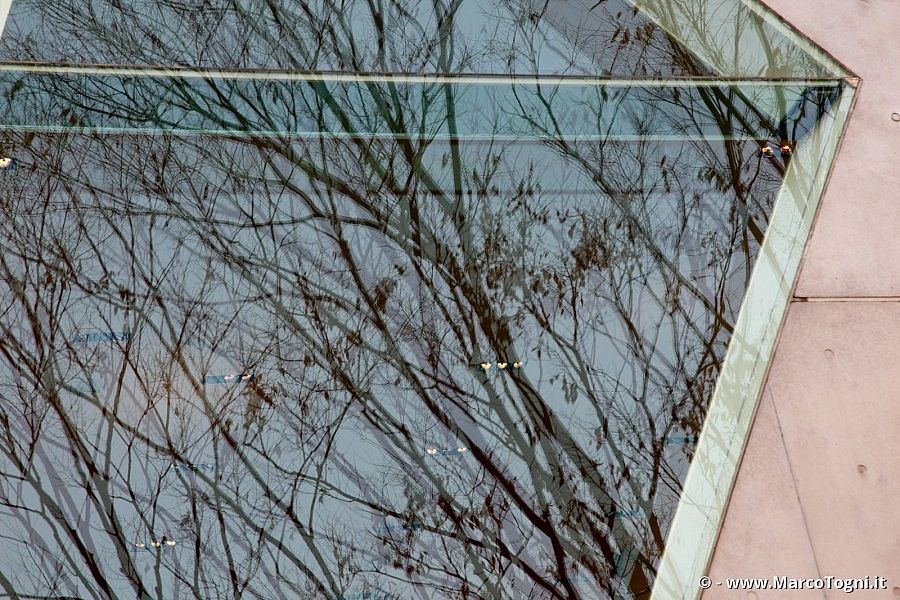
So don’t expect to look around the whole building. You can only go into the shop. It’s still worth walking in even if you’re not planning to buy anything, because from the inside the branches become picture frames, each one around a different stretch of the avenue.
The most surprising thing about the building is something you can’t see from the outside: there’s not a single column inside. The concrete branches on the facade aren’t decoration. They’re the load-bearing structure, 30-centimeter-thick walls that hold up the floors on their own, with clear spans of 10 to 15 meters.
You notice two results of this as soon as you walk in. The floors are completely open, with nothing breaking up the space, and the glass is set flush with the concrete, without any frame. It looks as if it had simply been poured into the gaps between the branches.
Toyo Ito’s idea is simple to explain and incredibly hard to build. He took the trees along the avenue, the zelkovas that shade all of Omotesando, and transferred their outlines onto the walls. Nine tree silhouettes interlock across the six exterior walls, bending around the L-shaped lot and hiding the fact that the street frontage is actually very narrow.
Watch how the pattern changes as you look up. Down low, the trunks are thick and solid, while higher up the branches multiply, get thinner and leave more and more room for glass. It works just like a real tree, where the canopy is lighter than the trunk.
The easiest way is to get off at Omotesando Station and take Exit A1, which puts you right on the avenue at the main intersection. From there, walk up toward Harajuku and in three or four minutes you'll see it in front of you, squeezed into the row of boutiques.
If you're coming from Harajuku, just do the same walk in reverse under the trees along the avenue. It takes a little over five minutes and it's the better approach, because seeing the building from a distance helps you make sense of the facade before you even reach it.
This place is on MarcoMaps
Tods Omotesando
My map of Japan: over 4,000 places I've tried myself, each with photos, rating, and hours. Filter by category and rating, find veg-friendly spots and places near you with GPS. No sign-up, right from your phone.


Tods Omotesando - nearby you will find: