 640 m
Kameyama Park640 m
With a nice view.
 ©rafa_hideclick - Shutterstock
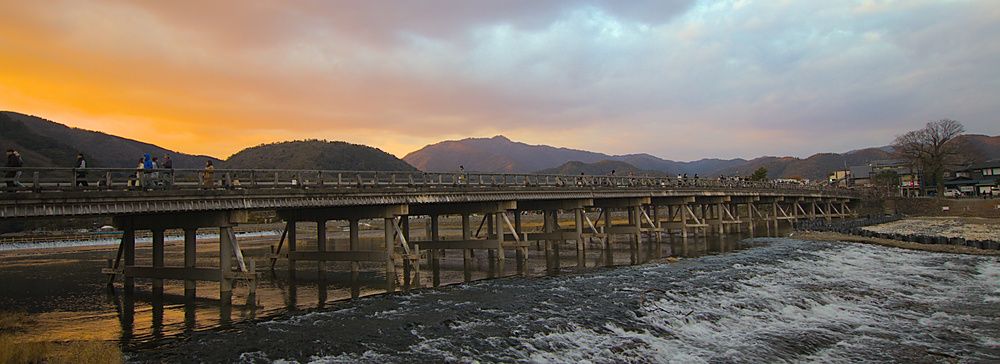
A bridge over the river in Arashiyama, Kyoto, that would be just another bridge if it stood on its own. With the wide, shallow water underneath and the tree-covered mountain behind it, though, it becomes the scene everyone pictures when they think of Arashiyama. Togetsukyo Bridge is something you look at more than something you cross, and what matters is everything around it: the riverbanks, the little island of Nakanoshima, the rowboats, the cherry blossoms in spring and the red maples in fall.
It’s the first thing to see on your first trip to Arashiyama, and it’s at its best if you get up early or stay until sunset.
The bridge is where you start, but what you’ve come for is the whole picture: river, bridge and mountain in a single frame, changing color with the seasons. These are the parts worth stopping for:
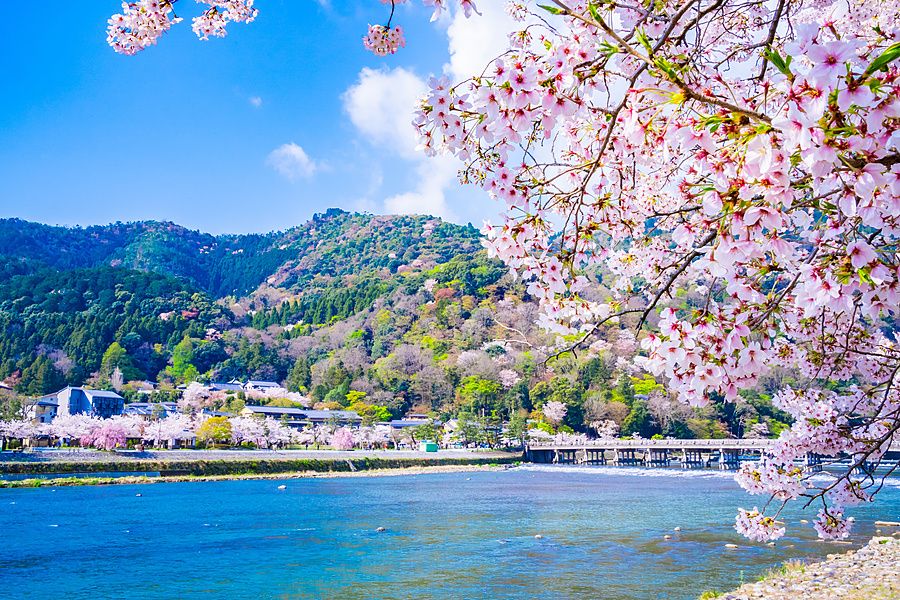
Walking across it is the least exciting part. The sidewalk is narrow, cars and buses go by on the roadway, and people stop in the middle to take pictures. If you just show up, cross it and head off to the temples, you haven’t seen a thing. To really see it, you have to go down to the riverbank.
The crowds bunch up on the bridge and at the north end, where you’ll find the shops, the rickshaws waiting for customers and the road to the bamboo grove. Along the embankment toward Nakanoshima there’s room even on weekends, except during cherry blossom season, because hardly anyone goes there.
To get up to Kameyama Park you climb steps and uphill paths, and in hot weather you’ll be sweaty by the time you reach the top. In return, there are far fewer people up there than down by the river.
There’s also a tradition I always tell people about when they come with me. Thirteen-year-olds, after their blessing at the temple on the hill across the river, cross the bridge without looking back, because if they turn around they lose the wisdom they’ve just received. If you see a dressed-up kid walking straight ahead with their eyes fixed forward, now you know why.
The name means roughly “moon-crossing bridge.” The story goes that Emperor Kameyama chose it in the 13th century: watching the moon move across the sky above the river, he felt it was crossing from one bank to the other, just like someone walking over the bridge.
There’s been a bridge here for more than a thousand years, tied to Horinji Temple on the south bank, the one the thirteen-year-olds visit. It’s been rebuilt many times after floods and fires. Today’s bridge dates from 1934, which is why it’s concrete underneath, but it was designed to look old and not spoil the scenery.
This isn’t a sight in the usual sense: there are no halls or statues. You come for the scenery, and the scenery delivers more than the photos promise, because up close the mountain is much taller and steeper than it looks. When someone comes to visit and asks me about Arashiyama, we always start here rather than with the bamboo. We sit on the embankment and look at the bridge with the mountain behind it, and from there on, exploring the rest of the area makes sense.
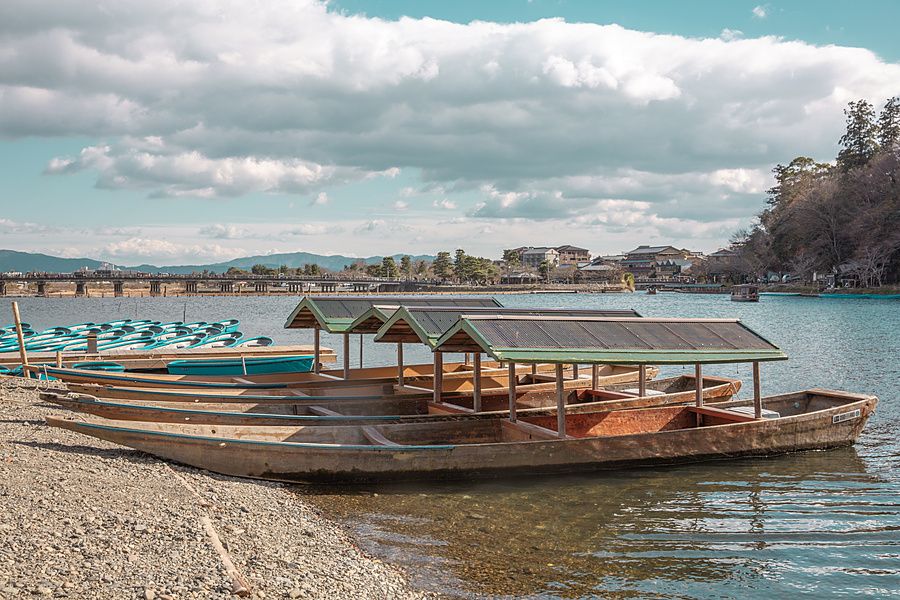
Early in the morning it’s a different place. Someone walks a dog across the bridge, the shops on the north bank still have their shutters down, and all you hear is the water. Around mid-morning the guided tour groups show up, and from then until the afternoon people on the bridge sidewalk move at a crawl.
Weekends are the worst time, and you’re better off on weekdays. During cherry blossom season and the weeks when the leaves turn red, the crowds spill down onto the banks and traffic on the road grinds to a halt.
Late afternoon is my favorite time after dawn. The sun drops behind the mountain, the bridge turns into a dark silhouette on the water, and the groups start to leave. In the evening the bridge is lit up and the area empties out, but the embankment is dark, so watch your step on the stairs and keep an eye out for bikes.
Don’t let rain put you off. When low clouds cling to the mountain it looks like an ink painting, and the crowds vanish. In summer everything is green, but during the day the heat is hard to take on the banks, where there’s no shade. Snow is rare in winter, but when it does fall, that’s when you’ll find the fewest people all year.
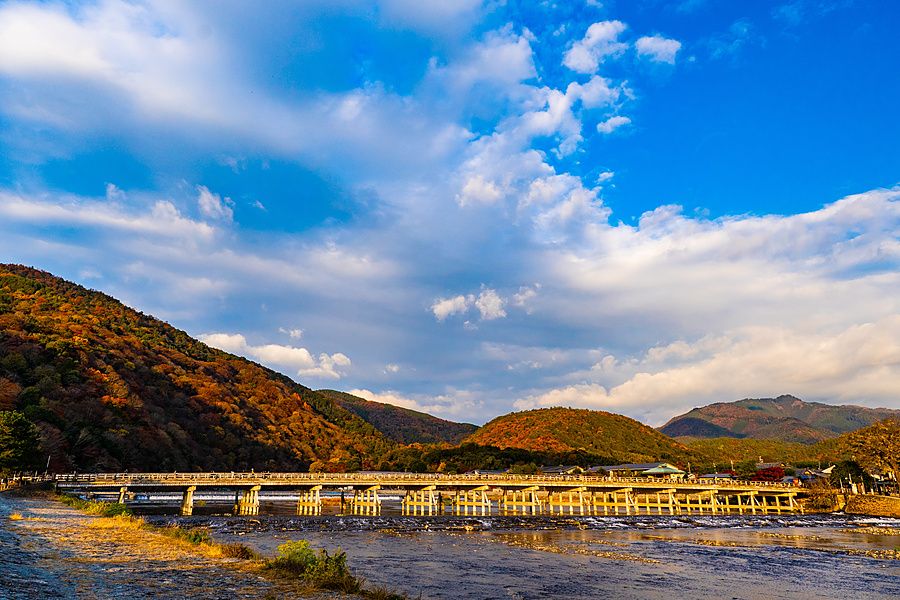
The classic shot is from the Nakanoshima side or the south embankment, with the bridge at an angle, the piers in the water and the outline of the mountain up top. If you go down to the rocks by the river, you can also get water in the foreground, and less of the crowded sidewalk ends up in the shot.
The bridge itself isn’t a good place to shoot from: you can’t stand still on the roadway, and from the sidewalk all you see is water. For a shot from above you need to climb up to Kameyama, where the river, the gorge and the boats coming down all fit in the frame.
At dawn nobody gets in the middle of your frame, and at sunset you’re shooting into the light while the sky changes color. Those are the two times I recommend. In the middle of the day you’ll still get the photo, but with dozens of heads in front of you.
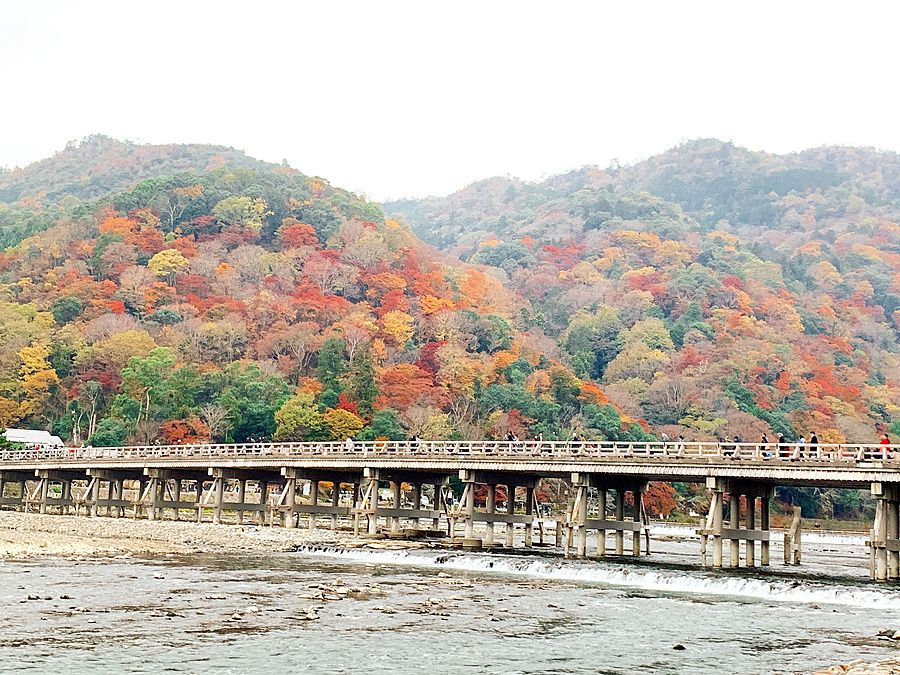
With Togetsukyo Bridge, when you go and where you stand matter more than the bridge itself. Rush across it at noon on your way to the bamboo and all you’ll remember is a busy bridge. Get there while the area is still empty, go down to the rocks and wait for the light to change on the mountain, and you’ll find the reason Arashiyama is famous, which is why it’s worth the early alarm. It has little to offer if you’re after buildings and interiors, and if you only have a few days in Kyoto and just want temples, you’re better off going elsewhere.
From Randen Arashiyama Station, head out onto the main street and walk south past the shops. In about 5 minutes you're at the north end of the bridge.
From Hankyu Arashiyama Station you come in from the south side instead. Walk 5-7 minutes toward the river to reach Nakanoshima, the quieter side, and cross onto the bridge from there.
From JR Saga-Arashiyama Station it's about 15 minutes on foot heading south, through the Tenryuji area.
This place is on MarcoMaps
Togetsukyo Bridge
My map of Japan: over 4,000 places I've tried myself, each with photos, rating, and hours. Filter by category and rating, find veg-friendly spots and places near you with GPS. No sign-up, right from your phone.


Togetsukyo Bridge - nearby you will find:
