Togoshi-Ginza
A lot of people never make it to Togoshi-Ginza, and to me that’s exactly its charm.
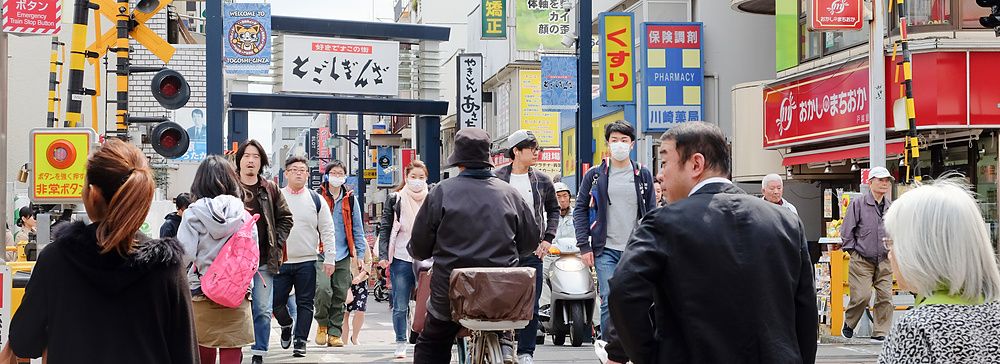
It’s a street more than a kilometer long, lined with small shops whose signs all look different. Locals do their grocery shopping here while tourists wander around with a croquette in hand.
There are no skyscrapers and no luxury brands. You come here to walk slowly, grab a bite on every corner and see a neighborhood you won’t find on postcards.
Come for a walk with me and I’ll show you how the street is laid out, when to go and how it got its name.
Contents
Nearby neighborhoods
Shinagawa
Meguro
One street in three sections
Togoshi-Ginza isn’t really one street. It’s three sections joined end to end, each with its own shopkeepers’ association: Shoeikai, Chuogai and Ginrokukai.
You can tell without looking at a map, because as you walk along, the arches, the streetlights and even the lettering on the signs change.
Together they run 1.3 kilometers with around four hundred shops, which makes this one of the longest shopping streets in the Kanto region.
That’s also why, if you walk the whole length, you go from fried-food shops to sewing supply shops to clothing stores almost without noticing. It isn’t a themed street. It’s a whole neighborhood’s everyday shopping, lined up along one road.
Come in the afternoon
Come in mid-afternoon, when the street is at its best.
For a few hours cars are kept out and the whole thing goes pedestrian-only, so you can walk down the middle without dodging traffic and take your time eating whatever you buy.
The local specialty is croquettes, or korokke. Almost every shop has its own version, from the classic potato croquette to ones with stranger fillings, and each one costs next to nothing.
Along the way there are also fried-food shops, bakeries, fruit stands, little animal-shaped sweets and small izakaya.
Give yourself a good hour for the walk itself, longer if you stop to eat something at every turn.
I’d pair it with another shopping street nearby. You can easily do both in one afternoon without rushing.
Don’t expect elegant restaurants or trendy spots, because this isn’t that kind of place. Everything here is very down-to-earth and a little worn around the edges, and that’s exactly why it’s worth the trip.
Togoshi-Ginza korokke
All these croquettes are no accident. The shopkeepers created a shared brand, Togoshi Ginza korokke, and every shop that joins displays the same sign.
The idea is that each shop has to come up with its own recipe. So you get everything from the classic potato and ground meat croquette to versions that sound like a gamble: one with octopus that reminds you of takoyaki, one whose filling tastes like gyoza, one made with oden.
You’ll find them at the butcher, at bakeries, at grocery stores and even at shops that sell something else entirely, each with a fryer going out front.
The fun is trying more than one as you walk. That’s how the street tells its own story.
Where the name comes from
Once you know where the name comes from, you’ll see this street differently.
After the Great Kanto Earthquake of 1923, the real Ginza, the upscale one in central Tokyo, had to rebuild its streets and was left with a mountain of red bricks to get rid of.
Those bricks ended up here, in a low, muddy area that flooded every time it rained, and they were used to pave the street.
The name came from that connection. Togoshi-Ginza is considered the first of the hundreds of shopping streets across Japan that have taken the Ginza name.
There’s even a mascot, Togoshi Ginjiro, and you’ll spot it printed on signs just about everywhere.
If you want to end the walk a little differently, there’s a public bath in the area with dark hot spring water, the well-known kuroyu, and a rooftop open-air bath with the classic Mount Fuji painting on the wall.
It costs the same as a regular sento, so very little, and it’s my favorite way to end an afternoon spent eating croquettes on the street.
Getting There
The most direct way is the Tokyu Ikegami Line. From Gotanda, on the Yamanote Line, it's two stops, and when you walk out at Togoshi-Ginza you're already in the thick of the crowds, roughly halfway along the street.
If you're coming from central Tokyo by subway, get off at Togoshi on the Toei Asakusa Line instead. It's a couple of minutes on foot to the start of the east section.
From the Oimachi or Jiyugaoka area you can take the Tokyu Oimachi Line to Togoshi-koen, but from there it's a 15-minute walk, and you come out at the other end of the street.
Useful Info
Name: Togoshi-Ginza
Time needed: About an hour for the walk, or two if you stop to eat at every stall
Closed: There's no common closing day. The shops take turns closing, most often on Sundays or Tuesdays
Tips: The best time is the afternoon pedestrian window, 15:00 to 18:00 (14:00 to 19:00 on Sundays and holidays). The street closes to cars and you can walk down the middle of the road with a croquette in hand. Before 10:00, on the other hand, a lot of shutters are still down.
Getting there:
- Togoshi-Ginza Station (Tokyu Ikegami Line): the street starts right outside the ticket gates
- Togoshi Station (Toei Asakusa Line): 2 minutes on foot, east side
- Farther away, but handy if you're coming from the southwest: Togoshi-koen Station (Tokyu Oimachi Line)
Map
MarcoMaps100% free
This place is on MarcoMaps
Togoshi-Ginza
My map of Japan: over 4,000 places I've tried myself, each with photos, rating, and hours. Filter by category and rating, find veg-friendly spots and places near you with GPS. No sign-up, right from your phone.
- 4,000+ places
- Rating, photos, and hours
- Veg friendly
- Near me (GPS)
- Favorites without login
- Works offline

