Tohoku
Tohoku is one of Japan’s regions.
Contents
Top destinations
Tohoku’s six prefectures
Tohoku covers the entire northern part of Honshu and is made up of six prefectures that are very different from one another, so the first thing to decide isn’t what to see but which part to focus on.
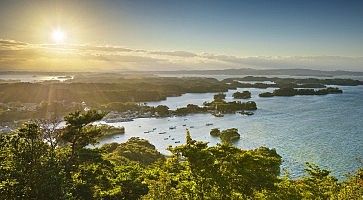
- Miyagi: the easiest to reach, with Sendai as a base for the whole trip and Matsushima Bay close by
- Aomori: wilder nature, from the Shirakami beech forests to Lake Towada
- Iwate: the temples of Hiraizumi and a coastline of sheer cliffs
- Akita: the samurai district of Kakunodate and the tucked-away Nyuto onsen
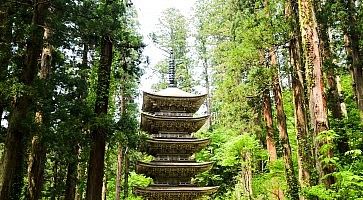
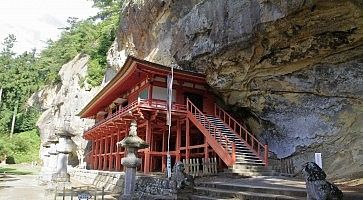
- Yamagata: the stairs up to Yamadera and the sacred mountains of Dewa Sanzan
- Fukushima: historic villages like Ouchi-juku and the castle in the Aizu valley
If it’s your first time up here, Miyagi and Yamagata are the easiest to fit into a trip starting from Tokyo. Aomori and Akita are worth it if you have more days to spare and don’t mind long distances.
Getting There
From Tokyo you'll almost always come by train. The Tohoku Shinkansen leaves from Tokyo Station and gets you to Sendai, the gateway to the region, in about an hour and a half, while Shin-Aomori at the far north takes just under three hours. The branch lines also take you to Yamagata and Akita without changing trains.
From Osaka and Kyoto it makes more sense to fly into Sendai than to travel up via Tokyo, and if you're coming down from Hokkaido, the shinkansen from Hakodate takes you under the sea.
Once you're here, local trains get much less frequent away from the shinkansen line. For lakes, gorges, and mountain onsen, a rental car is by far the easiest way to get around.
Useful Info
Name: Tohoku
Time needed: At least 5-7 days for two or three prefectures, 10-14 days to cover the whole region without rushing
Closed: Many scenic mountain roads (Hachimantai, Zao) and high-altitude trails are closed by snow from November until well into spring
Tips: If you can choose your dates, aim for the first days of August. Nebuta in Aomori, Kanto in Akita, and Tanabata in Sendai all fall within a few days of each other, and with the shinkansen you can see all three. Hotels in those cities fill up months ahead, though.
Getting there:
- Sendai Station (Tohoku Shinkansen): the most convenient stop for getting into the region
- Shin-Aomori Station (Tohoku and Hokkaido Shinkansen): the northern end of the line, connected to Hokkaido
- Yamagata and Akita Shinkansen: branch lines that split off at Fukushima and Morioka
Map
MarcoMaps100% free
This place is on MarcoMaps
Tohoku
My map of Japan: over 4,000 places I've tried myself, each with photos, rating, and hours. Filter by category and rating, find veg-friendly spots and places near you with GPS. No sign-up, right from your phone.
- 4,000+ places
- Rating, photos, and hours
- Veg friendly
- Near me (GPS)
- Favorites without login
- Works offline


Video: A traditional village in Japan (spectacular!!)

Video: Cherry blossoms in Japan (gorgeous!!)

When to go to Tohoku
Tohoku changes from season to season far more than the rest of Japan, so choosing the right month matters a lot.
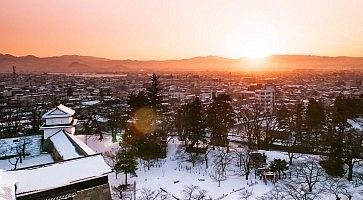
Winter is its signature season. Few places in the world get this much snow, and in January and February you’ll find the ice-covered trees of Zao and outdoor onsen with snow falling onto the water. The trade-off is that many mountain roads are closed and it gets dark early.
Spring comes late, and that’s the best part. When the petals are already on the ground in Tokyo, the cherry trees up here haven’t bloomed yet, and at the end of April the moat at Hirosaki Castle is covered in pink. If you got your hanami dates wrong, this is your second chance.
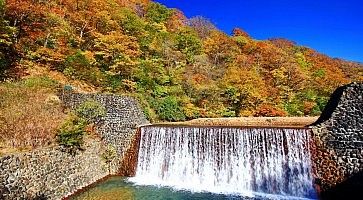
Summer is much cooler here than in Tokyo, and it’s the only time of year when you can really hike the mountain trails. Fall, on the other hand, comes early: in the mountains the fall colors start in October, weeks ahead of the cities farther south, and then slowly work their way down into the valleys.
Also in this section
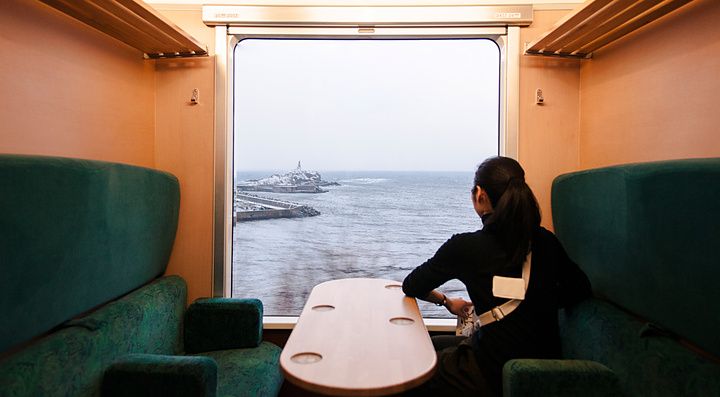
Resort Shirakami
Observation cars, shamisen and sea cliffs.