Toilets in Japan
Finding a clean toilet in Japan is one of the easiest things you’ll do on the whole trip. They’re free almost everywhere, there’s one on every corner, and most of the time they’re in better shape than the ones in plenty of cafés in Europe.
What throws people isn’t finding them. It’s what happens once you’re inside: a panel with ten buttons labeled in Japanese, a flush that seems to have vanished, a sink with nothing to dry your hands with.
All it takes is three things to keep in mind: know which kinds of places to look in, keep a small hand towel in your bag, and learn to spot the emergency button before you start pressing things at random.
Contents
- Where to find one
- The konbini rule
- Stations and trains
- Department stores
- Parks and rest stops
- The control panel
- How to flush
- The button to leave alone
- The sound button
- Japanese-style toilets
- Toilet paper and hand towels
- Flushing and trash
- Accessible restrooms
- Toilet slippers
- Shibuya's designer toilets
- What it costs
- Finding one with your phone
- My advice
Where to find one
In cities you don’t need to plan ahead. Wherever you are, there’s somewhere you can go within a two-minute walk. Things get trickier in purely residential neighborhoods, on some mountain trails and in the countryside, where the nearest store can be kilometers away.
When I need one, my mental checklist pretty much always runs in this order:
- Konbini: convenience stores that are open all day, and the quickest option anywhere.
- Train stations: even small ones almost always have a toilet, and it’s free.
- Department stores and shopping malls: when you want the comfortable, clean version with a big mirror.
- Public parks: handy around temples and along rivers, but stripped down to the bare minimum.
- Museums, large temples, tourist information centers and bus stations: places where nobody will ask you any questions.
On signs, the words to look for are トイレ or お手洗い, and the symbols are the same little man and woman you see all over the world.
The konbini rule
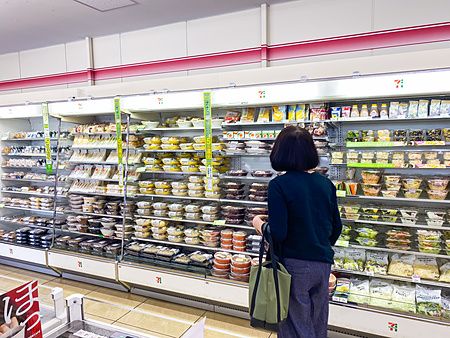
Almost every konbini has a toilet customers can use, and there are more than 50,000 konbini in Japan. It isn’t a given, though. Whoever runs each store makes the call, and in tiny shops in the most crowded neighborhoods there’s sometimes no toilet at all, or it’s staff-only.
If the door is locked or there’s a sign, just ask at the register. Everyone understands otearai onegaishimasu, and the staff will point you the right way.
The unwritten rule is that if you use the toilet, you buy something, even just a bottle of water or an onigiri. Honestly, nobody will give you a dirty look if you walk out without buying anything, and four out of ten people do exactly that. But the store pays for all the toilet paper and cleaning, and in some locations the toilet gets cleaned close to ten times a day.
One of the biggest chains estimates around a million uses a day across all its stores, which gives you a sense of how much those toilets have become a public service in disguise, run by private shops.
Inside you’ll almost always find a single-user restroom, often with an electronic seat, spare paper and a sign asking you to leave it clean. It’s where I send anyone who asks me where to go in a city they don’t know.
Stations and trains
Stations have toilets both inside and outside the ticket gates, and the difference matters: you can only reach the inside one with a valid ticket or by tapping your prepaid card. If you’re just walking around the area and not catching a train, look for the one outside the gates.
In big stations the standard is high, with displays showing which stalls are free, a spot with a mirror where you can freshen up, and sometimes a wider stall with a ledge for changing clothes. At small stations on private lines, expect the bare essentials, sometimes with no heated seat and a Japanese-style toilet.
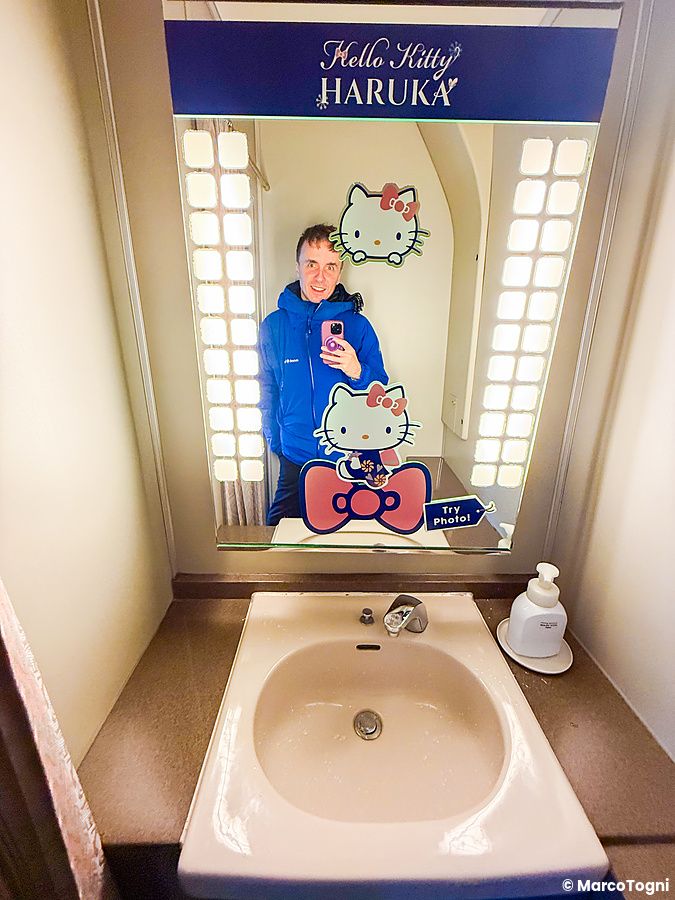
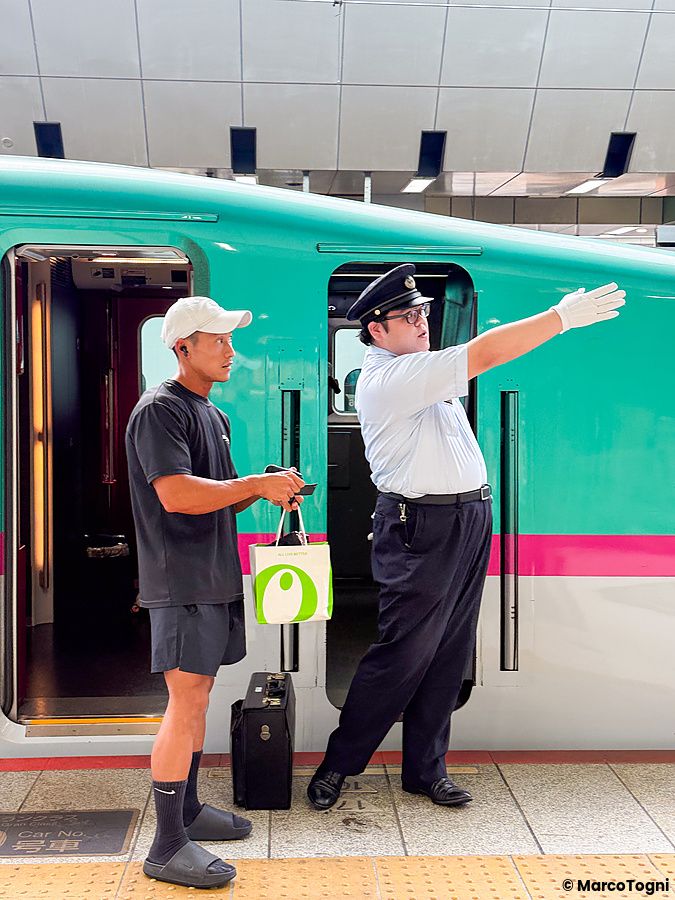
Subways and city lines have no toilets on board, and neither do many local trains, so go before you get on. Long-distance trains and the shinkansen, on the other hand, have toilets in every other car, with a separate sink outside and often an extra stall just for men.
My advice is to use them while the train is stopped at a station, because once it’s moving the stall rocks around quite a bit.
Department stores
The nicest toilets in Japan are inside department stores, and they’re not just for shoppers. You walk in, take the elevator, use the toilet and leave, and nobody says a word.
On the upper floors, the ones with clothing and restaurants, you’ll find big mirrors, stools, shelves for your bag and a corner set aside for doing your makeup, known here as the powder room. There’s often a stall with a platform for changing so you don’t have to put your clothes on the floor.
The basement level, the depachika, is the one packed with food counters, sweets and takeout bento. It’s the busiest part of the building, and the toilets down there, when there are any, always have a line. When I’m passing through at lunchtime, I go up two or three floors and I’m done in no time.
The same goes for the big mixed-use buildings near major stations: the toilets on the office and restaurant floors are almost always empty.
Parks and rest stops
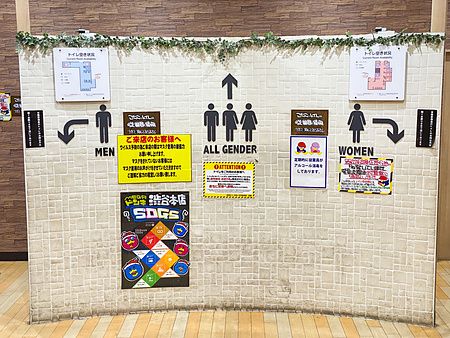
Park toilets are the most hit-or-miss category. Some are new and tidy, others are concrete blocks with a Japanese-style toilet and no paper. Around temples and along rivers they’re really convenient, but that’s where carrying a pack of tissues makes all the difference.
Large temples and shrines have free toilets, usually in good condition and often near the entrance or the office that sells amulets.
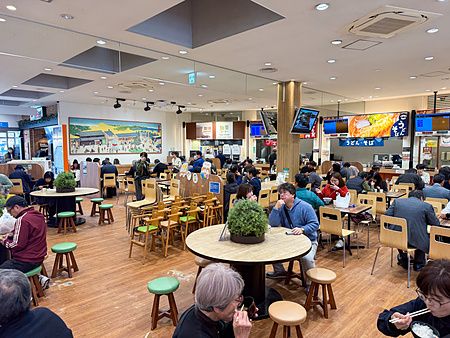
If you’re getting around by car or bus, highway rest areas are a different story. They’re open day and night, with dozens of stalls, changing tables, sinks for people with an ostomy and sometimes even a smoking area and a souvenir shop. The roadside stations along national roads, the michi no eki, offer much the same.
That’s exactly what I like about them: you can pull over at three in the morning in the middle of nowhere and find everything lit up and clean.
The control panel
The electronic seat is what surprises first-timers most, and it’s everywhere now. The first modern model came on the market in 1980, and today more than eight in ten households have one. In public toilets you’ll find them in stations, stores, cafés and a good share of konbini.
The controls are on a wall panel next to the toilet or on an arm attached to the seat. Newer models use standardized icons that you’ll get right away, while older ones only have Japanese text.
You really only need a few words:
- Rear: the rear spray, the one people use most.
- Bidet: the front spray, gentler and designed for women.
- 止 or 停止: stops everything, and it’s the button to find first.
- Water pressure: adjusts the spray strength, while 水温 sets the water temperature.
- Flush: means flush, while 大 and 小 are the full and reduced flush.
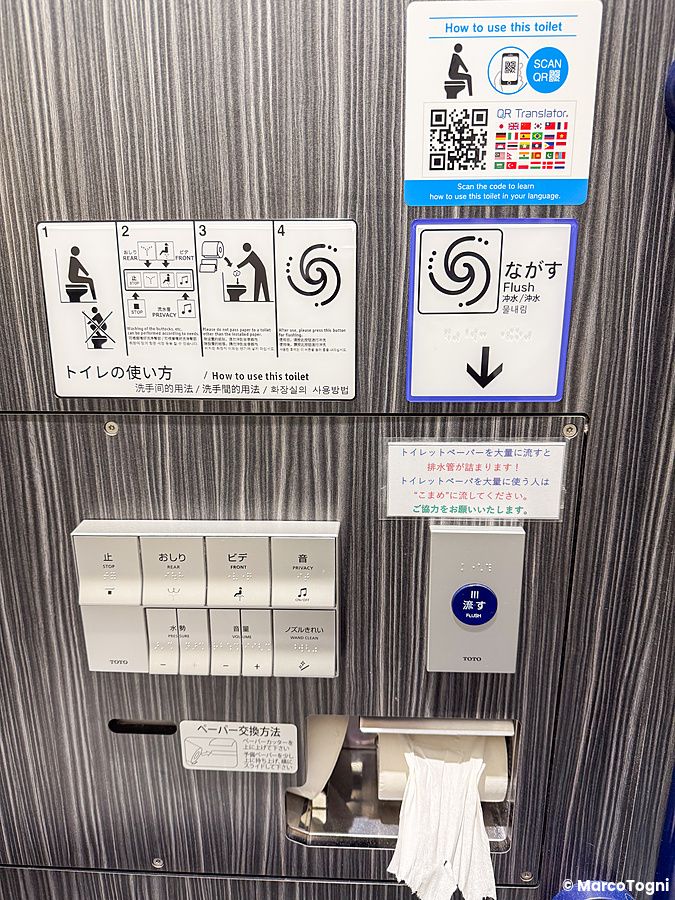
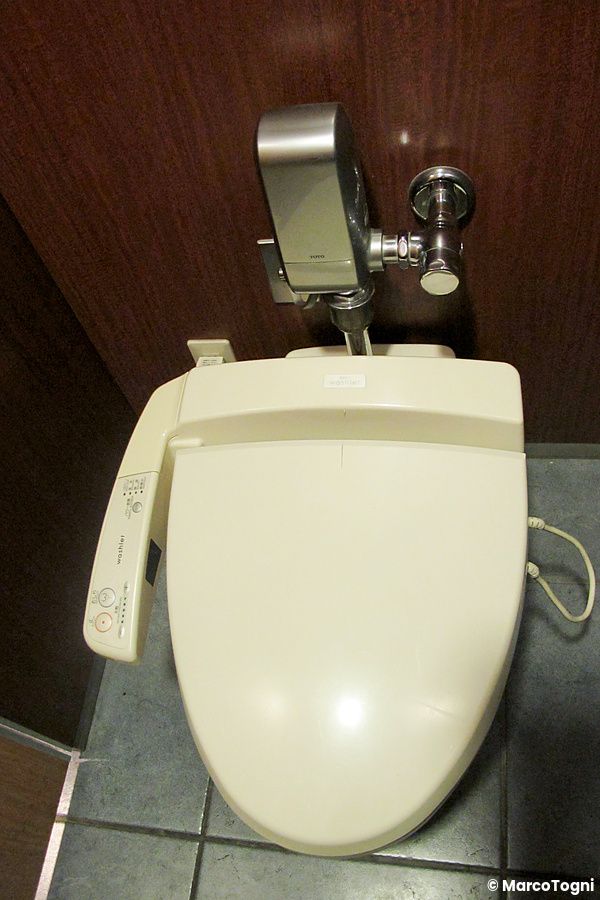
The water is warm, and so is the seat. The first time, what catches you off guard is the noise the mechanism makes more than anything else. If the spray hits the wrong spot, almost every model also lets you adjust the position of the nozzle.
How to flush
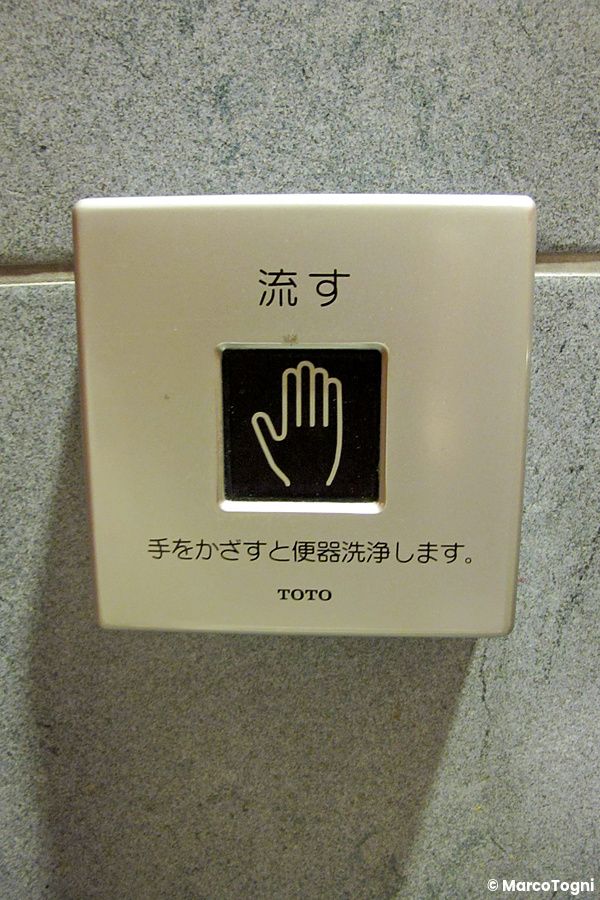
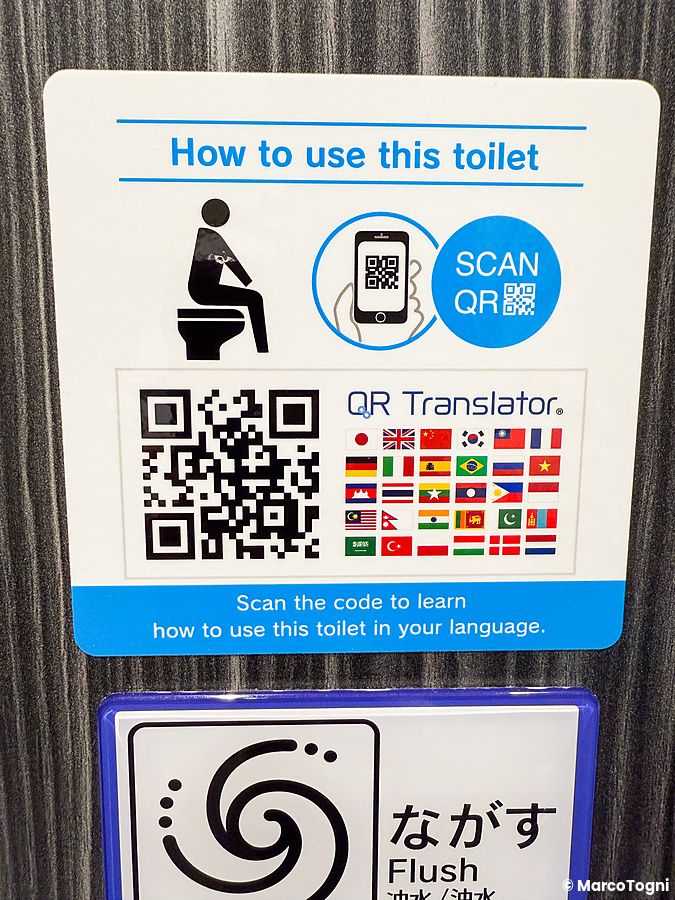
This is where almost everyone gets stuck. There are at least four different ways to flush: a button on the wall panel, a chrome lever on the side of the tank, a small motion-sensitive square you wave your hand over, or nothing at all, because the toilet flushes by itself when you stand up.
The rule that saves you ten seconds of panic is to check the wall first and the toilet second. Nine times out of ten the control is on the wall, labeled 流す, and it’s the biggest button after the red one.
In older station toilets you’ll still find a lever you turn by hand or push with your foot. If you haven’t found anything after thirty seconds, try standing up and taking a step away. If there’s a sensor, it’ll flush on its own.
The button to leave alone
There’s a button, usually red or orange, often bigger than the others and mounted separately on the wall, labeled 呼出 or 非常. It isn’t the flush. It’s the emergency call, connected to the station or store staff.
If you press it by mistake, an alarm goes off and someone will come and knock to check on you. It’s no big deal: just open the door and explain it was a mistake. Still, don’t go pressing it at random while you’re looking for the flush.
The practical way to tell them apart is that the flush button sits with the other controls, while the emergency one sits on its own, lower down or higher up, often next to a little drawing of a person falling.
The sound button
Many panels have a button with a musical note or the word 音姫, which means sound princess. Pressing it plays a fake running-water sound that covers up whatever noises you’re making.
It’s not just a quirk. Before these devices existed, many people flushed two or three times just to cover the sounds, and the amount of water wasted was enormous. The device was invented to solve that problem, and you’ll find it mostly in women’s toilets, in stations, restaurants and offices.
Some models have a sensor and start on their own as soon as you walk into the stall, and the first time it happens you look around trying to figure out where the water is coming from.
Japanese-style toilets
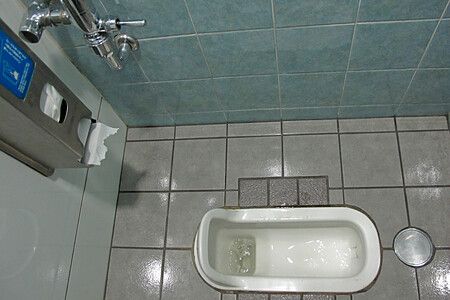
The traditional toilet, the floor-level kind you squat over, is called washiki and hasn’t disappeared yet. You’ll come across it in parks, older stations, some temples and public schools, where one toilet in three is still this type.
To use it, you stand straddling it, one foot on each side, facing the hooded end rather than the wall. Then you bend your knees and squat, and keep your pants pulled up, because they’re just a hand’s width from the floor.
When there’s a row of stalls, the signs on the doors show which is which, with a drawing of either the Western-style toilet or the floor-level one. Many Japanese people still choose the washiki to avoid touching the seat, and for the same reason public toilets often have a sanitizer dispenser and paper for wiping the seat before you use it.
Toilet paper and hand towels
You’ll find toilet paper almost every time, and when a stall doesn’t have any, there’s often a dispenser near the entrance. What’s missing almost everywhere are paper towels. There are no paper towel rolls or dispensers, and there isn’t always a hand dryer either.
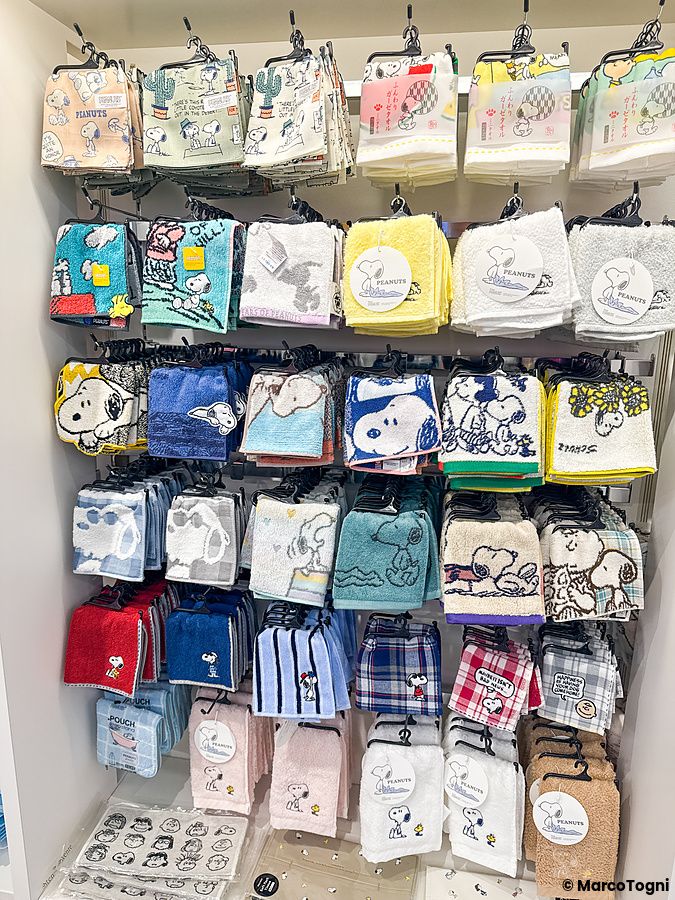
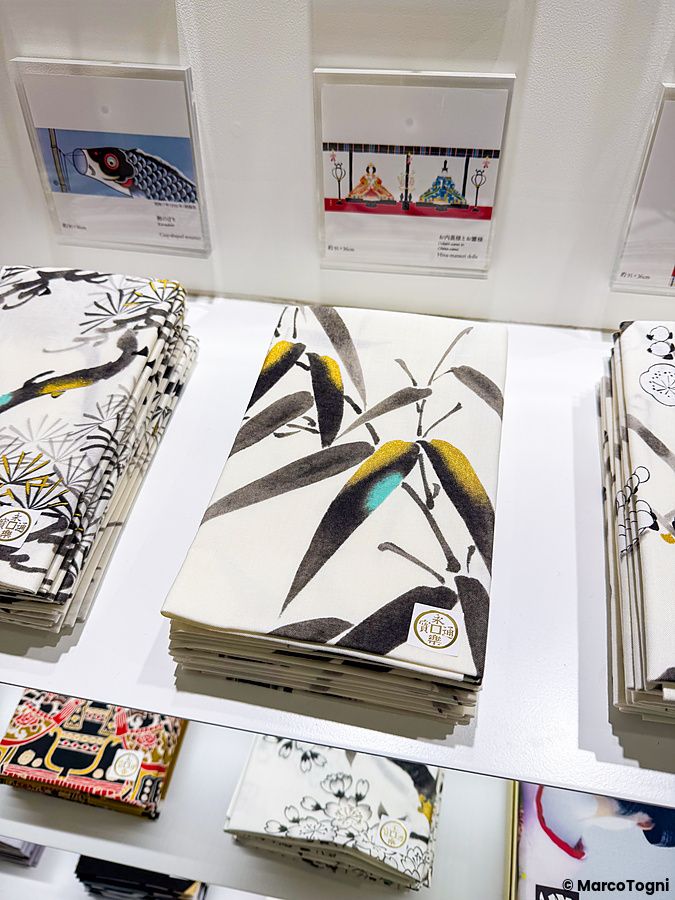
That’s why everyone here carries a small towel in their bag. You can buy one anywhere, from department stores to 100-yen shops, and it costs next to nothing. Give it three days and you’ll be doing it too.
As I see it, only a few things are worth carrying in your bag, and they don’t take up any room:
- A small cotton towel: keep it in your pocket or clipped to your bag.
- A pack of tissues: for when the paper runs out or you’re in the mountains.
- A small plastic bag for trash: restrooms almost never have a trash can.
- Hand sanitizer: in case you end up using restrooms in the countryside that only have cold water.
Out on the street, especially near the big stations, people will sometimes hand you a pack of tissues with an advertising flyer inside. They’re free and worth taking.
Flushing and trash
Toilet paper always goes in the toilet, and it dissolves just fine. You don’t put it in a bin next to the bowl the way people do in some other countries. The only stalls with a small lidded bin are in the women’s restrooms, and that bin is for sanitary pads.
Don’t flush wet wipes unless the package clearly says they’re flushable, and don’t flush tissues either, because they’re made specifically not to dissolve.
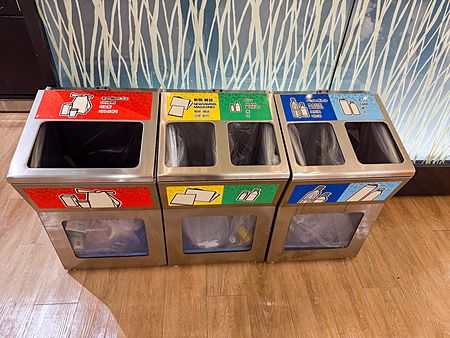
For everything else, from an empty bottle to the wrapper of something you ate on the street, keep in mind that Japan has very few public trash cans, and restrooms hardly ever have one. Whatever trash you end up with, you carry it with you until you reach a konbini or your hotel, and that’s when the little bag comes in handy.
Accessible restrooms
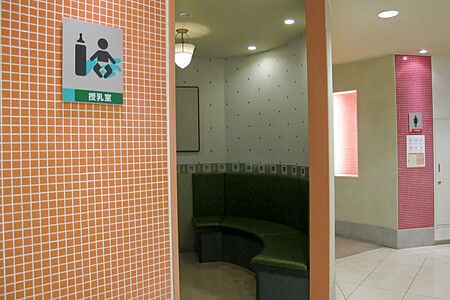
Almost everywhere you’ll find a separate, larger stall, labeled tamokuteki or takino toire, with a wide sliding door and a button to open it. Depending on the place, inside there’s a fold-down changing table, a wall-mounted seat to sit your child in while you go, a low sink for people with an ostomy, and handrails.
This stall is meant for people who actually need it: wheelchair users, parents with small children, people with health conditions. When there’s a line for the regular restroom, don’t use it as a shortcut, because someone with no other option might be on their way.
If you’re traveling with a big suitcase, it almost never fits in a standard stall. You’re better off leaving it in a coin locker at the station, or heading for a department store restroom, where even the regular stalls are wider.
Toilet slippers
In homes, ryokan, some traditional restaurants, and certain temples where you go in barefoot, there’s a pair of slippers just for the toilet in front of the restroom door. You leave your own outside, put those on, and do the same thing in reverse on the way out.
The classic mistake is walking back into the room still wearing the toilet slippers, and I’m not joking: it happens to plenty of people, and everyone notices except you. You can spot them because they’re usually plastic, a different color, and sometimes they have the word toilet printed right on them.
Always check the floor in front of the door before you go in. If there’s a pair of slippers sitting there, they’re for you.
Shibuya’s designer toilets
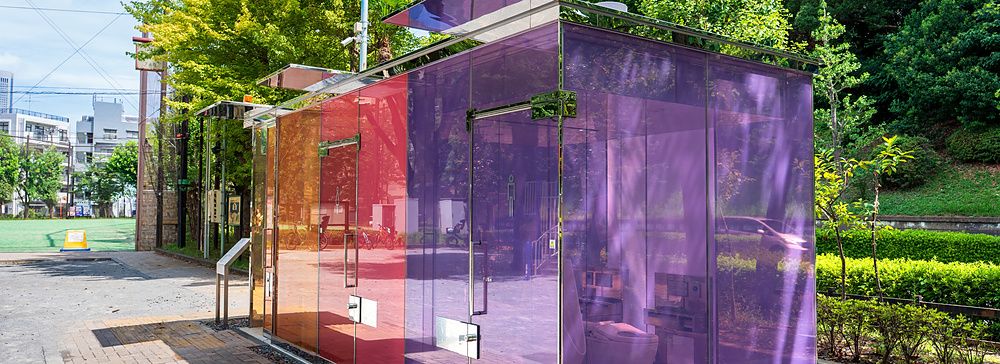
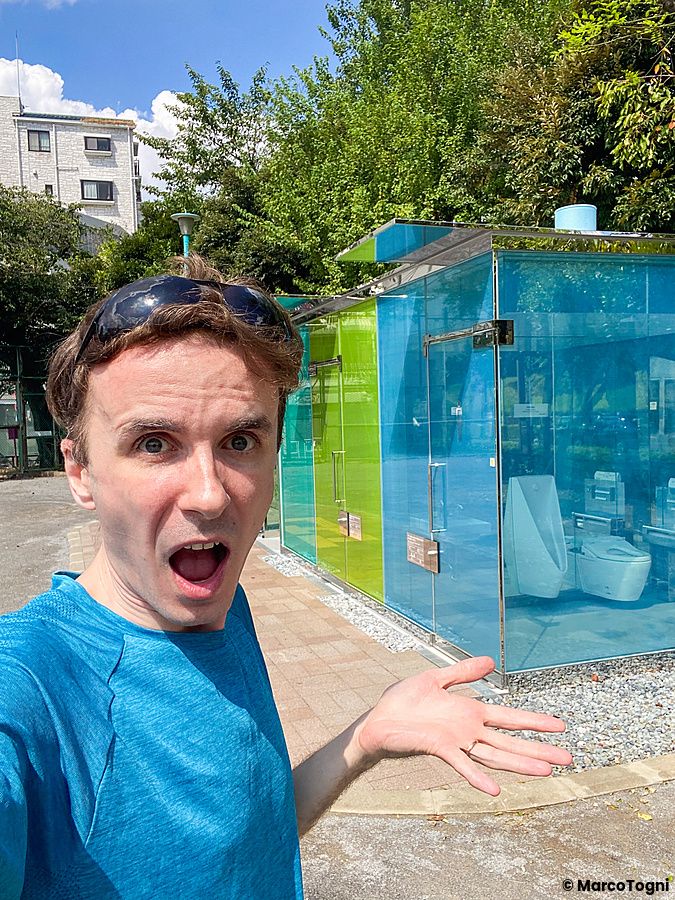
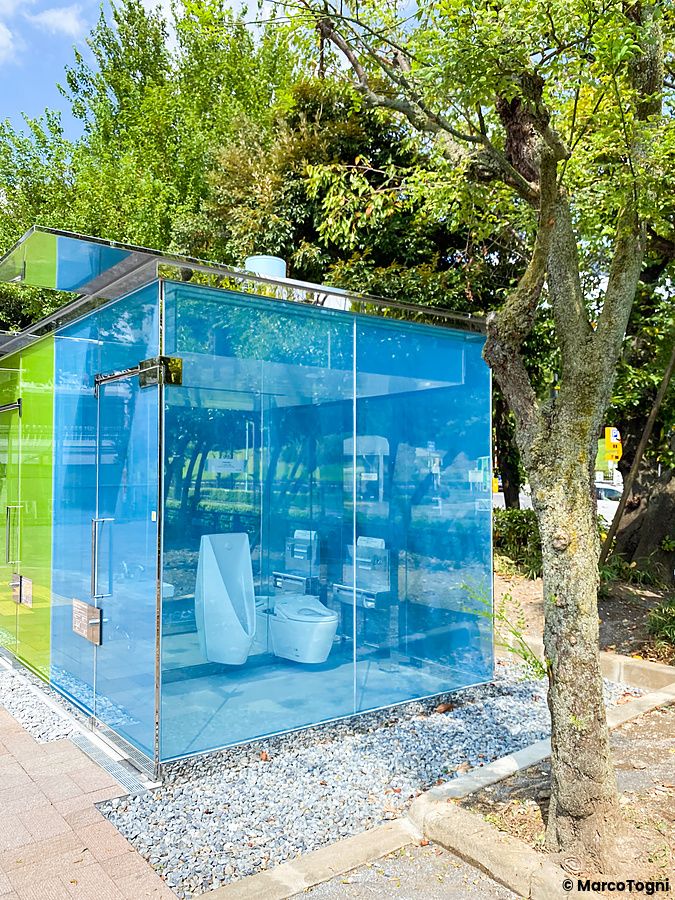
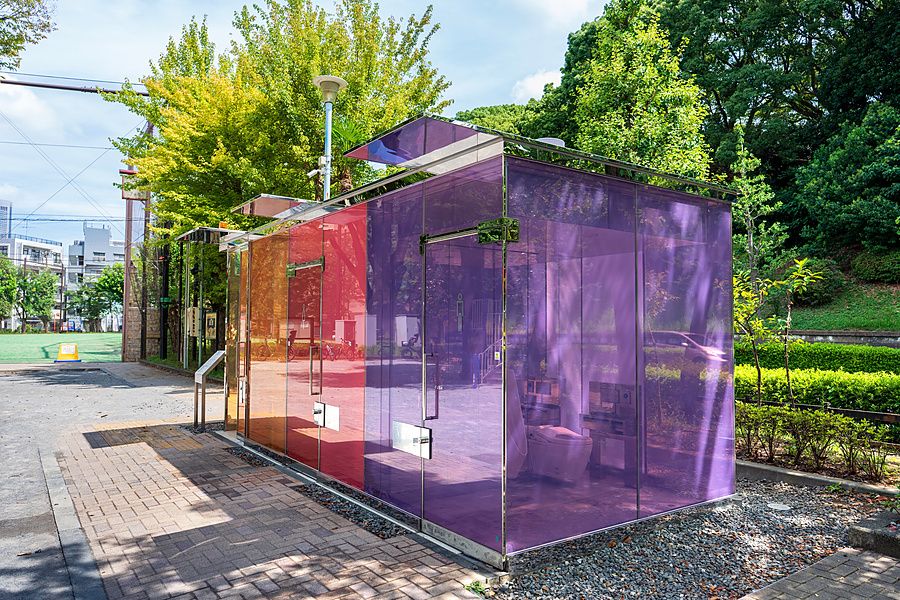
Shibuya, one of Tokyo’s busiest neighborhoods, has a set of seventeen public toilets designed by famous architects and designers, including Tadao Ando, Kengo Kuma, Shigeru Ban, Toyo Ito, and Marc Newson. The idea was to shake off the reputation public toilets have for being dark and dirty, and the result is a series of buildings that look like small pavilions.
The most photographed are the two with colored glass walls that turn opaque when you lock the door from the inside. Another one is built from cedar slats and looks like a cluster of huts among the trees.
They’re all free, all wheelchair accessible, and all equipped with electronic seats, and dedicated crews clean them several times a day. If you’ve seen the Wim Wenders film about a man who cleans Tokyo’s toilets, these are the very ones.
I wouldn’t plan a whole day around them, but if you’re in Shibuya or around Ebisu, they’re worth a five-minute detour, especially since they’re not just for looking at: you can actually use them.
What it costs
Next to nothing. Public restrooms in Japan are free, including the ones in stations, parks, department stores, and rest areas. There are no pay turnstiles like the ones you see in other countries, and nobody will ask you for a coin at the door.
The exceptions are mountain toilets on the busiest trails and in mountain huts, where you leave a contribution of a few hundred yen, and the paid powder rooms in the largest stations. For anywhere from a few hundred yen to about a thousand, you get a private booth with a lighted mirror, a hair dryer, and a flat iron. They make sense if you need to freshen up after an overnight bus, not if you just need to use the restroom.
What you actually spend is minimal: a pack of tissues, a small towel, maybe a roll of toilet paper from a konbini if you’re staying somewhere cheap. By Japanese standards, it’s one of the few things that has no impact at all on your travel budget.
Finding one with your phone
If you’re in an area you don’t know, the map on your phone almost always does the job. Just search for the word toilet or トイレ, and the public restrooms in parks and public buildings show up. Or look for the nearest konbini, which in practice is the same as finding a restroom.
There are also dedicated apps, updated by users, that list public restrooms with all the details: whether they have an electronic seat, a changing table, an accessible stall, or a sink for people with an ostomy. They’re in Japanese, but the icons make them easy to follow, and if you’re traveling with small children or have specific needs, you’ll find them really handy.
In big cities, though, I only open the map out of curiosity. I walk for a minute and find something anyway.
My advice
Don’t overthink it before you leave. It’s one of the few parts of a trip to Japan that takes care of itself. Remember to keep a small towel in your bag, look for the red button so you know which one not to press, and otherwise enjoy the heated seat in winter, which is a small, unexpected pleasure when it’s three degrees outside.
If I had to pick one restroom to walk into without a second thought, it would be the one on an upper floor of a department store: quiet, clean, with a big mirror and nobody in a hurry. Then you walk out, keep going, and forget all about it.
How many buttons did you press before you found the right one?