Tokiwaso Manga Museum
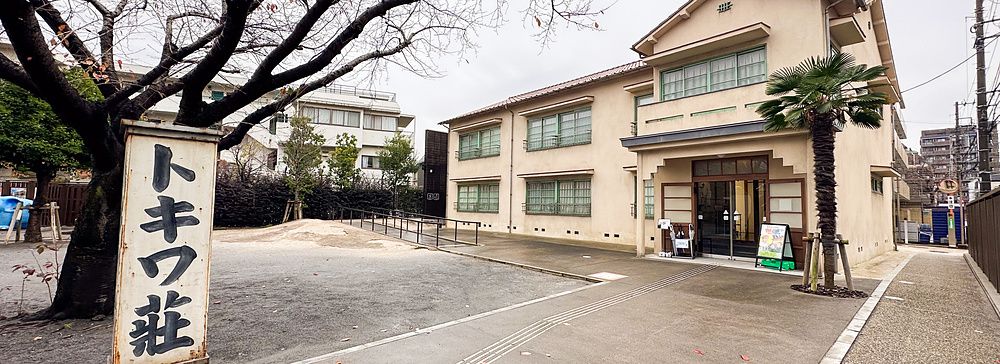
A museum dedicated to manga in a neighborhood park in the Ikebukuro area, where the wooden boarding house that was home to nearly all the artists who invented Japanese comics as we know them today has been rebuilt from scratch.
At the Tokiwaso you climb a creaky staircase, and at the top are the tiny rooms, rebuilt one by one, along with the shared kitchen and toilet. On the ground floor there’s a room displaying vintage manga and a rotating exhibition.
It’s a small, focused place, and if you’re even a little into manga, there’s nothing else like it in Tokyo.
What you’ll see
The original boarding house was torn down and no longer exists, so this building is a copy, rebuilt the way it looked ten years after it went up, down to the stains on the walls. The real Tokiwaso stood just a short walk from here. It was built in 1952 and demolished in 1982, and over those thirty years Tezuka, Ishinomori, Akatsuka and the Fujiko Fujio duo all lived there, almost all of them very young and broke.
- The stairs and the upstairs hallway: wood that creaks with every step, dim light, five doors on each side and, at the far end, windows with a painted view of the neighborhood as it was back then.
- The artists’ rooms: four and a half tatami mats each, with a desk, half-finished pages, clothes hanging on the wall, a wooden wardrobe and even a CRT TV. Room 14 is the one that passed from Osamu Tezuka to the Fujiko Fujio duo, and there’s also the only room that was home to a woman, Hideko Mizuno.
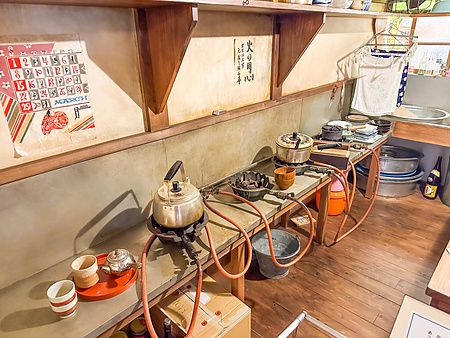
- The shared kitchen: gas burners with orange hoses, a dented teapot, empty bottles, half-eaten bowls of ramen left out and a calendar hanging crooked. There was no bath, so this is also where they washed.
- The toilet at the top of the stairs: stained urinals and tiles, rebuilt the way they were. It’s the first thing you see on your way up, and it tells you right away what life was like here.
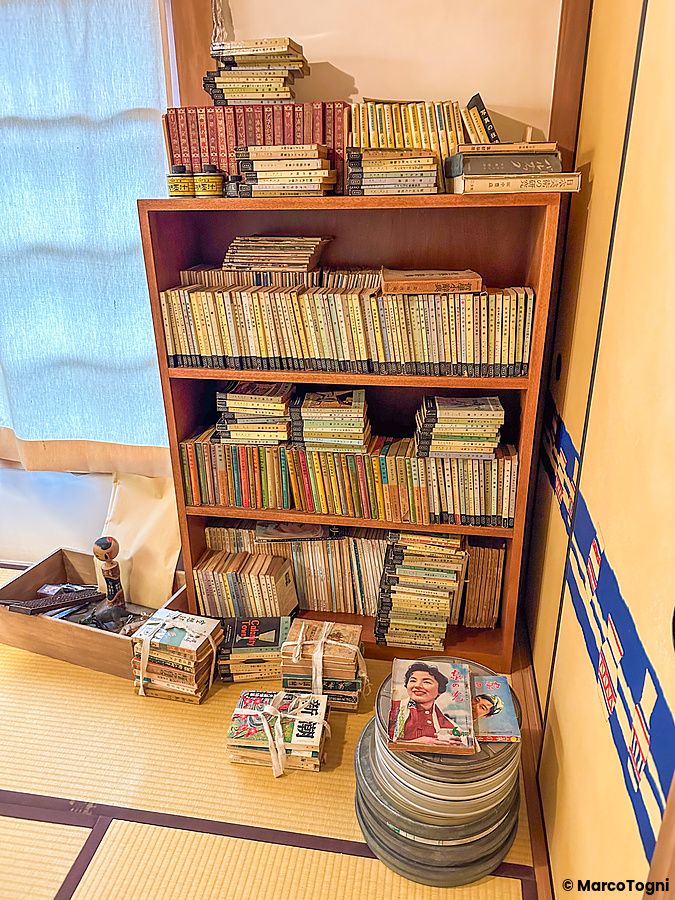
- The manga room on the ground floor: wooden shelves packed to the top with vintage volumes and magazines, and stacks of books tied with string on the tatami floor. You can look at the manga here, but you’re not allowed to leaf through them.
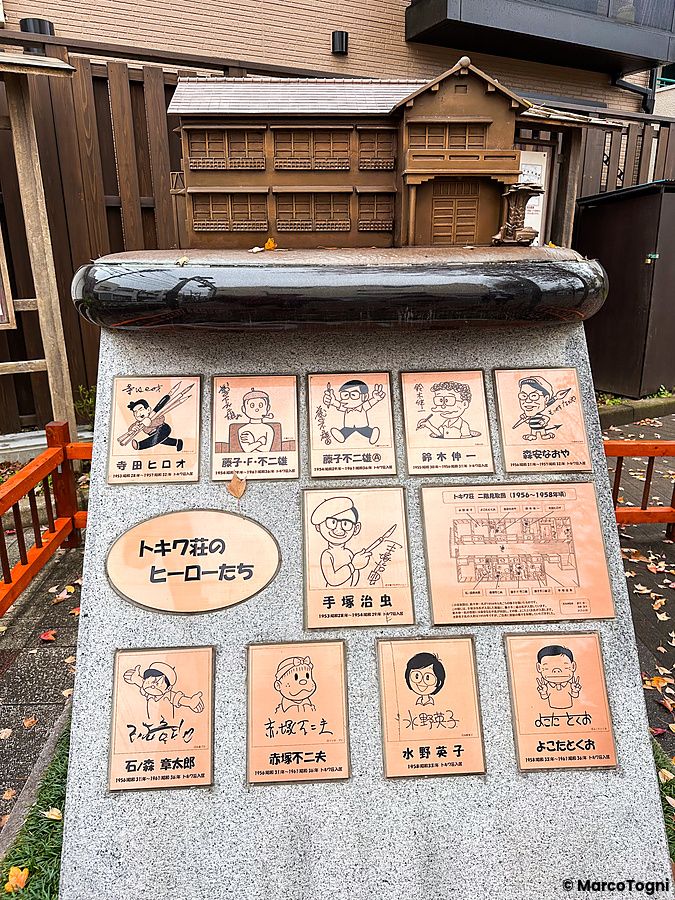
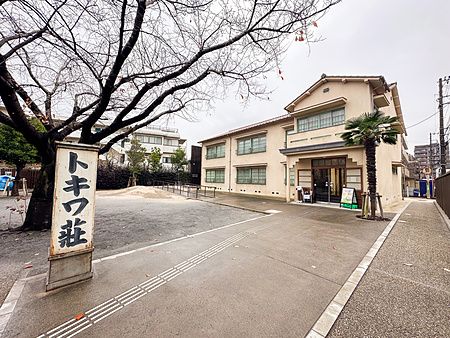
- The monument at the park entrance: a stone block topped with a miniature of the building, with metal plaques showing the names and drawings of the artists who lived there.
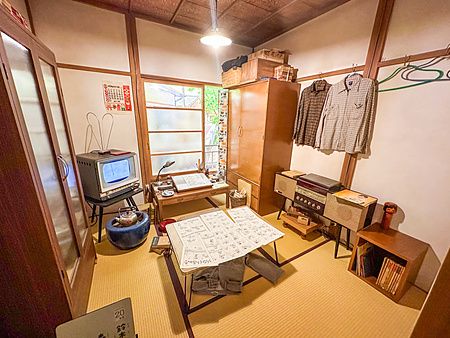
The rooms are smaller than you’d imagine. You look in from the doorway, and with two people at the same doorway you’re already bumping into each other, so when it’s busy you wait your turn in the hallway.
On the ground floor is the ceiling board Tezuka drew on before the building was demolished, and it’s the only original piece in the whole museum. You can’t take photos there, and lots of people walk right past it to the stairs, which to me is the biggest mistake you can make here.
This also isn’t a museum that walks you through the history of Japanese comics with information panels. If Tezuka, Ishinomori or Fujiko mean nothing to you, you’ll see ten little rooms with a desk in each and walk out wondering what you were doing there.
If you do know those names, though, you get something no other manga museum can give you: the actual place where a whole profession was invented by twenty-year-olds who slept at their desks.
I go back every time the exhibition downstairs changes, and anyone who comes to see me and reads comics ends up here, because it’s where you get the clearest sense of where all the rest came from.
When to go
The best time is a weekday morning. You’ll only run into two or three small groups, you’ll have the stairs to yourself, and you can really hear the wood creak.
Weekends and holidays are a different story: the upstairs hallway turns into a slow-moving line, with people stopping at every door to photograph the ramen bowls, and you end up looking at the rooms over someone else’s shoulder.
It’s a good place to save for a rainy day, since everything is indoors and the weather makes no difference.
In spring the cherry trees in the park bloom around the building, and in winter, with the trees bare, the dark wooden exterior stands out even better against the pale sky.
Inside
The stairs are the part you’ll feel in your legs. They’re narrow and steep, so only one person can go up at a time, and they’re a real hassle with a stroller.
Apart from that, nothing’s tiring: the hallway is flat and easy to walk through.
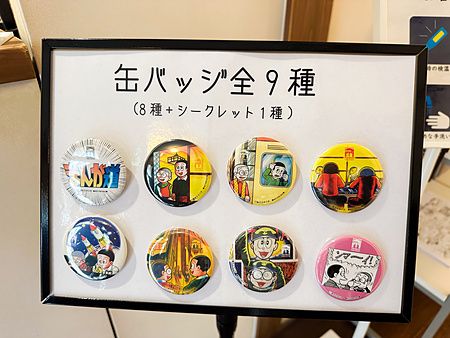
At the entrance there’s a board with nine metal pins showing classic scenes by the artists who lived here, and you get to take one.
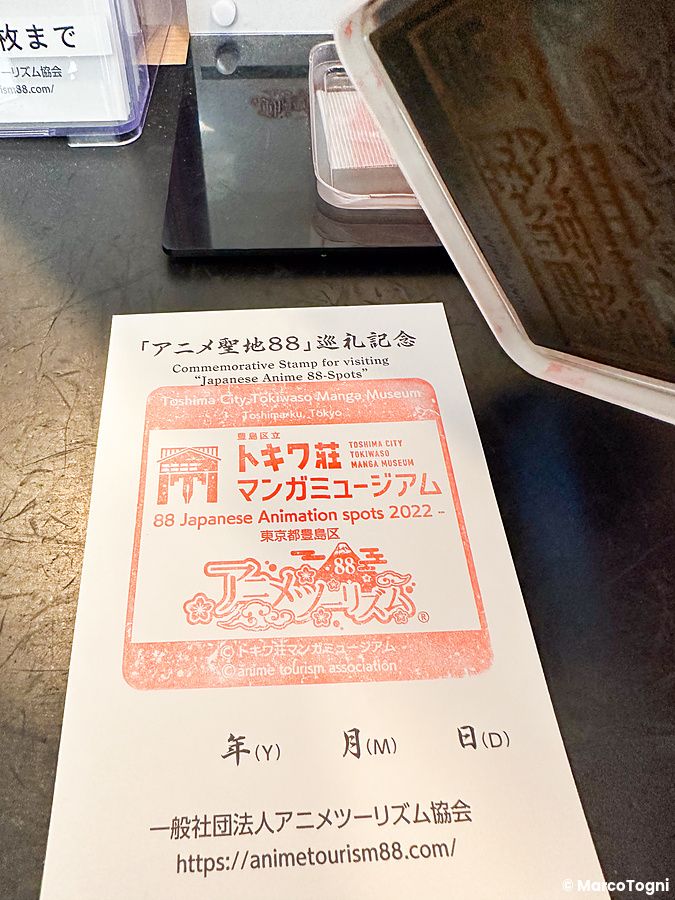
There’s also a commemorative stamp, part of the nationwide network of anime-related spots: you get a sheet, stamp it in red and take it home. The staff are friendly and happy to explain things, and some of them speak English.
You can’t take photos on the ground floor, but upstairs you can.
The best shot is from the far end of the upstairs hallway, with the open doors in a row and the windows backlit. Outside, the shot to get is of the building from the park, with the vertical sign in the foreground.
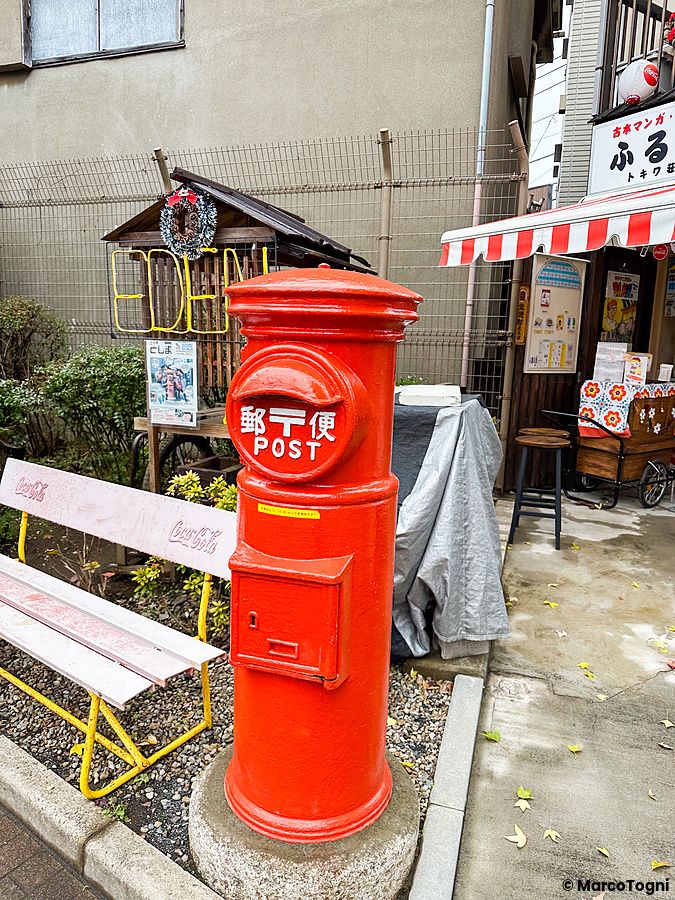
Next to the entrance there’s also an old cylindrical red mailbox, with a bench beside it.
At a glance
- The highlight: the upstairs, rebuilt as it was, with the rooms, the hallway and the kitchen.
- When to go: weekday mornings; Saturdays, Sundays and holidays get much busier; fine on rainy days too.
- Best for: manga readers, anyone curious about how the artists worked, and anyone looking for an afternoon away from the usual spots.
- Atmosphere: creaky wood, dim lights, a few people at a time, everyone talking quietly.
Is it worth it?
You don’t come here for the amount of stuff on display, because there isn’t much. You come to stand in a wooden hallway and see what a cramped hole these artists worked in, the same artists who now have museums dedicated to them all over the world. If you read manga, it’s worth the detour out here, no question.
If you don’t read Japanese comics, it’s a different story: without those names in your head, all you get is bare rooms, and there are a hundred better ways to spend your time in Tokyo.
Getting There
The easiest way is the subway: get off at Ochiai-minami-nagasaki Station, take Exit A2, and in about 5 minutes on foot you'll reach Minami-Nagasaki Hanasaki Park, where the museum is.
If you're coming from Ikebukuro on the Seibu line, get off at Higashi-Nagasaki and walk about 10 minutes from the South Exit through the residential streets.
Useful Info
During special exhibitions: 500 yen for the whole museum (100 yen for elementary and junior high school students)
- Ochiai-minami-nagasaki Station (Toei Oedo): Exit A2
- Higashi-Nagasaki Station (Seibu Ikebukuro): South Exit
- You can also get there by bus from Ikebukuro, Mejiro and Shinjuku (Minami-Nagasaki 2-chome stop)
Map
This place is on MarcoMaps
Tokiwaso Manga Museum
My map of Japan: over 4,000 places I've tried myself, each with photos, rating, and hours. Filter by category and rating, find veg-friendly spots and places near you with GPS. No sign-up, right from your phone.
- 4,000+ places
- Rating, photos, and hours
- Veg friendly
- Near me (GPS)
- Favorites without login
- Works offline

