310 m
Don Quijote310 m
Open 24 hours, and you can find anything.
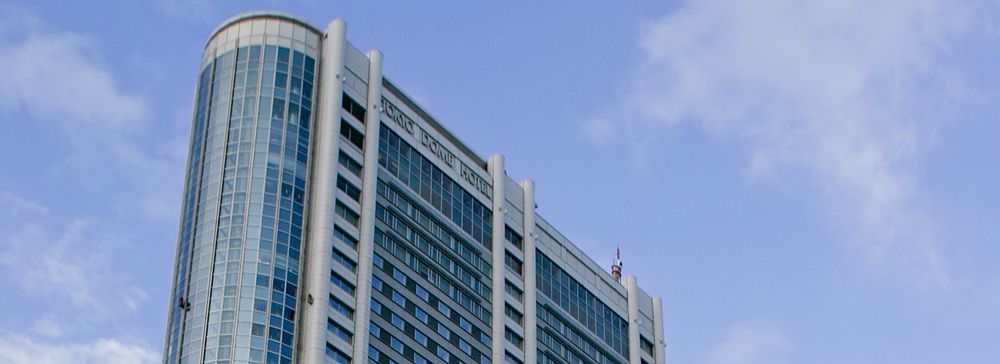
A big hotel in a skyscraper in Tokyo’s Bunkyo ward, right next to Tokyo Dome, where you can see the whole city from the upper floors and wake up to skyscrapers outside the window. The Tokyo Dome Hotel is the place I recommend to anyone who wants a bright room on a high floor in central Tokyo.
It works for couples, for people spending a few days in Tokyo who want to stay central but away from the chaos of Shinjuku, and for anyone who wants to treat themselves to a night with the city at their feet without emptying their bank account.
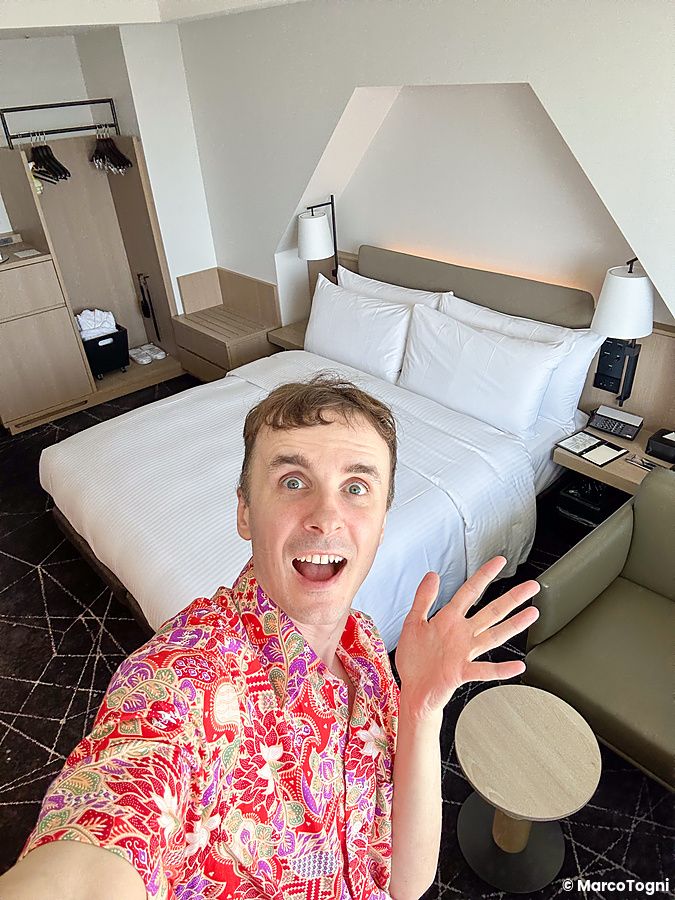
I booked the Premium Room Queen, which guarantees you a room between the 35th and 38th floors, and I got 3618, on the 36th. It’s a room for two, about 26 square meters. It isn’t big, but it’s well laid out, with light wood, dark carpet with a geometric pattern, a double bed with white sheets and an armchair.
The closet has no doors and is big enough for two people with a normal amount of luggage. Open two large suitcases at the same time, though, and they take up almost all the free floor space.
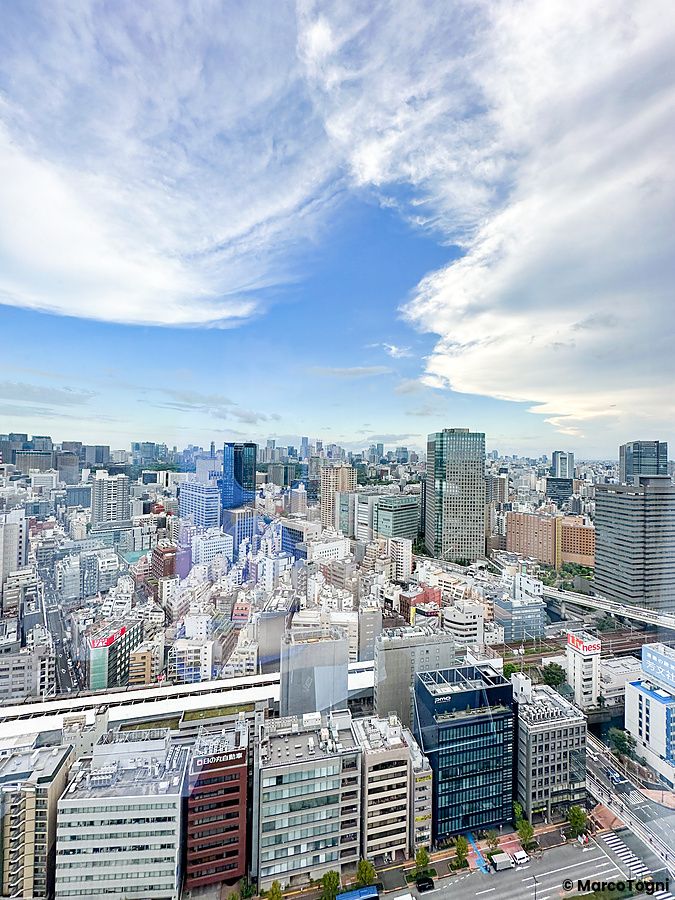
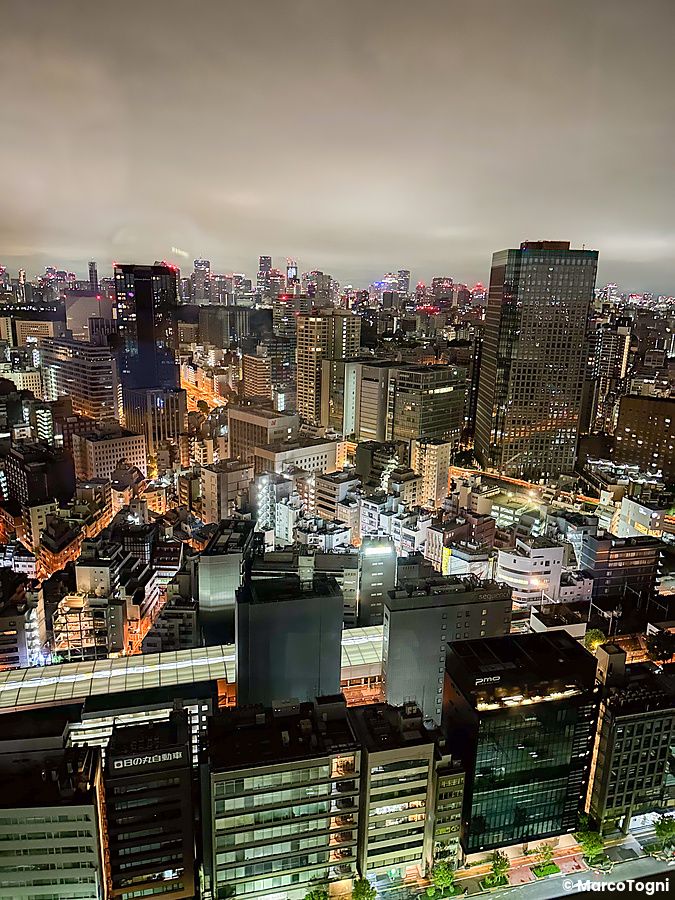
The window fills the entire far wall, and that’s where you see why the high floor costs extra. Below you, buildings and streets spread all the way to the horizon, with the towers of central Tokyo rising further off. On a clear day you can pick out the neighborhoods one by one. At night the same view turns into a sea of lights, and you lose any urge to turn on the TV.
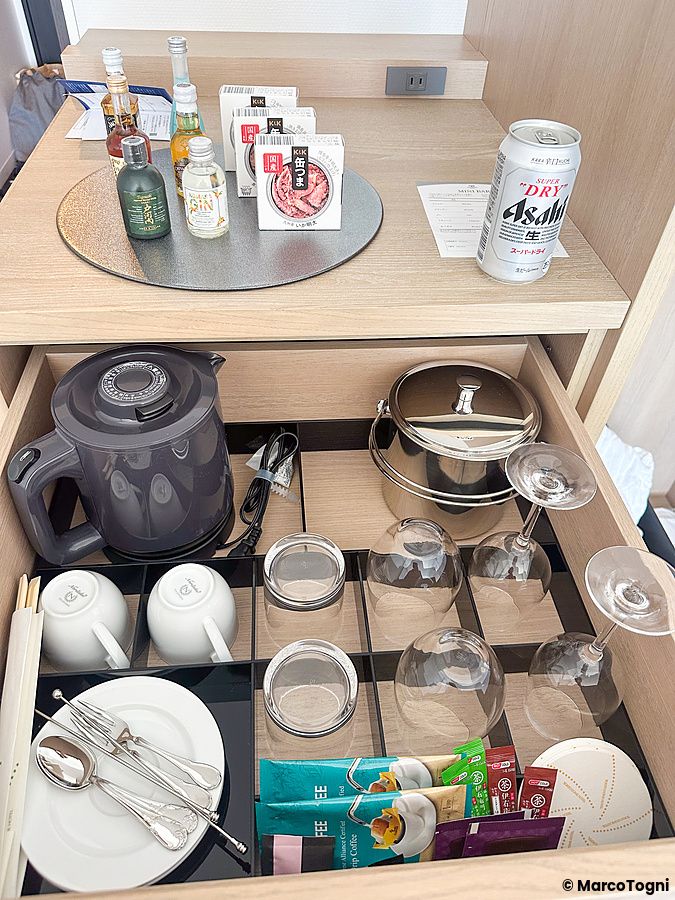
The minibar area is what really sets these rooms apart from the regular floors. On the counter there are miniature bottles of liquor, little boxes of snacks and a can of Asahi, and the drawer underneath holds the kettle, an ice bucket, cups, wine glasses, and tea and coffee packets. On the premium floors the minibar is included in the rate, so in the evening you can sit by the window with a cold beer without worrying about the bill the next morning.
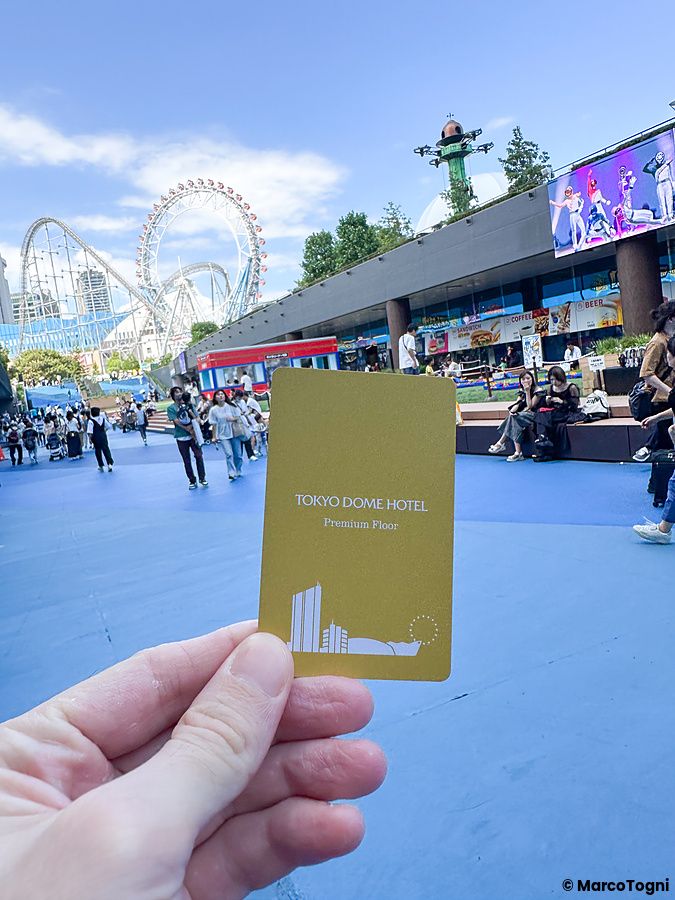
The bathroom amenities are from Panpuri, a Thai brand of natural products, in big green bottles next to the folded white towels. Your key card is gold. It’s a small detail, but it tells you right away that you’re on a different floor from everyone else.
Here’s how the rooms break down:
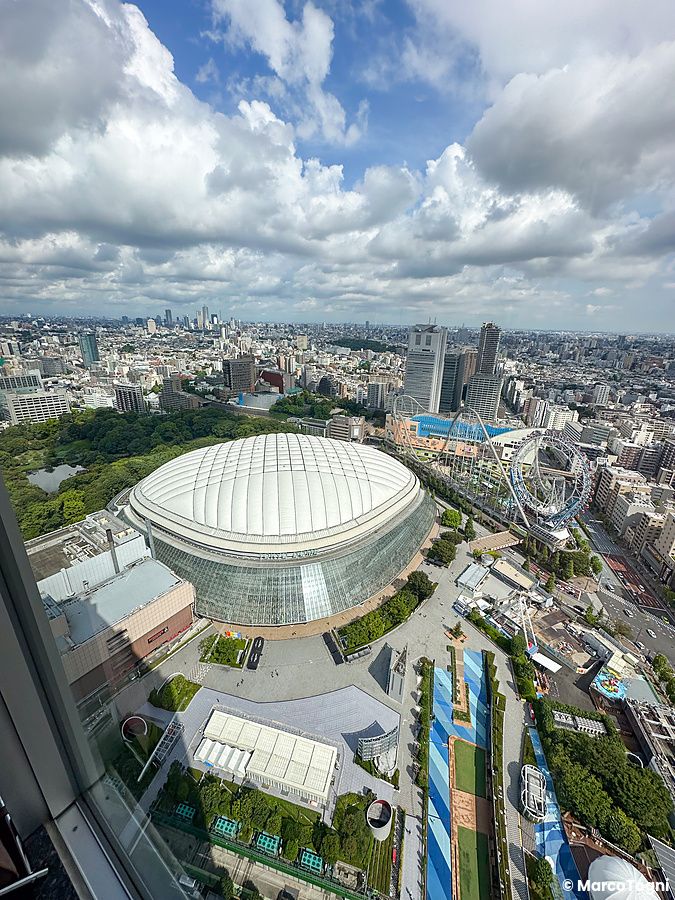
Every room looks out from one of the tower’s two sides, north or south. The north side looks out on Tokyo Dome, the Ferris wheel and the amusement park’s roller coasters, while the south side looks toward the Imperial Palace, the Marunouchi skyscrapers and, on clear days, the ones in Shinjuku. If you have a preference, say so when you book. The south side has the widest view, and the north side puts the Dome and the lit-up amusement park right in front of you.
On the standard floors the view depends a lot on how high up you are. Below the 20th floor you may end up facing other buildings, so it’s worth asking for a high floor there too. This isn’t a hotel for people who want tatami and a traditional Japanese feel. It’s styled like a big modern city hotel: understated, with wood and dark fabrics.
Prices are in the upper-midrange, but they swing a lot with the season and with what’s on at the Dome. In quiet weeks the premium room costs less than you’d expect for a room that high up in central Tokyo, while during concerts and big games prices go up quite a bit. I recommend booking early and avoiding cherry blossom season, Golden Week, Obon and New Year’s.
When I need a place to stay in Tokyo and want to open the curtains in the morning and look out over the city’s rooftops, it’s the first hotel I check. The premium room isn’t as big as a suite, but I haven’t found anywhere else that gives me a high floor, an included minibar and breakfast on the top floor at this price.
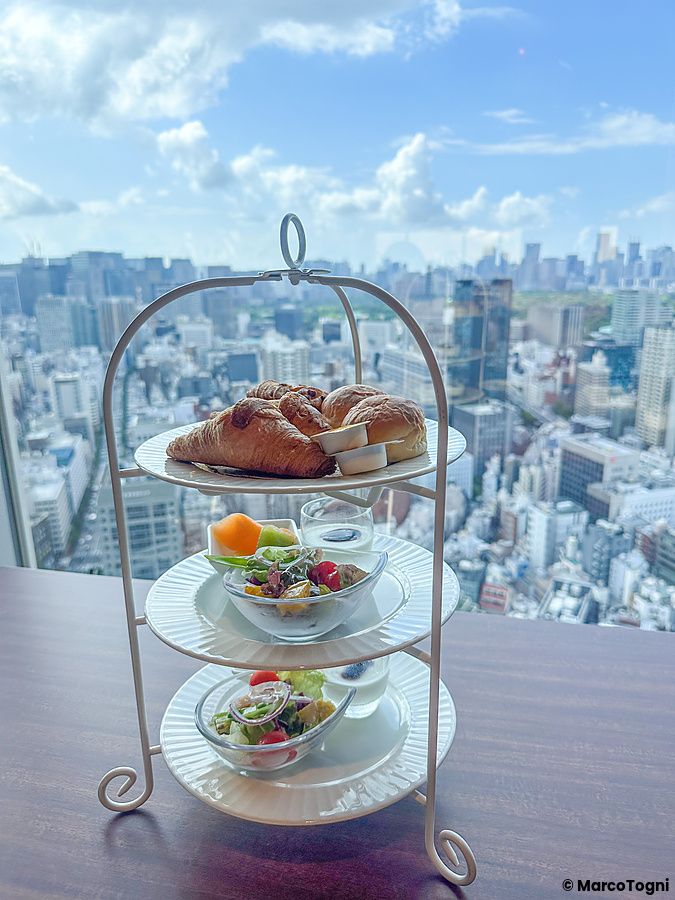
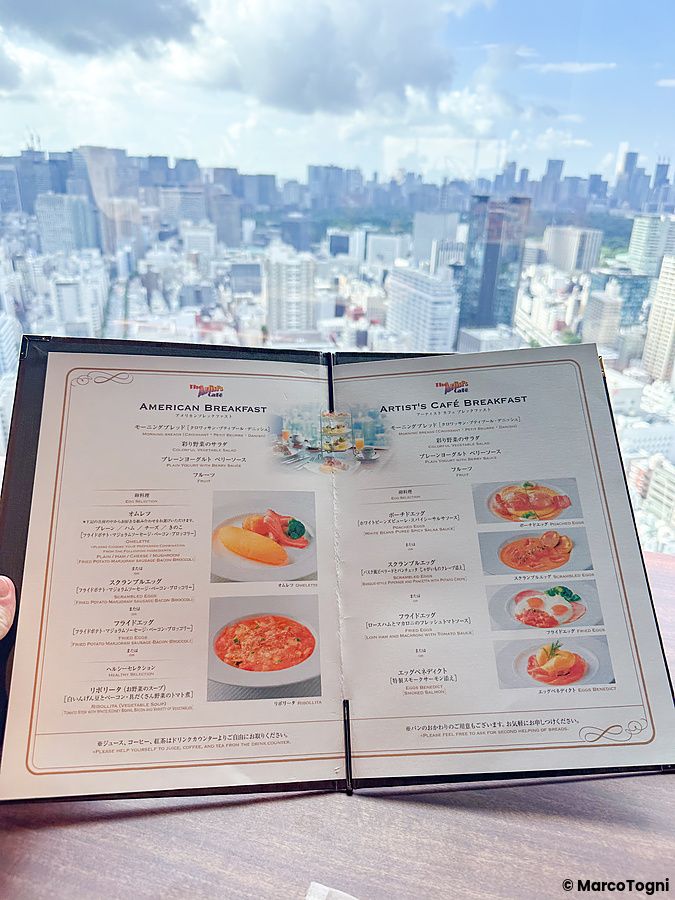
With the premium room, breakfast is at the Artist Cafe, the top-floor restaurant, and that alone is a good reason to book it. You sit at a table by the windows and order your main dish from the menu (omelet, eggs done several ways, soup). Shortly after, a three-tier stand arrives with croissants, bread, salad and fruit, plus yogurt. Breakfast is served at your table rather than set out as a buffet, so there’s no lining up with a tray and no filling your plate in a rush.
You take your time over breakfast with the view in front of you, and that’s the part of the stay that sticks with you most.
If you’re on a standard floor or prefer a buffet, there are other places to have breakfast. The biggest is Rilassa, on the third floor. It’s a huge room with large windows facing Tokyo Dome and a wide choice of Japanese and Western dishes, and it’s very popular with families because everyone can take what they want. Premium guests can choose another restaurant too, so if you feel like a buffet one morning, head down there.
The hotel has quite a few restaurants: the Rilassa buffet, a Kyoto-style restaurant, a steakhouse, a yakiniku restaurant, the French restaurant Deux Mil, and the bar. They’re not the reason to choose the Tokyo Dome Hotel, but in the evening, if it’s raining or you get back tired, you can eat well without going out.
The one place worth going up to at least once is the bar on the top floor. From its windows you look down on the stadium, with its white roof, the gardens and the buildings all around it. A drink up there before dinner is the best way to get a sense of where you are.
If you care about working out, there’s also a gym. Guests on the premium and executive floors can use it at no extra charge, and it’s only open to adults 18 and over. There’s no pool, spa or onsen, though. If a Tokyo hotel means a hot bath in the evening for you, you won’t find that here.
Hotels with over a thousand rooms handle their guests in their own way, and this one is no exception. The staff are friendly, speak English and sort things out quickly, but don’t expect them to call you by name or walk you to your room the way they would at a small luxury hotel. This is a huge hotel and it runs like one, with the lobby always full of people.
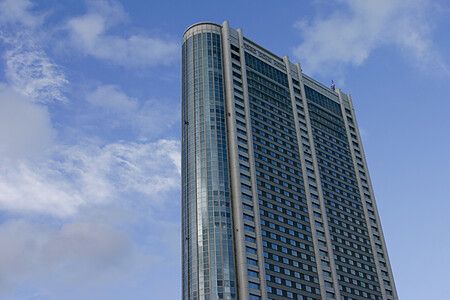
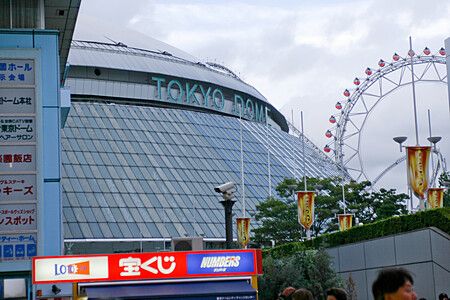
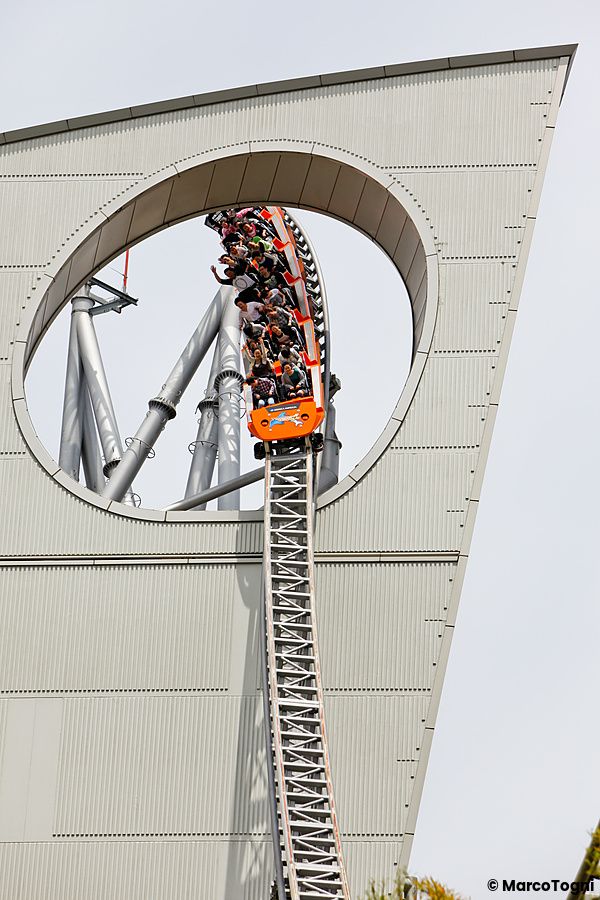
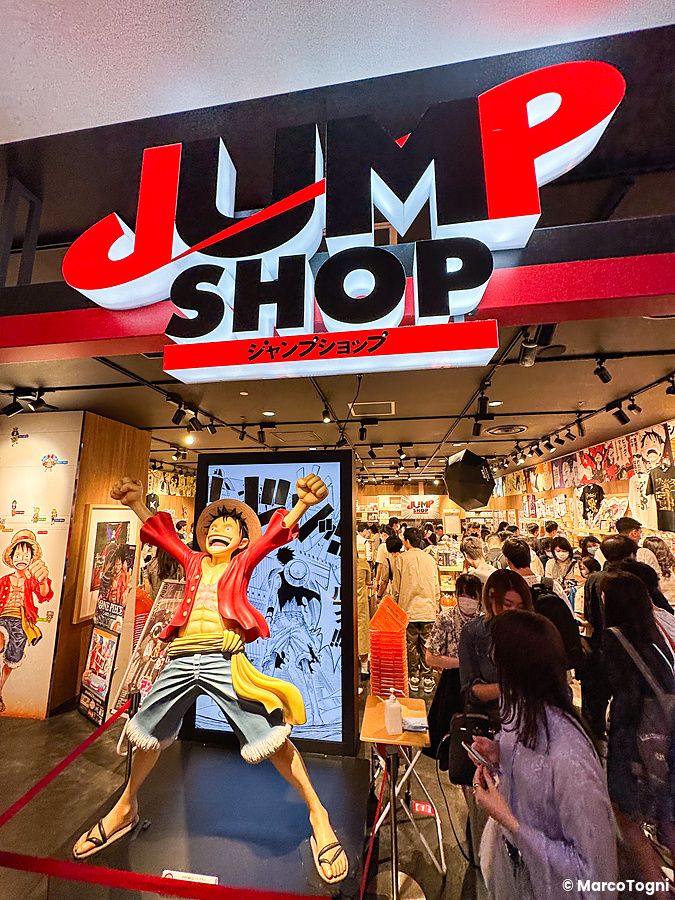
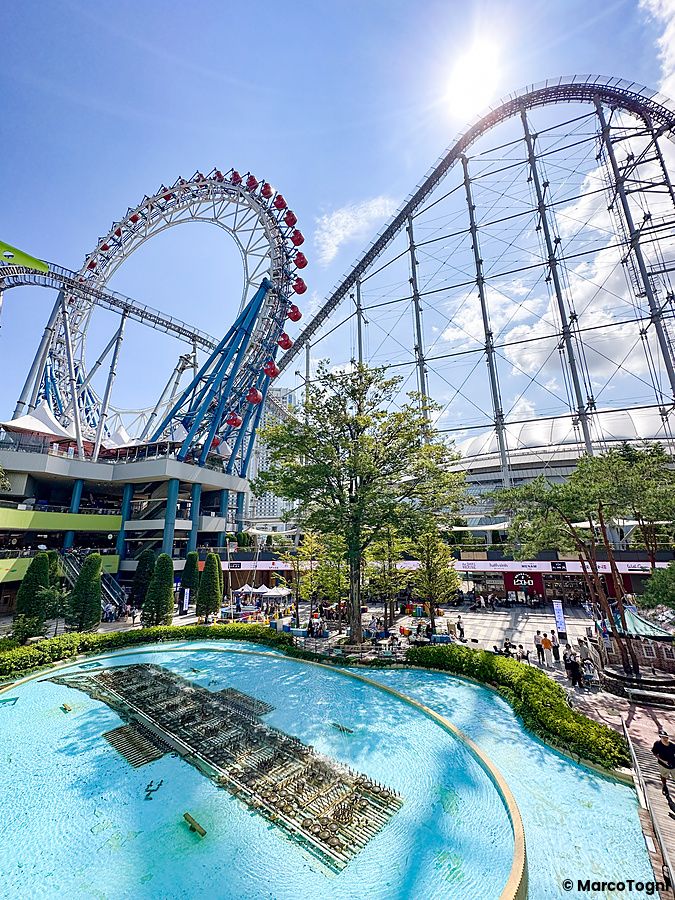
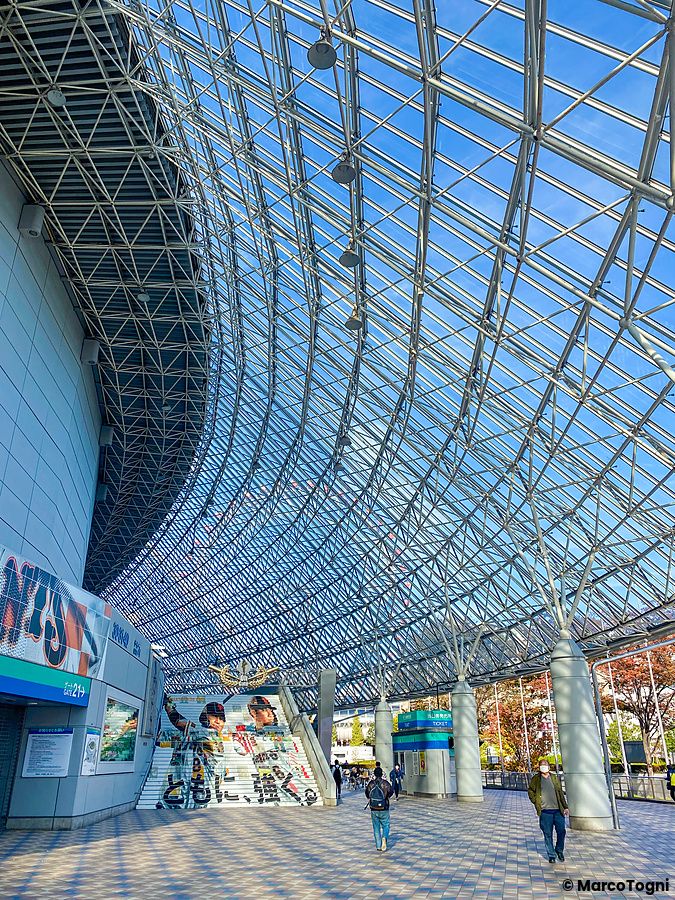
The hotel is part of Tokyo Dome City, the complex that grew up around the domed stadium where the Yomiuri Giants play and where the big concert tours play too. When you walk out the door, you’re surrounded by the white dome, the fountains and pools of blue water, the shops, and the amusement park, whose roller coasters run between the buildings and through the ring of the LaQua mall. There’s also the Jump Shop, the official store for Shonen Jump manga, with a life-size statue of One Piece’s Luffy at the entrance.
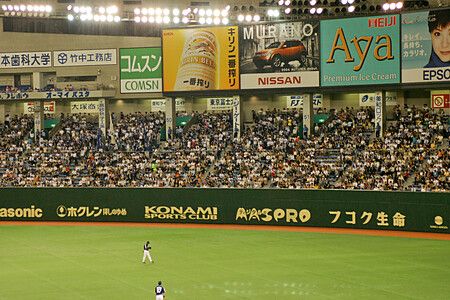
If you can get a ticket for a baseball game, go and see the crowd: thousands of fans dressed in orange, singing through the entire game. On game or concert days the area gets packed, and you feel it in the hotel lobby and elevators.
In the evening, once the stadium closes, the area quiets down. Restaurants and bars are clustered around the station, with izakaya, ramen shops and cheap chains where you can eat without a reservation, while the streets around the tower empty out and you come back to somewhere quiet. Up in your room the city stays lit, but no noise reaches you from below.
If you stay here, I suggest heading out early one morning to Koishikawa Korakuen, the garden right next to the complex. It’s one of Tokyo’s oldest gardens, dating from the 17th century, with ponds, little stone bridges and a path that loops around the water. It’s beautiful with the red leaves in fall and the plum blossoms at the end of winter, and seeing the roller coasters through the trees is strange and fun at the same time.
Pros:
Cons:
Ideal for: couples and travelers who want a room on a high floor in central Tokyo without paying what the best-known luxury hotels charge
Atmosphere: a glass tower above the amusement park, rooms in light wood and dark tones, a packed lobby on game days
Room to ask for: Premium Room Queen, south side if you want the widest view
What stays with you when you leave the Tokyo Dome Hotel is the light changing over the city as night turns into day. The Marunouchi towers go dark one by one, the first lights come on in the windows of the buildings, and the trains start running again between the houses. You watch it all from the armchair by the window, with a cup of tea made with the room’s kettle, before going up to breakfast.
Then you head downstairs, walk through the garden while it’s still empty, and your day starts as calmly as a day in Tokyo can. Book yourself a night on the upper floors of this tower. You’ll thank me early in the morning, standing at the window.
From JR Suidobashi Station, take the East Exit. The hotel tower is across the street, and a couple of minutes later you're in the lobby, which makes it easy even with luggage.
If you're coming by subway, the Toei Mita Line exit at Suidobashi is a one-minute walk. From Korakuen, you cut through Tokyo Dome City past the Dome itself, which takes about 5 minutes.
This place is on MarcoMaps
Tokyo Dome Hotel
My map of Japan: over 4,000 places I've tried myself, each with photos, rating, and hours. Filter by category and rating, find veg-friendly spots and places near you with GPS. No sign-up, right from your phone.


Tokyo Dome Hotel - nearby you will find: