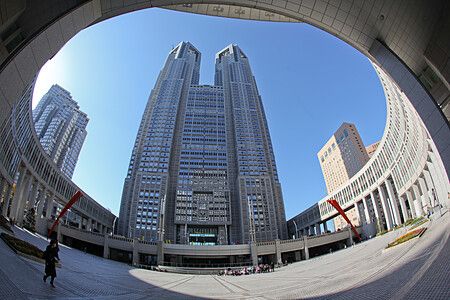
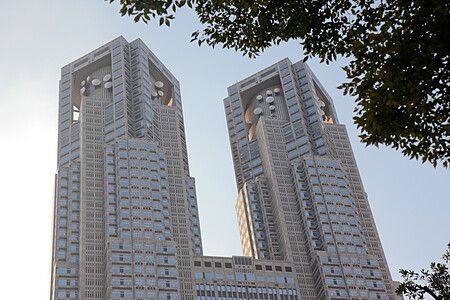
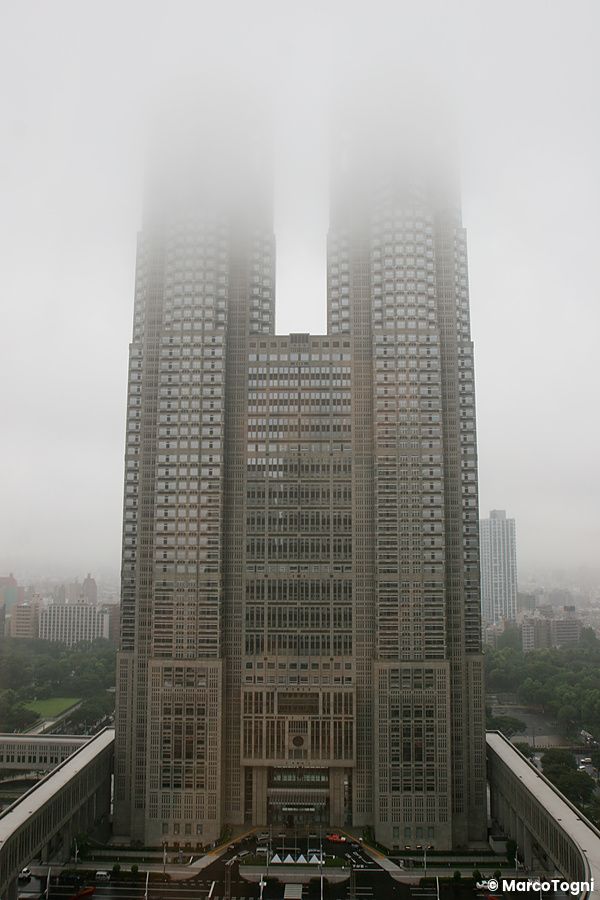
This is essentially Tokyo’s city hall, though whatever you picture when you hear “city hall” probably doesn’t match this huge two-tower building designed by Kenzo Tange.
It’s one of the city’s symbols, so it turns up in a lot of films. The opening scenes of Tokyo Decadence, for example, include a moving shot of it that’s as striking as it is realistic.
Building No. 1 was completed in 1991, and at 243 meters it was Tokyo’s tallest skyscraper for years, until Midtown Tower came along in 2007. It rises as one solid block up to the 33rd floor, where it splits into the twin towers you’ll recognize from much of Shinjuku.
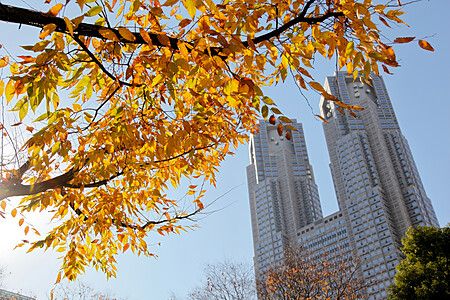
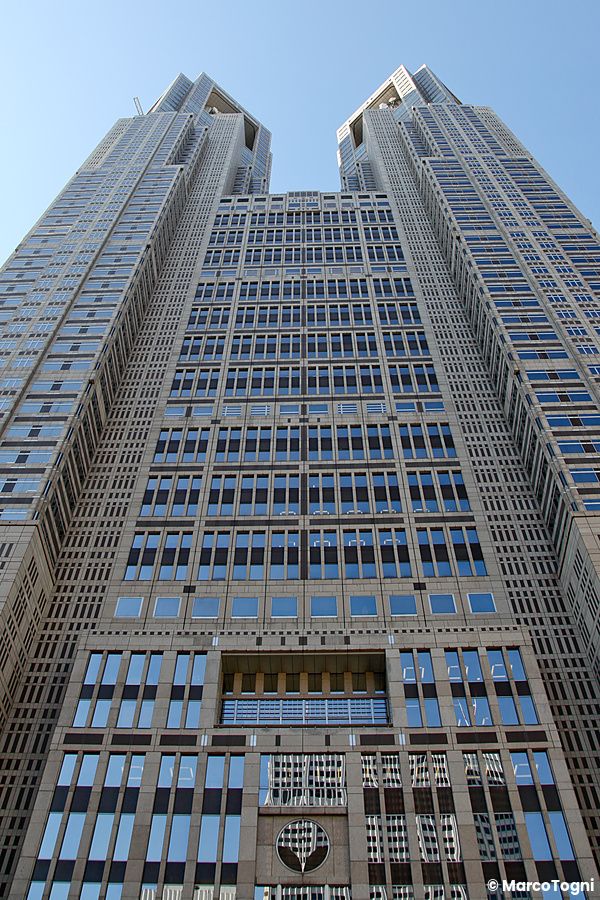
Tange’s design draws on two references. The pattern on the facade resembles the traces on an integrated circuit, while the silhouette of the two towers echoes a Gothic cathedral. The observation decks are on the 45th floor, 202 meters up, one in each tower.
You’re probably here for what’s at the top: each tower has an observation deck open to the public, where you can take in the view of the city from above.
Getting There
The most direct way is the Oedo Line. At Tochomae Station, Exit A4 brings you out practically underneath the building, and you're in the lobby in a couple of minutes. If you're coming from Shinjuku, take the West Exit and head toward the skyscrapers. It's about a ten-minute walk, and when it rains you can do almost all of it through the underground passage to the office district.
Once you're inside, don't just line up at any elevator. The observation decks have their own dedicated elevators, one for the North Tower and one for the South Tower, and they leave from the ground floor.
Useful Info
Name: Tokyo Metropolitan Government Building
Cost per person:Free admission to both observation decks
Time needed: I'd allow 45 minutes to take in the view from one observation deck. Plan on 1.5 hours if you want to see both and look around the tourist information center.
Closed: The North Observation Deck is closed on the second and fourth Monday of the month and the South one on the first and third Tuesday. If that day is a national holiday, the closure moves to the following day. When one of them is closed, the other stays open later, into the evening. Both are closed over the New Year holidays, from December 29 to January 3, except on January 1.
Tips: If you're only going up once, pick the observation deck that's open in the evening and get there shortly before sunset. Within an hour you'll see the city in full daylight, then the sky changing color, and then the sea of lights, without having to wait in line a second time.
Getting there:
Tochomae Station (Toei Oedo): Exit A4, connected to the building
Shinjuku Station (JR, Odakyu, Keio, subway): West Exit, about 10 minutes on foot
Nishi-Shinjuku (Marunouchi) and Shinjuku-nishiguchi (Oedo) stations are also close by
Address: 2-chome-8-1 Nishishinjuku, Shinjuku City, Tokyo 163-8001, Japan
My map of Japan: over 4,000 places I've tried myself, each with photos, rating, and hours. Filter by category and rating, find veg-friendly spots and places near you with GPS. No sign-up, right from your phone.
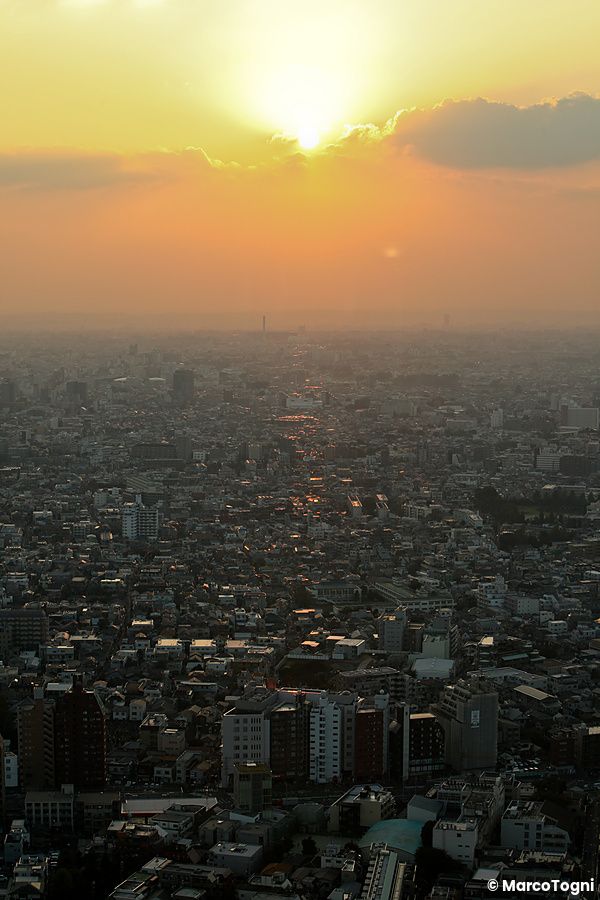
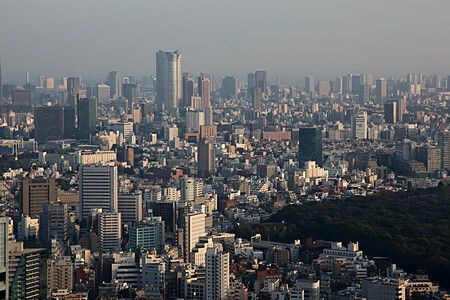
From the 45th floor you can see across half the city. To the east you’ll pick out the red silhouette of Tokyo Tower and the tip of the Skytree, and closer in you can make out the green patch of Meiji Jingu and the white dome of Tokyo Dome.
The real highlight is to the west, though. On clear days, especially in winter, Mount Fuji appears on the horizon beyond the sprawl of rooftops. When it’s hazy, it disappears completely and all you’ve got in front of you is skyscrapers. It’s worth checking the weather and going up on the right day, because the difference is huge.
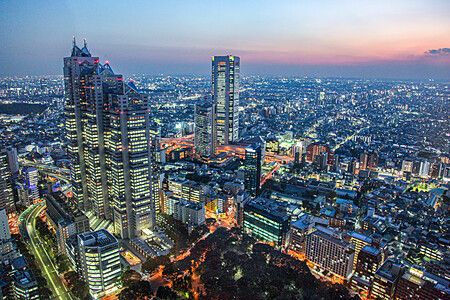
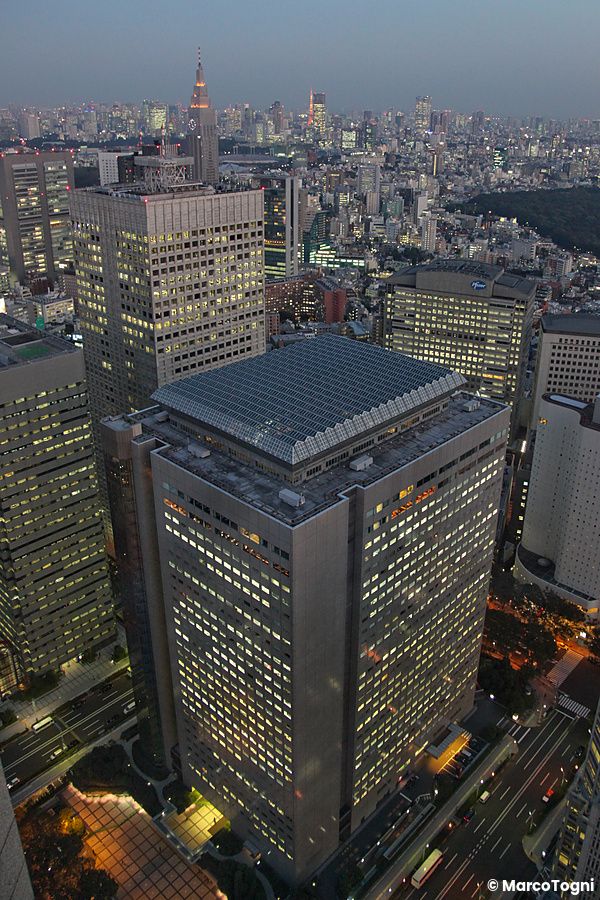
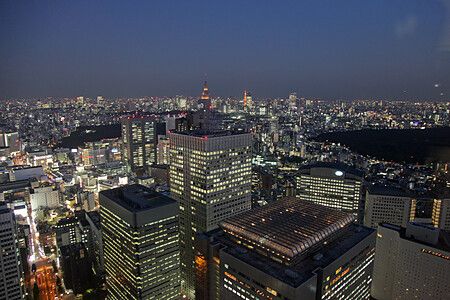
At night the neighborhoods turn into a web of roads full of moving traffic. The sodium lights contrast sharply with the blue of dusk.
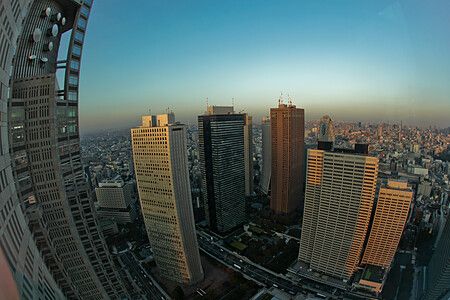
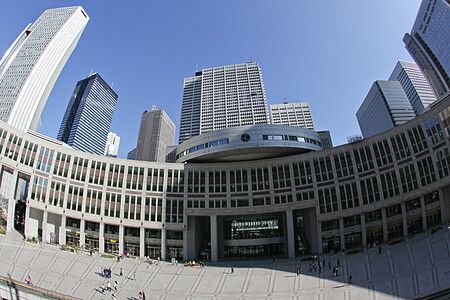
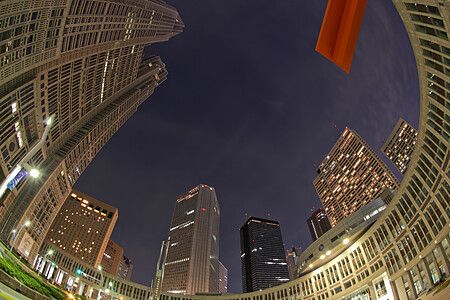
Shooting with a fisheye lens from the middle of the paved plaza brings out the curves of the space. Be careful not to get in the way of the workers passing through.
The sun sets right behind the buildings to the west. Use exposure compensation so your shots don't come out completely black.
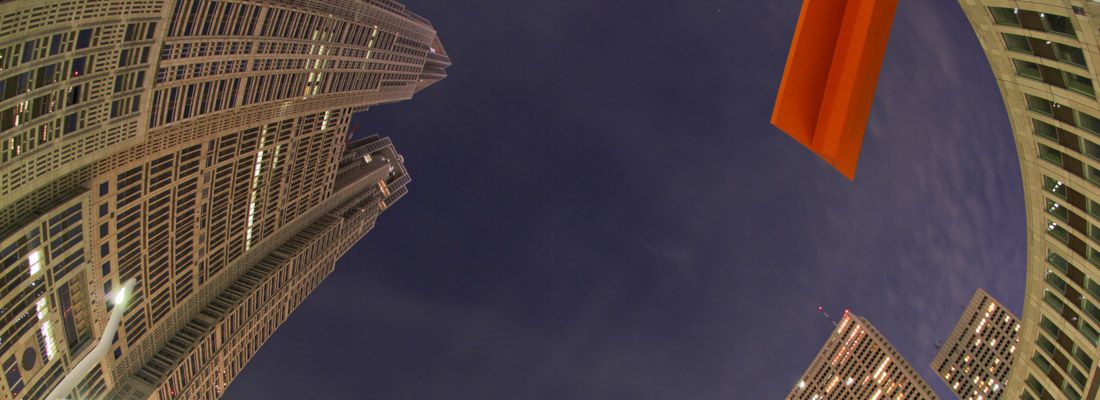
Look straight up to appreciate the perfect symmetry of the facades. The prefabricated panels reflect the midday light.
After dark, the lit windows give Tokyo a different sense of scale. Hold the camera steady to avoid the slight blur caused by the thick glass.
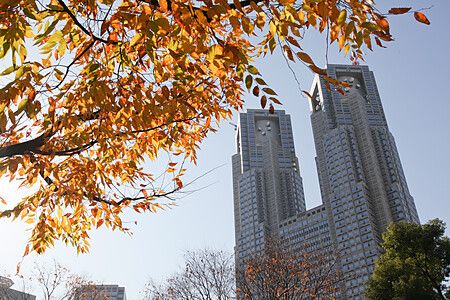
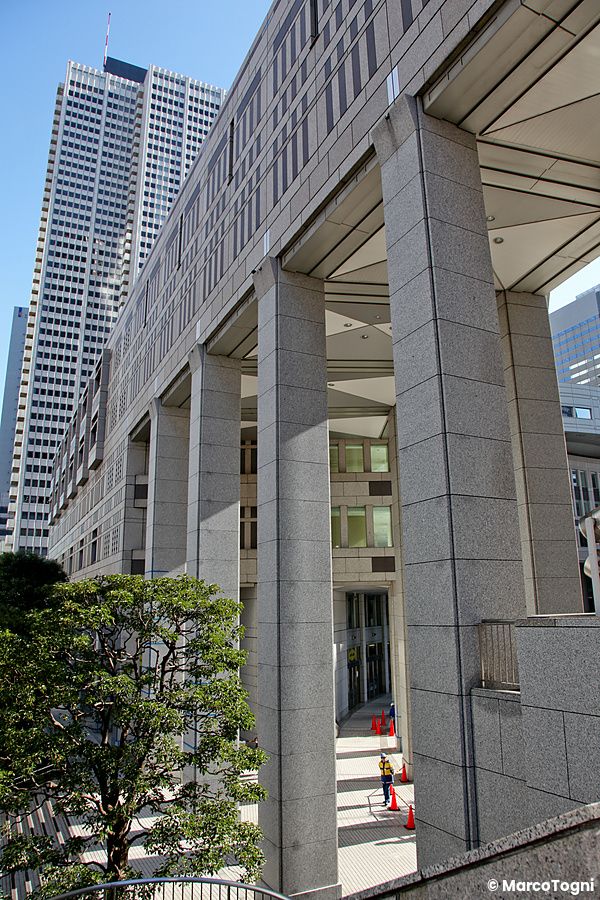
The contrast between the gray of Kenzo Tange's architecture and the autumn leaves makes for great shots without leaving the plaza.
Pressing the lens against the glass gets rid of annoying reflections from inside the deck. A wide-angle view lets you follow the network of streets below.
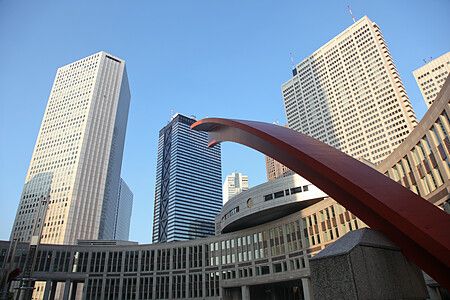
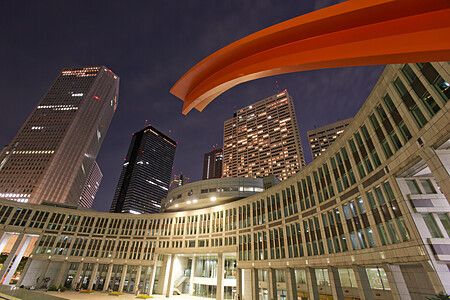
The red arch gives you a handy sense of scale against the dizzying heights. It also helps you set the exposure before framing the sky.
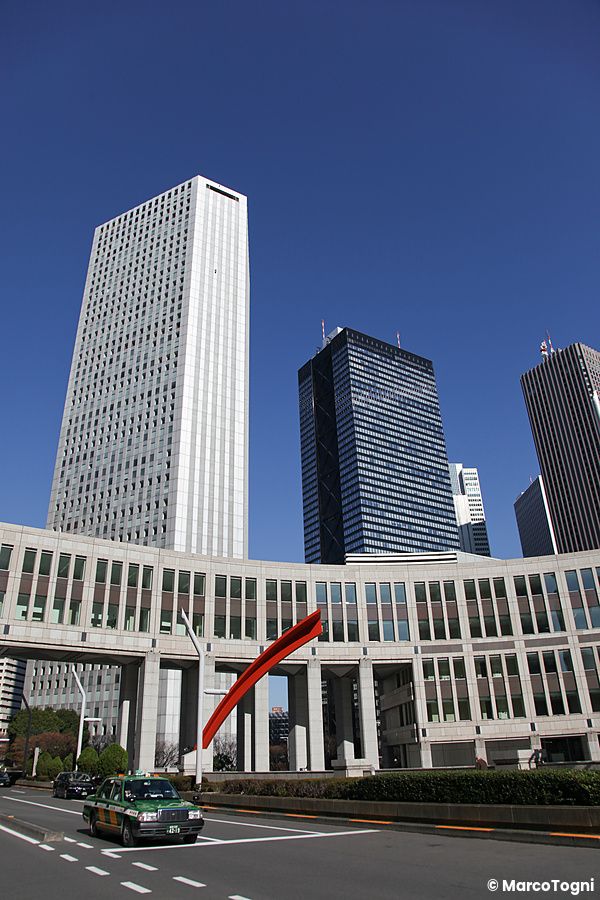
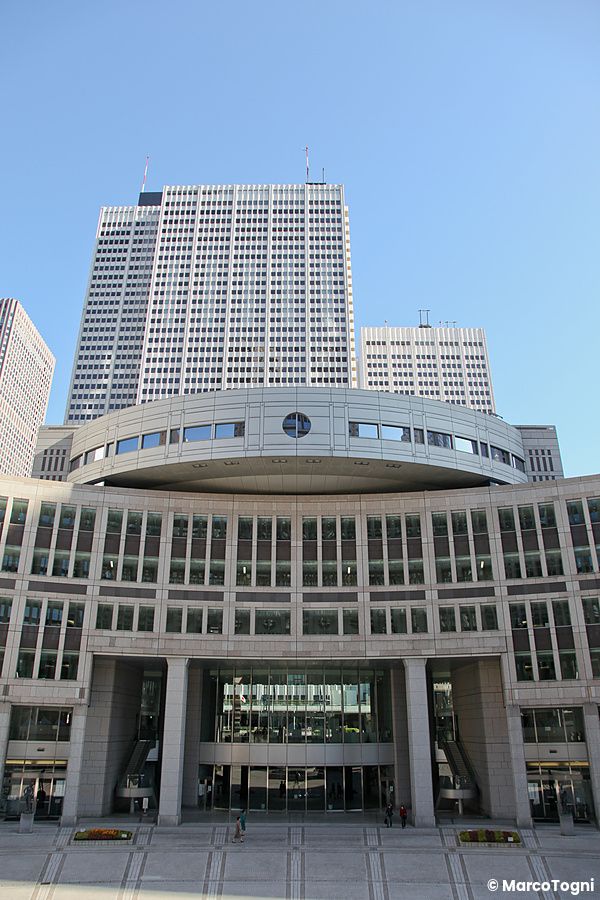
The curved section linking the building's wings is where the taxis pull through. Keep an eye on your surroundings while you look for the best angle.
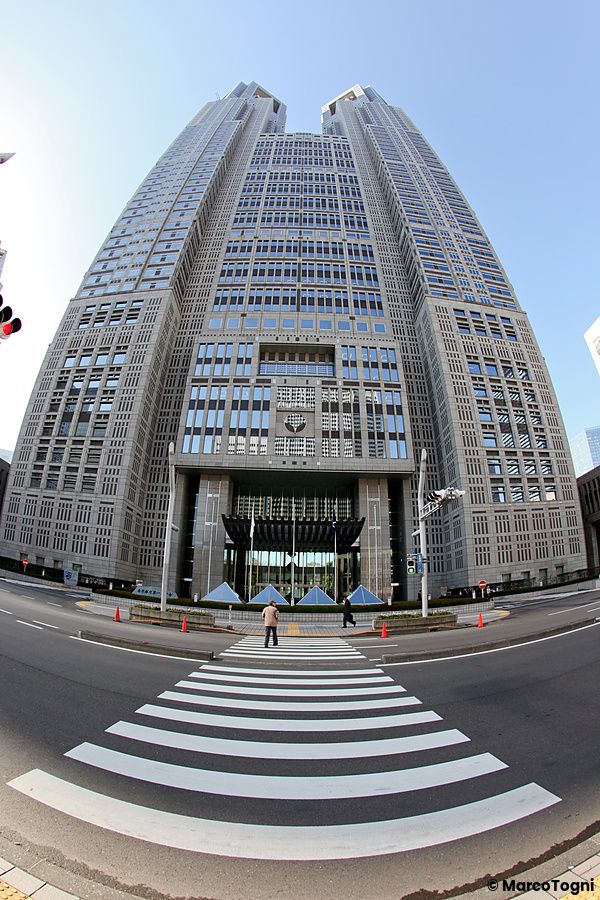
The massive stone twin towers dominate the Shinjuku skyline. To fit the whole building in from below, you need an ultra-wide lens.
The large metal sculptures break up the monotony of the concrete at ground level. They make handy meeting points if you get separated from your group.
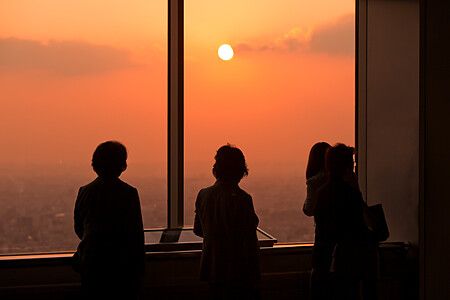
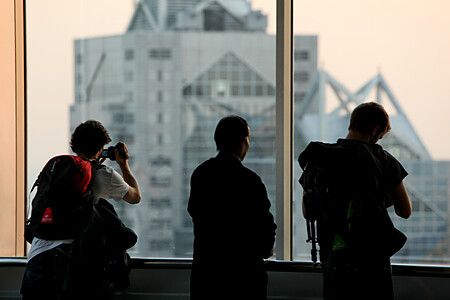
Waiting for sunset and shooting into the light gives you sharp silhouettes. Be patient, because the spots right up against the windows free up quickly once it gets dark.
Walking under the massive portico, you get a feel for the building's real scale. The cones mark off areas where cleaning is underway.
The main glass entrance is the public entrance. The lines for security screening form right under this wide structure.
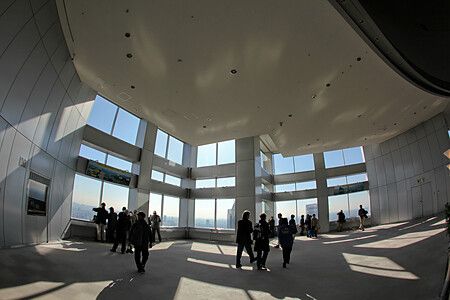
The observation deck's large hall is lined with big windows all the way around. Walk the whole loop to find the side with the least glare.
The crosswalks lead straight to the entrance. At rush hour there's a constant stream of office workers through this area.
Toward sunset a thick golden haze fills the western horizon. You need a very clear sky to spot Mount Fuji's silhouette at this hour.
The semicircular plaza at the base channels the flow of employees and visitors. It's the ideal spot to get your bearings before going up.
Use the branches of the surrounding trees to frame your shot. It's a useful way to break up the rigid geometry of the mirrored facades.
The low late-afternoon light casts long shadows across the surrounding rooftops. It's the best time of day to get a sense of the city's depth.
Look south to find Roppongi Hills' cylindrical tower. The green patches of the parks stand out among all the residential buildings.
On hazy days the tops of the skyscrapers disappear into the clouds. In these conditions there's practically no view.
The metal emblem in the middle of the structure represents the administrative office. Point your lens upward to isolate the geometric lines.
The café inside has seats where you can take a quick break. In the middle of the day, the reflections on the floor show which areas get the most sun.
Back down in the plaza, the building's geometry looks different. The lights still on upstairs are a sign of long evening shifts in the offices.
The metal sculptures at the base stand out strongly against the dark. The building's architectural lighting makes handheld shots easier.
On evenings without haze you can clearly make out the outline of Tokyo Tower. Brace your camera against the window frame as a makeshift tripod.
After sunset the building’s facade turns into a screen. The show is called Tokyo Night & Light and runs every evening, with several showings a night, each a few minutes long. It holds the Guinness World Record for the largest architectural projection in the world.
The images cover the wall from the fourth floor up and the projections change, so if you come back on a different evening you’re likely to see something new.
You watch it standing in the plaza in front of the building, the same area you pass through on your way up to the observation decks, so you can easily do both on the same visit. In the colder months it gets dark much earlier, and the wait between coming down from the observation deck and the start of the show shrinks to almost nothing.
Nearby
Tokyo Metropolitan Government Building - nearby you will find:
 223 m






 405 m
 422 m
 439 m
 497 m
 512 m