 366 m
Crony366 m
Eighteen courses and a green star.
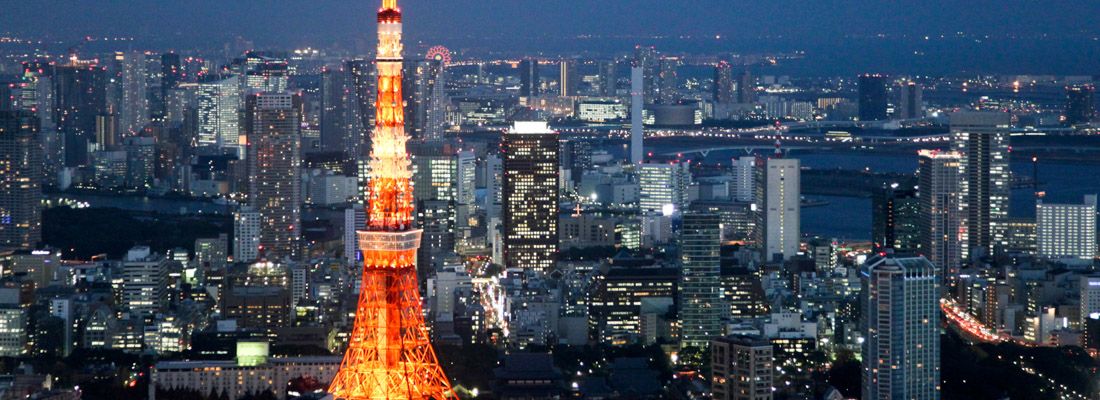
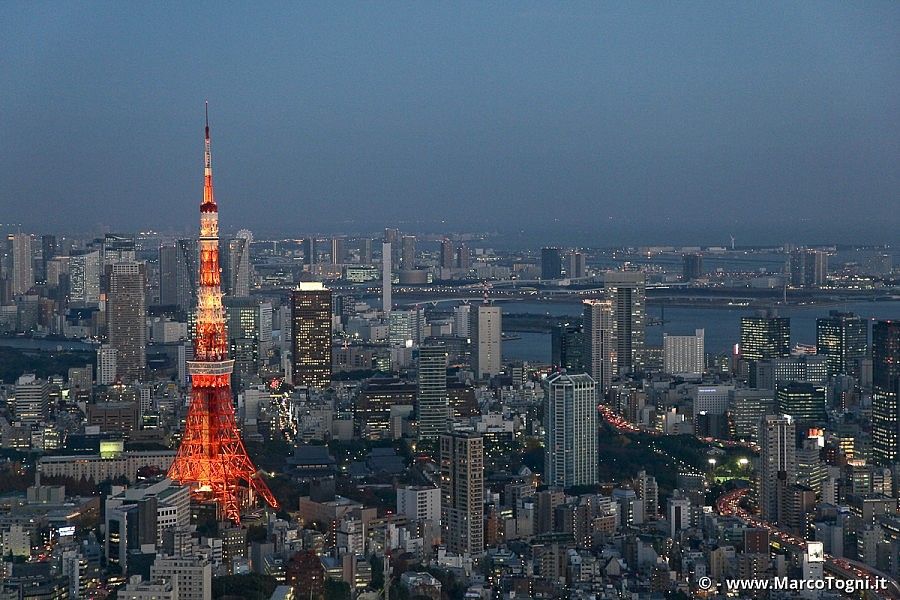
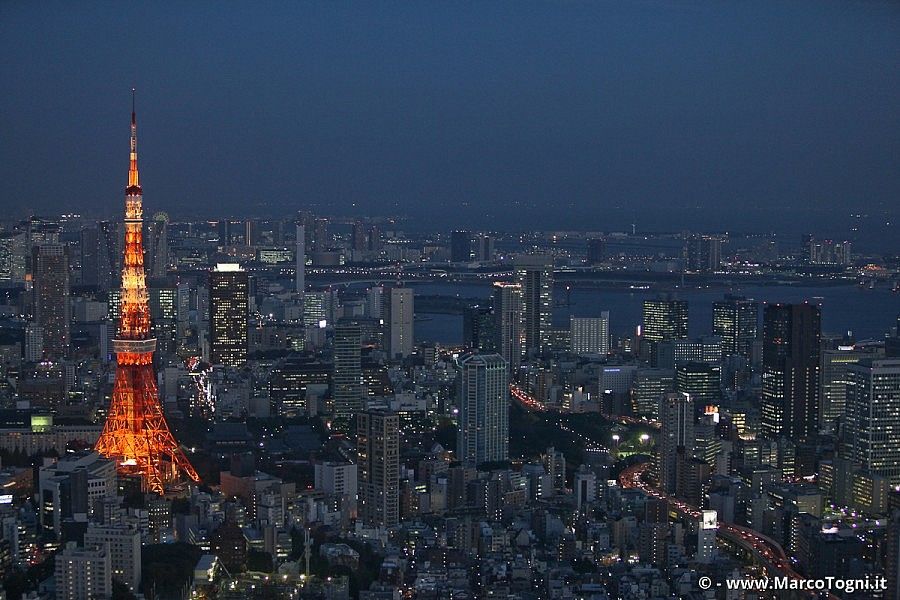
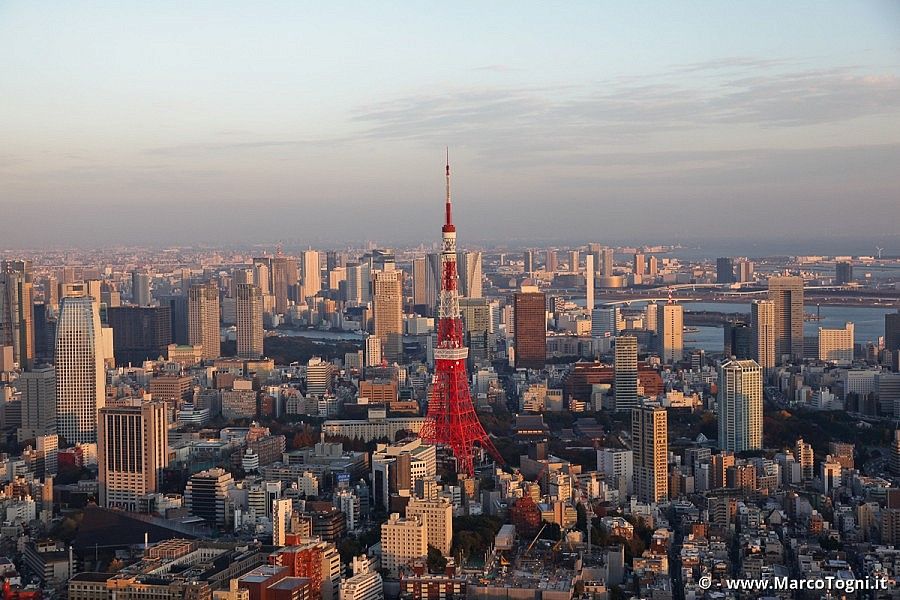
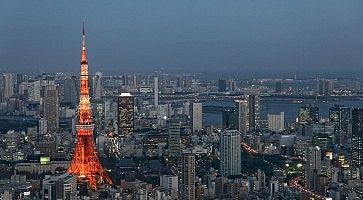
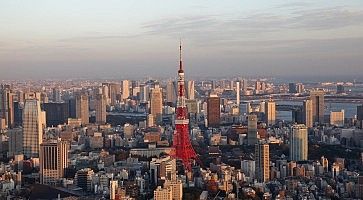
From Roppongi you can see a tower in the distance that looks a lot like the Eiffel Tower. With so many skyscrapers around it, Tokyo Tower looks shorter than the one in Paris at first glance, but it isn’t: Tokyo Tower is a few meters taller than the Eiffel Tower. At 333 meters, it beats it by just a handful of meters.
It was built as a transmission tower for radio and TV broadcasters. Over the last few decades, though, Tokyo has kept putting up very tall buildings, like Roppongi Hills not far away, and the tower’s signal could no longer reach far enough.
That’s why the Tokyo Sky Tree was built. It opened in May 2012, stands 634 meters tall and has areas open to the public at 350 and 450 meters, where you can shop, relax in cafés and restaurants and take in a great view. Since then the Sky Tree has broadcast Tokyo’s TV channels, and Tokyo Tower now serves as the backup transmitter.
You can see the tower from far away, so once you're out of the subway it's hard to head the wrong way. The most convenient stop is Akabanebashi on the Oedo Line: from the Akabanebashi exit it's a 5-minute walk, with the tower right in front of you the whole time.
If you're coming from Roppongi, take the Hibiya Line to Kamiyacho, use exit 1 and walk another 7 minutes.
If you're traveling on JR trains, get off at Hamamatsucho and cut through Shiba Park. It takes a good 15 minutes, but it's the nicest way in, with Zojoji Temple and the red tower in the same shot.
This place is on MarcoMaps
Tokyo Tower
My map of Japan: over 4,000 places I've tried myself, each with photos, rating, and hours. Filter by category and rating, find veg-friendly spots and places near you with GPS. No sign-up, right from your phone.


The view from the first deck is already very good, so there’s no need to pay more to go any higher. And if you’d rather not pay anything for a view, take a look at my guide to free things to do in Tokyo, where I suggest going up the Tokyo Metropolitan Government Building instead.
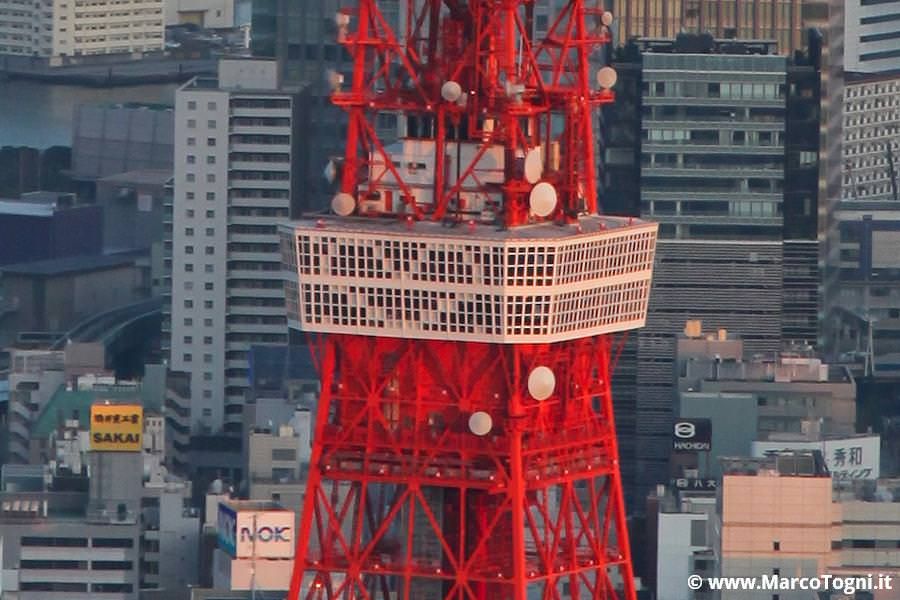
Tokyo Tower’s observation deck.
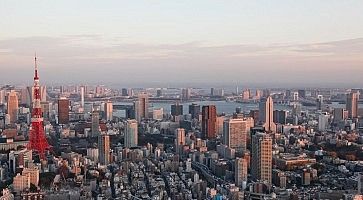
From the Main Deck, the first place your eyes go is straight down. Below you are the roofs of Zojoji Temple and the greenery of Shiba Park, a beautiful contrast with the skyscrapers all around them. As you walk around the deck you can pick out the bay with the Rainbow Bridge, the buildings of Roppongi and, far off, the thin outline of the Tokyo Sky Tree.
On clear winter days, when the air is cleaner, Mount Fuji shows up on the horizon too. It’s the view everyone hopes for, and in summer you very rarely get it.
The Top Deck is something else entirely: a small space full of mirrors and lights, where the angled glass reflects the view over and over. Visitor numbers are capped and you go up in small groups, so it never gets as packed as the deck below. During the day, though, the view isn’t that different from the one on the 150-meter deck. It’s in the evening, with the city lit up all the way to the horizon, that you really feel those extra hundred meters.
The building at the base of the tower has four floors. On the first floor you’ll find the ticket counter for the observation decks, the coin lockers and a few souvenir shops.
The second floor has more souvenir shops, a store selling over 5,000 kinds of natural stones and scented candles, a café, an ice cream shop, a soba restaurant, a curry rice place and an area serving various Western dishes. This area is called the Food Court, and it’s where you can eat quickly without spending much: spicy noodles, pizza, burgers and ice cream.
The third floor has the tower’s official shop, which is the best stocked of them all, plus the Tower Gallery with its temporary exhibitions and a café.
What’s on FootTown’s upper floors changes often. Over the years they’ve housed museums, theme parks and game arcades, so it’s a good idea to check what’s there when you visit.
Take the elevator up to the tower’s first level, 145 meters above the ground, and you’ll find Club 333 with live music, Café La Tour and a glass panel in the floor where you can get the thrill of standing on glass and looking down at what’s below.
The second level, at 150 meters, has a photo panel with the names of the buildings you can see in the distance, the official shop and a small Shinto shrine, plus the entrance to the Top Deck, the 250-meter observation deck. There are no shops or cafés up there. The only thing to do is look out over the city, with an audio guide to keep you company.
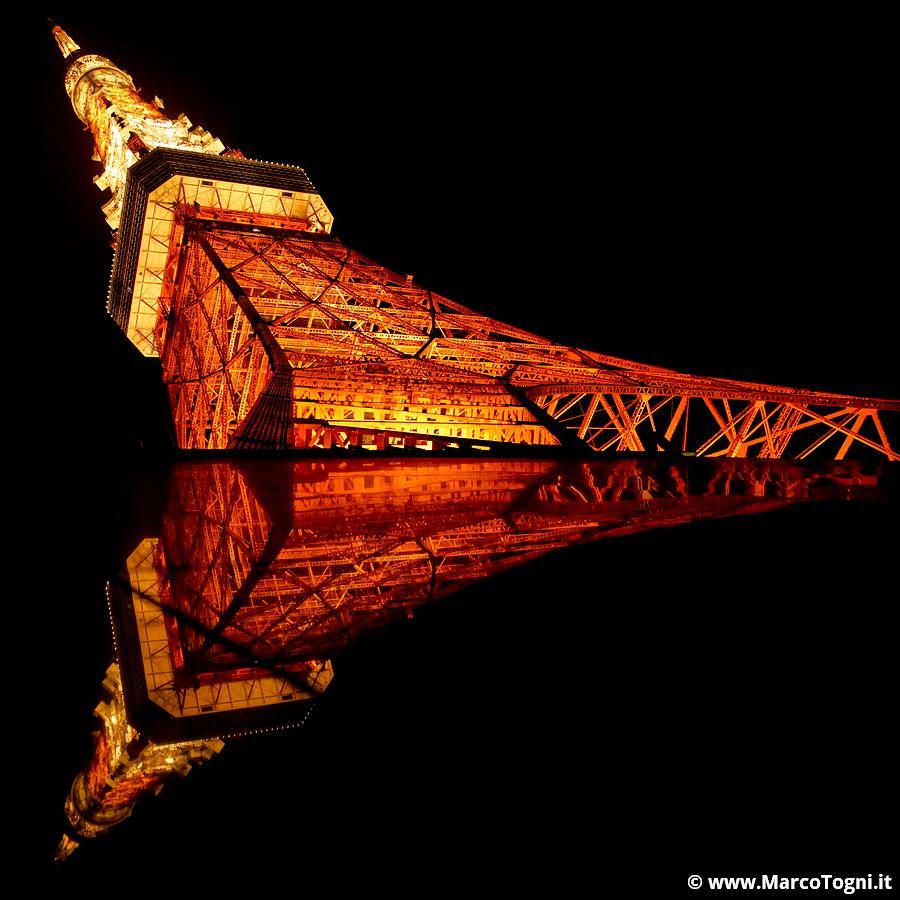
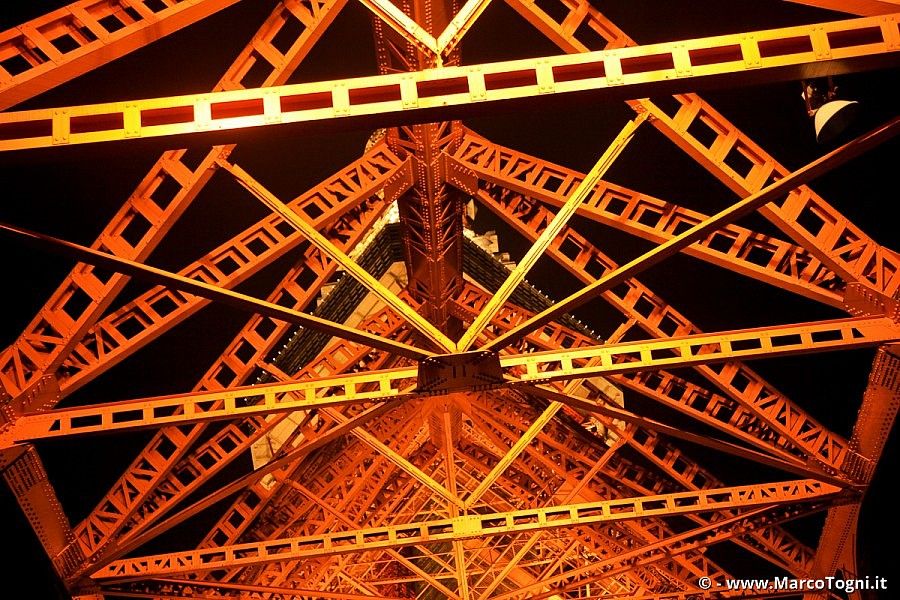
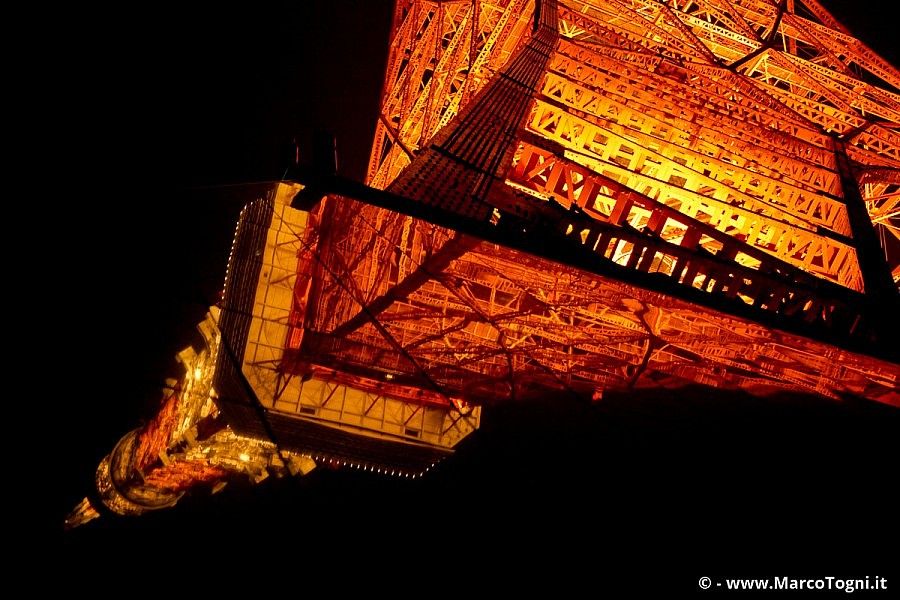
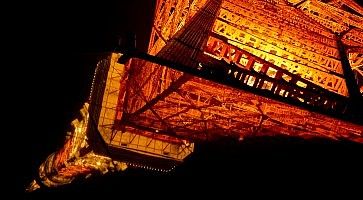
A creative shot of Tokyo Tower.

Tokyo Tower with the Odaiba Ferris wheel in the background.
The tower opened in 1958, right in the middle of Japan’s economic boom, and at the time it was the tallest self-supporting structure in the world. It was a way of telling the world that postwar Japan was back on its feet. It was designed by Tachu Naito, the engineer who had pioneered earthquake-resistant structures in Japan, and all the calculations were done by hand, without computers. Construction took just over a year and a half.
Some of the steel came from American tanks scrapped after the Korean War and melted down for the job, a detail Japanese people always love to tell you about.
The white and orange aren’t an aesthetic choice either: civil aviation rules require them. Every five years a team of workers repaints the tower by hand, top to bottom.
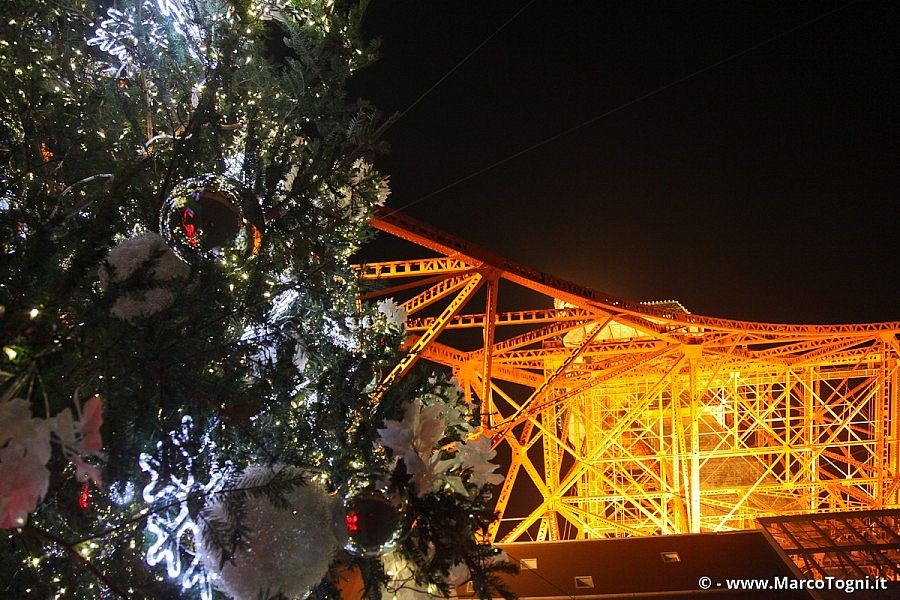
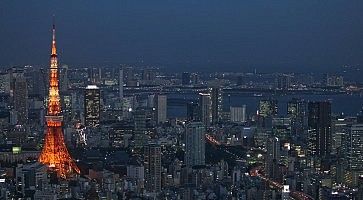
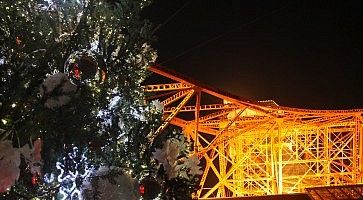
By day you notice Tokyo Tower; at night it takes over the skyline. The classic lighting changes with the seasons: warm orange in winter, fall and spring, white and silver in the summer months. Hardly anyone notices at the time, but it’s why photos from January look different from photos from August.
On special nights the Infinity Diamond Veil comes on, with hundreds of LEDs lighting the tower in different colors each time, usually tied to a special date or an event.
If you want to photograph it, the right spot isn’t at its base but a few blocks away. From the side streets around Shiba Park, the tower suddenly pops up between the buildings and steals the show.