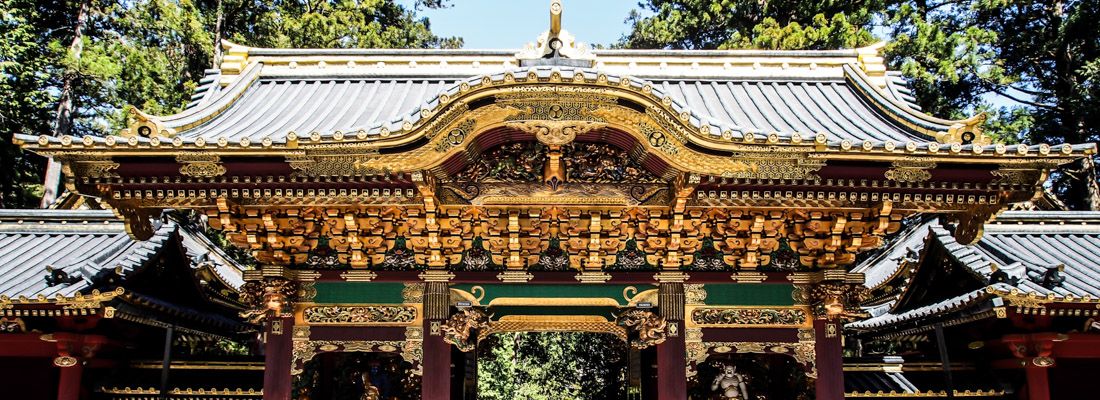
Toshogu Shrine
Toshogu is a Shinto shrine and mausoleum dedicated to Tokugawa Ieyasu, who founded the Tokugawa shogunate. It was Japan’s last shogunate, and it ruled the country for more than 250 years, until 1868. Along with Ieyasu, the shrine honors the spirits of two other major figures in Japanese history, Toyotomi Hideyoshi and Minamoto Yoritomo.
The shrine is in Nikko, in Tochigi Prefecture, in the northern part of the Kanto region on Honshu, and it’s a UNESCO World Heritage Site.
During the Edo period, the Tokugawa shogunate organized processions to the shrine. That old custom lives on in the Procession of the Thousand Warriors, held every year in spring and fall.
The American physicist Richard Feynman visited the shrine and called it close to perfect, and he was especially taken with the symmetry of one of its gates.
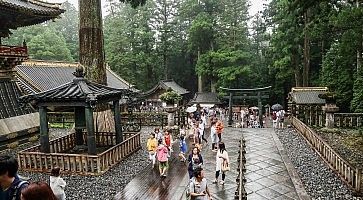
Today it’s a popular tourist destination, and deservedly so, even though it was built as a place of prayer and quiet reflection.
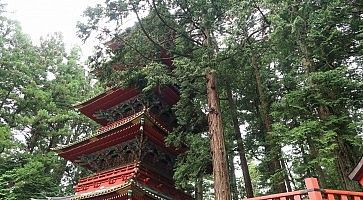
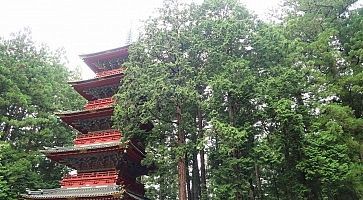
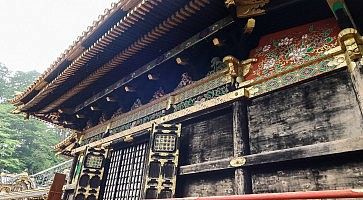
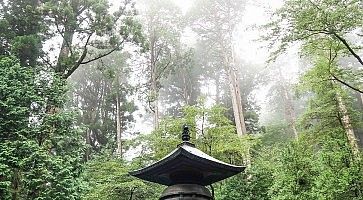
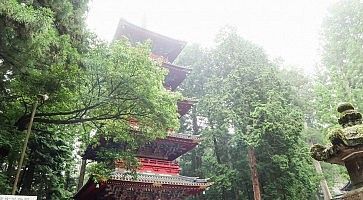
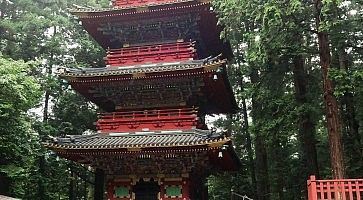
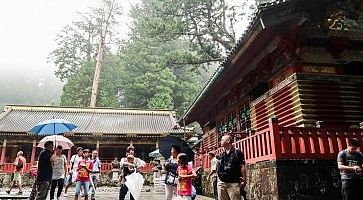
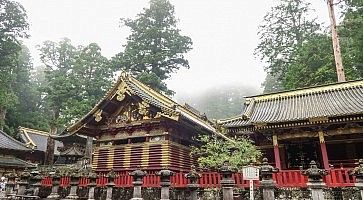
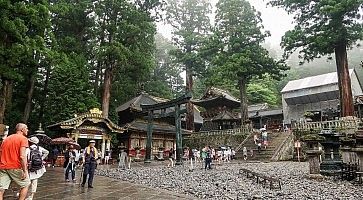
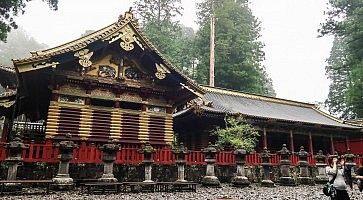
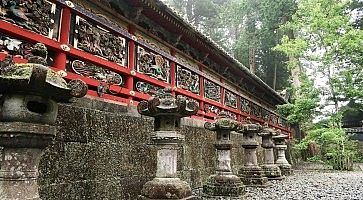
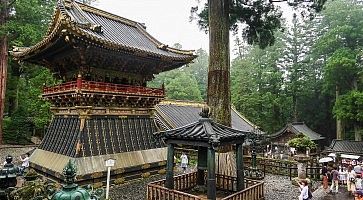
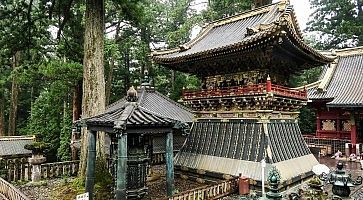
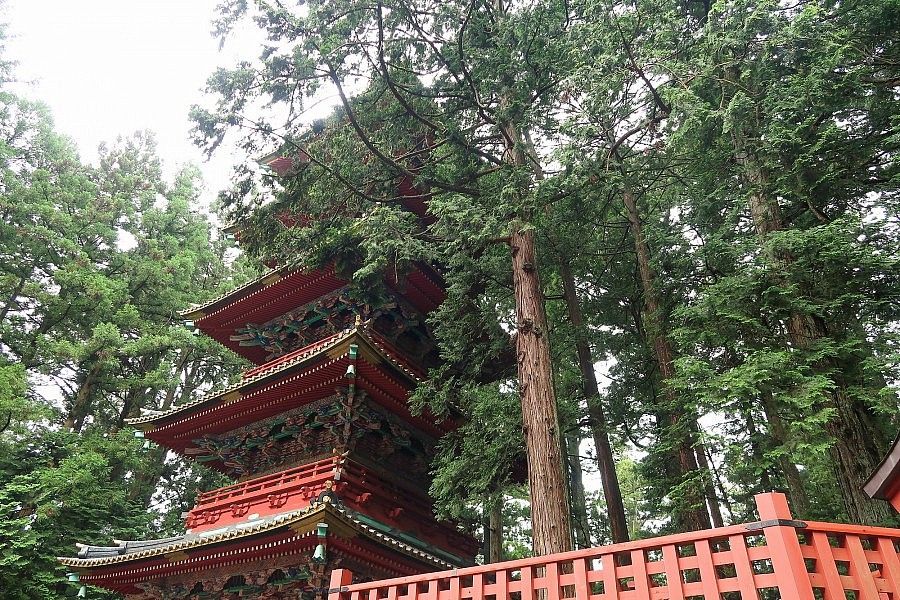
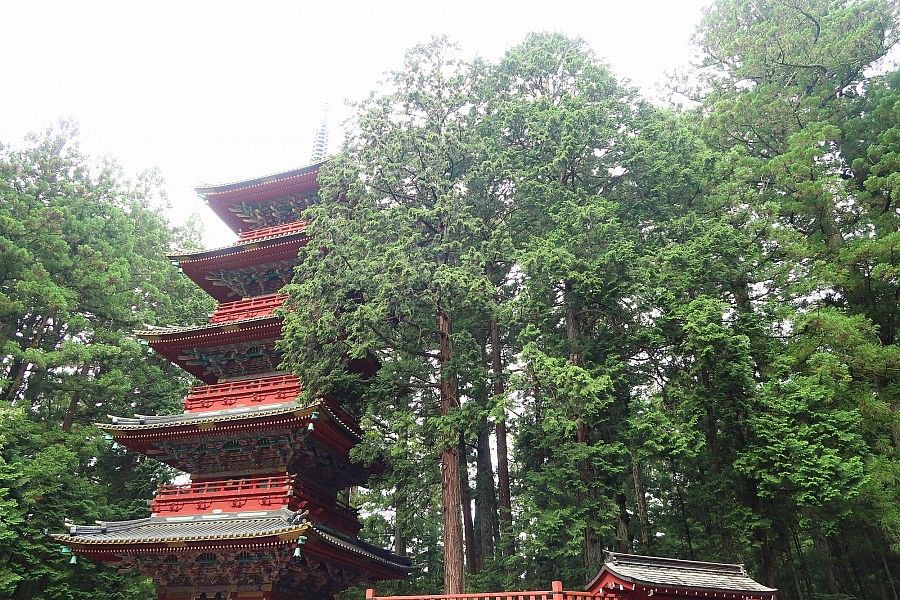
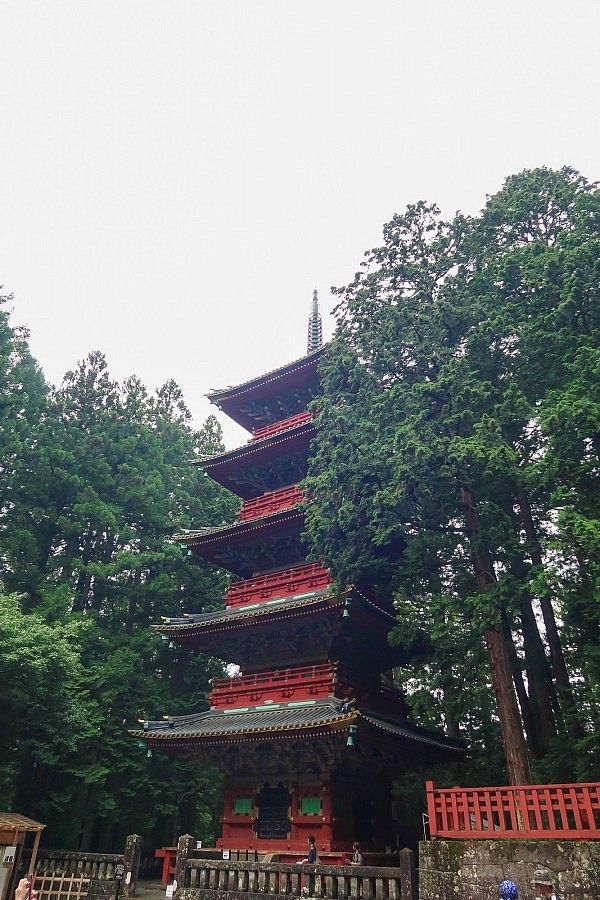
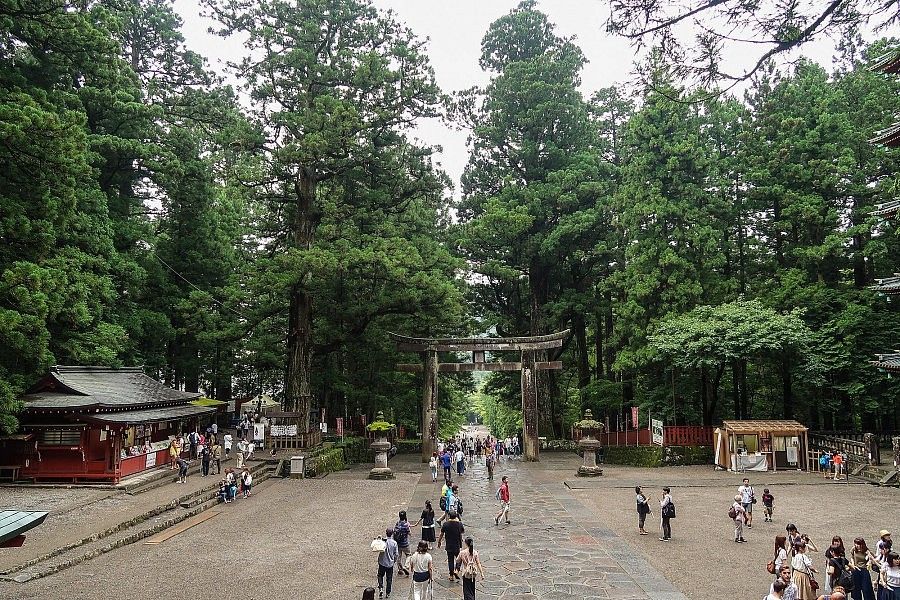
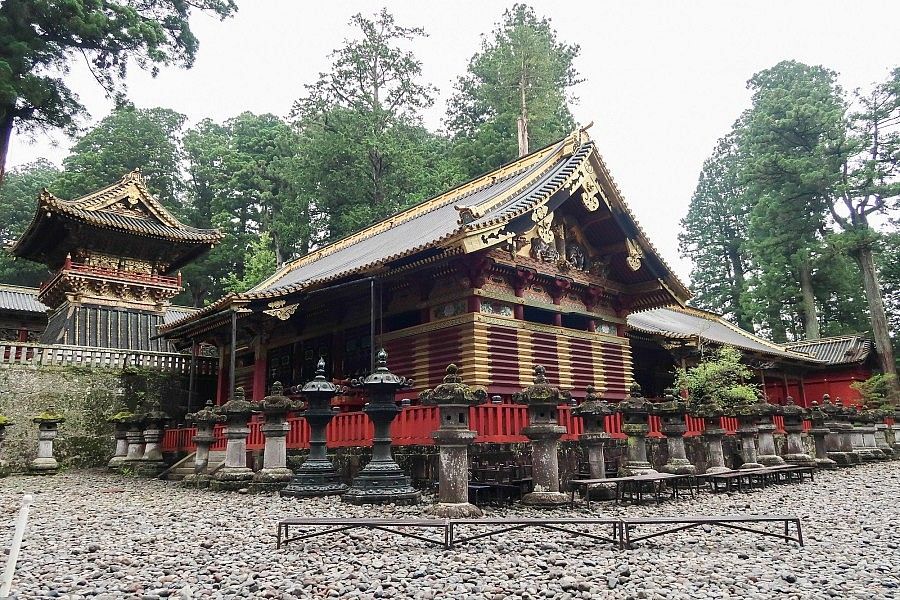
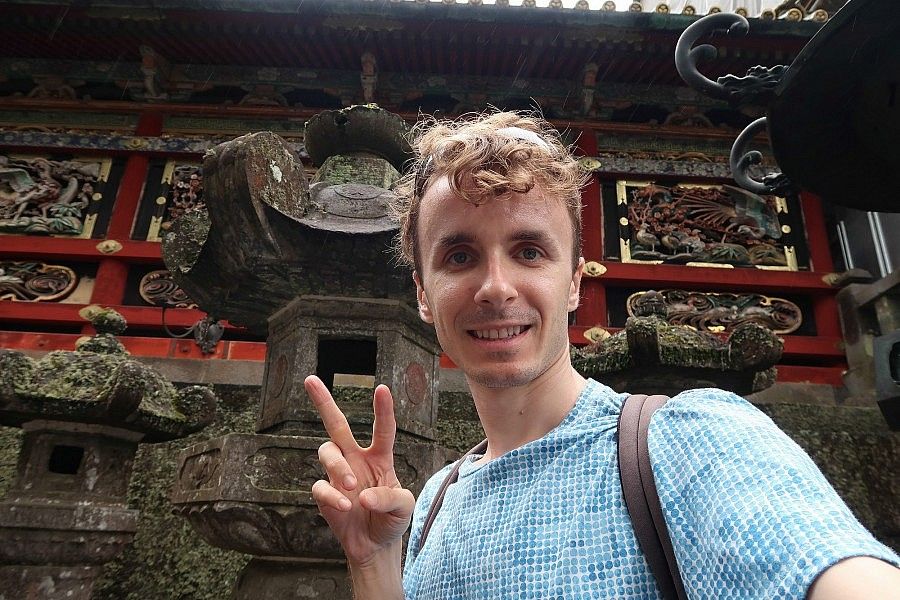
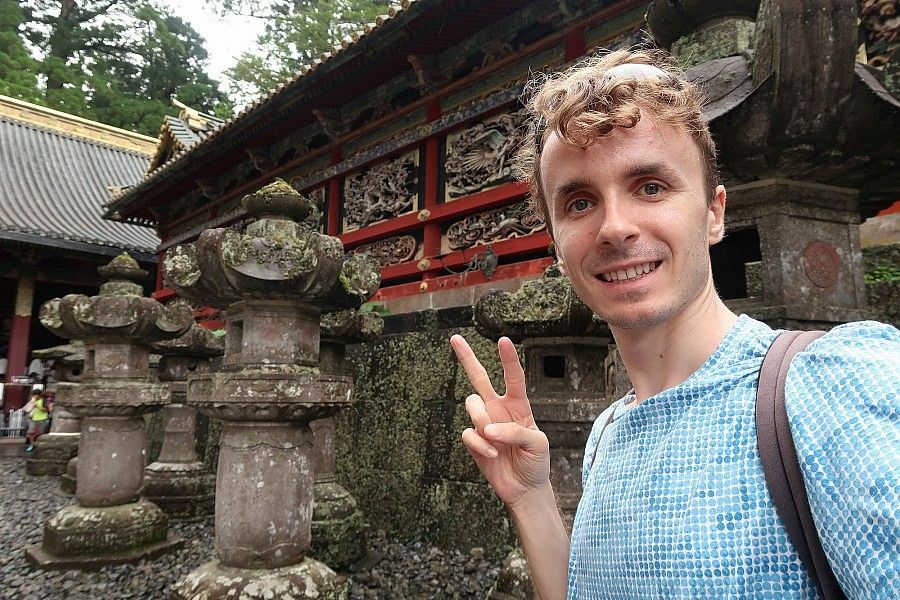
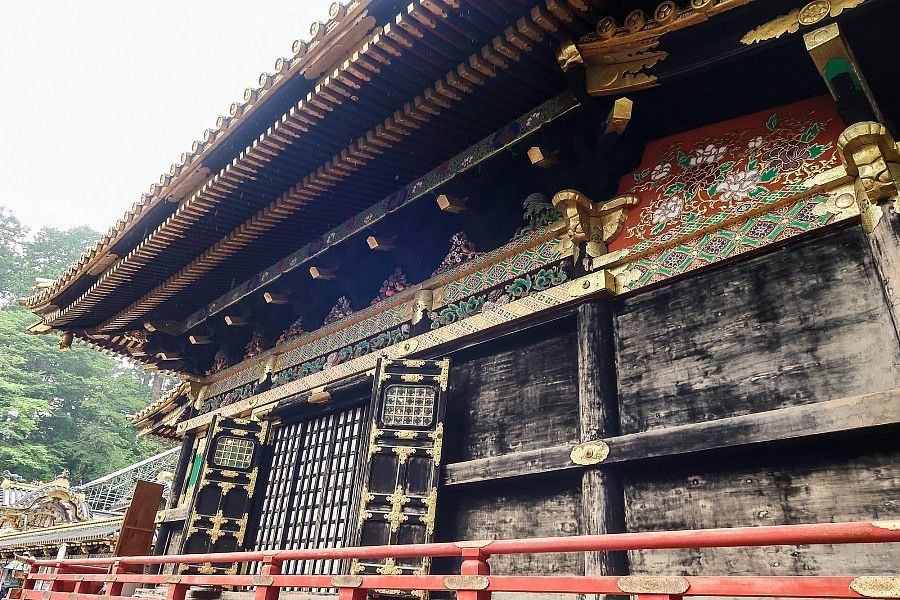
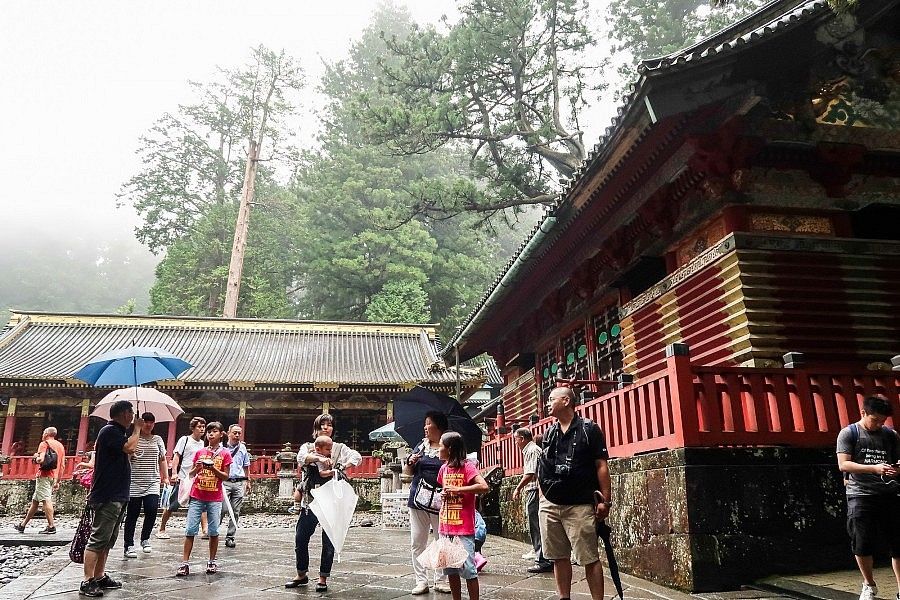
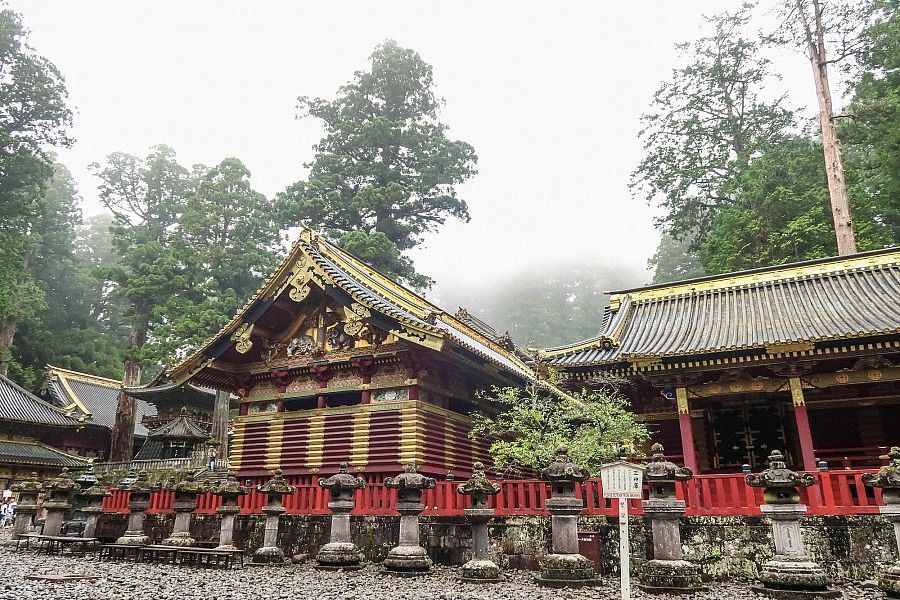
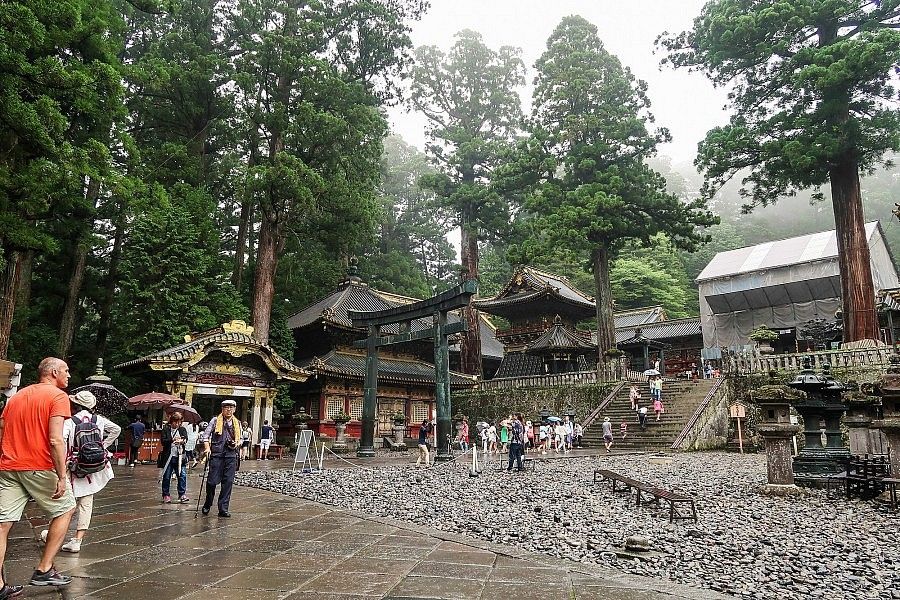
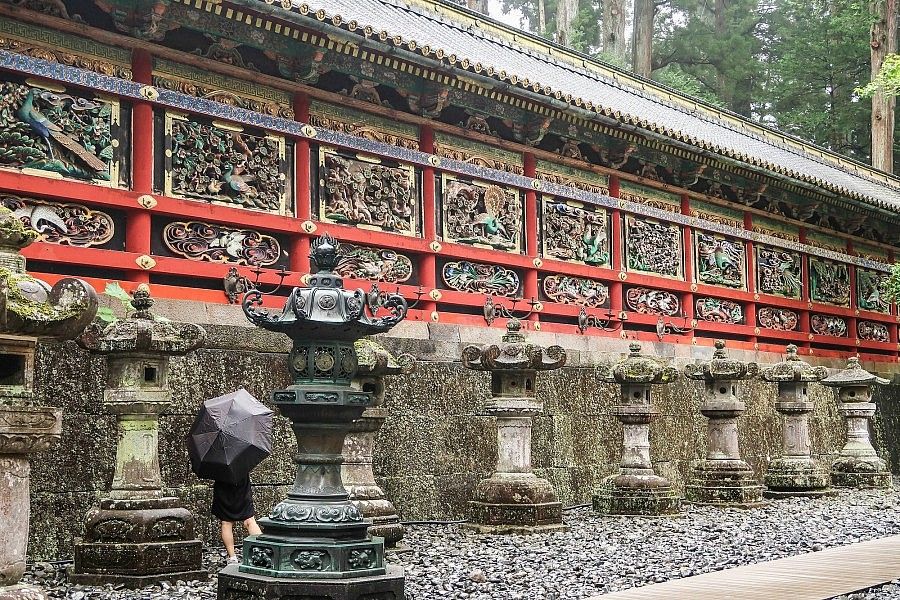
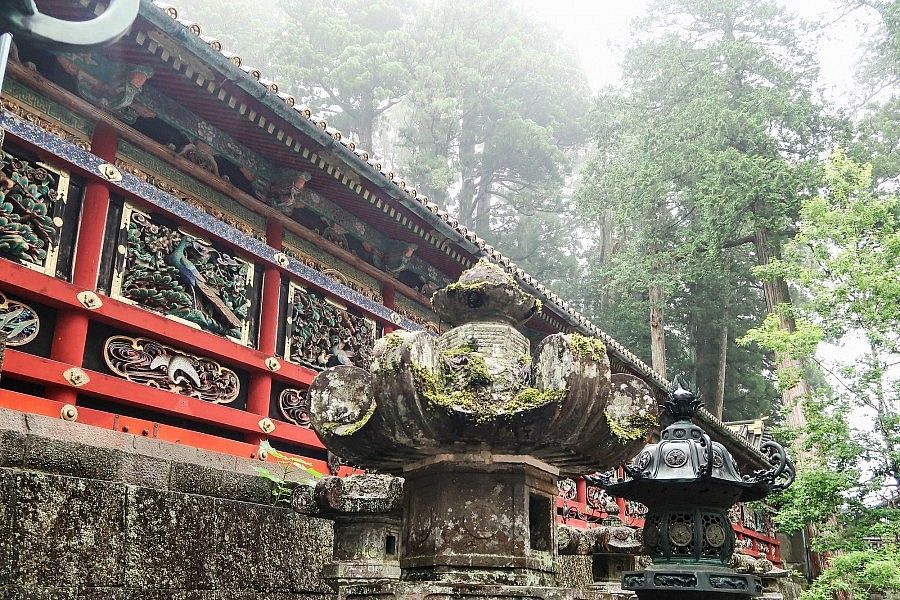
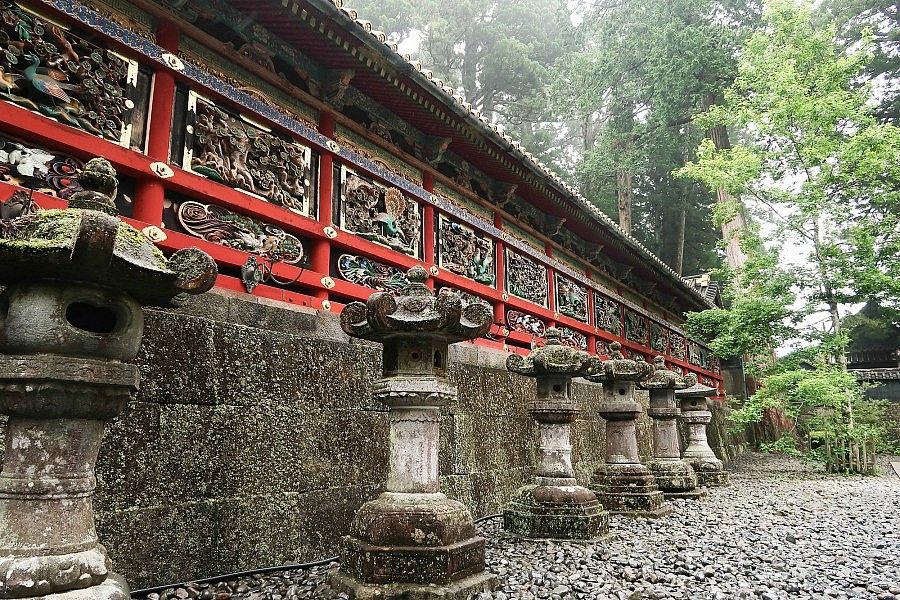
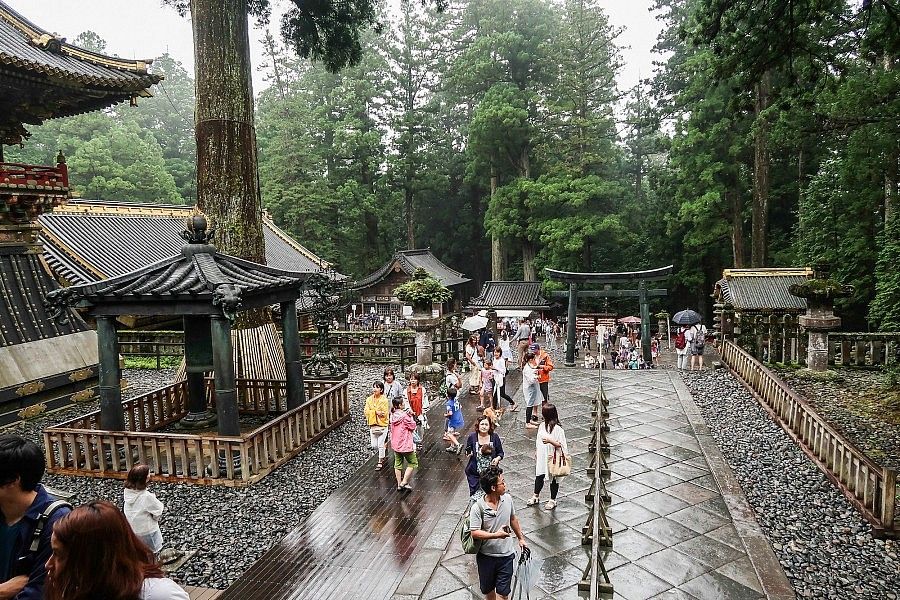
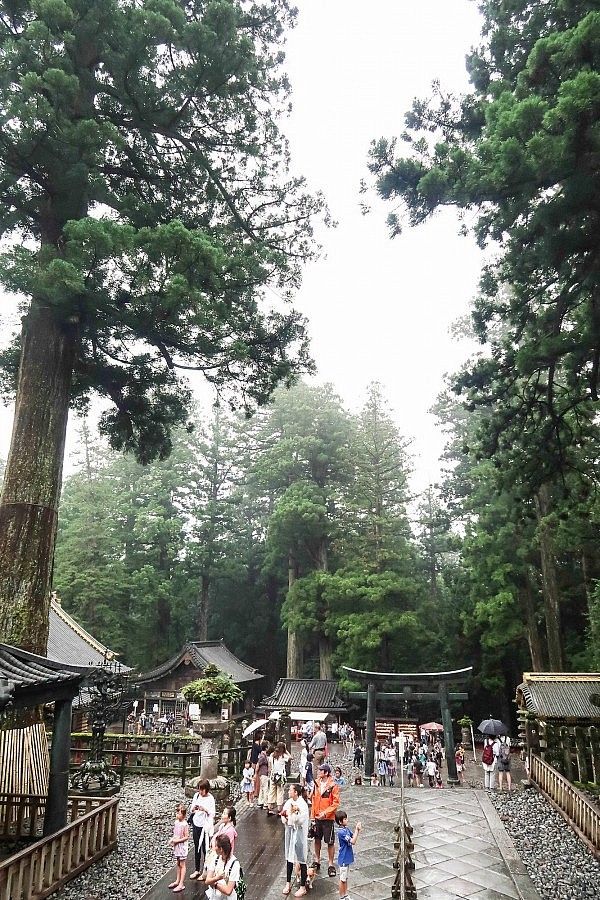
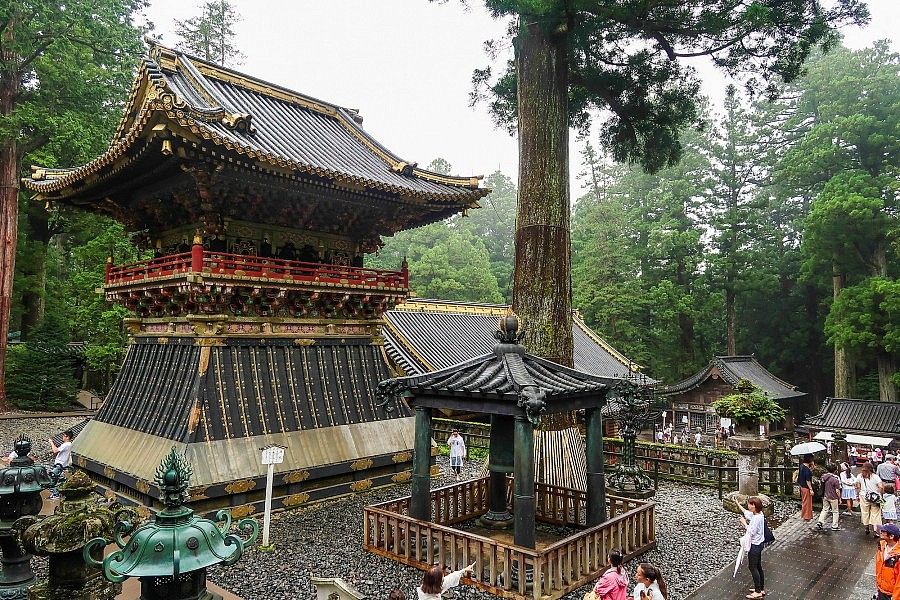
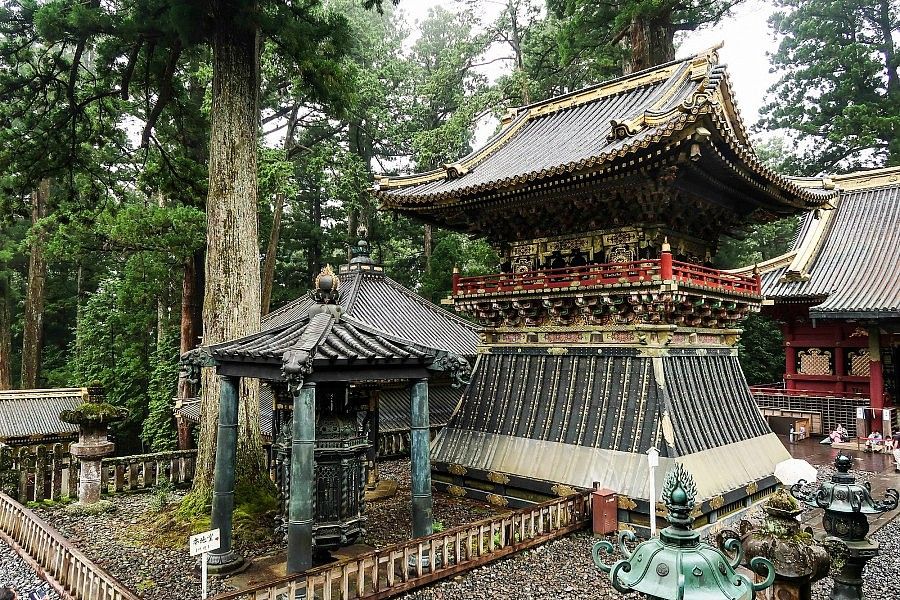
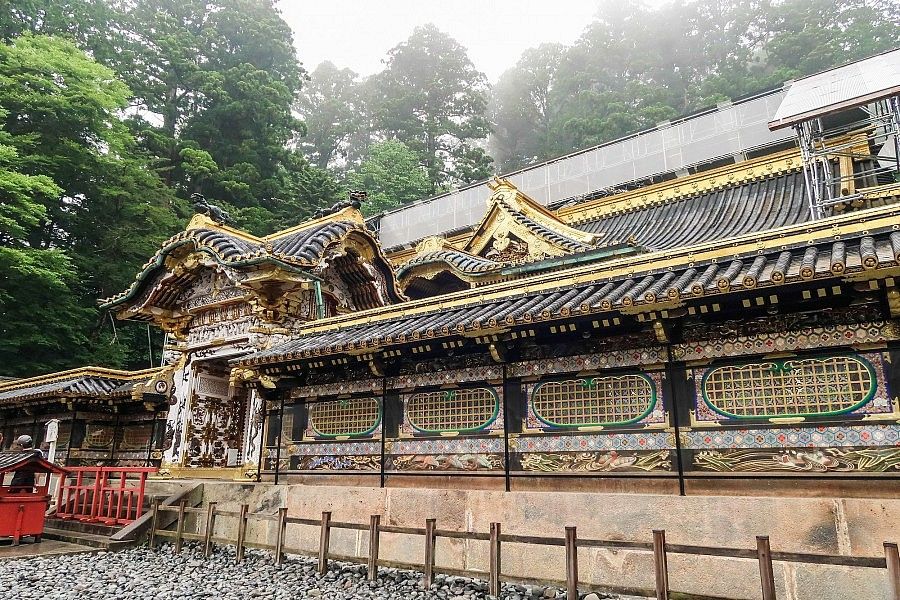
The complex is lavishly decorated, with more than a dozen Shinto and Buddhist buildings set in a beautiful forest. The mausoleum started out fairly simple, but in the first half of the 17th century Ieyasu’s grandson Iemitsu expanded it into the beautiful complex you can still see today.
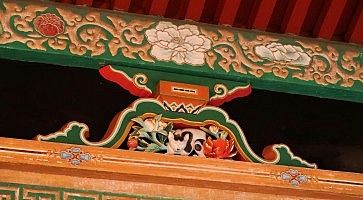
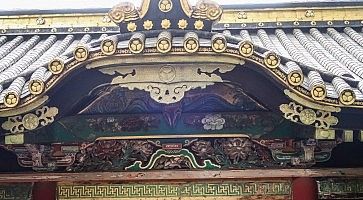
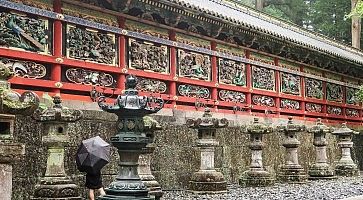
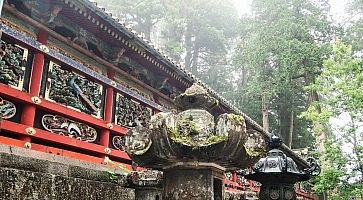
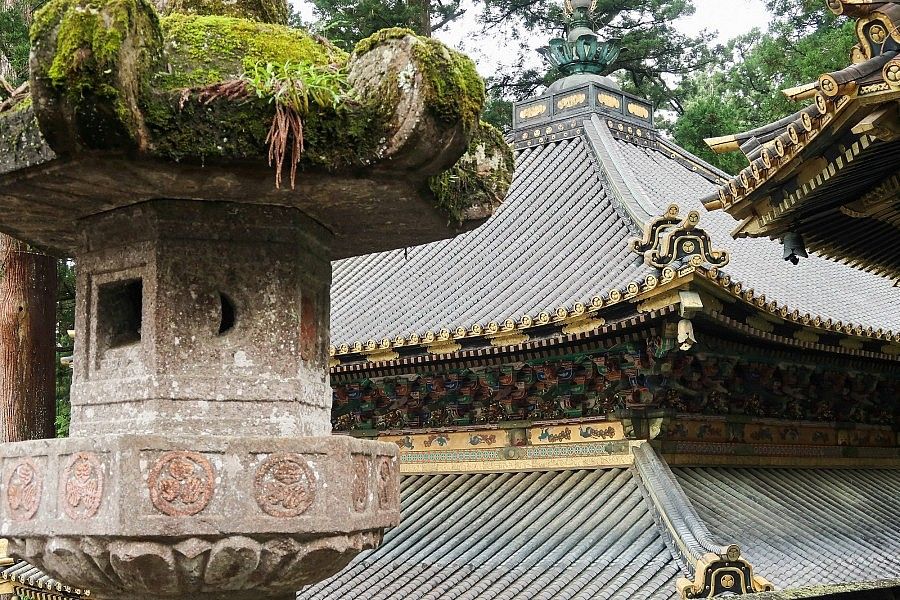
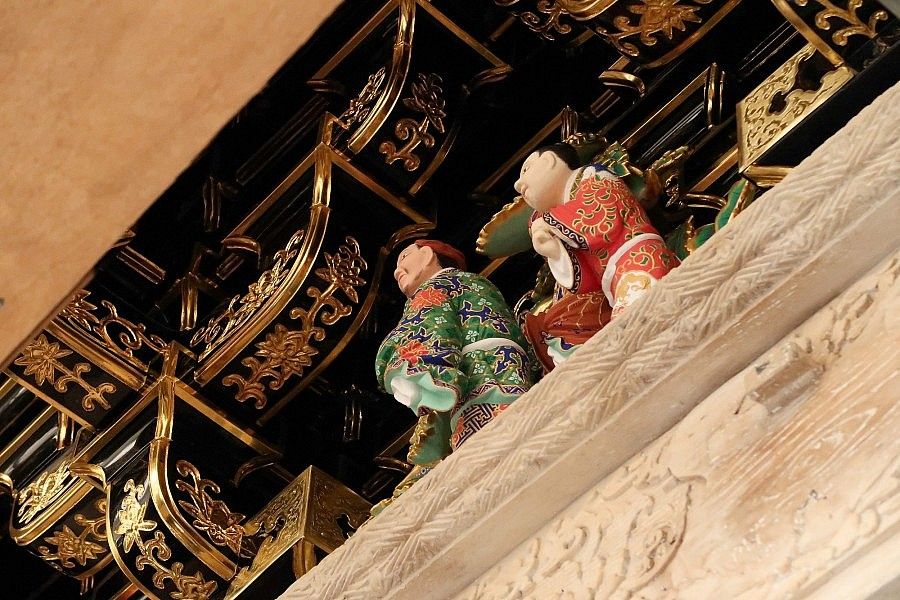
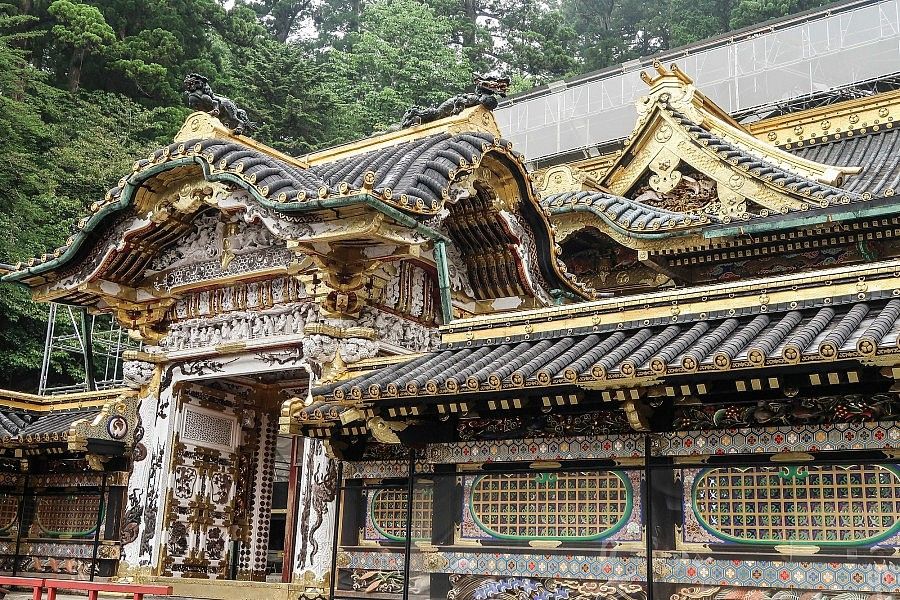
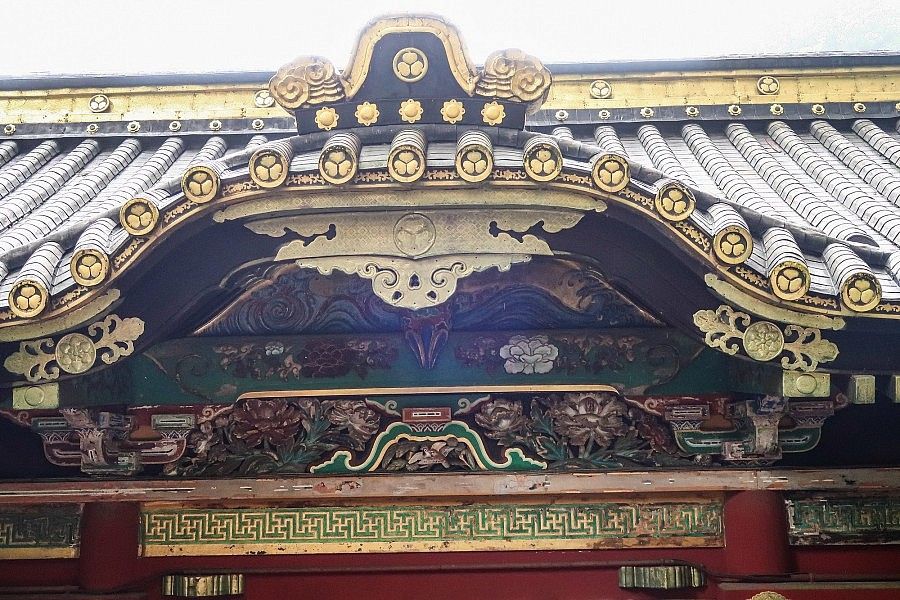
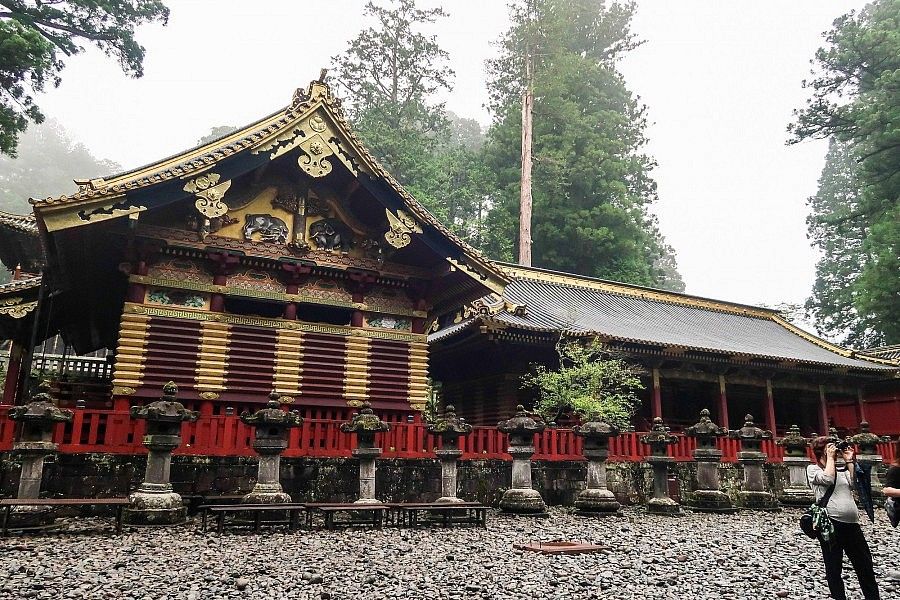
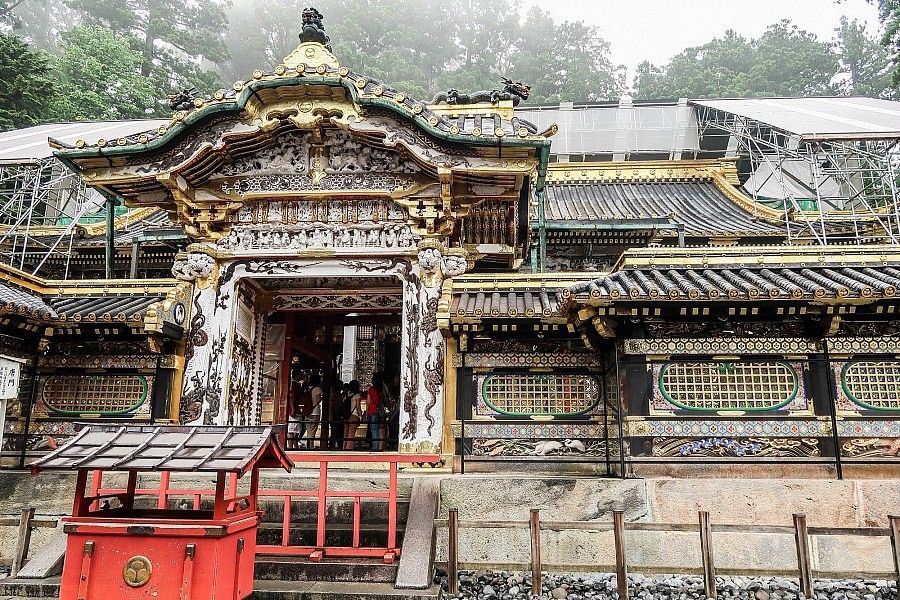
Countless wood carvings and gold leaf make up most of the decoration.
Contents
What to see
Toshogu holds a number of objects designated as National Treasures and Important Cultural Properties of Japan, including some swords.
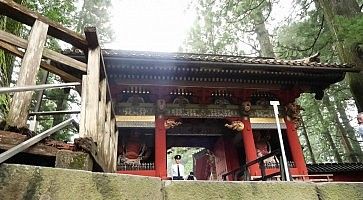
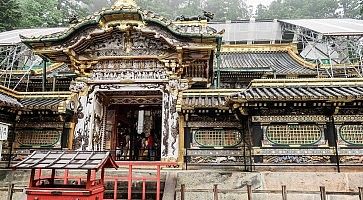
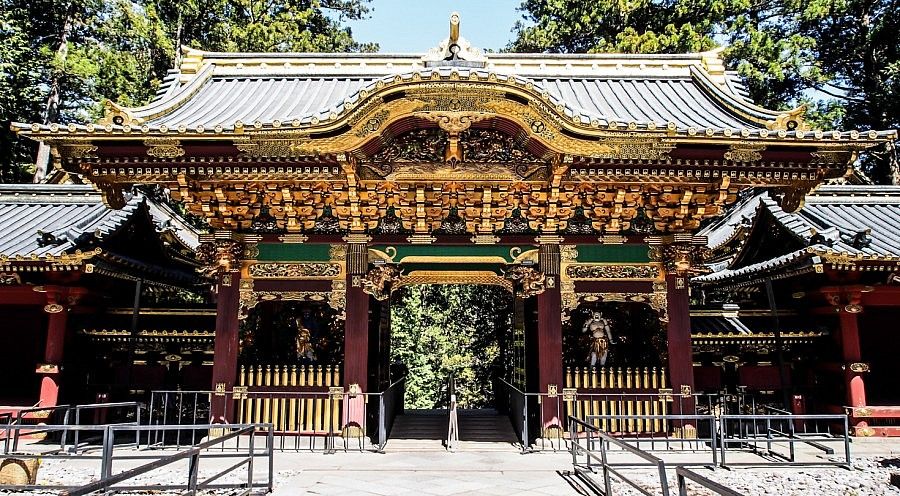
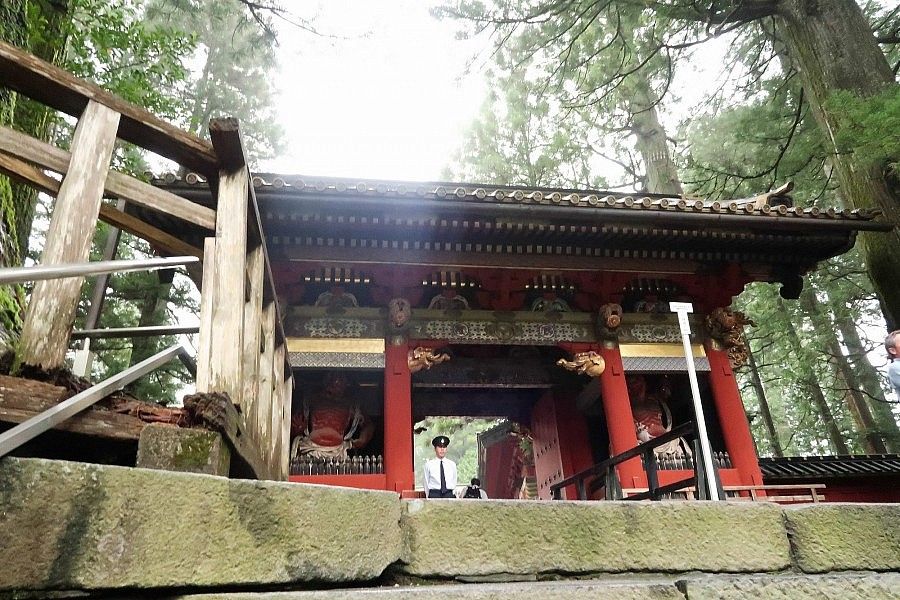
Among the buildings in the sacred complex are the Yomei-mon gate, covered in reliefs and painted in bright colors, and the Kara-mon gate, with its Chinese-style motifs.
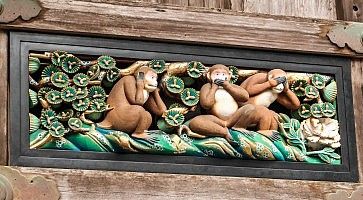
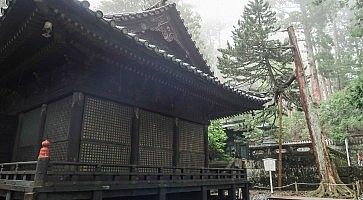
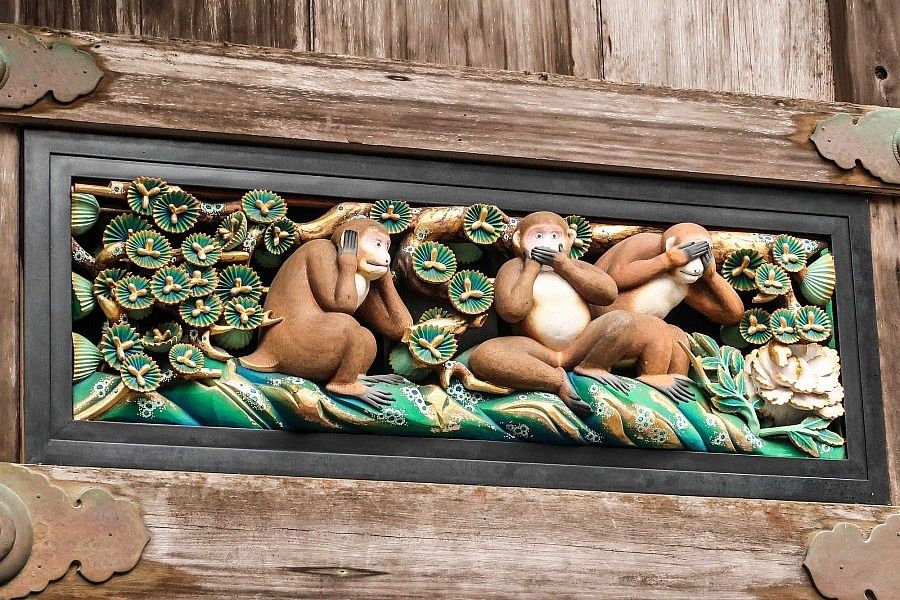
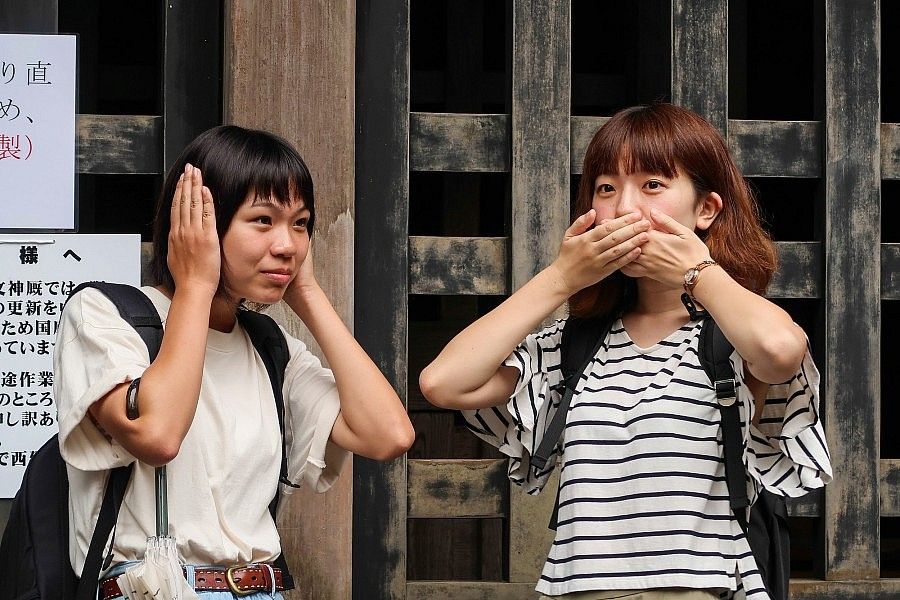
Don’t miss the shrine’s sacred stable either. It’s decorated with Mizaru, Iwazaru and Kikazaru, the three wise monkeys of Japanese culture.
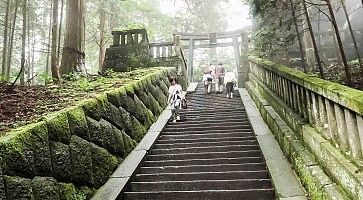
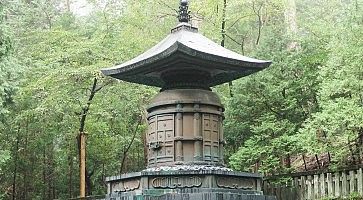
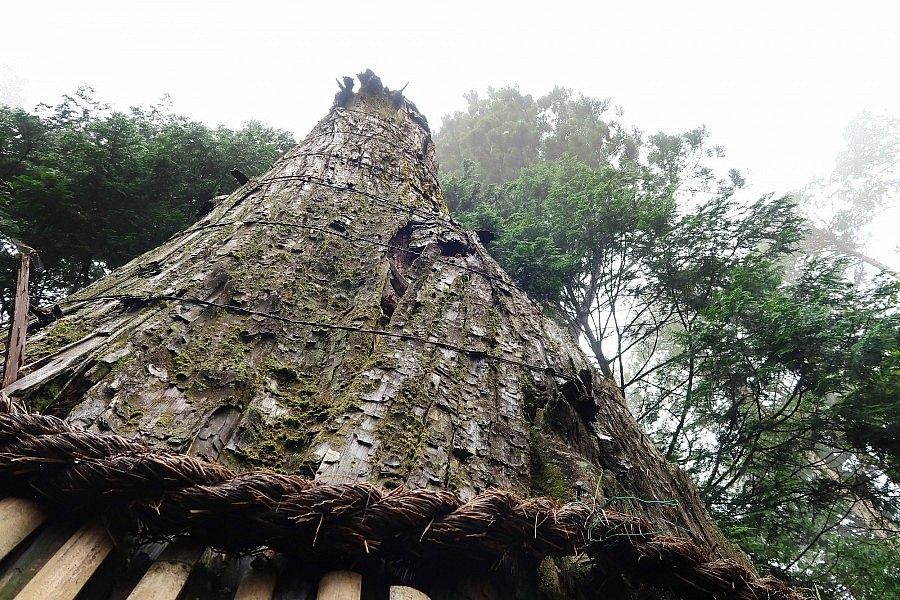
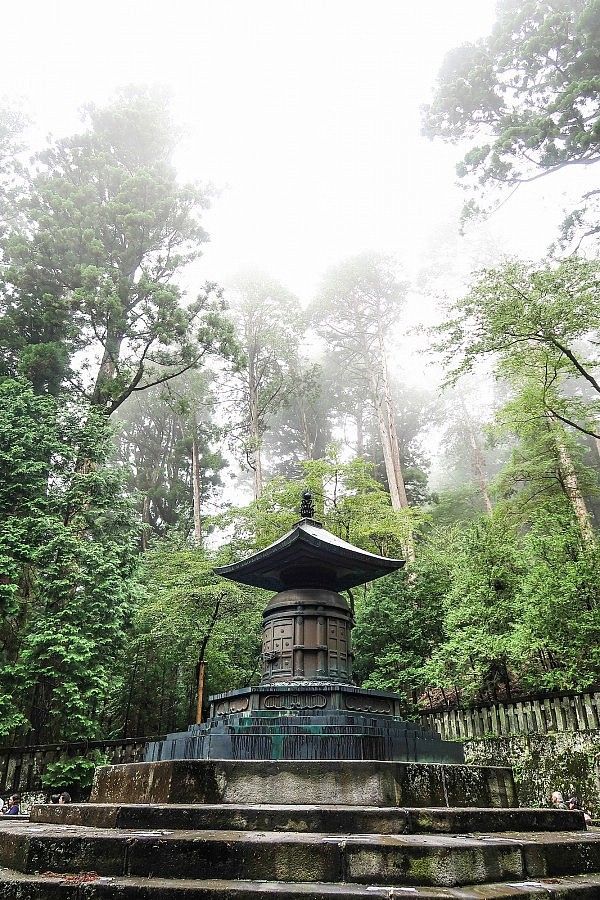
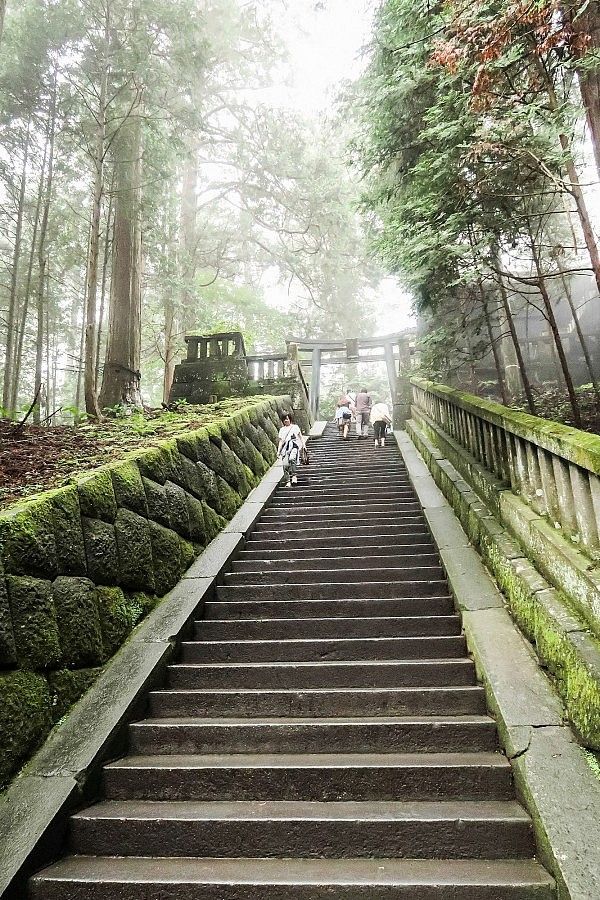
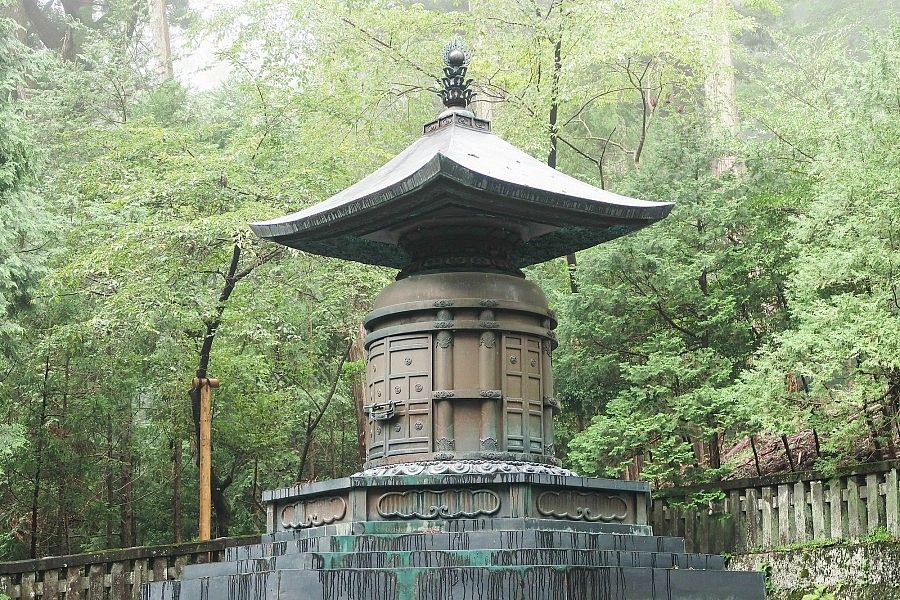
A climb of 207 stone steps takes you up into the cryptomeria forest, where you’ll find the shrine with Ieyasu’s burial site. His remains are kept in a bronze urn.
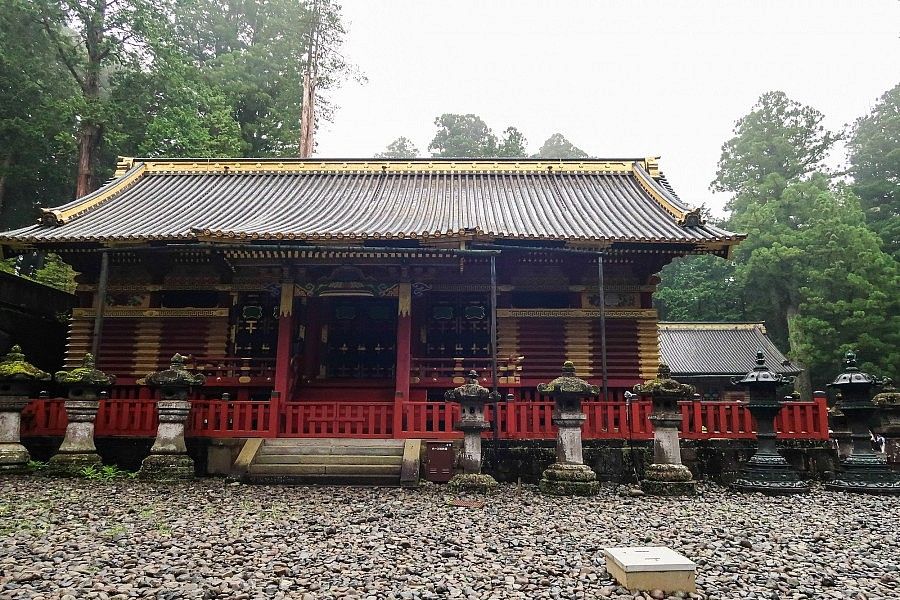
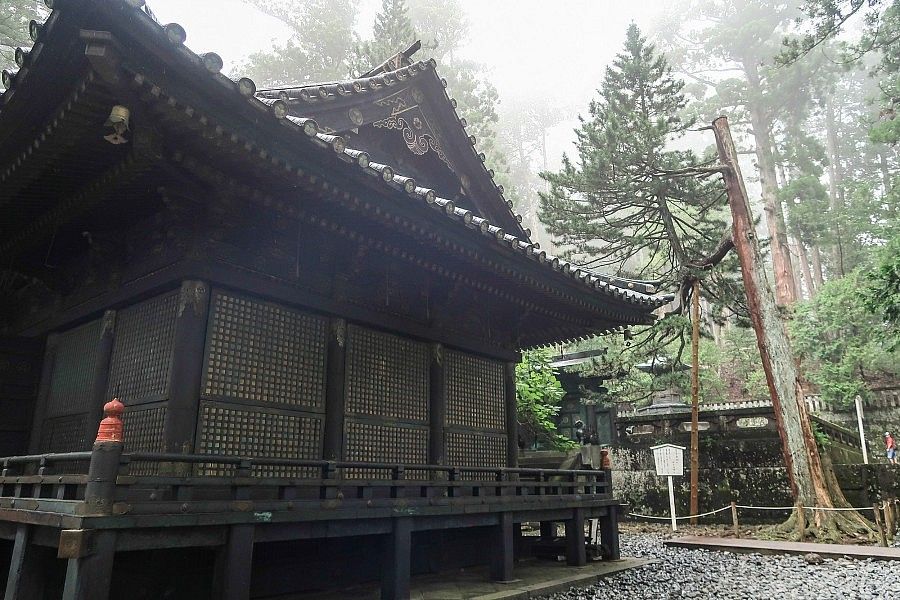
Toshogu’s main hall was built in 1617, and 20 years later it went through a major renovation that produced the splendid group of buildings you see today. The original design set out to make the most of the natural landscape and the huge, centuries-old trees on the site, and it also incorporated measures to make the buildings stable and resistant to fire, cold and humidity. Thanks to that, what’s still standing today is a group of buildings so skillfully made that they’ve been designated National Treasures.
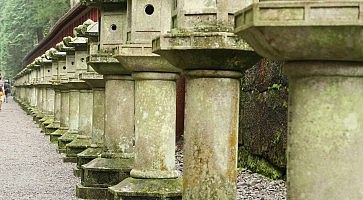
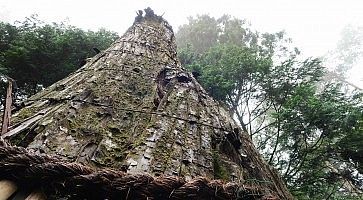
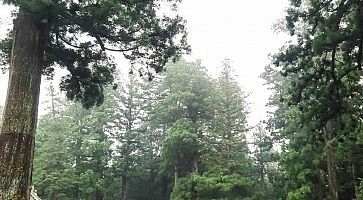
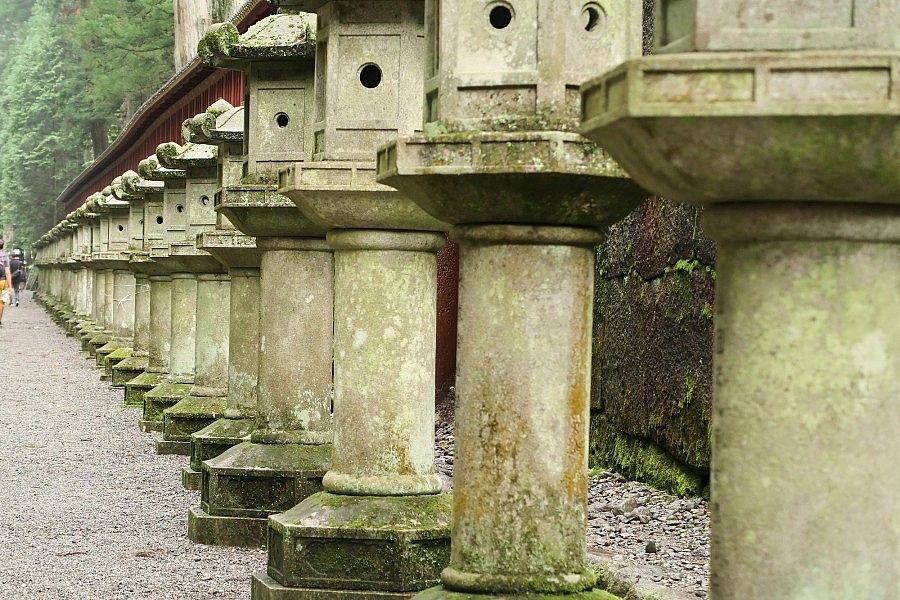
The 37-kilometer road from Nikko to the shrine is called Nikko Suginamiki because it’s lined with about 12,000 cryptomeria, Japanese cedars planted in the 17th century. It’s been designated a Natural Monument. The trees were planted by Matsudaira Masatsuna, a Tokugawa vassal who chose to give the shrine trees instead of the usual offering of valuables, and he spent about twenty years on the job.
Of the roughly 200,000 cedars he planted, less than a tenth survive, but that’s still enough to form a green tunnel that holds the world record for the longest tree-lined avenue.
Toshogu is also famous for the ornate carvings that cover entire buildings, inside and out. The towering Yomei-mon gate in particular is known for its elaborate decoration, which includes more than three hundred carvings of mythical animals such as dragons, lions and kirin. One of the twelve white columns holding up the gate is worth a look too: on the north side, there’s one whose spiral pattern is carved upside down.
It isn’t a slip by the carver but a deliberate choice. According to an old belief, anything perfect starts to decay right away and attracts evil, so that small flaw, put there on purpose, works as a kind of wooden good-luck charm.
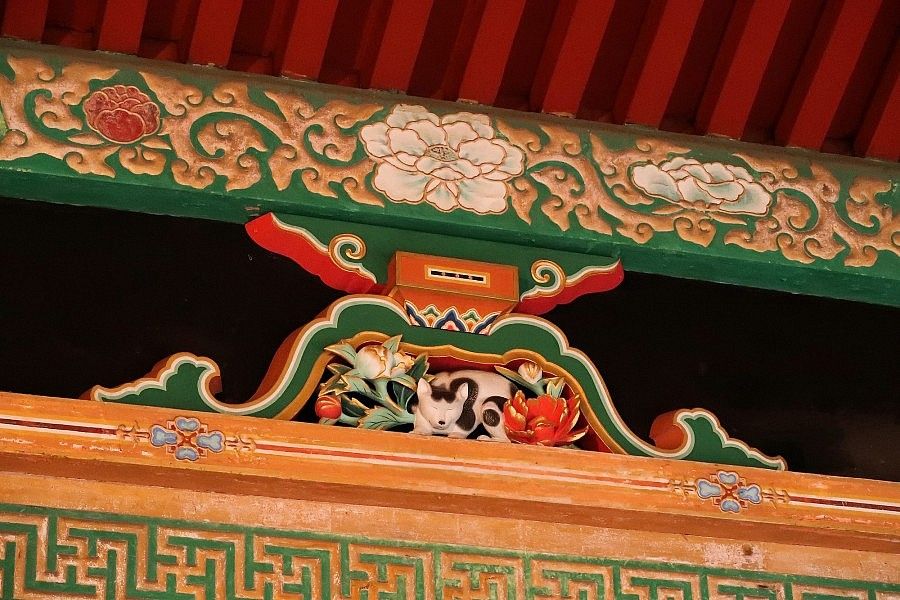
Along the east corridor is the Sleeping Cat carving, a masterpiece so realistic that the cat seems to be keeping an eye on everything around it, even though it’s asleep. Two sparrows are carved on the back of the same panel, and you need to look at the two carvings together. Instead of chasing the birds, the cat sleeps, and the scene is read as a symbol of a country finally at peace after centuries of war.
The carving is tiny considering how famous it is. It’s attributed to the woodcarver Hidari Jingoro, and it marks the start of the path that climbs up to Ieyasu’s tomb.
The monkey panels on the sacred stable
The three monkeys everyone takes pictures of are just one of eight panels, and on their own they only tell half the story. The reliefs run along the top of the sacred stable, the only building in the complex left in plain, unfinished wood, with no lacquer or paint, and they’re meant to be read in order, like a comic strip. Using monkeys in place of people, they tell the story of a person’s life from childhood to motherhood.
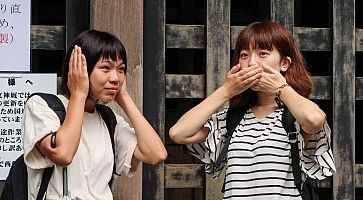
The famous see no evil, hear no evil, speak no evil scene is on the second panel, and it’s about teaching children to stay away from evil. If you have a few minutes, follow the rest too: there’s a monkey gazing at the clouds and dreaming of the future, one being comforted by friends after a disappointment, and a couple facing the waves of life together.
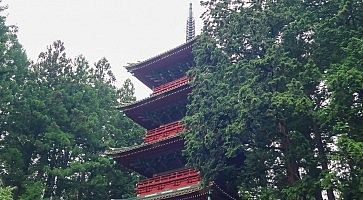
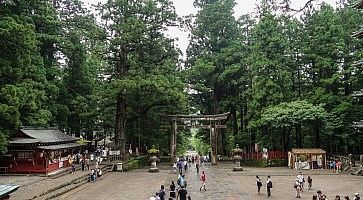
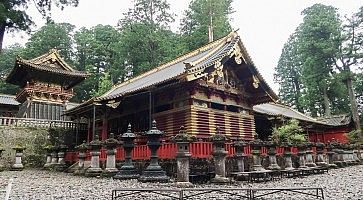
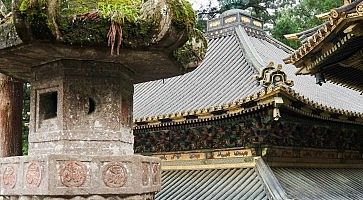
Photo Gallery
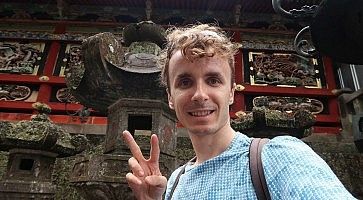
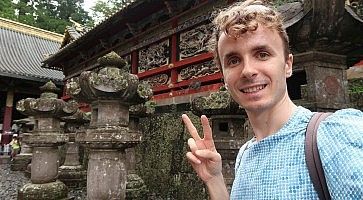
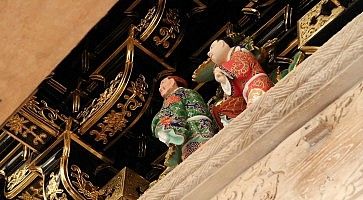
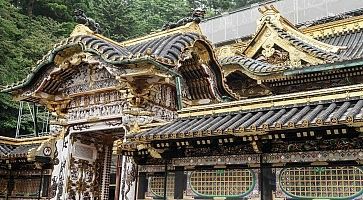



When the processions are held
The Procession of the Thousand Warriors is still held today during two big festivals on the same dates every year: May 17 and 18 in spring, and October 16 and 17 in the fall.
The first day is for yabusame, horseback archery, held along the avenue leading to the shrine. The procession itself sets off the next day at around 11:00. More than a thousand participants in armor, carrying spears, drums and banners, escort the three sacred palanquins to the spot where the procession stops to rest, and that’s the day Nikko fills up with people. The fall festival follows the same pattern on a smaller scale. This is no ordinary costume parade: it retraces, step by step, the 1617 journey that brought Ieyasu’s remains to Nikko from Kunozan, in what’s now Shizuoka Prefecture.
There are three palanquins for a reason, too. They carry the spirits of the three figures enshrined at Toshogu: Ieyasu, Hideyoshi and Yoritomo.
Getting There
You get to Nikko by train, and the shrine is the last stretch. From Tobu Nikko Station, or from the JR station just below it, it's about 2.5 kilometers along the main street, so a good half hour on foot, gently uphill.
If you'd rather save your legs, buses from both stations drop you at the Shinkyo stop next to the red bridge, which leaves you a ten-minute walk uphill, or at Nishi-sando, on the west side of the complex.
From Tokyo the easiest way is the Tobu line from Asakusa, where direct trains take about two hours.
Useful Info
- Tobu Nikko Station (Tobu Nikko Line): direct trains from Asakusa
- Nikko Station (JR Nikko Line): change at Utsunomiya
- Bus stops: Shinkyo and Nishi-sando, on the lines to Chuzenji and Yumoto
Map
This place is on MarcoMaps
Toshogu Shrine
My map of Japan: over 4,000 places I've tried myself, each with photos, rating, and hours. Filter by category and rating, find veg-friendly spots and places near you with GPS. No sign-up, right from your phone.
- 4,000+ places
- Rating, photos, and hours
- Veg friendly
- Near me (GPS)
- Favorites without login
- Works offline

