Toyama
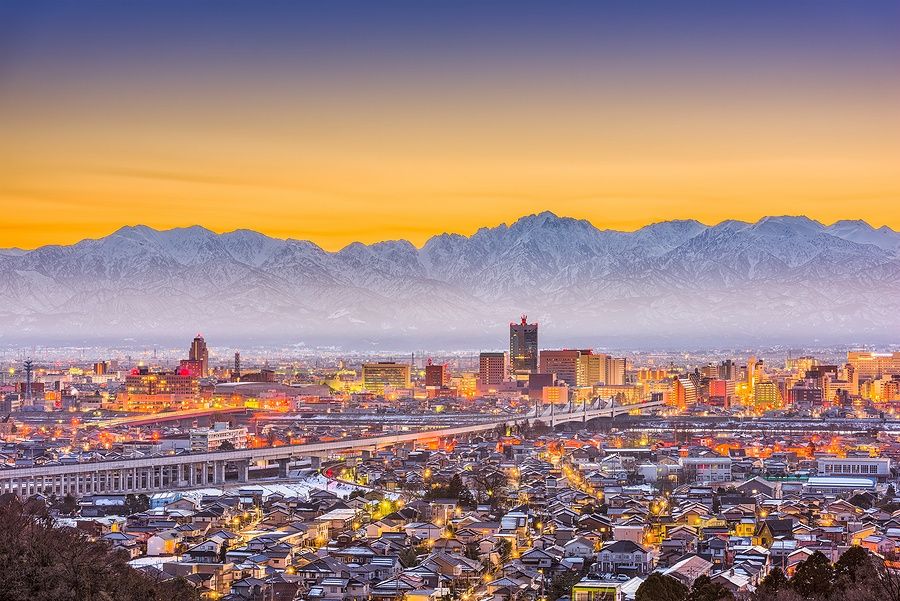
The capital and largest city of Toyama Prefecture, Toyama started out as a small town that grew up around its castle. Over time it became the leading center for the pharmaceutical industry and for handcrafted glass. The Hokuriku Shinkansen stops here, so Toyama is easy to reach, which makes it a great base for exploring a region full of lovely places. Nearby Kanazawa, known as “little Kyoto,” is perfect if you want a feel for old Japan, and the Japanese Alps that surround Toyama have ski resorts and hiking trails. Still, Toyama itself deserves some of your time, because it can really surprise you. Museums, craft villages and romantic river cruises are just some of the things to see and do in Toyama.
Contents
The castle and old craft traditions
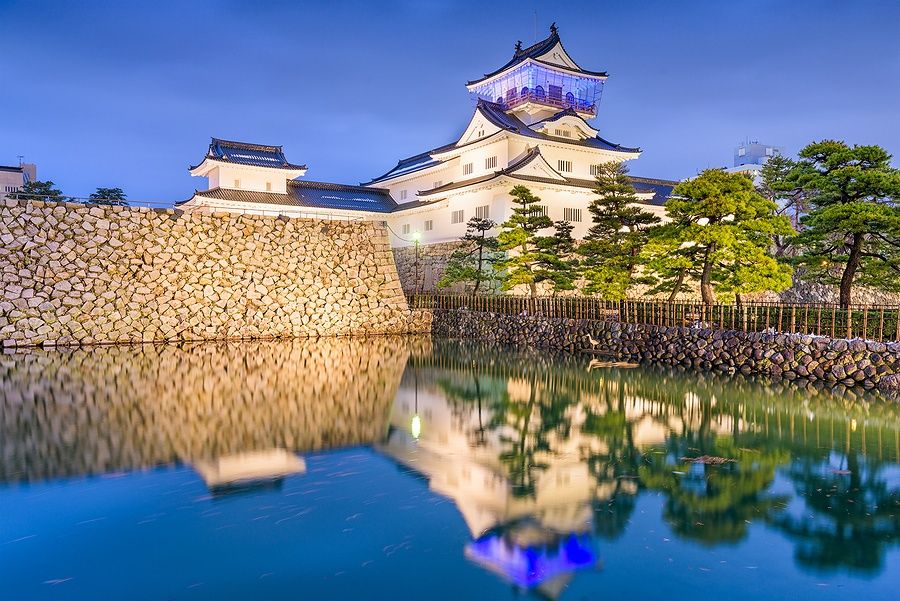
Toyama Castle sits at the heart of the city. Unlike many castles, it isn’t tucked away on a hill but right in the center, a sign that the town grew up around it. The castle gardens are a lovely place for a walk, with cherry trees that bloom in spring and maples that light up the castle in fiery shades in the fall. Inside the gardens you can visit the Toyama History Museum and the Sato Memorial Art Museum, which has a fine collection of porcelain sets used in the tea ceremony.
Toyama is better known for glass than for porcelain, though, and several places in town celebrate this old tradition. One of them is the Glass Art Museum, a few minutes’ walk from the castle. The building was designed by Kengo Kuma. The outside is clad in slats of granite, glass and aluminum that echo the Tateyama peaks, while inside, the museum shares its space with the city library, surrounded by pale wood walls and shelves. Don’t miss the sixth floor, the Glass Art Garden, with installations by the studio of contemporary American glass master Dale Chihuly.
If you have time and you’re into local crafts, head to the Toyama Folkcraft Village, a village devoted entirely to traditional crafts in the hills of Kurehayama Park, west of downtown. Its halls and exhibits cover the arts and crafts of the area: glass, ceramics, dolls and much more.
The 500 statues of Chokeiji Temple
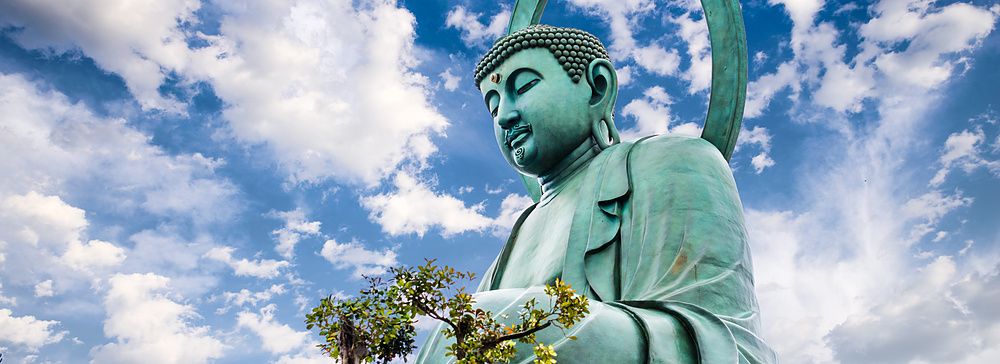
Right next to the Toyama Folkcraft Village is Chokeiji Temple, one of the city’s most important sacred sites. It’s best known for its 500 statues of rakan, the followers of the Buddha, which stand along the hillside behind the main hall.
Toyama’s pharmaceutical industry
Toyama has long been the main center for medicine and the pharmaceutical industry, and the city proudly shows this off through a number of attractions. One of them is the Toyama Medicine Museum, part of the Folkcraft Village, where you can browse more than 3,000 items covering 300 years: medical instruments, lotions, medicines, documents and much more. The Kanaoka Residence is also worth a look. This Edo-period home, now a museum, houses one of the city’s first pharmacies. The historic Ikedaya Yasubei Shoten in central Toyama, on the other hand, is still very much in business, selling traditional Japanese and Chinese herbal remedies.
River cruises and cherry blossoms
The Matsukawa River runs along the northern edge of the Toyama Castle park. It’s a quiet spot where you can unwind with a walk, the water flowing slowly beside you. For most of the year it’s peaceful, but it gets livelier in spring, when the cherry trees along its banks are in bloom. Besides taking photos and having picnics, one of the things visitors and locals love most is a short sightseeing cruise on the river, which gives you a better look at the blossoms and at the statues by local artists along the banks.
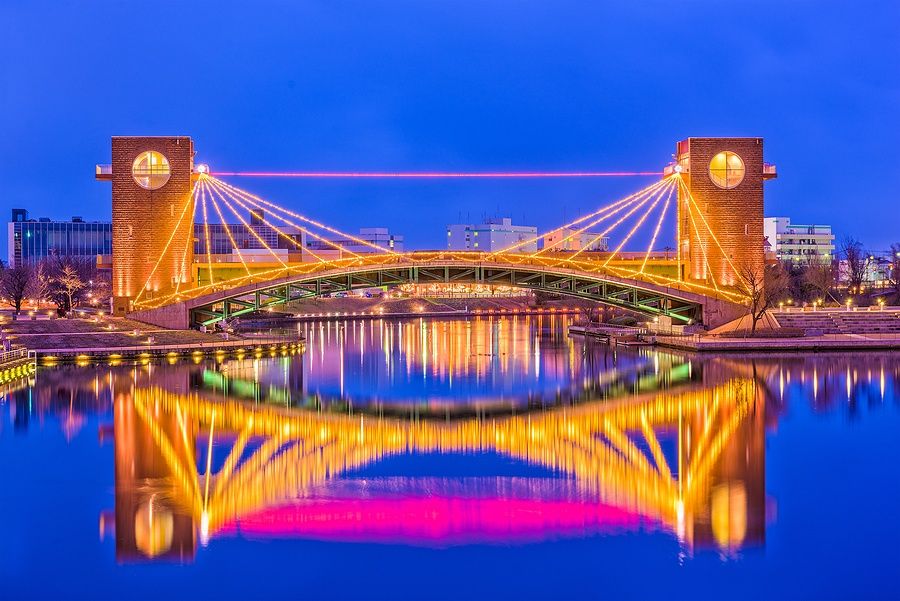
You can also take a cruise from Fugan Canal Kansui Park, just 500 meters from Toyama Station. These cruises head north up the canal all the way to the Iwase port area on Toyama Bay. The park also has two observation towers, plus a café and a restaurant where you can take a break, look out over the canal and try local specialties. The café is a Starbucks that has become famous as one of the most striking in the chain: its walls are all glass and look out over the canal. Come back after sunset, when the park and the bridge light up and are reflected in the water.
Iwase and Toyama Bay
Iwase is the city’s historic port area, facing Toyama Bay. You can still spot several traditional buildings here that recall the days when Toyama was a major trading port on the Sea of Japan. Today the area is popular in summer thanks to the beautiful white-sand beaches nearby, which are perfect for a swim. The picturesque harbor is nice for a stroll in the sea breeze before a bit of shopping for local products and souvenirs at Iwase Canal Hall.
Mountains and onsen on the Tateyama Kurobe Alpine Route
Toyama is one of the main gateways to the mountains in the area and to the hot spring towns of Tateyama, Shinano-omachi, Kurobe and Unazuki. If you love hiking, most of the trails are accessible from May to November, and the rest of the year belongs to snow sports fans.
One of the most exciting things you can do is ride the Toyama Tateyama Line, a charming railway line that starts at Toyama Station and runs to Tateyama. From there you take the funicular up to Bijodaira and then the mountain bus to the Murodo plateau, at 2,450 meters, where the view is spectacular.
In spring, roughly from mid-April to June, the road to Murodo runs between the snow walls of Yuki no Otani, which reach about 20 meters in the snowiest years. In summer, you’re better off taking a walk around Mikurigaike Pond, a small volcanic lake that mirrors the peaks.
From Murodo, the Alpine Route continues to Kurobe Dam and down into Nagano, to Shinano-Omachi, so you can travel the whole route and end your trip on the other side of the Alps.
What to eat in Toyama
Toyama has some of the best fish in Japan, and it’s all down to the bay. Just off the shore, the seabed plunges hundreds of meters, which puts creatures on your plate that you won’t find anywhere else. The star is shiroebi, a white shrimp just a few centimeters long that locals call the jewel of the bay. Try it raw over a bowl of rice, or as tempura. In spring it’s time for hotaruika, the firefly squid that glow blue off the coast at night.
The other dish to try is masuzushi: marinated trout pressed onto a bed of rice inside a round wooden box lined with bamboo leaves. You can buy it all over town, but the widest selection is at Toyama Station, where it’s the best-selling bento. If you want something more filling, order a Toyama Black, a ramen with a very dark broth that was created here after the war for workers. It was meant to be eaten with rice, which is why the flavor is so strong.
Getting There
From Tokyo Station, the Hokuriku Shinkansen gets you to Toyama in about two hours with no transfers. It's the easiest way to come, and from Kanazawa the ride takes only about twenty minutes.
From Osaka and Kyoto, take the Thunderbird limited express to Tsuruga and switch to the shinkansen there. The whole trip takes about three hours.
If you fly in, Toyama Airport is just south of the city, and buses drop you off in front of the station in about twenty minutes.
Useful Info
Fugan Canal cruises: run from late March to late November
Glass Art Museum: closed the first and third Wednesday of the month
- Toyama Station (Hokuriku Shinkansen, JR Takayama Line, Ainokaze Toyama Railway): take the south exit for downtown and the castle
- Centram: a loop line that runs from the station past the castle and the Glass Art Museum area
- The Portram to Iwase leaves from the north side of the station, and trains to Tateyama depart from Dentetsu-Toyama Station
Map
This place is on MarcoMaps
Toyama
My map of Japan: over 4,000 places I've tried myself, each with photos, rating, and hours. Filter by category and rating, find veg-friendly spots and places near you with GPS. No sign-up, right from your phone.
- 4,000+ places
- Rating, photos, and hours
- Veg friendly
- Near me (GPS)
- Favorites without login
- Works offline

