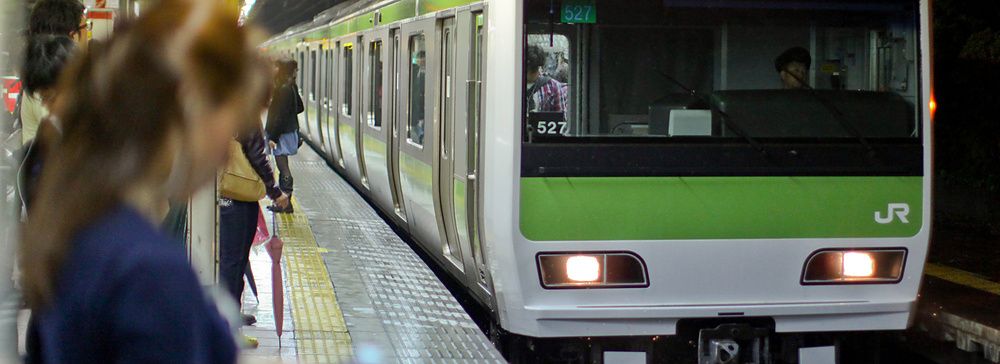
How to Check Train Schedules in Japan
In Japan the train is the easiest and fastest way to get around. Tokyo alone has dozens of lines run by different companies, and if you set off without a plan, you can waste a lot of time.
This page covers how to check train schedules in Japan, including the shinkansen, and how to pick the best routes within cities, especially Tokyo.
Contents
The best apps for schedules and routes
These are the best apps for checking schedules and connections and figuring out which stations to use:
- Google Maps: my favorite and the one I recommend. It’s accurate, fast and already installed on a lot of phones. Just enter where you’re starting from and where you’re going.
- Japan Travel by NAVITIME: designed for tourists, it includes info on the trains the JR Pass covers and warns you when a route isn’t covered by the pass.
Plan your routes
When you’re getting around a city like Tokyo, map out the lines you’ll be using. It’ll save you time and stress.
Here’s an example. To get from Akihabara to Shinjuku, a lot of tourists take the Yamanote Line and it takes them about 35 minutes, when the Chuo Line is usually the better choice and much faster. The apps always show you the fastest option based on actual train times.
Changing trains in Japan is often really easy. Many stations are designed so you can switch from one train to another just by crossing the platform, so you don’t have to walk forever.
For getting around the city, you don’t need to check schedules because trains come every few minutes. The only time that really matters is the last train of the day, especially if you want to stay out late.

Click the map to download the high-resolution file.
Check the train type
Not every train on a line is the same. Local trains stop everywhere, while rapid, express and limited express trains skip the smaller stations. The classic mistake is hopping on a faster train and watching your stop go by.
Platform monitors always show the train type in English too, with a different color for each category. Private lines add even more names (semi express, commuter express and so on), and on some of them the fastest train requires an extra fee and a reserved seat.
The apps already take all of this into account, so if you follow the route they give you, you’ll be on the right train. The only thing to check on the platform is that the arriving train is the one on your schedule.
Watch out for the last train
The last train leaves around midnight, sometimes as late as 1:00, but it depends on the line and the direction.
If you need to transfer, make sure you don’t reach the transfer station too late, or you could end up stranded. The last train on a line isn’t necessarily the last train that works for you. If you have to change, what counts is the last combination of trains that gets you back to your hotel, and that usually means leaving quite a bit earlier. Look up your trip back in the app and it’ll tell you what time to head out so you don’t get stuck.
If you do miss the last train, you can:
- take a taxi (very expensive)
- sleep in an internet cafe
- find a hotel in the area
- wait for the first train in the morning, usually around 5:00
Use an app for schedules
Stations still have printed timetables, but hardly anyone looks at them anymore, because everyone uses apps.
Google Maps tells you exactly when the next train leaves and which platform it’s on.
If you end up offline, you can still find your way with the station signs and boards, which are always clear and well designed.

Weekend schedules are different
Japanese train schedules aren’t the same every day. Almost every line has a weekday schedule and a separate one for Saturdays, Sundays and holidays. The frequencies change, the fast trains in service change, and often the last train leaves earlier.
So you might check a route on a Wednesday, take it on a Sunday and find the schedule has changed. When you look things up, set the actual date and time of your trip instead of the current ones. It’s the only way to see the right schedule.
Japan Rail Pass and shinkansen
The Japan Rail Pass doesn’t cover Nozomi and Mizuho trains, but you can buy a supplement that lets you ride these super-fast trains too.
Either way, you get free seat reservations, which you can also make online or at the ticket machines (in major stations).
If you miss your train, you can make a new reservation for free.
I still recommend planning your longer trips in advance with the apps, so you know where to change and which trains to take.
That said, there’s no need to stress too much about schedules, because you always have some flexibility. On the Tokaido Shinkansen between Tokyo and Osaka, trains leave every few minutes, so if you miss one, just get on the next, maybe in the unreserved cars. Be careful with all-reserved trains, though, like the Hayabusa heading north. You can’t board those without a reserved seat.
Away from the main routes it’s the other way around. Many regional lines have one train an hour, sometimes fewer, and there you really do need to make a note of the times.
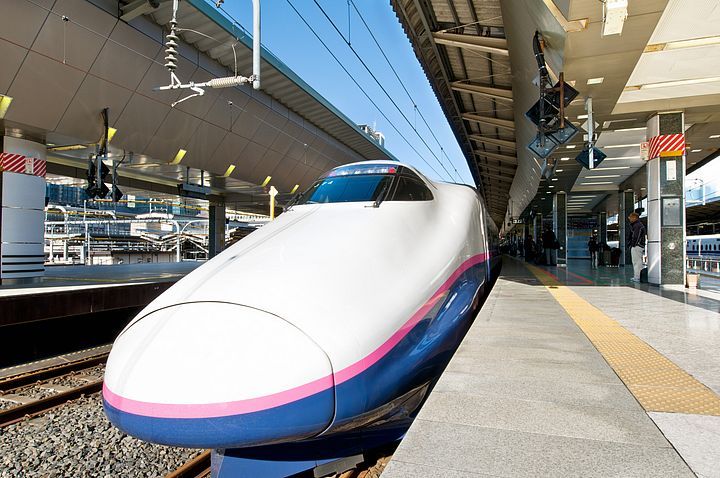
A shinkansen at the station. Photo: © A41cats/Dreamstime
When a line stops running
Every now and then a line gets suspended because of bad weather or an accident, and trains can end up sitting there for half an hour. Spoken announcements are almost always only in Japanese, but station monitors show line status in English too, and the apps flag the disruption.
The good news is that in a city like Tokyo there’s almost always another option. Lines run by different companies cover the same routes, so you just run the search again in the app to find a route that works. On a long-distance trip, though, it’s worth rechecking your connections, since a 20-minute delay can make you miss your next transfer.
