Trains in Japan
Riding trains in Japan is one of the most enjoyable parts of a trip here, and figuring out who runs each line saves you time, money and a lot of confusion at the ticket gates. Japan doesn’t have one national railway the way many European countries do. Instead there are the JR companies, the city subways and a huge number of private lines, each with its own tracks, its own fares and often its own entrances.
That’s why a ticket you buy in Shinjuku won’t work on the line next door, and why the Japan Rail Pass covers less of Tokyo than many people expect. Once you understand how the system is split up, planning your trips gets much easier.
Contents
Why there are so many companies
Japan’s rail system is split among dozens of companies, from big networks covering half the country down to small rural lines just a few kilometers long. For decades a single public body, Japanese National Railways, ran the state railways. Alongside that network, the major cities had long had private lines, built by business groups that also developed stores and residential neighborhoods along their tracks.
You can still see this today. In Shibuya, Shinjuku or Ikebukuro, the department store attached to the station often has the same name as the rail company that serves the station.
Japanese National Railways had run up enormous debts, partly because fares, budgets and new lines all had to be approved by parliament. On April 1, 1987, it was privatized and split into several companies, which created the JR group. What you get today is lots of different operators that cross paths in the same stations, each one keeping its own books. And the splitting hasn’t stopped. When a new stretch of Shinkansen opens, the old JR line running alongside it is often handed over to a local company backed by the prefectures and municipalities. That’s what happened with IR Ishikawa around Kanazawa and with Aoimori in the Aomori area.
If you have a JR pass, this matters: a line that older maps show as JR may not be JR anymore.
The JR companies
The JR group is made up of six passenger companies, each covering its own region, plus a single nationwide freight company. These are the ones you’ll care about:
- JR Hokkaido, which covers the northernmost island, including Sapporo and the connections toward Hakodate.
- JR East, the biggest, which serves Tokyo, the Kanto region and all of northern Honshu, and runs the Yamanote line and the Shinkansen to Tohoku and Niigata.
- JR Central, which operates the Tokaido Shinkansen between Tokyo and Shin-Osaka, plus the lines around Nagoya.
- JR West, which covers Osaka, Kyoto, Hiroshima and the Shinkansen from Shin-Osaka to Hakata.
- JR Shikoku and JR Kyushu, which cover the islands they’re named after.
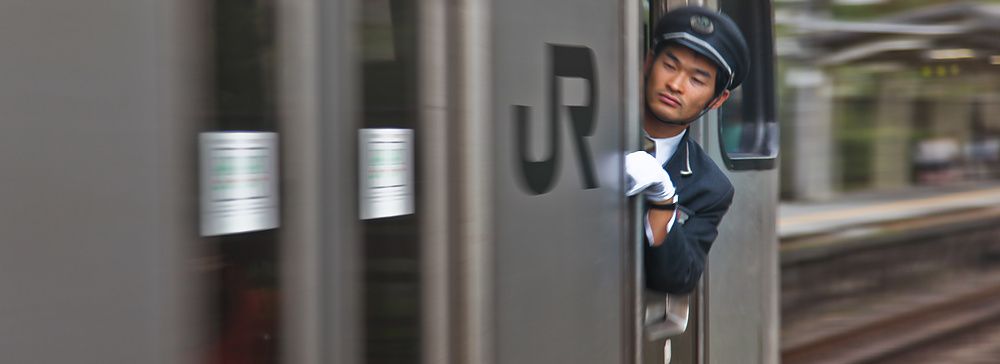
For travelers, these companies feel almost like one. They share the same logo, and you can buy a ticket across several JR companies in one go. A Tokyo–Hiroshima trip on the Shinkansen runs on two companies’ lines, but what you’re holding is a single ticket.
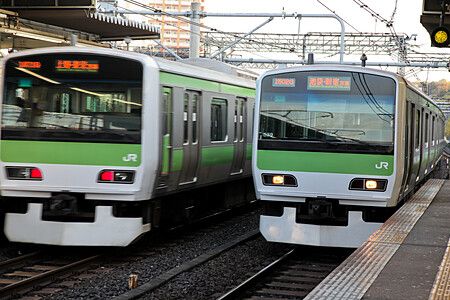
Within Tokyo, the JR you’ll be using is always JR East: the Yamanote, Chuo, Keihin-Tohoku and Sobu lines. These are the above-ground lines that link the big neighborhoods, and if you have a JR pass you’ll use them constantly.
Tokyo’s subways
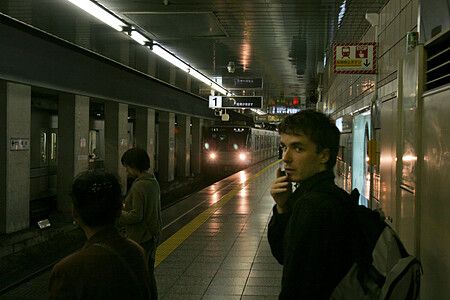
Tokyo’s subway doesn’t belong to one company. Its lines are split between two operators. Tokyo Metro has nine lines, including the Ginza, Marunouchi, Hibiya and Hanzomon lines. The other four (Asakusa, Mita, Shinjuku and Oedo) belong to Toei, which is run by the Tokyo Metropolitan Government’s transportation bureau.
On the maps they look like a single network, and at many stations you’ll go from one to the other without even noticing. The fares, though, are calculated separately. When you transfer between the two, you pay the fares for both legs, minus a small transfer discount.
If you’re in the city for a few days, you can get the Tokyo Subway Ticket. It comes in 24-, 48- and 72-hour versions and works on every Tokyo Metro and Toei line, but not on JR. It’s only sold to people with temporary visitor status, so have your passport with you.
I recommend getting it if you’ll be spending those days around Asakusa, Ginza, Roppongi and similar areas, where the subway really does drop you right where you’re going. But if most of your trips are along the Yamanote line, you could end up paying for a pass you don’t use enough to make it worth it.
Other big cities have their own subways too, run by their own operators, separate from JR: Osaka Metro in Osaka, and city-run subways in Nagoya, Kyoto, Fukuoka and Sapporo.
Private railways
The private companies are the part that confuses first-timers the most, but they’re also the ones that take you to a lot of the most beautiful places. Japan has sixteen major private railways, most of them around Tokyo and in the Kansai region. Technically, Tokyo Metro is classified as one of them too.
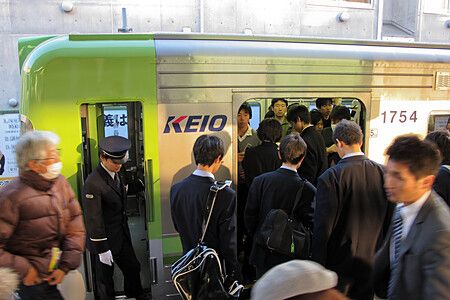
Around Tokyo, the names you’ll see most often are Tokyu, which starts from Shibuya; Odakyu and Keio, from Shinjuku; Seibu, from Ikebukuro and Shinjuku; Tobu, from Asakusa and Ikebukuro; Keisei, from Ueno; and Keikyu, from Shinagawa. There’s also Sotetsu, which mainly serves the Yokohama area.
In Kansai the big private railways are Hankyu, Hanshin, Keihan, Kintetsu and Nankai. They connect Osaka, Kyoto, Kobe and Nara in direct competition with JR West. Nagoya has Meitetsu, and Fukuoka has Nishitetsu.
Don’t think of these as second-rate lines. If anything, they often leave from a more central station or get you closer to where you actually want to go, and on some routes they’re cheaper than JR. There’s just one drawback: you can’t use them with the Japan Rail Pass.
Tickets and ticket gates
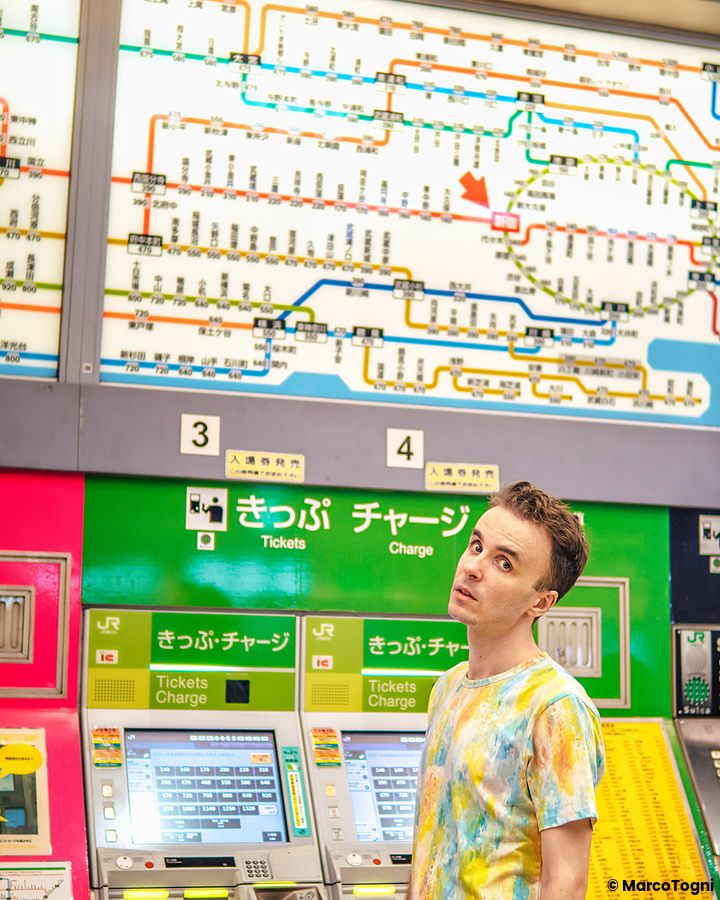
Each company sets its own fares, and that’s the first rule to get straight. When you switch from one company to another you’re paying for two separate tickets, each with its own minimum fare, which is usually somewhere around 150–200 yen. So a short trip with a transfer between JR and the subway costs more than the same trip on a single company’s lines.
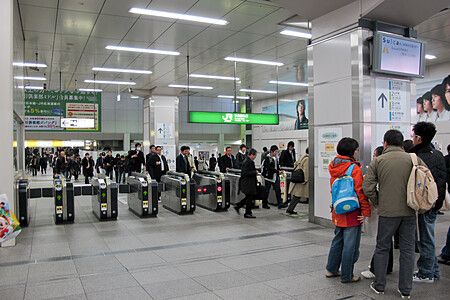
Many stations have direct transfer gates between two companies, so you don’t have to go out to the street. With an IC card you just tap through: the system charges you for the first leg and starts the next one.
Paper tickets take a little more care. Sometimes the ticket machines let you buy a combined ticket all the way to your final stop on the other company. If you can’t find one, buy the cheapest ticket and pay the difference at the fare adjustment machine before you exit. Nobody’s going to fine you. It’s completely normal, and Japanese people do it too.
Pay attention to station names as well, because the same name doesn’t mean the same building. A few typical cases:
- In Nara, the JR station and the Kintetsu station are two different places, and Kintetsu Nara is much closer to the park and the main temples.
- In Arashiyama, the JR station is called Saga-Arashiyama, while the Hankyu station is on the other side of the river, south of Togetsukyo Bridge.
- In Asakusa, the Tobu station and the subway station have separate entrances, even though they’re just a short walk apart.
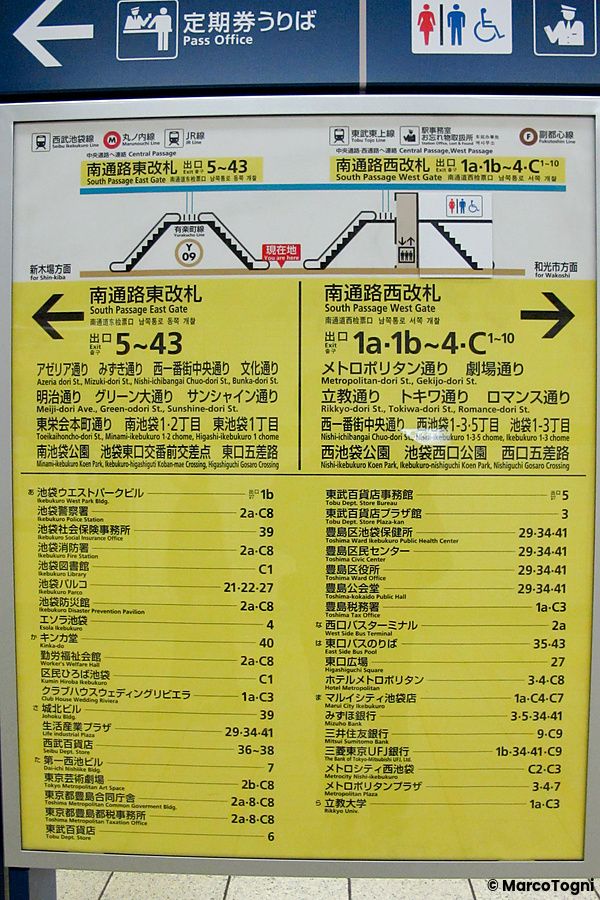
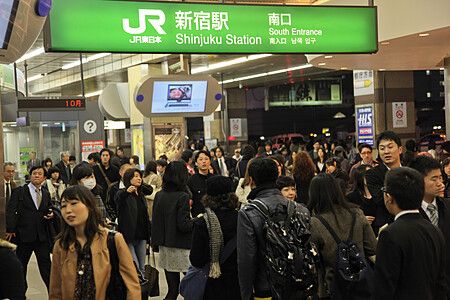
- In Shinjuku, JR, Odakyu, Keio and the various subway lines each have their own ticket gates, and walking from one company’s exits to another’s can take quite a few minutes.
Trains that switch companies
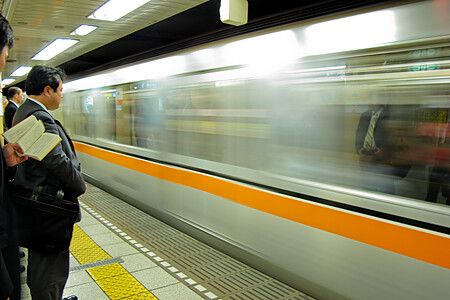
In Tokyo it’s common to board a subway train and end up in the suburbs without ever changing trains. This is what’s called through service between different companies. The subway lines are connected to the tracks of the private railways and JR, and trains run straight through from one to the other. At the station where the two meet, only the crew changes.
Some of the most-used examples: the Hanzomon line continues onto the Tokyu Den-en-toshi line, the Fukutoshin line runs through onto the Tokyu Toyoko line all the way to Yokohama, and the Toei Asakusa line connects with Keisei and Keikyu, forming the route between Narita and Haneda. JR does it too, for example with the Chuo-Sobu line continuing onto the Tozai line.
For travelers, this has two practical consequences. First, the fare is still calculated company by company, even if you never get off. With an IC card, the total is charged automatically when you exit.
The second point is for Japan Rail Pass holders. If you stay on the train when it moves onto subway or private tracks, you have to pay separately for that stretch. Check the destination shown on the train, too. On the Hanzomon line you might see the name of some small town in Saitama you’ve never heard of, and that’s normal.
IC cards
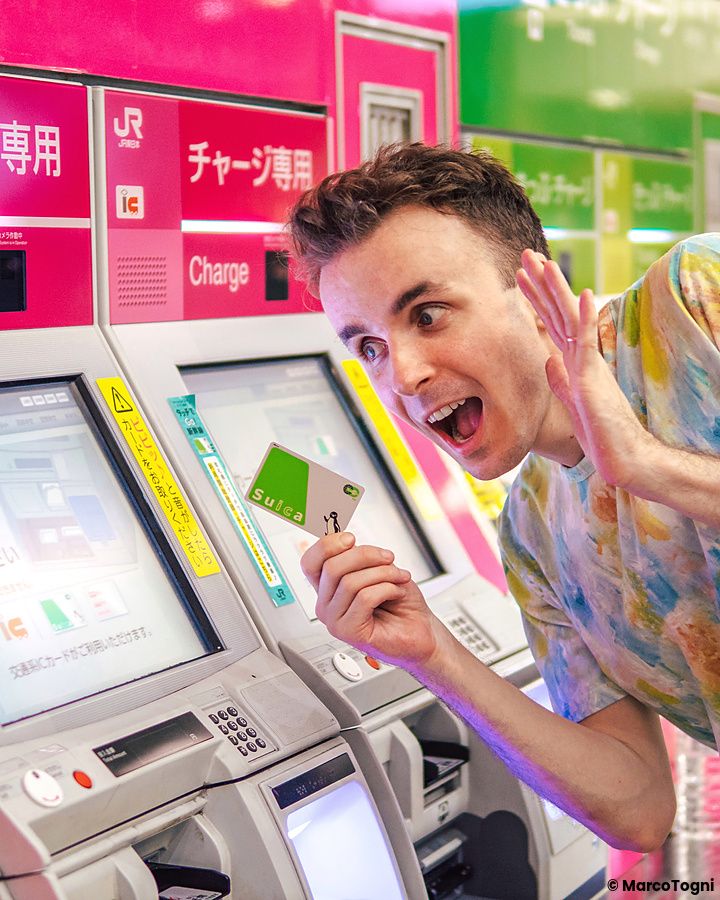
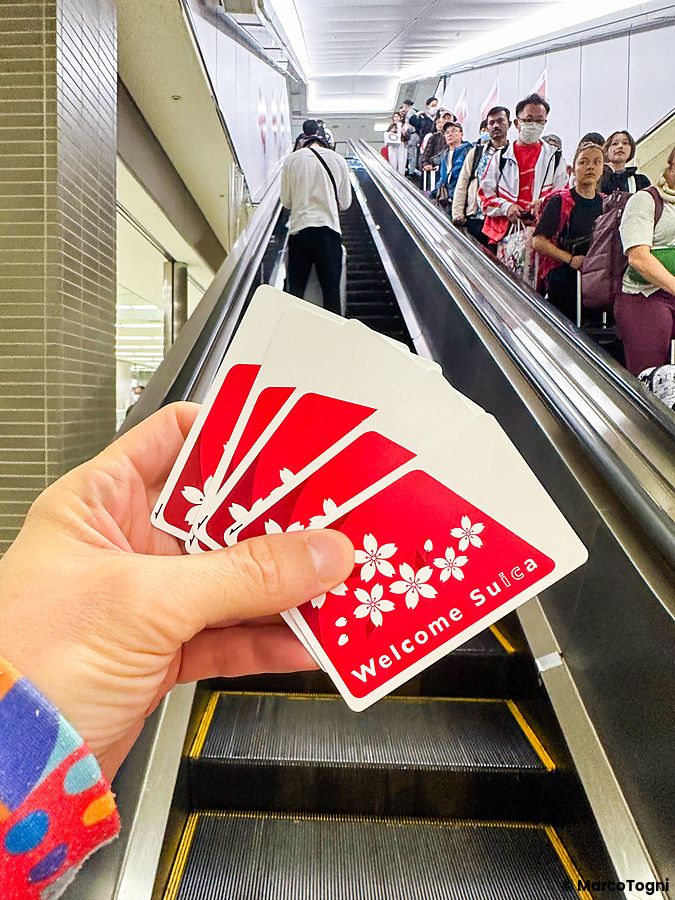
Rechargeable IC cards make almost all of these problems go away. There are ten main cards, including Suica, Pasmo, Icoca, Toica, Manaca, Kitaca and Sugoca, and each one works in the others’ areas. With a Suica you bought in Tokyo, you can pay for the subway in Osaka, the buses in Fukuoka and the private lines in Nagoya.
I recommend one to everyone, even if you have a Japan Rail Pass, because as soon as you step off the JR network you’ll need something to pay with anyway.
Keep in mind that each card works one region at a time. You can’t make one continuous trip that crosses two different IC areas. If you’re going from Tokyo toward Nagoya on local trains, you have to exit and re-enter at the boundary, or buy a paper ticket.
Reserved seats on limited express trains, JR or private, also require a separate surcharge, so the card on its own isn’t enough. For getting around the city and the surrounding area, though, you’ll almost never need anything else.
The Japan Rail Pass
The Japan Rail Pass works across the entire network of the JR companies, from the Shinkansen to express, rapid and local trains. There are a few specific exceptions, though, and you should know them before you go:
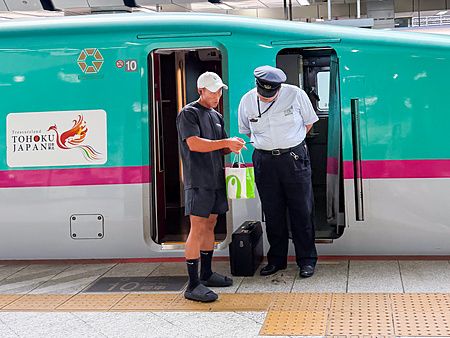
- On the Nozomi and Mizuho Shinkansen, the pass alone isn’t enough. You need a supplementary ticket for every trip, which you buy at the station. Alternatively, on the Tokaido and Sanyo lines you can take the Hikari, Kodama and Sakura.
- Among non-JR lines, it’s valid on the Tokyo Monorail, which connects Hamamatsucho with Haneda Airport.
- It also works on some local lines, like the Aoimori around Aomori or IR Ishikawa between Kanazawa and Tsubata, but only on specific segments.
- On trains to Nikko and Kinugawa that continue onto the Tobu network, you pay for the private section separately.
- It covers JR local buses and the ferry to Miyajima, but not express buses.
Tokyo Metro, Toei and private railways are never covered. In Tokyo the Yamanote Line gets you to a lot of neighborhoods, but for Asakusa, Roppongi or Omotesando the subway is often the more direct option.
I often see people taking really long detours just to stay on JR and avoid buying a subway ticket. I’ll be honest with you: you save a few yen and lose half an hour, and on a day of sightseeing that time matters a lot more than the money.
A few common trips
A lot of the classic day trips from the big cities involve a private railway, and that’s where the difference between operators matters most.
For Hakone, the most convenient rail option is the Odakyu Line from Shinjuku. The Romancecar, the express with reserved seats, costs about 1,000–1,500 yen extra each way, while the Odakyu group’s Hakone Freepass covers the basic fare and most of the transportation in the area. With the Japan Rail Pass you can take the Shinkansen to Odawara, but from there on you still have to pay.
For Nikko, the natural choice is the Tobu line from Asakusa, which also has its own passes for the area. If you have a JR Pass, you can take the Shinkansen to Utsunomiya and then the JR Nikko Line at no extra cost, though with one more transfer.
Between Kyoto and Nara, JR and Kintetsu offer very similar travel times and fares. Without a JR Pass, I’d go with Kintetsu, because its station is closer to the deer park.
Getting to Tokyo’s airports also means choosing between operators. For Narita there’s JR with the Narita Express or Keisei with the Skyliner from Ueno. For Haneda there’s Keikyu from Shinagawa or the Tokyo Monorail, which is free with the JR Pass.

Finding your way
Once the logic clicks, a few habits are enough to keep you from ever getting it wrong:
- Use a route-planning app like Google Maps or Japan Transit Planner. It shows the company and the fare for each leg, so you can spot right away where you’re paying two separate fares.
- Check the company name on the signs, not just the line name. In stations like Shinjuku or Umeda, that’s what points you in the right direction.
- Keep some money on your IC card, even if you have a JR Pass, so you don’t have to top it up in a rush when you transfer.
- If you buy the wrong ticket, don’t worry. The fare adjustment machine by the exit gates fixes it in a few seconds.
- Look up the company that serves your destination first, then choose your pass, not the other way around.
That last point is the one I find myself repeating most often. A lot of people buy a pass assuming it works everywhere, then find out once they’re in Japan that their destination is served by a private railway.
My advice
At first it feels like a maze, but after a couple of days you’ll catch yourself checking the company name before you even look at the line color. I wouldn’t obsess over it. Get a Suica, let the app tell you which train makes the most sense, and when an extra ticket gets you there sooner, just pay for it without thinking twice.
The JR Pass makes sense for long Shinkansen trips, the subway for the city, and private railways for day trips. That’s three different systems for three different jobs. And when you find yourself on a Hanzomon Line train heading to a town whose name you can’t pronounce, at least you’ll know why.