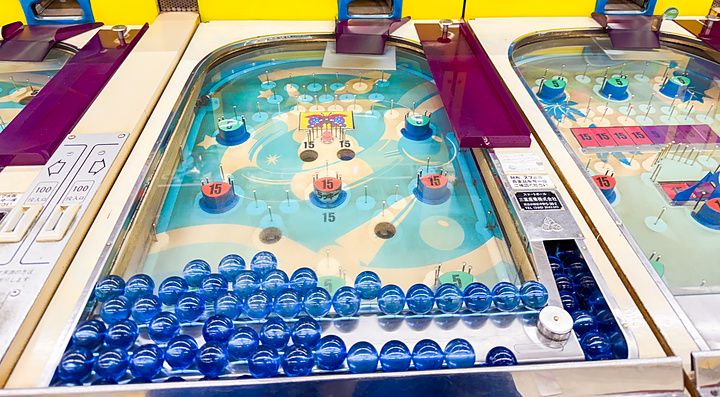
 168 m
Smartball New Star168 m
Analog pinball and candy prizes.
 ©Malcolm Fairman - Shutterstock
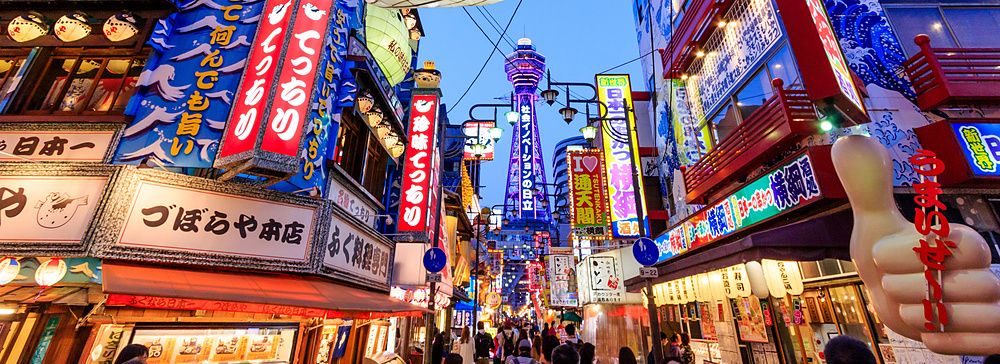
An observation tower set down in the middle of Shinsekai, the Osaka neighborhood of stacked neon signs and kushikatsu joints that stay open late — and the best part isn’t the enclosed floors but the open-air walkway that wraps around the top.
Everybody knows Tsutenkaku for the Billiken, the god of good luck whose feet people rub, and for the colored light on its tip that forecasts the next day’s weather. You go up to see Osaka all around you, from the port to the mountains behind the city, and to look down on the street running below.
It’s the right place if it’s your first time in Osaka, if you’re traveling with kids, or if you want the view from above with the city lit up.
You work your way up floor by floor, and each one is its own thing. This isn’t a tower where you ride up, look out, and come back down.
From the walkway up top, you see a different Osaka on each side. To the west there’s the port with its Ferris wheel, and to the east the Higashi-Osaka plain runs flat until it hits Mount Ikoma. To the southeast you see the trees of Tennoji Zoo and Abeno Harukas, a gray wall rising above everything else. To the north, the street points straight toward the buildings of Namba.
For me the light floor is the weakest part of the whole thing. You walk through and keep going, because the show there is inside, not outside. Where you end up spending the most time is up top, in the open air.
There are two catches. First, the only way to reach the open-air walkway is by stairs, so with a stroller or tired legs you’ll have to skip that part. Second, the line is underground, in an enclosed corridor with nothing to look at, and on weekends around midday you’ll stand there for quite a while.
The biggest reality check, though, is that this isn’t a tall tower. It’s around 100 meters, and Abeno Harukas, three times that height and not far away, reminds you of it fast. But that’s exactly why the view is so good. You’re low enough to make out the rooftops, the signs, the cars, and the people walking, not just a distant carpet of lights.
I go back every time someone visits me in Osaka, and I go as the sun goes down. From that walkway you watch the city light up piece by piece while down below the Shinsekai signs crowd in on each other all at once, and I don’t know anywhere else in Japan where a neighborhood and its tower stand so close together.
The sweet spot is the hour before sunset. Go up while it’s still light, stay as long as you need, and by the time you come down the street is already lit. That way you get both versions of the city on a single trip up.
Early on weekday mornings the tower is almost empty, and you can go around the walkway without waiting your turn at the glass tip. Avoid Saturdays and Sundays around midday, when the wait gets long and you’re shoulder to shoulder up top.
The worst times of all are spring break, summer vacation, and the days around New Year’s, when the line never clears. Fall is the quietest season, and with clear air Mount Ikoma stands out sharply on the horizon.
Wind matters more than you’d think. If it’s blowing hard or there’s thick fog, they close the open-air section and only the glassed-in floors stay open, at which point you’ve only seen half the place.
In summer, be ready for the heat: there’s not a scrap of shade on the walkway and the metal gets scorching. On days with low, heavy clouds, don’t bother. You can’t see far, and all you’re left with is the neighborhood below.
You start in the basement and go up in two stages, switching elevators halfway. In the car that takes you to the top, the attendant tells you to look up, not down, because the ceiling is a starry sky where the Billiken appears. It’s a small thing, but they do it with a smile and a few words of English for anyone who doesn’t follow.
The staff here is one of the best things about the place. Everyone is always attentive, and nobody leaves you stuck wondering where to go.
You end up doing a lot of walking in this tower, more than you’d expect. Besides the upper floors, the full route takes in the third floor, with a café and a model of old Shinsekai from the days of the original tower (it was taken down during the war for its steel), then the peacock ceiling painting at the entrance, and the shops in the basement.
If you only want the view, you can skip all that and stick to the two top floors. With kids, though, you’ll stay twice as long as you planned, what with the slide, the toy machines, and the candy makers’ shops.
If heights get to you, be realistic: the open-air walkway has a grated floor, so you see the drop under your feet even before you reach the glass. People who are afraid of heights don’t even make it to the tip, and I’m not joking. You’ll see people stop halfway and turn back.
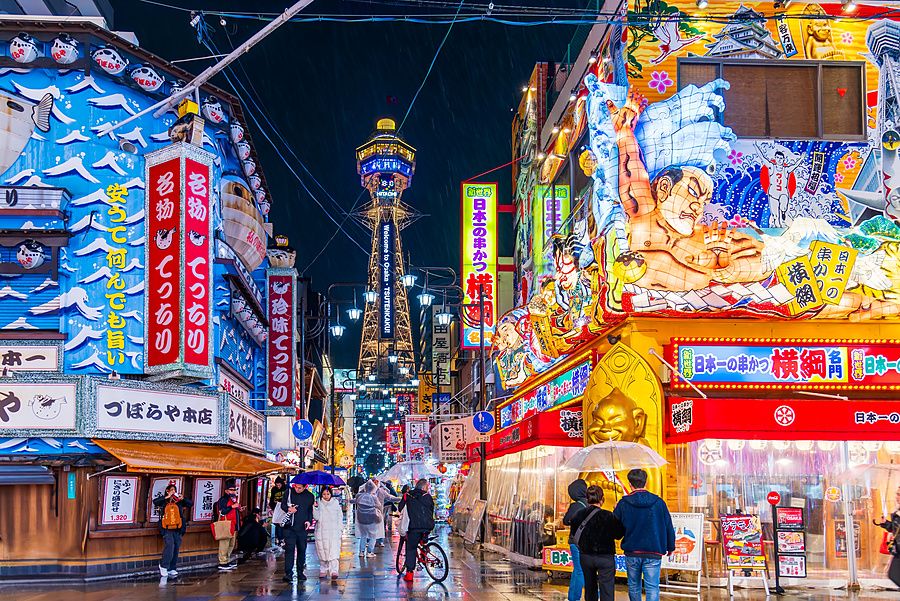
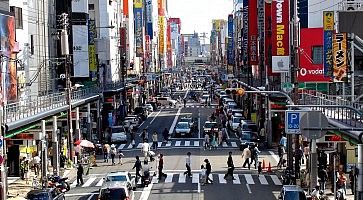
The photo everyone wants isn’t taken from the tower but from the street in front of it, looking up with the signs closing in on both sides and the steel frame at the end of the view. Stand in the middle of the pedestrian street, by the decorated storefronts, and wait for the lights to come on.
The right moment is when the sky is still dark blue and the neon is already on. The tower stands out against the sky, and the signs don’t blow out the shot.
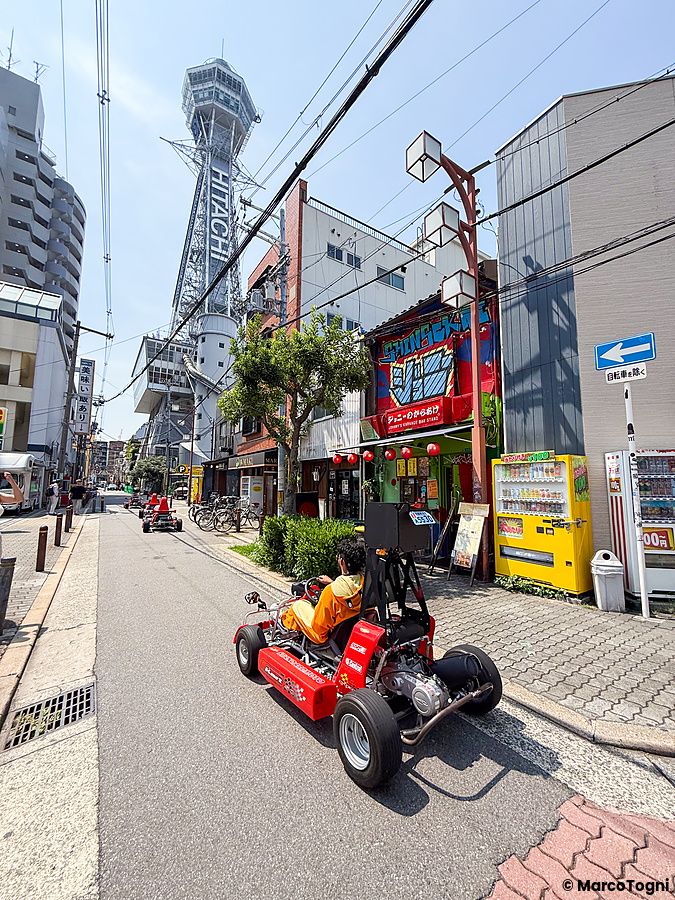
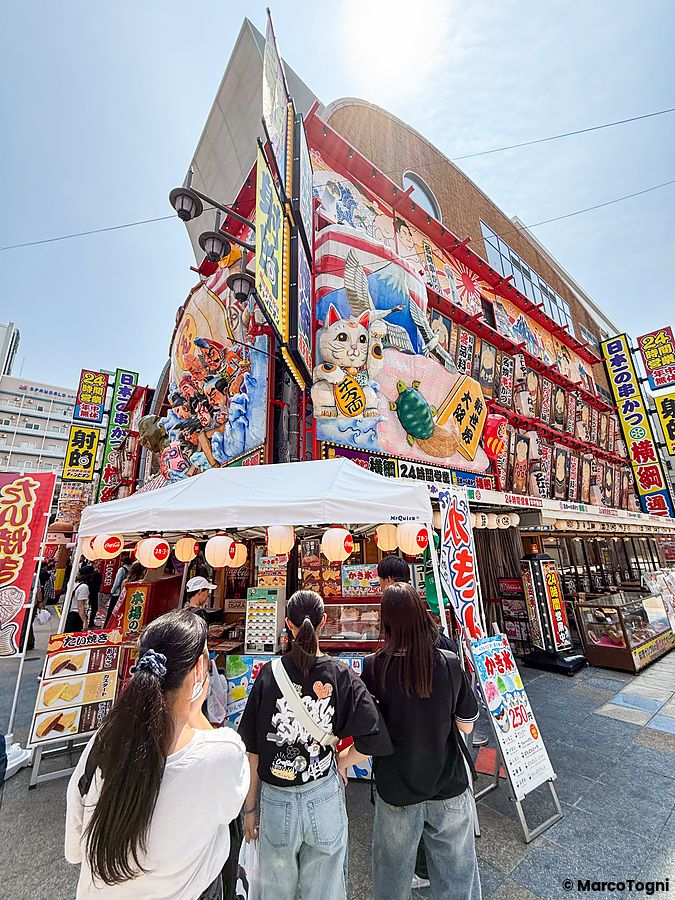
The same street has the storefronts that make Shinsekai so recognizable: a giant sumo wrestler mounted on a building, a golden Billiken sitting outside an entrance, 3D signs as big as a room. Go-karts driven by tourists in costume rumble through the middle, and you hear them before you see them.
From above, the best spot is the glass tip facing north, with the street running straight below and the lights lined up. During the day you’ll wait a bit for it to free up; in the evening, a bit less.
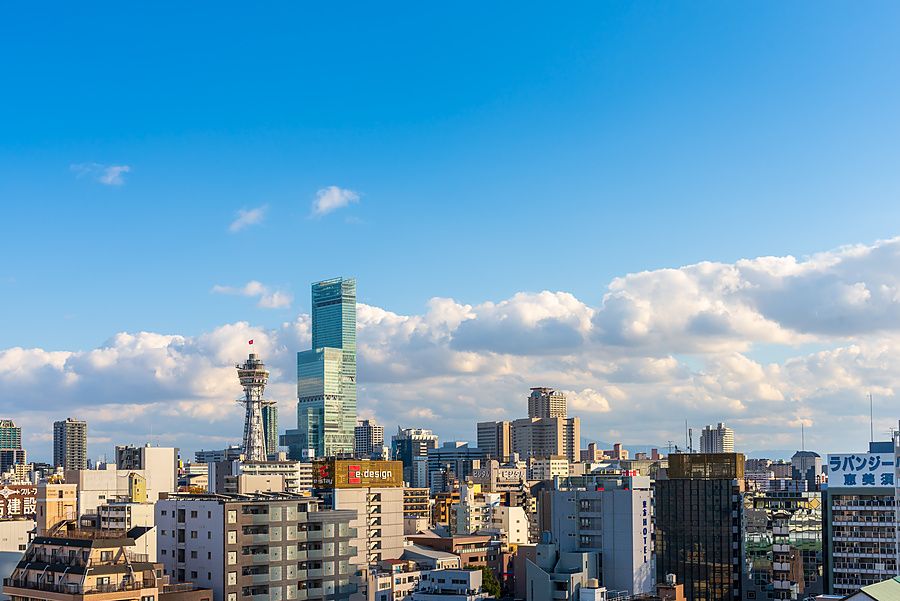
It’s worth every minute you give it, and you make the detour for one thing: standing outside, 90 meters above a neighborhood that looks twice as bright at night, with no glass in front of you. You’ll find a wider, higher, clearer view elsewhere in the city, but it’s not the same thing.
If you’re afraid of heights or can’t manage stairs, know going in that you’ll miss the part people come for. For everyone else, my advice is to go, and to plan on staying up there longer than you expect.
This place is on MarcoMaps
Tsutenkaku
My map of Japan: over 4,000 places I've tried myself, each with photos, rating, and hours. Filter by category and rating, find veg-friendly spots and places near you with GPS. No sign-up, right from your phone.


Tsutenkaku - nearby you will find:
168 mAnalog pinball and candy prizes.
 280 m
Open 24 hours, and you can find anything.
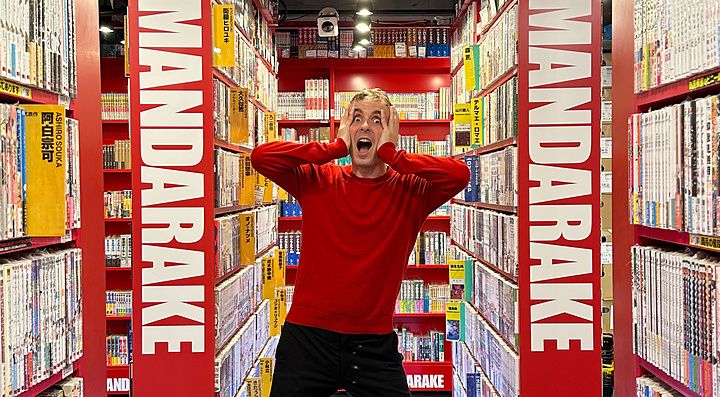 742 m
Used anime and manga.
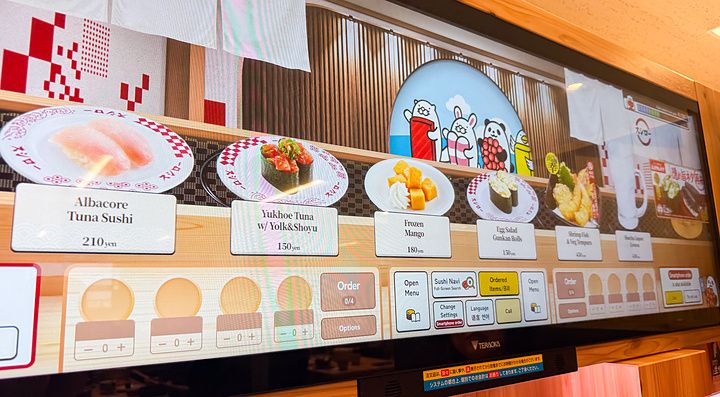 833 m
Cheap kaiten sushi.
 883 m
Otaku district, similar to Akihabara.
 899 m
A store that sells everything. Great.