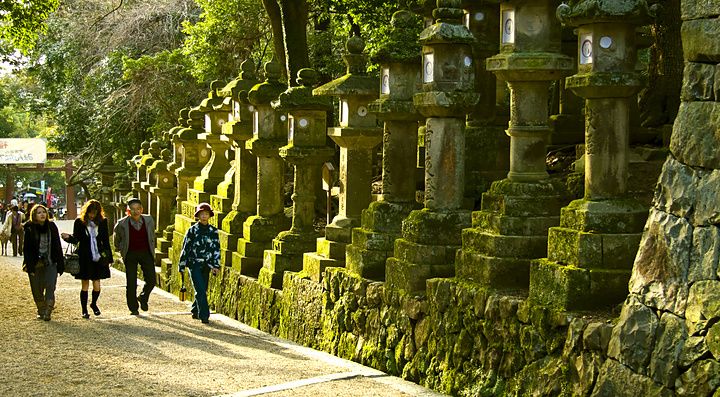
627 m
Isuien Garden627 m
Beautiful, in central Nara.
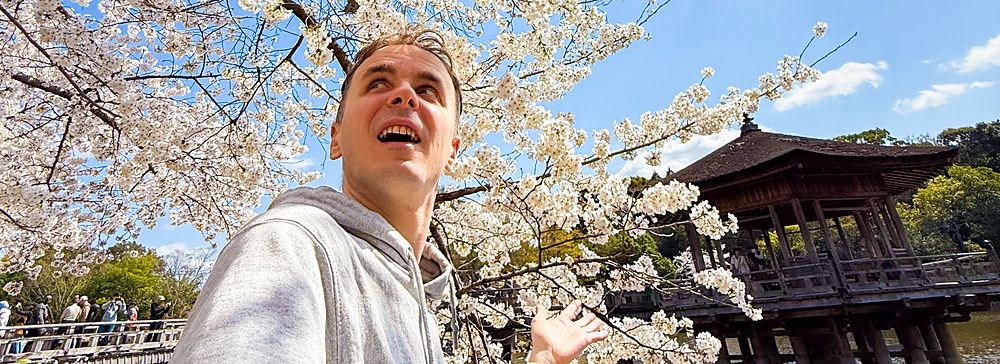
A wooden pavilion out in the middle of a pond, in the southern part of Nara Park over toward Kasuga Taisha. It’s called Ukimido, and from a distance it looks like it’s resting on the water. You walk out to it on a wooden bridge, with cherry trees, tall trees, deer, and little rowboats all around.
There are no halls to tour and no treasures on display. People come for the view, to sit for a moment out on the water, and to see how the pond changes from season to season. If you want to take a break in Nara after the big temples, this is the place, and in spring, when the cherry trees reach right down to the water, it’s my favorite scene in all of Nara.
The pavilion has six sides and a cypress bark roof, and it sits in the center of Sagi-ike pond. What’s really worth seeing, though, is the whole picture: the water, the trees reflected in it, and the hills of the park behind. Don’t expect an old building, either. The first pavilion was built in 1916, and the one you see today is a 1994 reconstruction that kept the same shape.
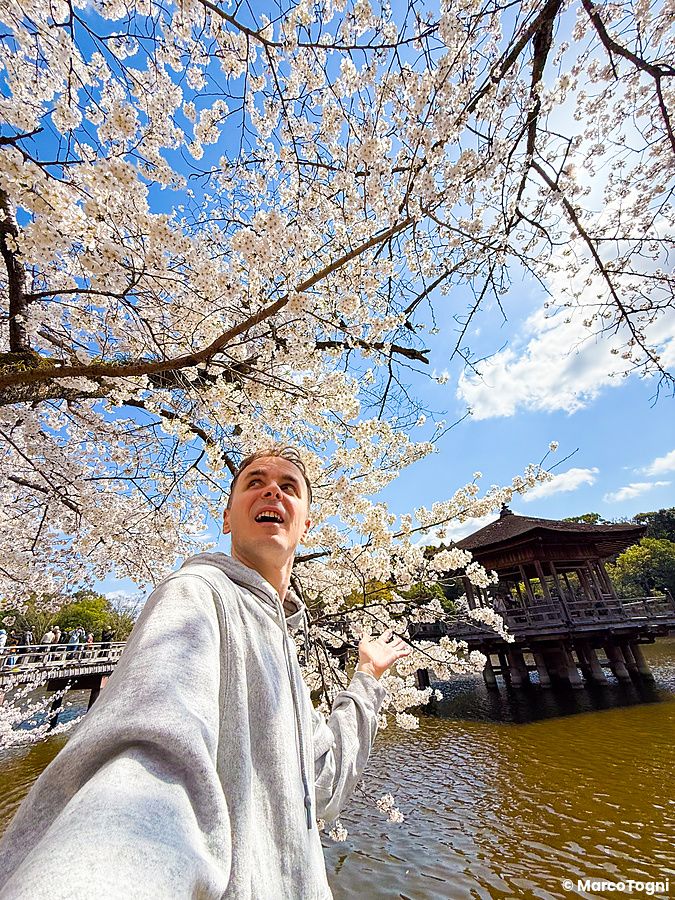

The most useful thing to know is where to look at it from. From the middle of the pavilion you see the shore, but you can only get the famous view, the one with the reflection, from outside the pavilion. The best spot is the shore with the cherry trees: put a branch in bloom in the foreground and the pavilion behind it, out on the water.
Don’t expect a large building or anything to explore. You can walk around the pavilion in no time, and if you’re looking for statues, gold, and dim halls, you won’t find any of that here.
Compared with Nara’s big temples, there are fewer people here. Tour groups stop at Todaiji and Kasuga Taisha, and only some of them make it down to the pond. You can hear the ducks, the oars of the boats, and the deer walking over dry leaves.
In spring all that changes. The shore fills up with people holding up their phones, every boat is out, and on the bridge you walk single file.
In the end it’s simple: a wooden pavilion, a pond, trees all around. It’s not a monument to study. It’s a scene to look at.
When I have guests from Italy and take them to Nara, the pond is the last stop on the tour of deer and temples. That’s where we finally sit down and watch the water without saying a word, and no one has ever told me it was a waste of time.
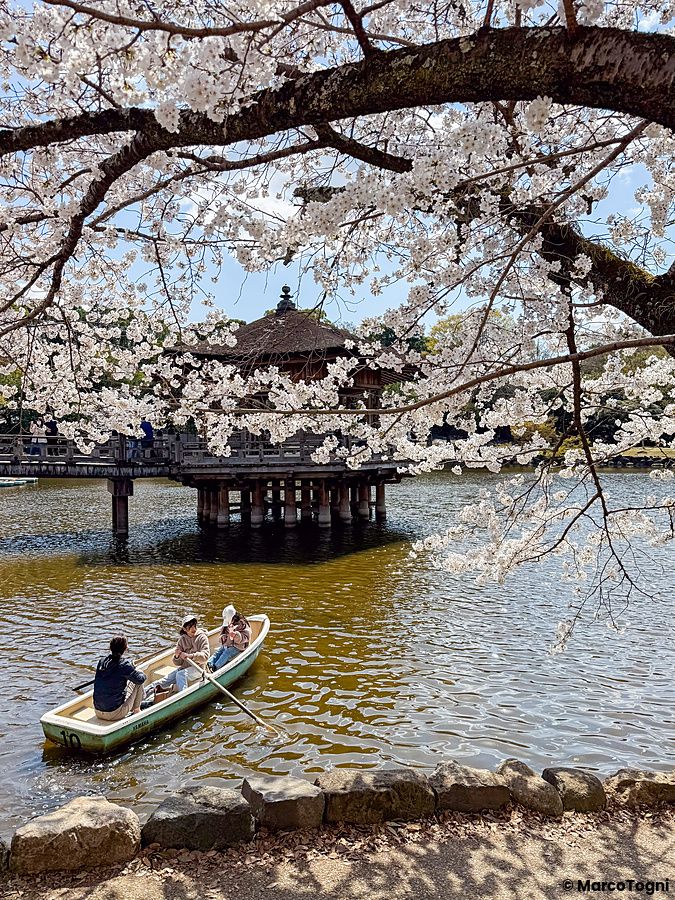
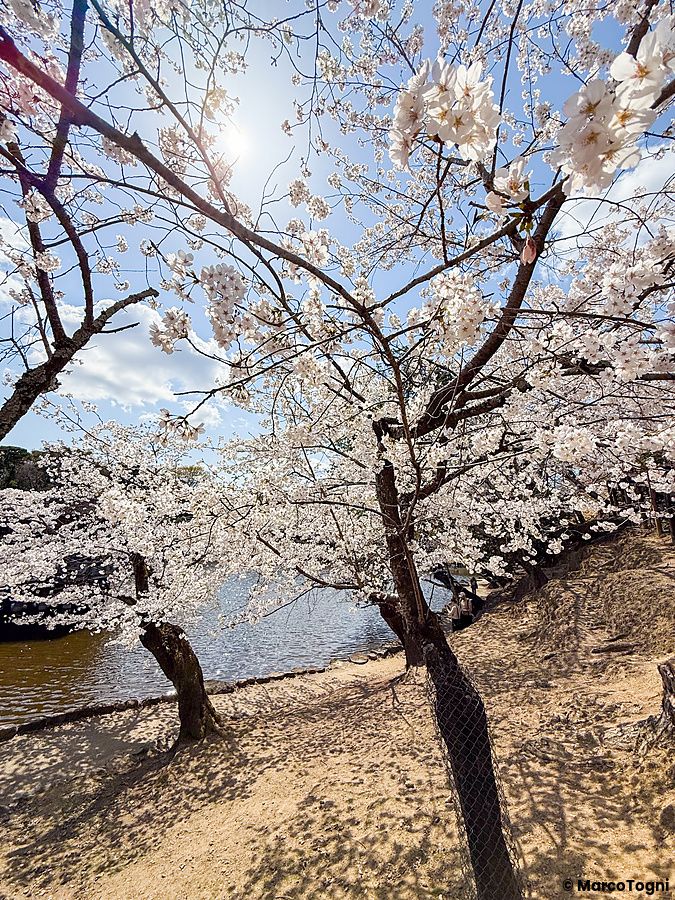
Ukimido is at its best in spring, when the cherry trees bloom. The branches hang over the water, the boats pass under the blossoms, and the pavilion sits in the middle of all that pink. Those weeks are crowded, so if you want the bridge to yourself, go early in the morning, when there are just a few ducks on the pond and the light is still low.
In fall the park’s trees turn red and yellow and are reflected in the water, and in summer the pink flowers along the shore take their turn. In winter, if it snows, you can see the sacred mountain behind Kasuga Taisha white with snow and reflected in the pond.
In the evening the pavilion is lit with an orange light, and you can see it from far off in the dark. The park around it, though, is really dark, with no lights along the paths through the trees. Some people find it the most beautiful time to be there, while others feel a little uneasy.
On gray days or when it’s windy, the reflection disappears and you’re left with a pavilion on a pond. To see the full reflection, you need a day without a breath of wind.
The pond is on flat ground and the wooden bridge is level, so getting to the pavilion is easy, even with a stroller. It’s a different story if you want to head up to the round-window pavilion and the plum trees. That’s hilly ground, with dirt paths and some ups and downs. The round-window pavilion is an old Kamakura-period storehouse that belonged to Kasuga Taisha and was moved here in the late 1800s. It’s an Important Cultural Property, and you can see it only from the outside, behind a fence.
The plum grove has about 250 trees with red and white blossoms, and it’s at its best in February and March, when the cherry trees by the pond are still bare.
It’s a good place for kids. They love the boats and the deer, and from the bridge they can watch the carp and turtles in the water. Just remember that the park has no trash cans, so you’ll need to take your trash with you.
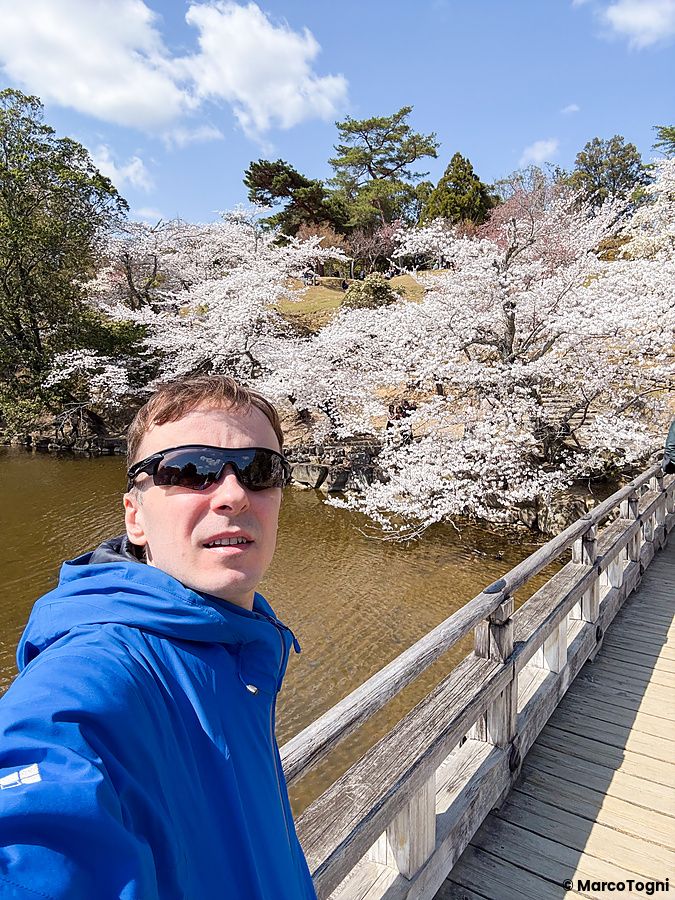
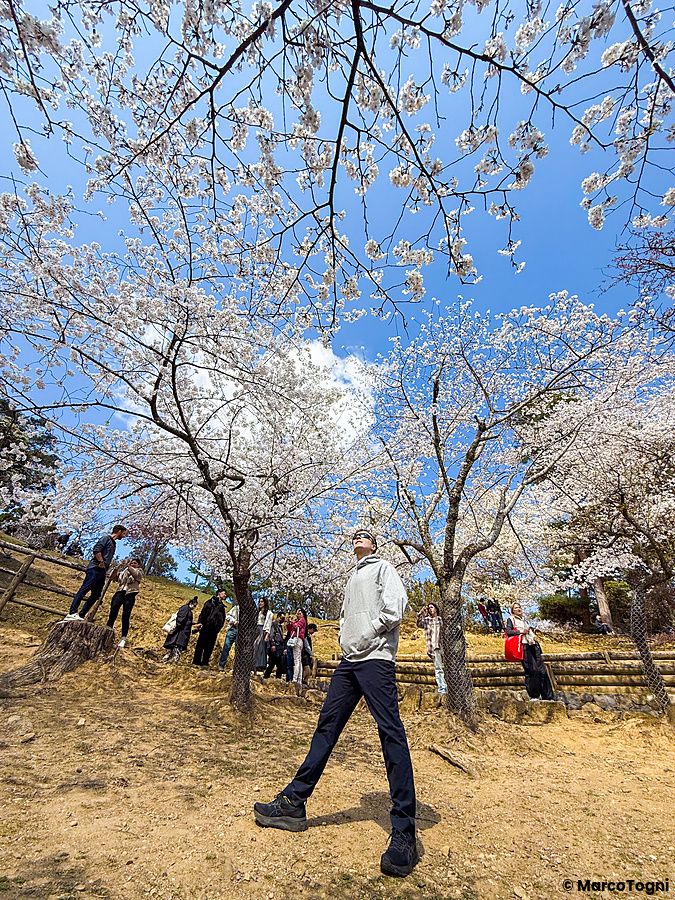
You don’t come here for the building, which is just six wooden sides and a bark roof. You come for the way it sits on the water: a pond, trees that change color with the seasons, and a pavilion placed exactly where it belongs. In April, with the cherry blossoms over the water and the boats passing underneath, it’s the most beautiful thing you can see in Nara Park, so make the detour without thinking twice. If you’re going to Nara only for the monuments, though, and every minute has to go toward seeing a famous temple, you can skip it.
From Kintetsu Nara Station it's about a 20-minute walk. Cross the park heading east, walk past the National Museum, and turn right down toward the pond before you reach Kasuga Taisha.
From JR Nara Station the walk takes about half an hour, so you're better off taking the loop bus to the Kasuga Taisha Omotesando stop, which is a 5-minute walk from the pond.
This place is on MarcoMaps
Ukimido Pavilion
My map of Japan: over 4,000 places I've tried myself, each with photos, rating, and hours. Filter by category and rating, find veg-friendly spots and places near you with GPS. No sign-up, right from your phone.


Ukimido Pavilion - nearby you will find: