Utagawa Hiroshige
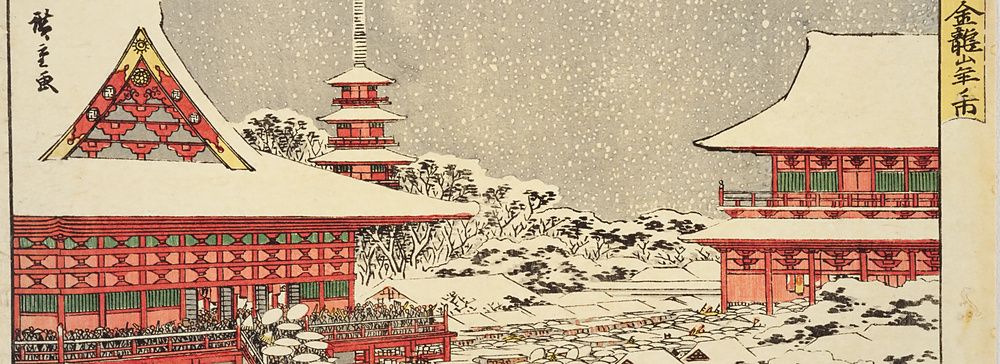
If there’s one artist I’d tell you to get to know before you leave for Japan, even if you know nothing about Japanese art, it’s Utagawa Hiroshige. You’ve definitely seen his prints, maybe without realizing it: bridges in the rain, travelers walking through snow, plum trees in bloom against a red sky.
To me, nobody captured travel and the seasons in Japan better than Hiroshige. There’s also a practical reason to write about him on a travel blog. A lot of the places he drew are still there, and you can go and see some of them with his prints in hand.
Contents
Who Hiroshige was
Utagawa Hiroshige was born in 1797 in Edo, today’s Tokyo, into the Ando family, who were low-ranking samurai. His father held a post in the shogunate’s fire brigade, an unromantic but very practical job in a city built almost entirely of wood.
Hiroshige lost both parents when he was around thirteen and inherited that firefighting post. But his heart wasn’t in it. As a teenager he became an apprentice in the workshop of Utagawa Toyohiro, a ukiyo-e painter, and at sixteen he was given the artist name Hiroshige, which he took partly from his teacher’s name.
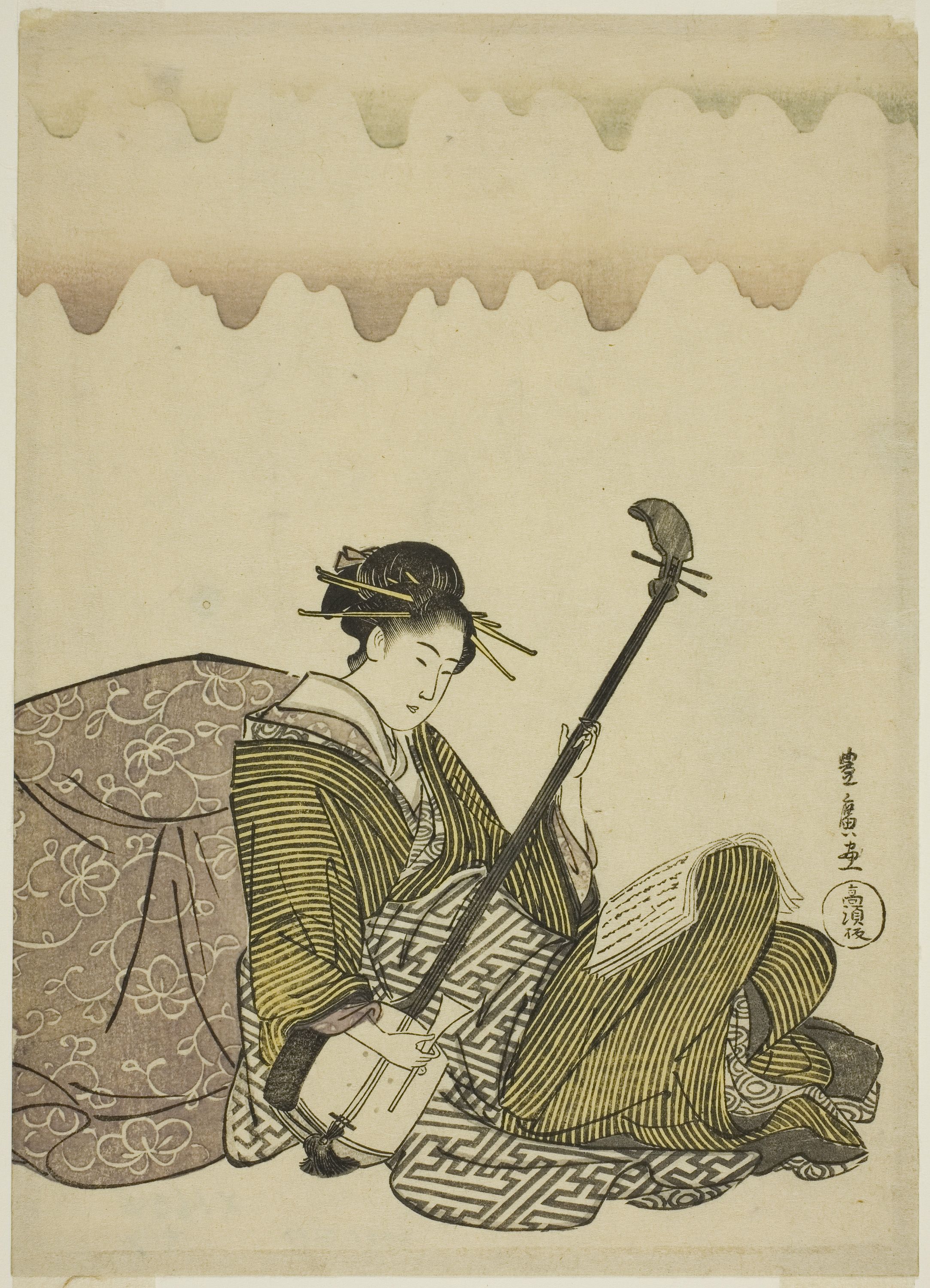
For years he did a bit of everything, as artists did back then: portraits of kabuki actors, beautiful women, book illustrations. Real success came late, after he turned thirty, once he focused on landscapes.
He died in 1858, at sixty-one, during a cholera epidemic that hit Edo at the time. He left behind an enormous amount of work, reportedly thousands of designs, plus a final series he never got to finish.
What ukiyo-e is
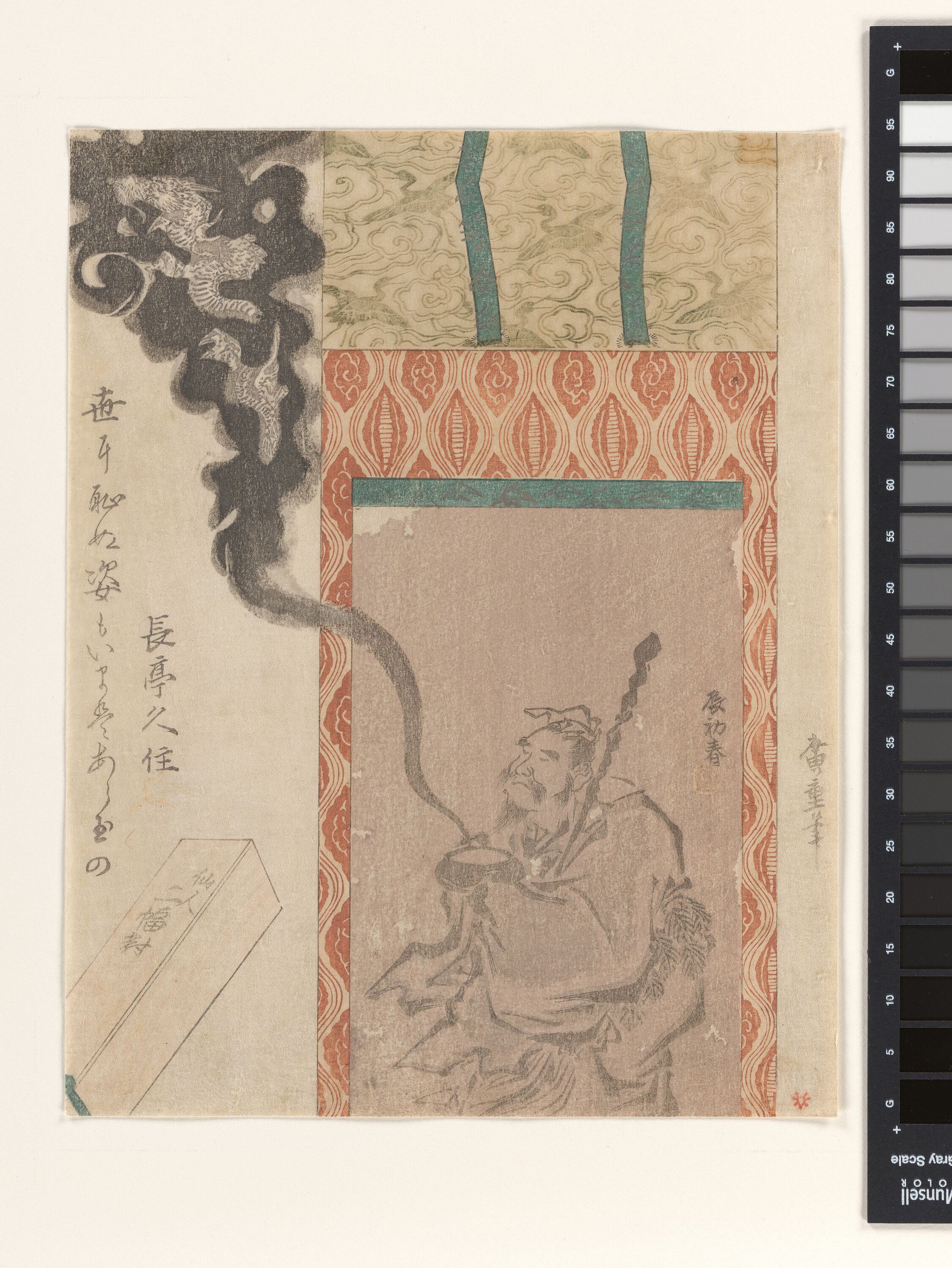
To understand Hiroshige, you need to know what ukiyo-e was, since that’s the technique he worked in. Ukiyo-e were woodblock prints, meaning they were printed from carved wooden blocks, and they were produced in Edo for a very wide audience. Nobody thought of them as museum pieces. A print cost roughly as much as a bowl of soba, and people hung them at home or gave them as gifts.
Every print was a team effort:
- The artist, like Hiroshige, drew the design and specified the colors, but didn’t carve the wood.
- The carver transferred the drawing onto a block of cherry wood and carved it, cutting a separate block for each color.
- The printer brushed on the pigments by hand and pressed the sheets of washi paper one at a time, color after color.
- The publisher decided what to produce, paid for everything and sold the prints in his shop.
This is why there are many impressions of the same Hiroshige print in museums around the world, and why early printings are worth much more than later ones. The blocks wore down with use, and printers often changed the colors or simplified the gradations.
The Tokaido
The series that made him famous is The Fifty-three Stations of the Tokaido, which the publisher Hoeido began releasing in 1833. The Tokaido was Japan’s most important road at the time. It ran along the coast from Edo to Kyoto, with fifty-three post stations where travelers slept, ate and changed horses.
The story goes that Hiroshige had traveled it himself shortly before, with a shogunate delegation taking horses to Kyoto as a gift for the emperor. Not all scholars agree the trip really happened that way, but the prints look like the work of someone who had walked that road.
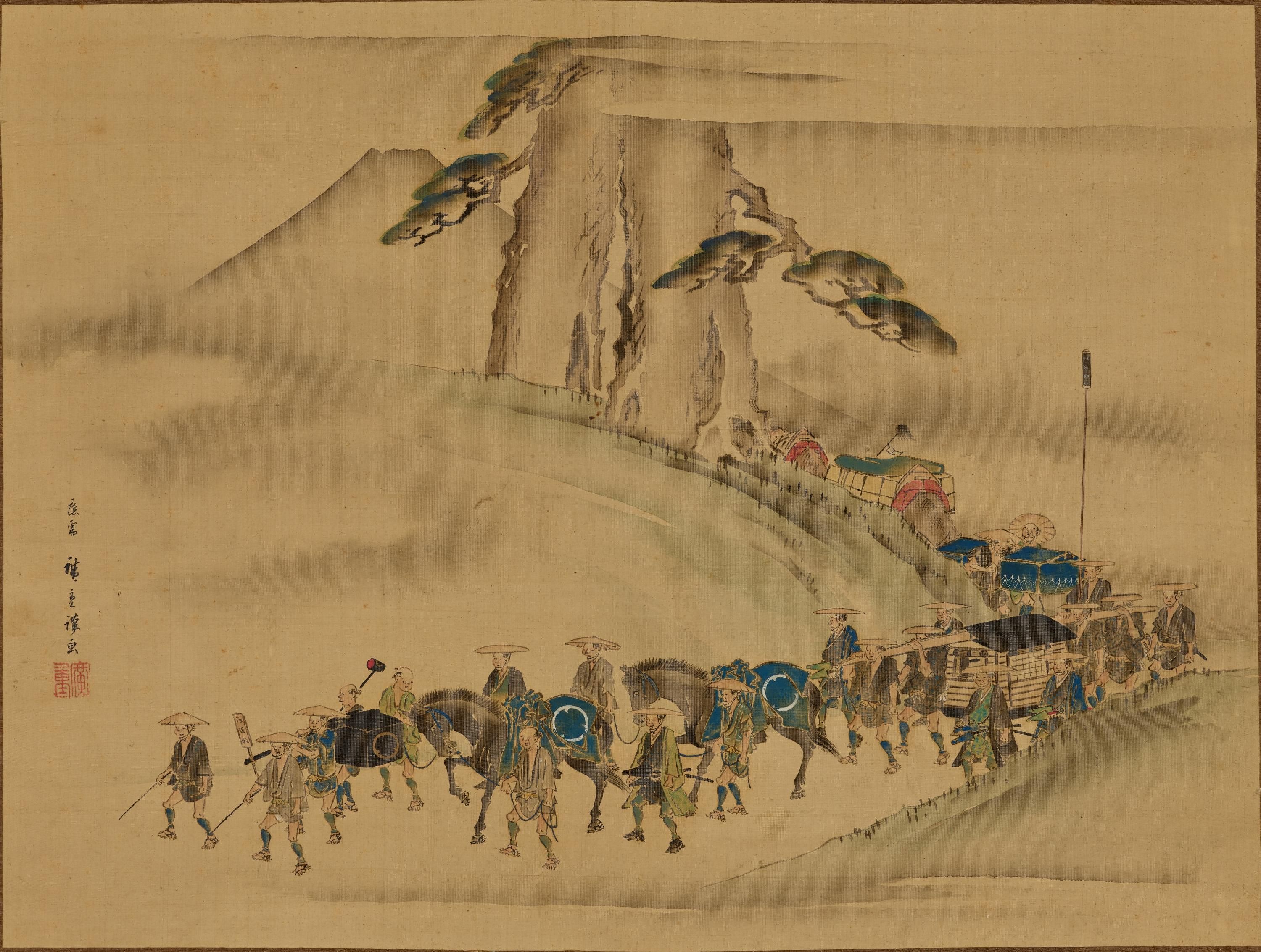
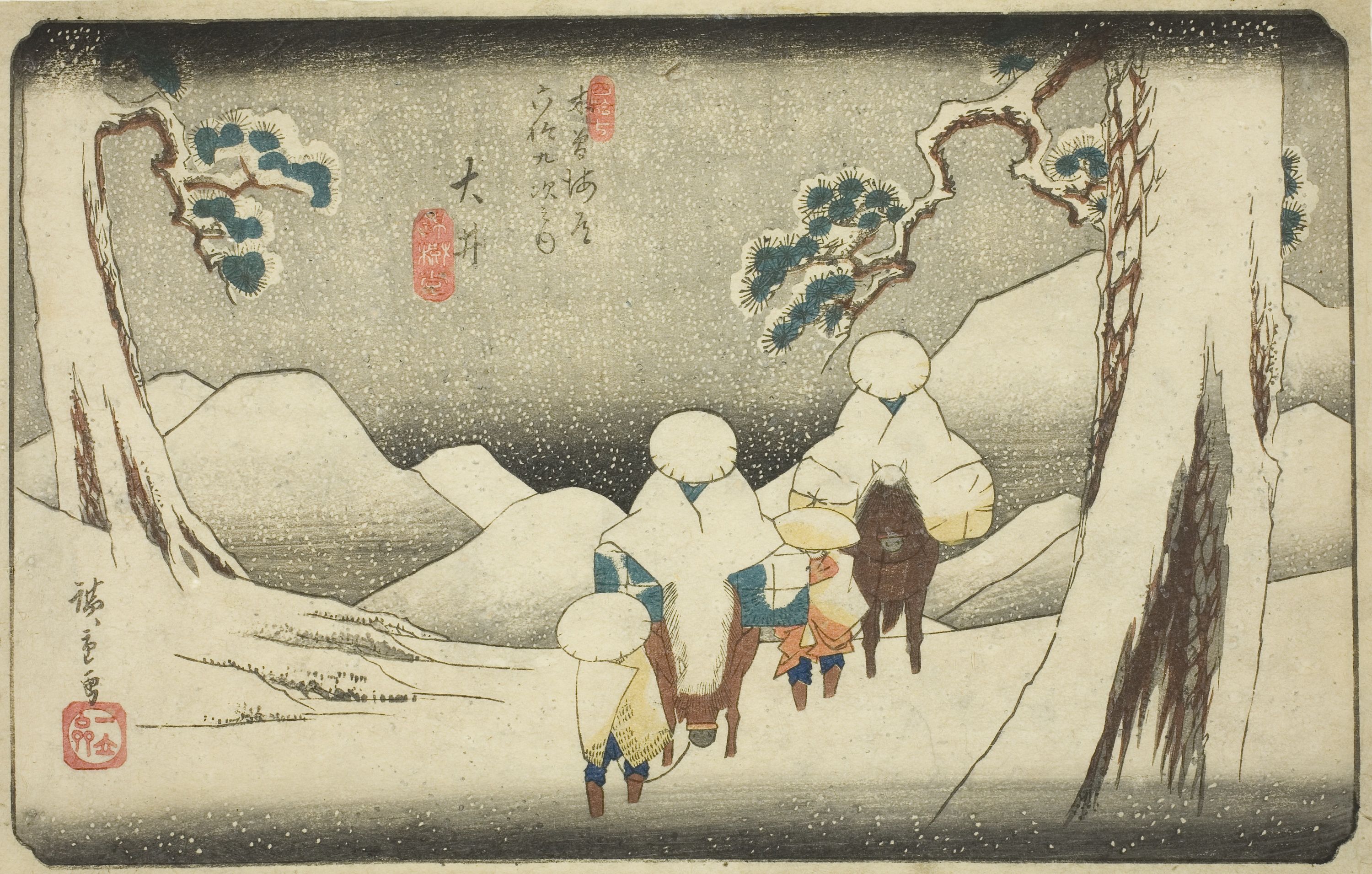
The series has fifty-five sheets: the fifty-three stations, plus the departure from Nihonbashi Bridge in Edo and the arrival in Kyoto. Look at them in sequence and what strikes you is that the real subject isn’t the famous sights but the people on the road. Porters sweat through a thunderstorm, travelers bend into the wind, women from the inns drag customers inside by the arm, people warm themselves on a snowy night.
It was a huge hit, partly because travel was catching on among ordinary people in those years, usually with a pilgrimage as the excuse. People who couldn’t go bought the journey as a set of prints, and those who’d already been kept them as souvenirs.
Hiroshige and Hokusai
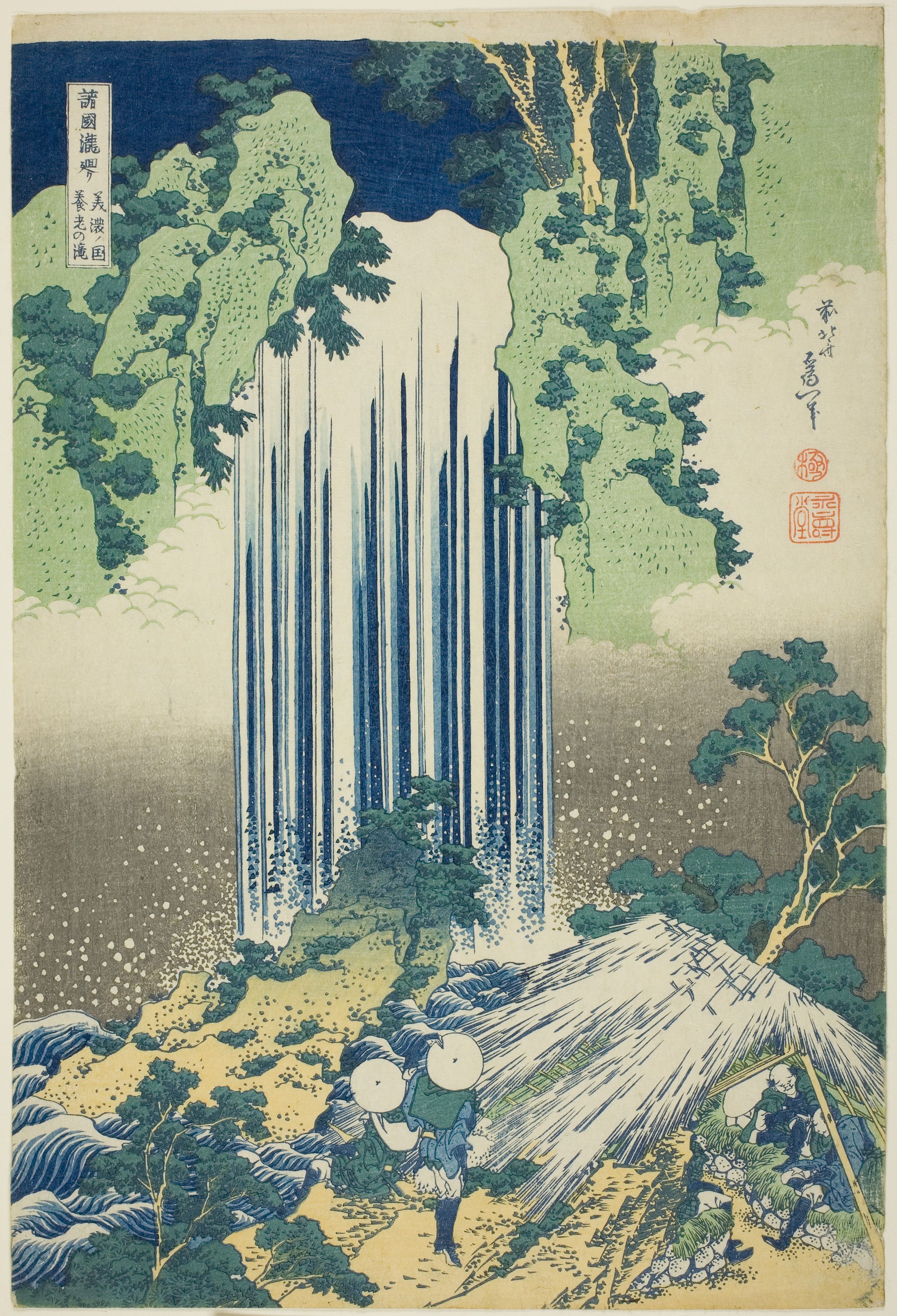
You can’t talk about Hiroshige without mentioning Katsushika Hokusai, the other big name in Japanese landscape art and the man behind the Great Wave. Hokusai was almost forty years older and had just put out the Thirty-six Views of Mount Fuji when Hiroshige was publishing his Tokaido, so people found them side by side in the publishers’ shops.
Honestly, comparing the two is the quickest way to understand what makes Hiroshige special. Hokusai builds his images like an architect, with strong lines and surprising compositions. His nature is full of movement: huge waves, mountains placed in odd spots.
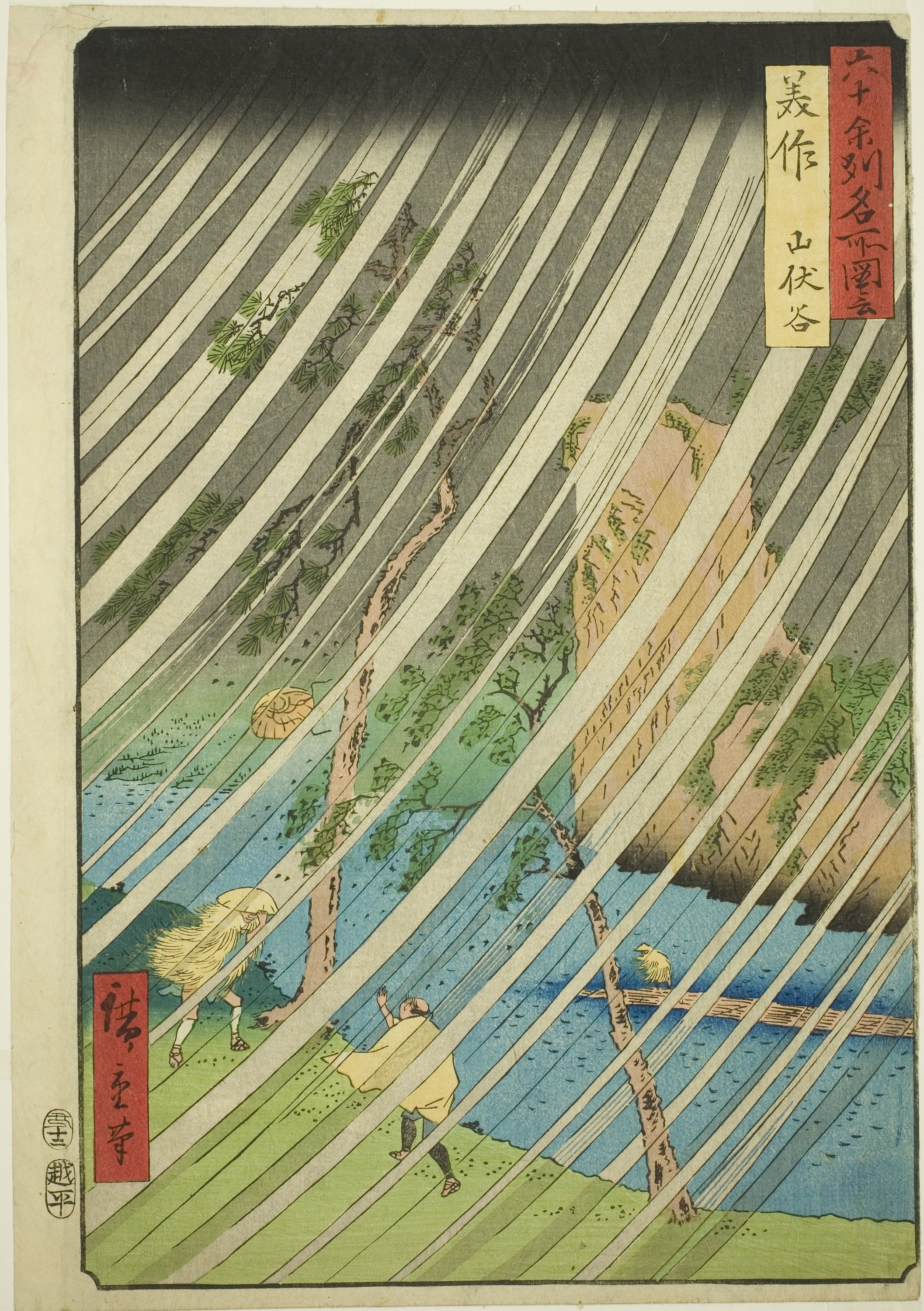
Hiroshige, on the other hand, puts you inside one specific day. He cares about the weather, the season, the time of day and the way the light falls. He uses a lot of bokashi, a color gradation made by applying the pigment to the block gradually, for dawn and sunset skies, a darkening sea, mist.
One makes you stop and admire the composition; the other makes you feel cold just looking at a snow scene. For me, that’s the easiest difference to remember when you’re standing in front of them in a museum.
Hiroshige blue
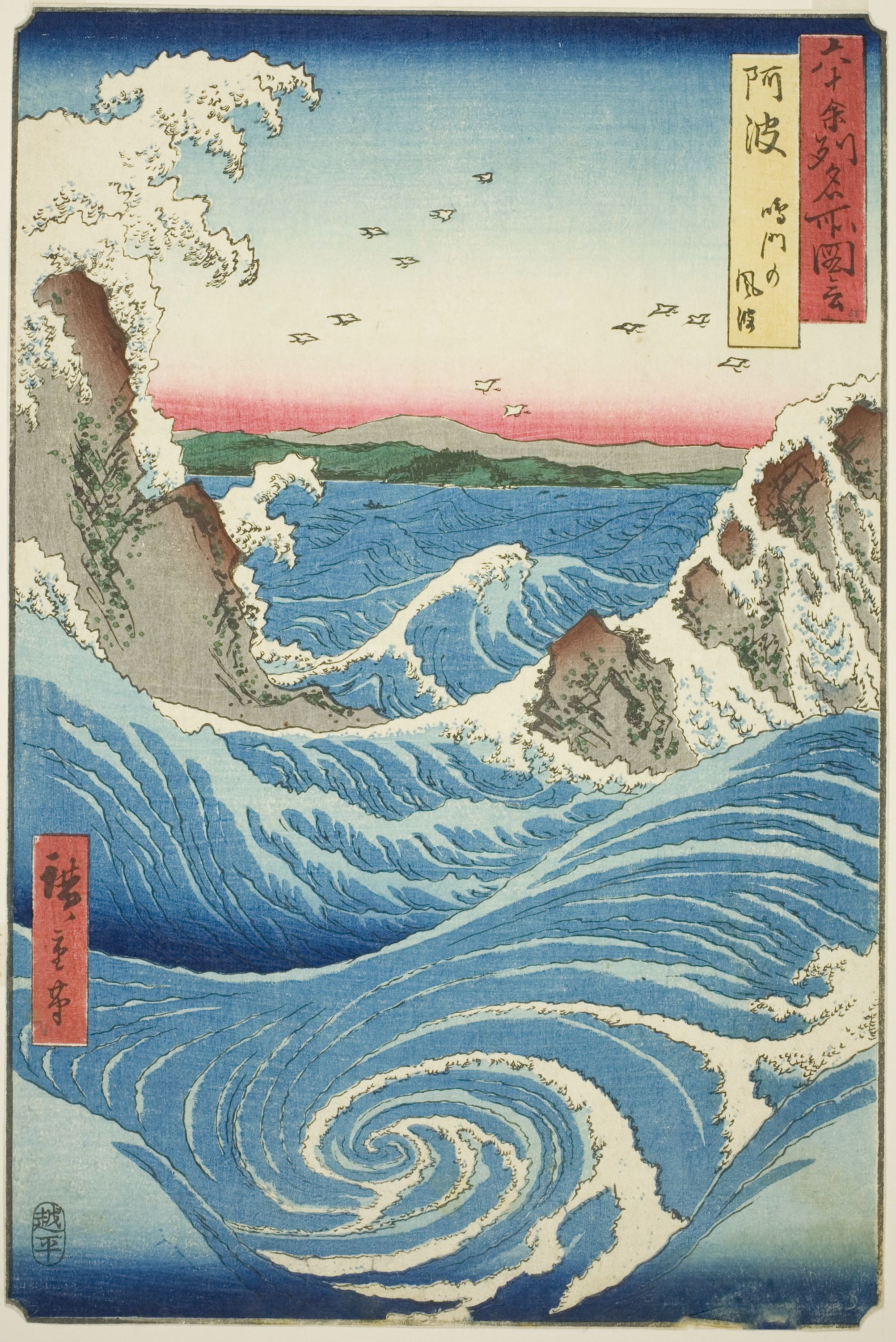
Once his prints started circulating in Europe, people began talking about Hiroshige blue. It’s the deep blue of his skies and rivers, made with Prussian blue, a synthetic pigment that reached Japan through trade with the Dutch and was called bero-ai, meaning Berlin blue.
He wasn’t the only one using it (Hokusai made his wave with it too), but Hiroshige turned it into something close to a signature. Unlike the plant-based indigo used before, this blue doesn’t fade quickly, and it allows very soft gradations, from dark blue at the top to almost white near the horizon.
If you look closely at a good original print, these gradations are exactly where you can see the printer’s hand: smooth transitions with no hard edges, all done by hand on wood.
One Hundred Famous Views of Edo
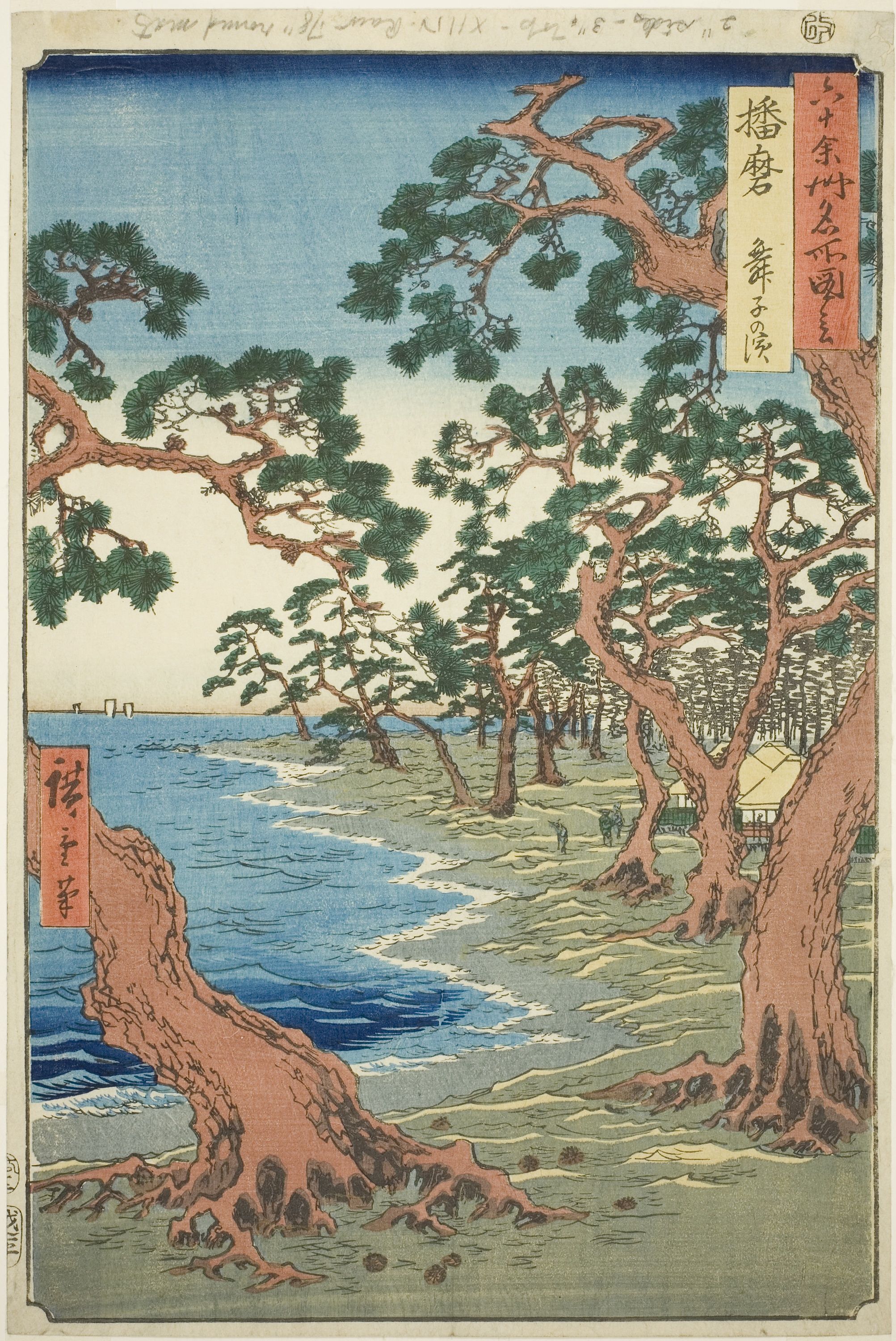
His last big series is One Hundred Famous Views of Edo, which he started in 1856 and didn’t live to finish. There are actually more than a hundred prints, a hundred and eighteen plus the title page, and some were completed by his student, who later took the name Hiroshige II.
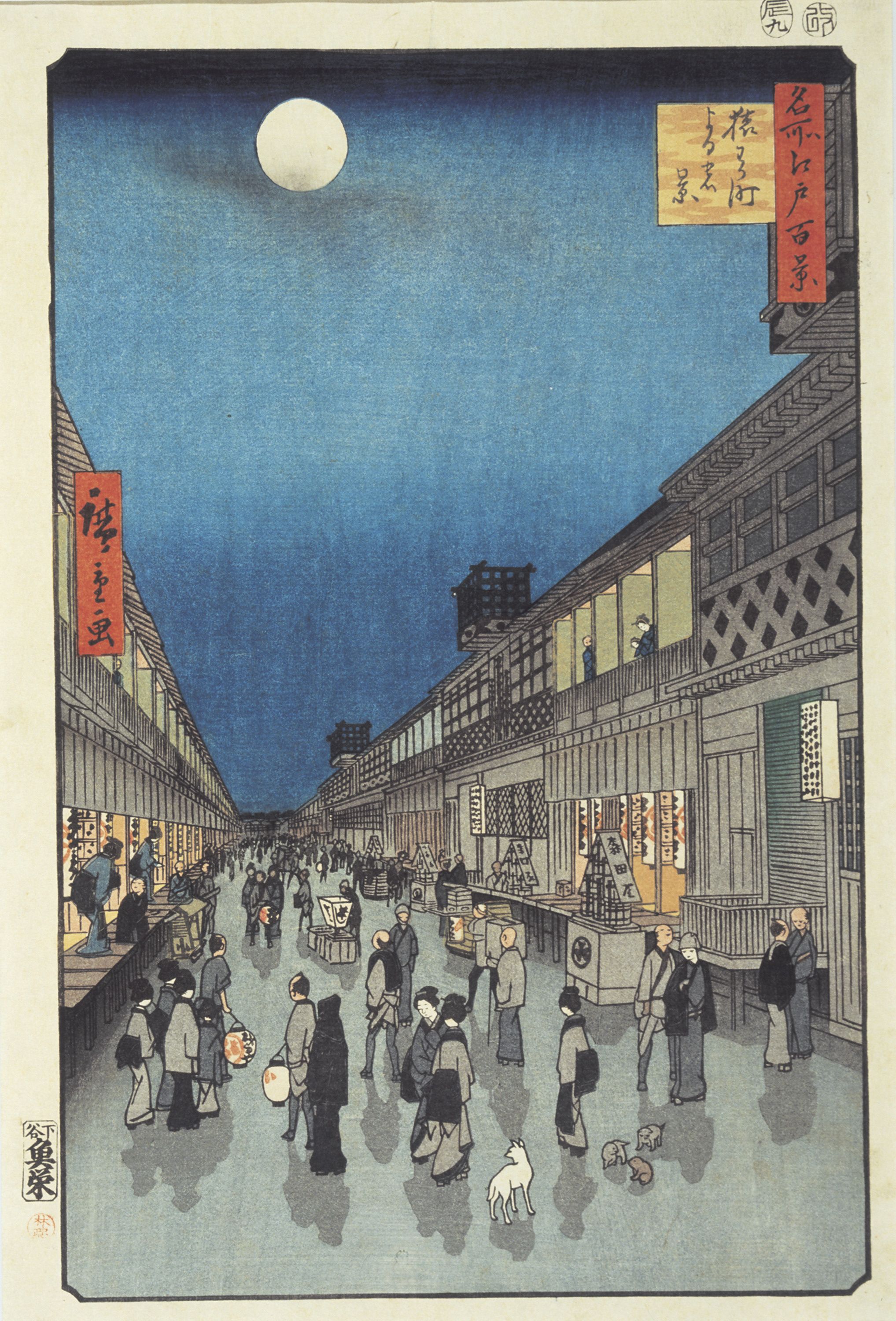
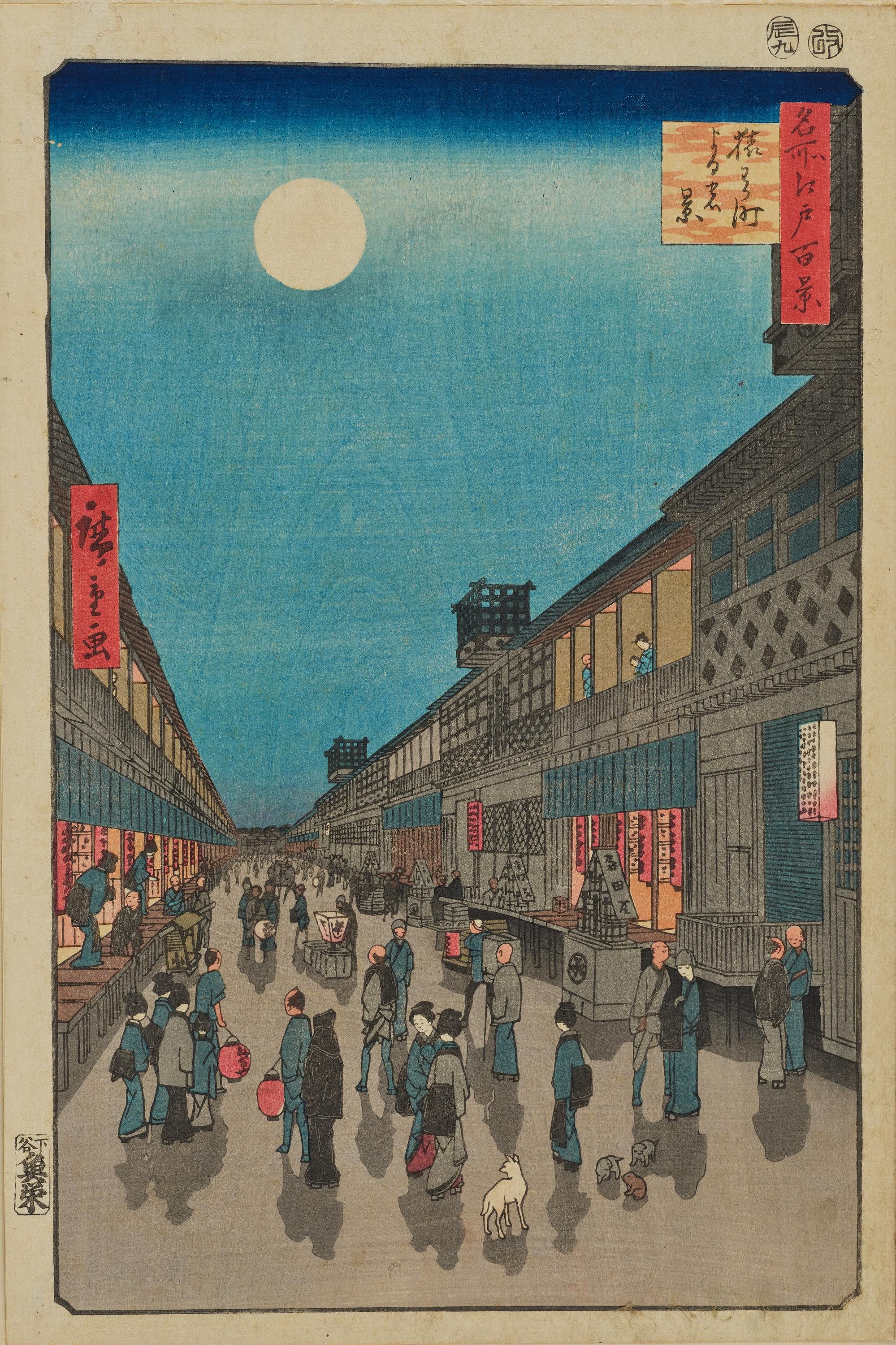
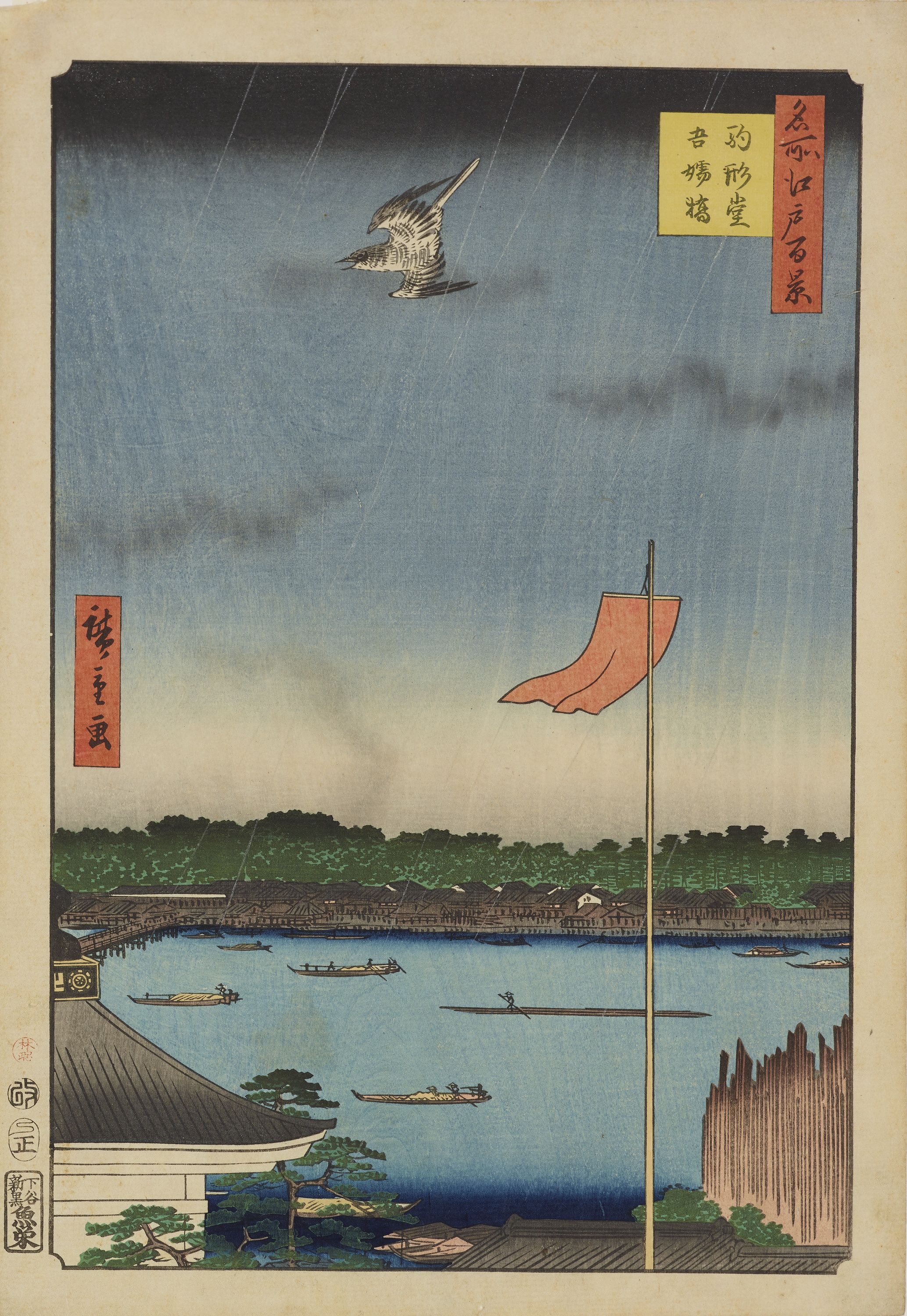
Here Hiroshige portrays his own city neighborhood by neighborhood and season by season. The prints are vertical, and there’s often something huge in the foreground, like a branch, a lantern or a horse’s legs, with the landscape small behind it. Today that framing looks almost photographic.
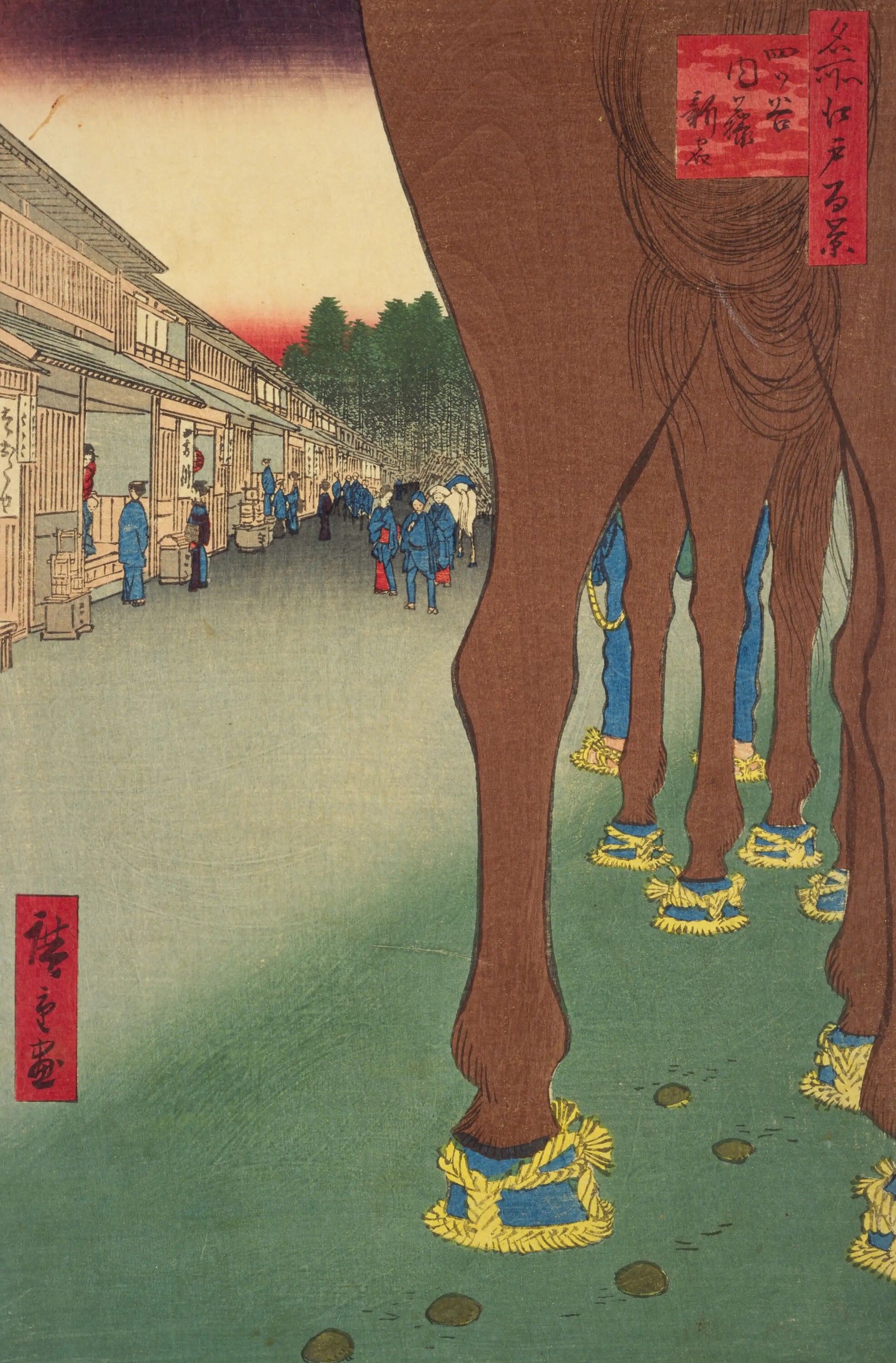
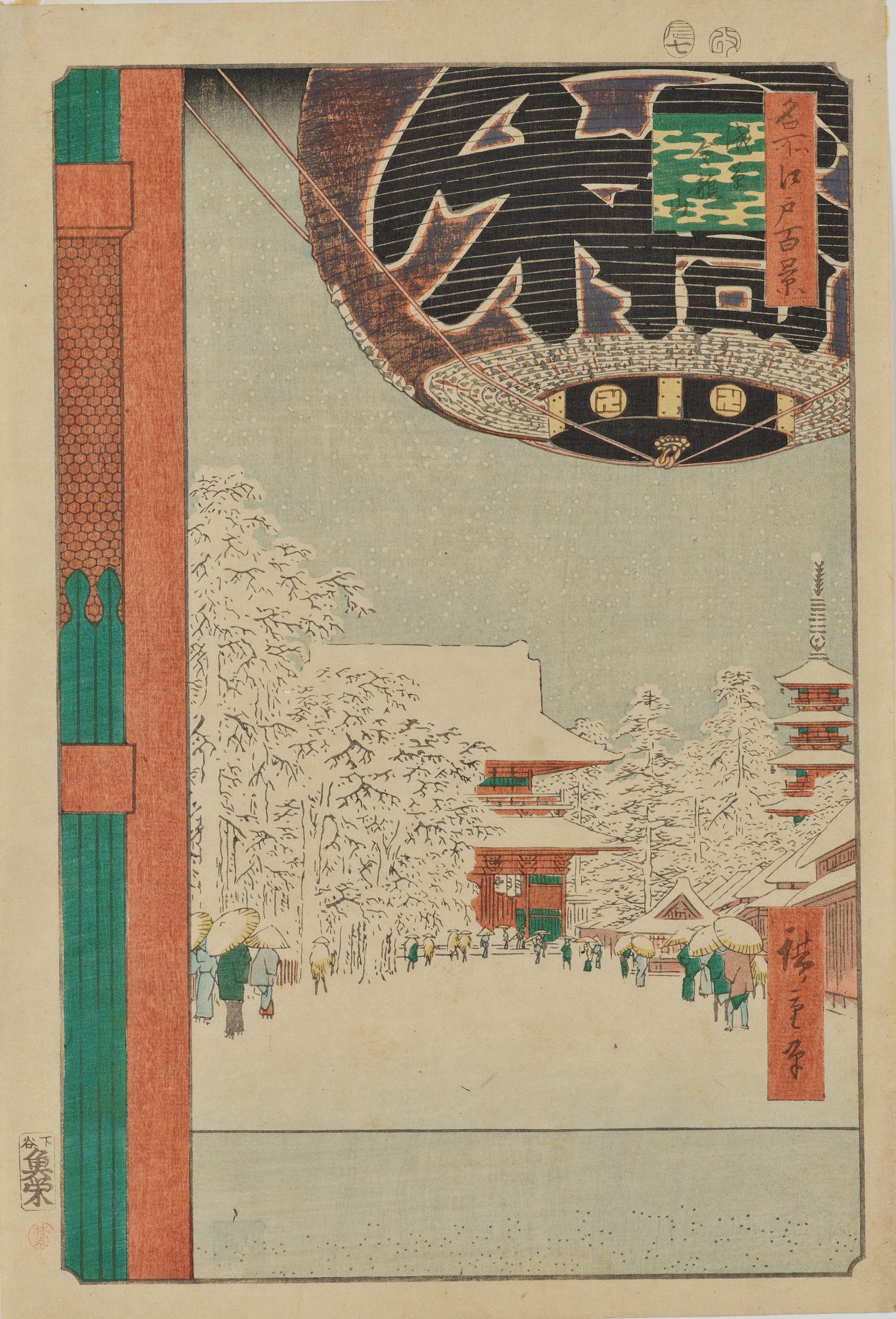
When I walk around Tokyo I often think of these prints, because the names are the same: Ueno, Asakusa, the Sumida River, Meguro, Shinagawa, Kameido. There’s snow on the bridge, fireworks over the river, water lilies and cherry blossoms, pilgrims on a miniature Mount Fuji.
This is Tokyo before modernization, just before Japan opened up to the world, and a lot of these places have changed completely. That’s part of why it’s fun to look at the prints and then go to the real place.
Van Gogh and Japonisme
One of the best stories about Hiroshige involves Vincent van Gogh. In Paris in the 1880s, Van Gogh bought hundreds of Japanese prints from an art dealer, dozens of them by Hiroshige, and filled his studio with them.
In 1887 he copied two prints in oil from the One Hundred Famous Views of Edo: Plum Garden in Kameido and Sudden Shower over Ohashi Bridge. The copies stick closely to the originals, with the branches and the rain where they should be. Along the sides, Van Gogh added borders with Japanese characters, which he copied without understanding what they meant.
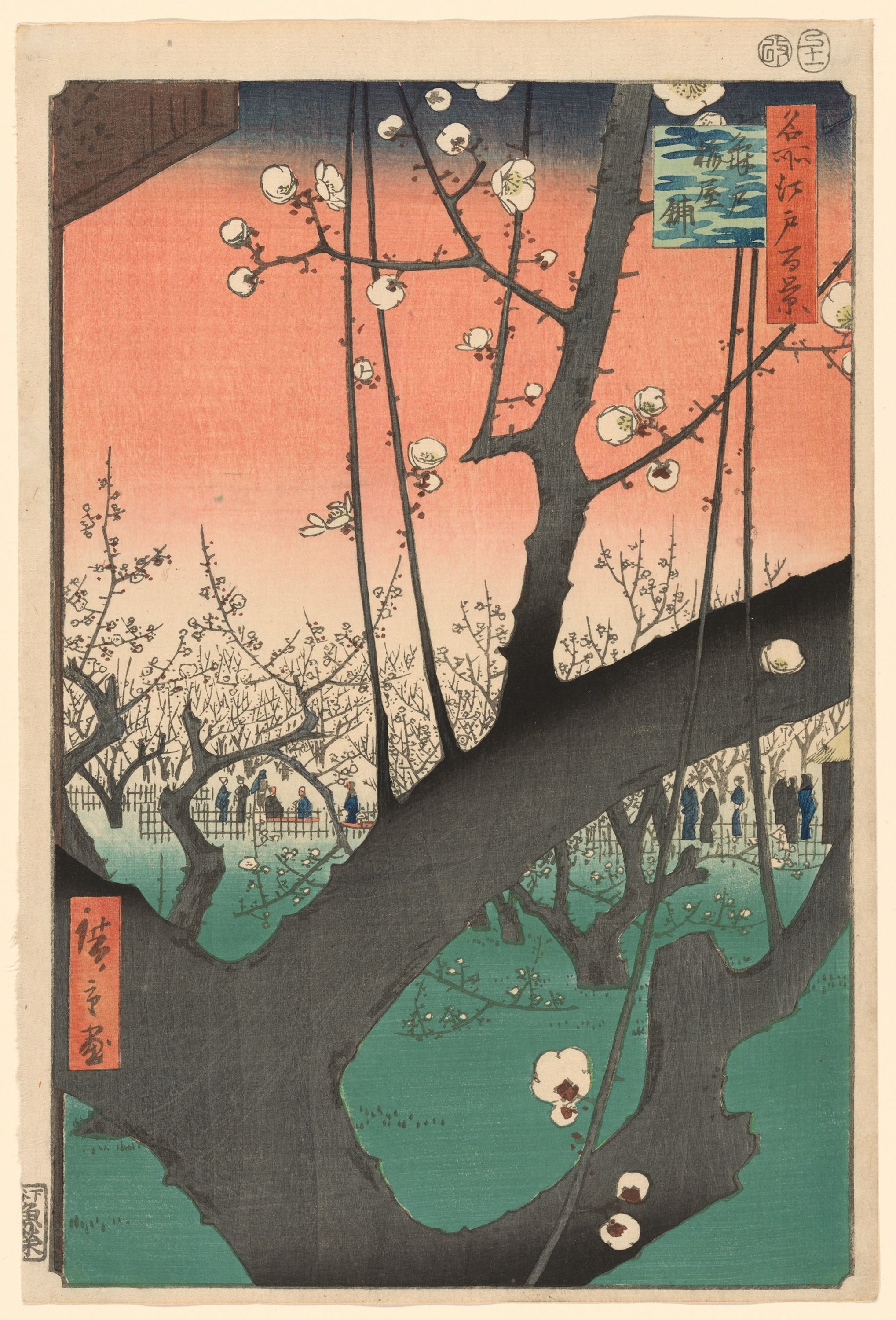
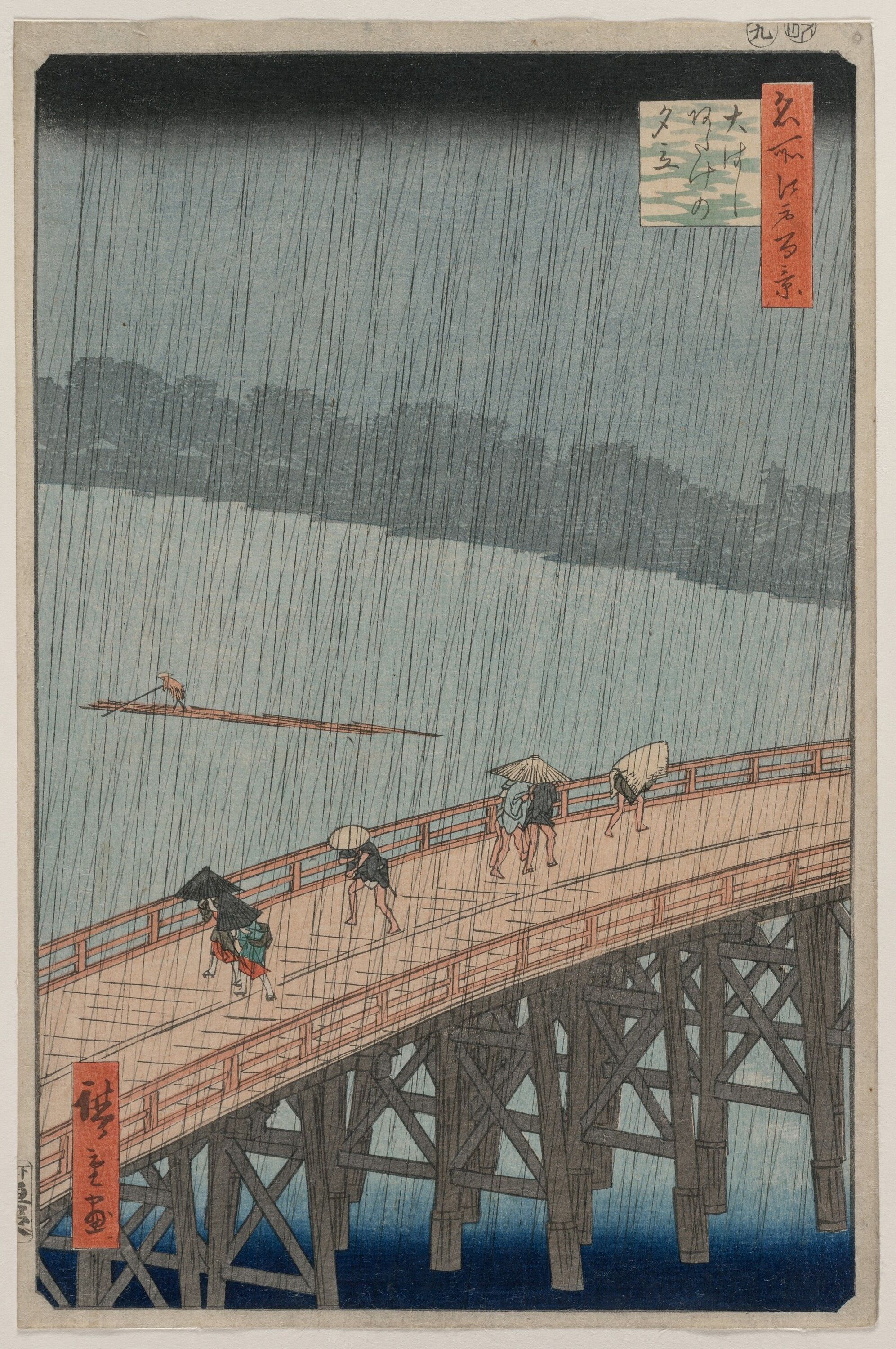
Today these two paintings hang in the Van Gogh Museum in Amsterdam, and they’re probably the reason a lot of people in Europe have seen Hiroshige without knowing it. But his influence goes well beyond these two paintings.
The Impressionists and Post-Impressionists took flat colors, cropped compositions and exaggerated foregrounds from Japanese prints. The trend even has a name, Japonisme, and Hiroshige is one of its key figures.
Finding Hiroshige in Tokyo
If you’re in Tokyo and want to see Hiroshige’s work in person, the first place I’d send you is the Ota Memorial Museum of Art in Harajuku, a short walk from Omotesando. It’s a museum devoted entirely to ukiyo-e, with a collection of around 15,000 works, and Hiroshige is one of the names you’ll see most often.
It’s small enough to see in an hour. The exhibitions change every month, and the museum closes for a few days between shows to set up the next one. Before you go, check the schedule, because not every exhibition is about Hiroshige. You take off your shoes at the entrance, there’s a small tatami room inside, and the contrast with the crowds on Takeshita Dori, two minutes away, couldn’t be sharper. Tickets are cheap, usually around 1,000 yen or even less, but check the current prices before you set off.
If you like walking, there are a few spots from the One Hundred Famous Views of Edo you can visit with the print on your phone:
- Shin-Ohashi Bridge, over the Sumida River between Nihonbashi and Morishita, is the bridge in the downpour that Van Gogh copied. The bridge in Hiroshige’s day stood a little farther downstream, but you can still recognize the view of the river.
- Kameido Tenjin Shrine, near Kinshicho, appears in one of the best-known prints in the series, with its arched bridge and the wisteria that blooms in spring. The plum garden that Van Gogh painted was nearby, but it no longer exists.
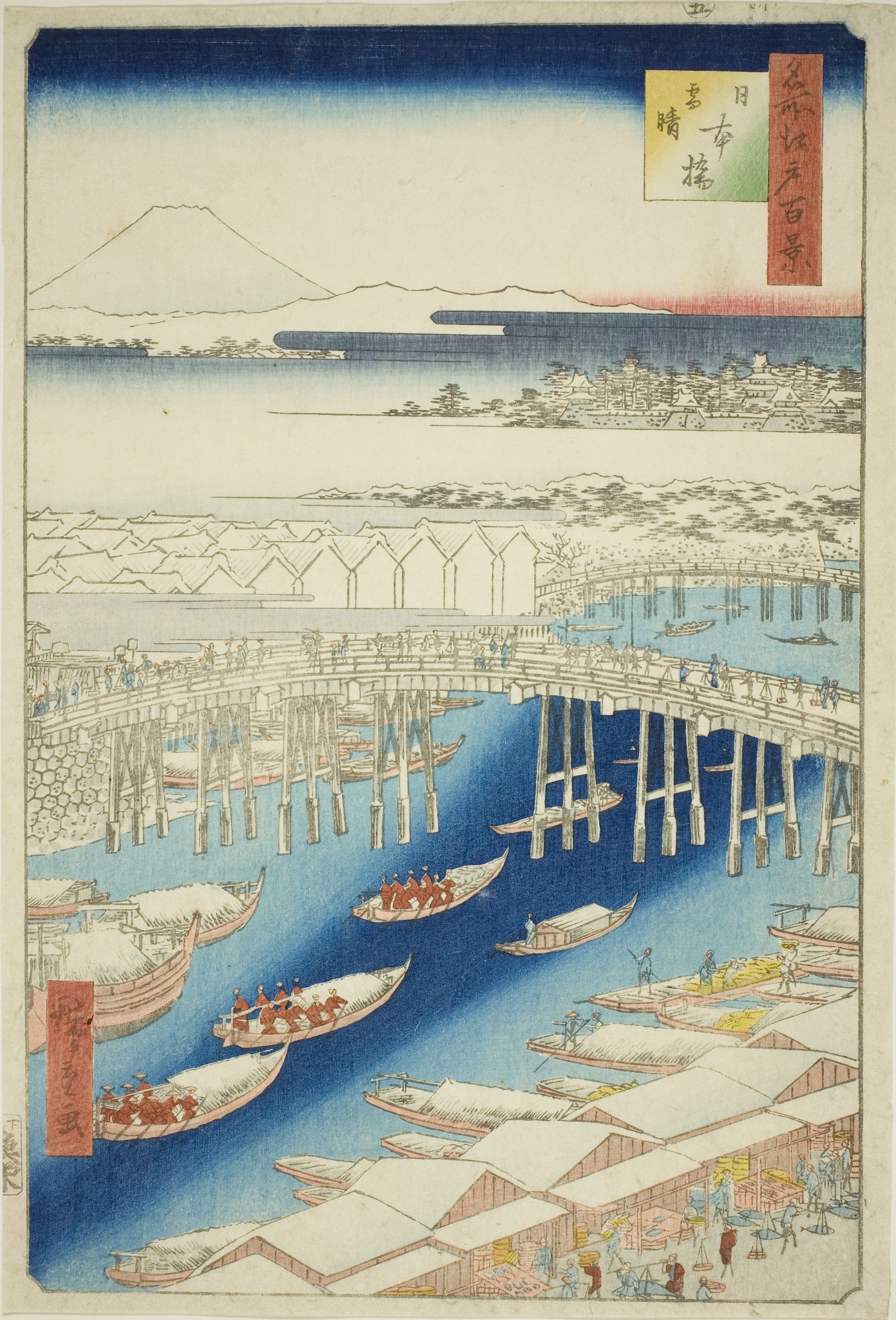
- Nihonbashi Bridge was the starting point of the Tokaido, and it’s the subject of the first print in the series. Today it sits under an elevated expressway, but road distances in Japan are still measured from here.
- Ueno Park and Asakusa show up in several prints, with the cherry trees, the temple and the entertainment streets.
Hiroshige’s grave is also in Tokyo, at Togakuji, a temple up north in Adachi, near Takenotsuka Station. The temple moved there after the Great Kanto Earthquake, and the gravestone was rebuilt for the 100th anniversary of his death. Visiting it is a pilgrimage for enthusiasts, far from the usual tourist routes, and I’d only recommend it to people who’ve already seen everything else.
The museums outside Tokyo
Both museums devoted entirely to Hiroshige are outside Tokyo, and they’re only worth the trip if you’re genuinely interested.
The first is the Tokaido Hiroshige Museum in Yui, Shizuoka. It opened in 1994 on the site of the official inn at Yui, one of the 53 post stations on the Tokaido. Its roughly 1,400 works include several complete sets of the Tokaido series and the One Hundred Famous Views of Edo, and the museum shows them in rotation across five exhibitions a year. You get there by local train on the JR Tokaido Line, which roughly follows the old road.
What I like is that Yui has more going for it than the museum. The town is known for sakura ebi, tiny pink shrimp that are caught only in this bay and eaten either fried as tempura or raw over rice. Not far away is Satta Pass, the setting of Hiroshige’s Yui print, where the road runs along a cliff high above the sea with Fuji in front of you. On clear days the view is almost the same as in Hiroshige’s print, apart from the expressway and the railway that now run below.
The second is the Bato Hiroshige Museum in the town of Nakagawa, in Tochigi Prefecture. It began with the donation of a collection of more than 4,000 works put together by a local businessman, including many of Hiroshige’s hand-painted works, which are much rarer than his prints.
The building opened in 2000 and was designed by Kengo Kuma, the architect of Tokyo’s Olympic Stadium. It’s made of local cedar slats that filter the light, and that alone is almost worth the visit. Getting there is the problem: it’s out in the countryside, and without a car you’re looking at a long bus ride from Utsunomiya. I think it makes sense if you love architecture, or if you’re already driving around Tochigi, maybe after Nikko.
How to look at a print
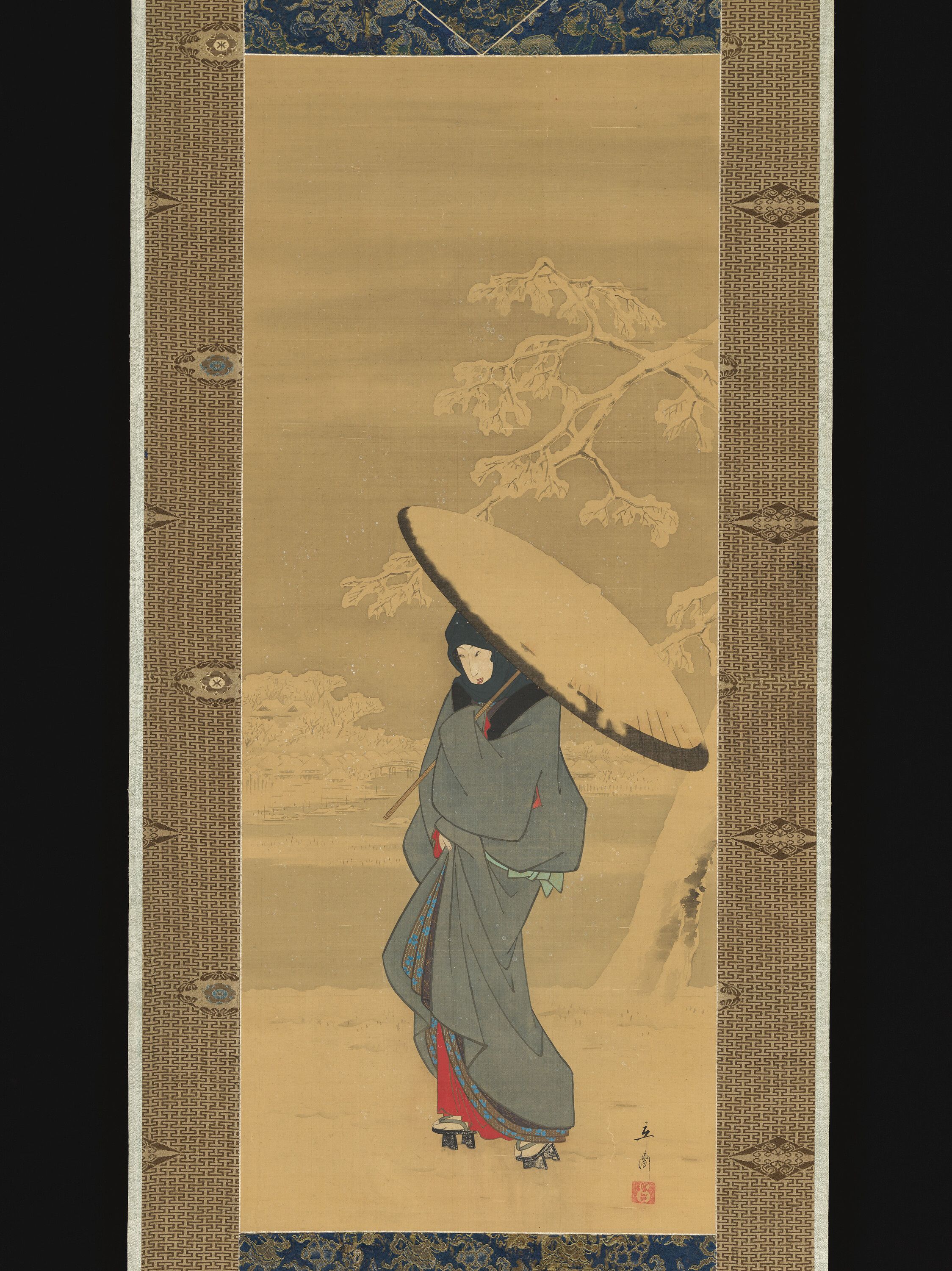
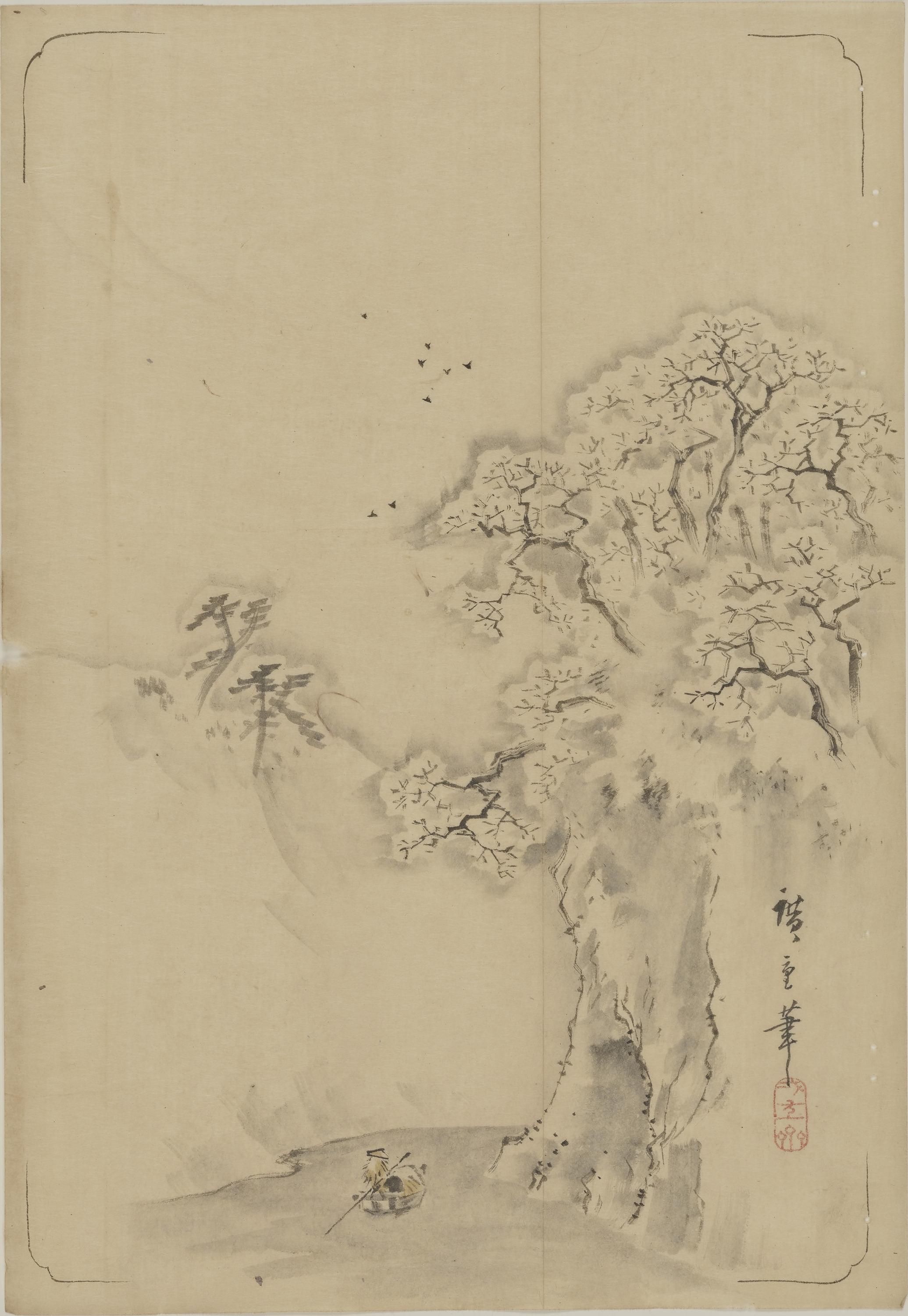
When you’re standing in front of a Hiroshige print, whether it’s in a museum or a shop, a couple of things are worth taking your time with. The first is the title cartouche, usually a colored rectangle in one corner, with the artist’s signature and the publisher’s seal close by.
Then look at the gradations in the sky and the water. In the first printings they’re soft and complex, while in later ones they get flatter or disappear altogether, and the colors change.
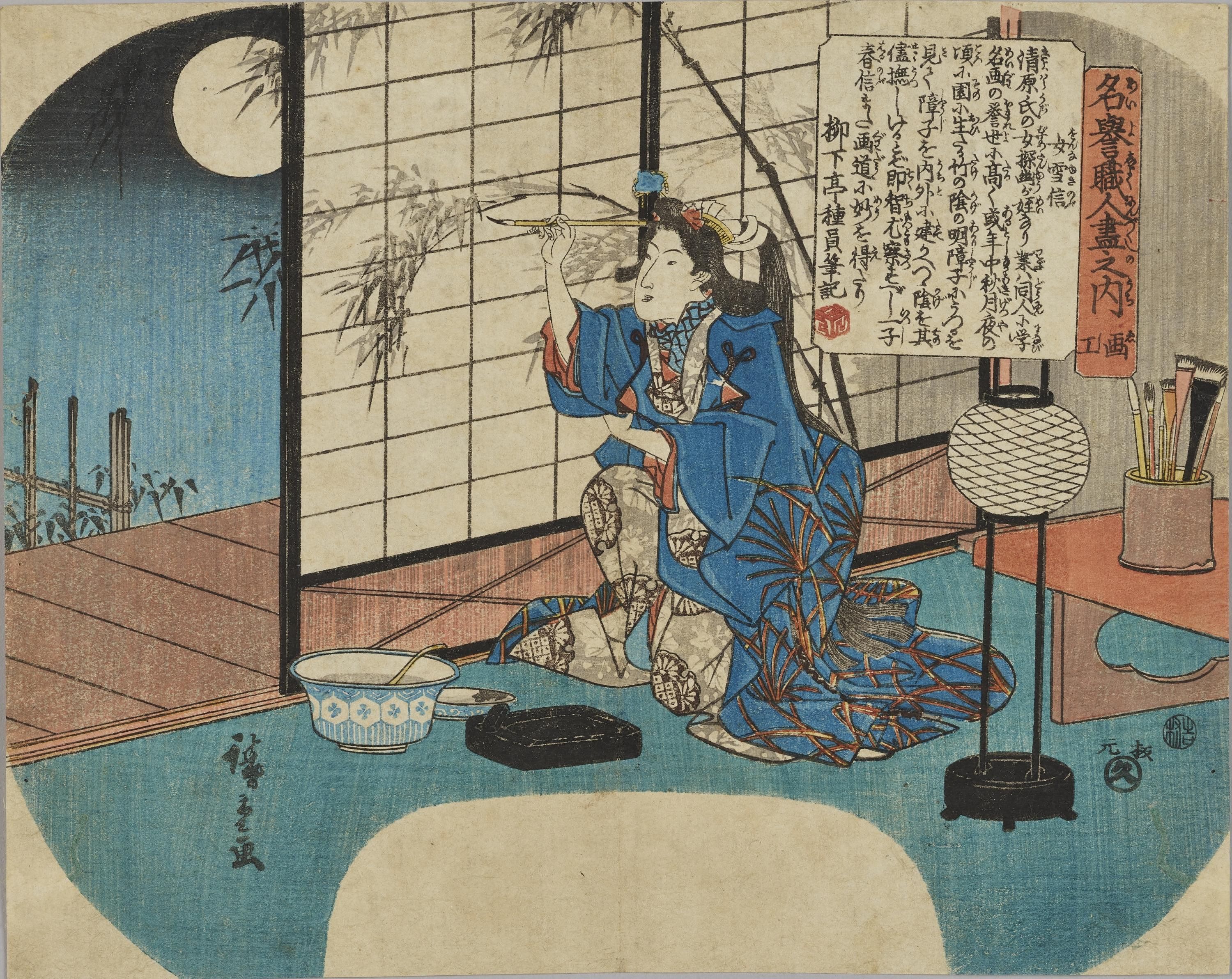
Many travelers ask me whether it’s worth buying one. Tokyo has shops specializing in prints, especially in Jimbocho and Ginza, where you’ll find original period prints, modern reprints made with the traditional technique, and simple printed reproductions.
- Modern offset reproductions cost very little and make a nice souvenir, but they have nothing to do with the original technique.
- Hand-printed reprints made from newly carved woodblocks are the compromise I recommend most, with real washi paper, real pigments, and prices usually somewhere between a few thousand and a few tens of thousands of yen.
- 19th-century originals start at affordable prices for minor or damaged prints, but for the famous series in good condition prices climb steeply, and that’s when you need a reputable shop that gives you full information about the piece.
Always ask what you’re buying. A good dealer will be happy to tell you. In Japan, quality reprints aren’t considered fakes. They’re a recognized craft, and their makers are upfront about what they’re selling.
Why it helps before your trip
There’s a very practical reason to get to know Hiroshige before you travel to Japan. He teaches you to see the country season by season. His prints are full of things people in Japan still follow closely today, like the plum blossoms at the end of winter, the cherry trees, wisteria, fireflies in summer, the autumn moon and the first snow.
Let’s face it, it’s the same calendar that still decides when tourism peaks, what’s in the pastry shops and which ads go up on the subway. Recognizing it in the prints helps you make sense of it when you’re there.
The same goes for slow travel. If you walk part of the Nakasendo, the inland road between Edo and Kyoto that Hiroshige drew with Keisai Eisen in another famous series, or a stretch of the old Tokaido, you find yourself in landscapes you already knew from the prints: the climbs, the inns, the mountain passes.
When I’m out on these old roads, his prints come to mind right away, and they change the way I look at even an ordinary stretch of forest or a bridge.
What I’d do
If you only have an afternoon, go to the Ota Memorial Museum of Art in Harajuku, then take a walk along the Sumida River to Shin-Ohashi Bridge, ideally on a rainy day. That’s all it takes to understand how a fireman from Edo ended up in Van Gogh’s paintings.
If you have more time and like walking, I’d go with Yui: the museum, a bowl of pink shrimp and the climb up to Satta Pass with Fuji in front of you. That’s where you realize Hiroshige didn’t make anything up. He just looked. So which print would you go looking for first?