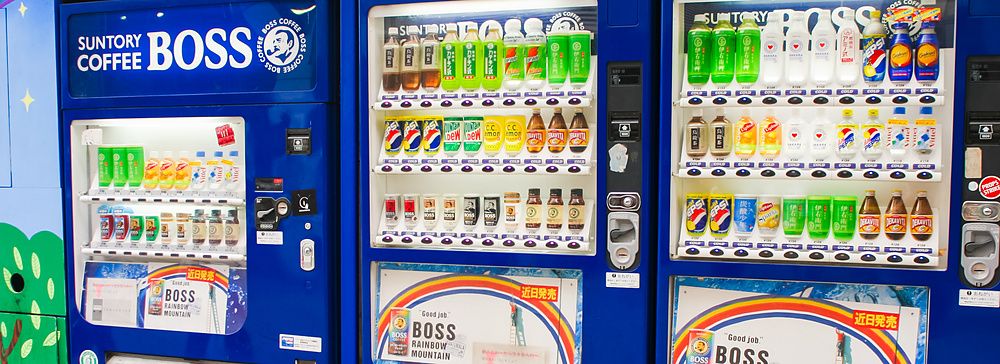
Vending Machines in Japan
Vending machines are one of the first things that make people fall for Japan. They’re everywhere: outside houses, in the middle of rice paddies, at the start of a mountain trail, next to a temple gate.
You walk past them ten times a day without a second thought, until one afternoon you stop and take a good look at one and realize there’s a system behind it that’s been thought out down to the last detail, with its own rules, its own customs and a few legends that have been going around for thirty years. You can pay with coins, transit cards and apps, and it costs next to nothing. In winter they serve piping hot cans, and in some places you can buy ramen, eggs or vegetables. What you won’t find, even though half the internet says otherwise, is used underwear.
Contents
How many there are
If you count everything, including ticket machines and automated services like change machines, Japan has almost four million machines. Drink machines alone account for over two million, more than half the total.
Do the quick math and that’s roughly one machine for every thirty people. The numbers peaked in the early 2000s at more than five million, and since then they’ve been slowly dropping, because 24-hour convenience stores have taken a slice of that market.
There are still a huge number of them, though, and above all they’re still outside on the street, lit up all night. That’s the real difference from the rest of the world, where vending machines almost always live indoors, in an office, a station or a gym.
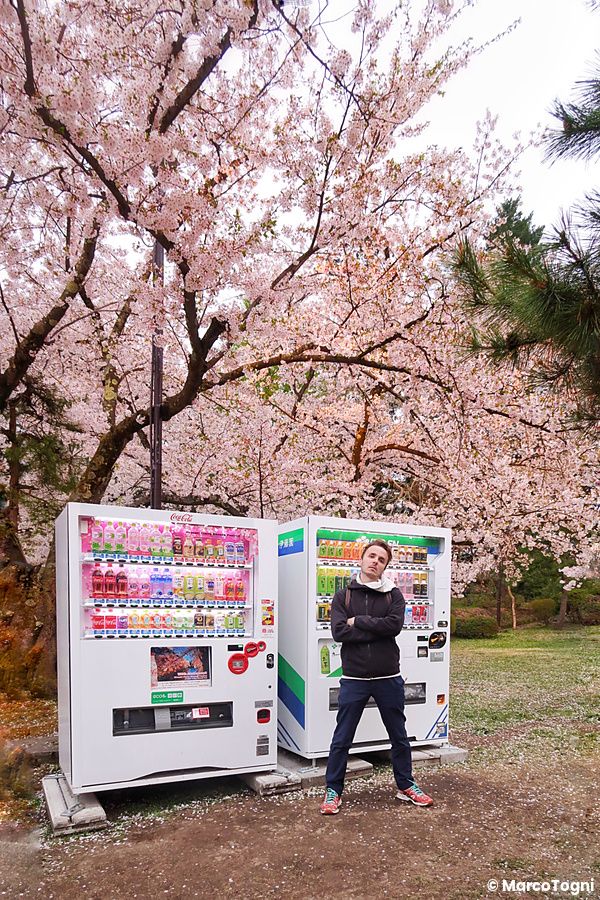
Here you’ll come across one in a dirt parking lot far from the nearest shop, LEDs glowing, with nobody around. The first time you hike up a trail and see one pop up among the trees, it feels like a joke.
Why they’re everywhere
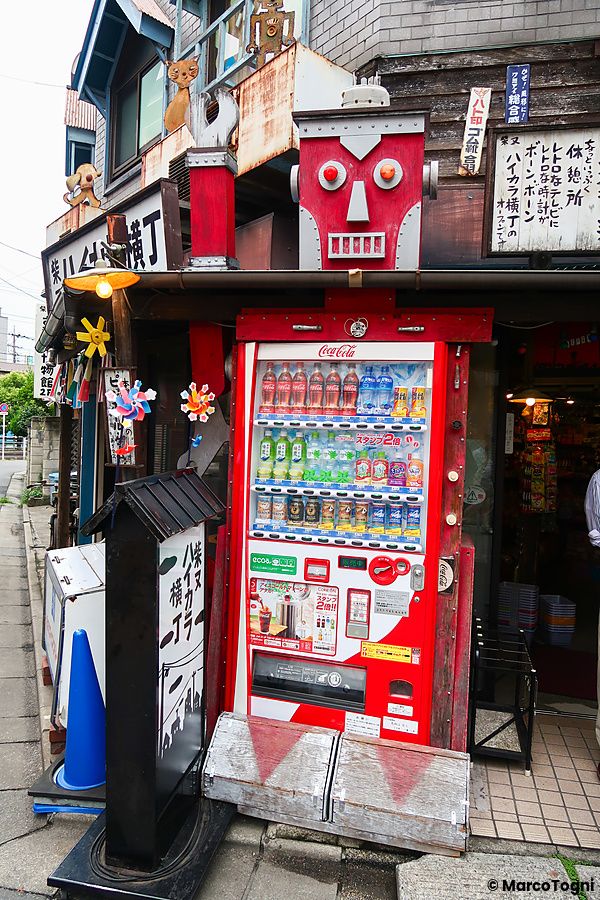
The number one reason is that nobody messes with them. A machine full of cans, with a coin box inside, can sit on the street with no fence and no camera and nothing happens to it. That alone explains much of the story.
Then there are more practical reasons, and they stack up:
- Cities are dense and transportation is well organized, so whoever restocks the machines can cover a lot of them in a small area, which keeps the cost of each stop low.
- Labor is expensive, and so is commercial rent: a square meter of sidewalk makes far more money with a vending machine on it than with anything else.
- 100-yen coins are in constant circulation and easy for coin readers to recognize, and you see very few counterfeits around.
- The invention of machines that hold hot and cold drinks side by side, in the 1970s, made vending machines useful twelve months a year instead of just in summer.
One last thing matters too. People who own a scrap of land they can’t use, like a three-meter strip in front of the house or the corner of a parking lot, rent it to an operator and collect a small percentage. Nobody gets rich, but it’s money that comes in without lifting a finger.
Paying
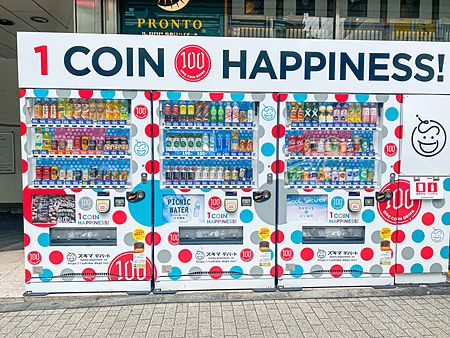
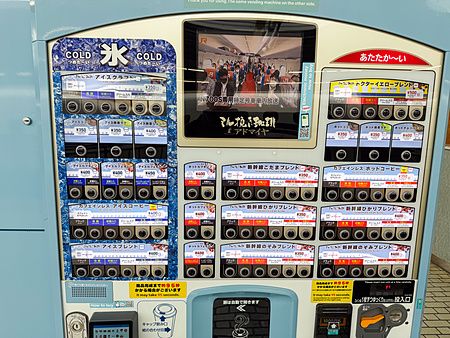
You can still do everything with coins, and it’s the easiest way if your wallet is full of change, which happens fast here. Machines take any coin from 10 yen up, so everything except 1- and 5-yen coins, and many also take 1,000-yen bills. Your change drops out right away into the little tray at the bottom.
For travelers, though, there’s something handier. A good share of these machines read transit cards, the rechargeable ones you use on the subway and trains. You tap the card on the reader, press the button for your drink, hear the beep and that’s it.
The newer machines also take QR code payments through local payment services, and sometimes contactless credit cards. You have to tap the reader before choosing your drink, not after; otherwise nothing happens and you end up pressing buttons that don’t light up.
The drink brands’ apps are a different story. They connect to the machine, collect stamps every time you buy something and give you a free drink after a while. They’re only worth installing if you’re staying several weeks. Otherwise, don’t bother.
Then there’s the little lottery. Some operators switch on a kind of slot machine that starts after you buy, with numbers spinning on the display. If they line up, you get a second drink free. The odds are set by whoever runs the machine, usually one in fifty or one in a hundred.
What it costs
Drinks are one of the cheapest things you’ll buy in Japan. A small can almost always runs 130–160 yen and a half-liter bottle around 160–200, and unsweetened green tea costs the same as cola, often a little less.
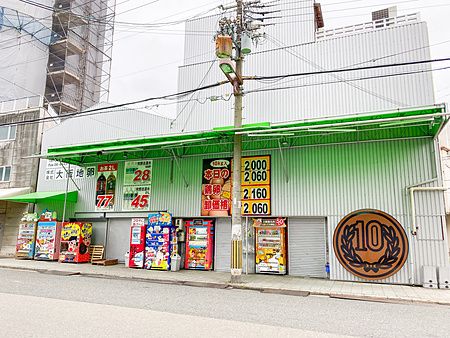
As you wander around, you’ll also run into budget machines, the ones with handwritten yellow tags and prices around 100 yen. They’re not scams. The people who run them buy up products in old packaging, stock close to its expiration date and mixed lots from different brands, and they use older machines that are cheap to keep running.
You’ll rarely find them in front of the main station, because renting the space there is expensive. Look for them a block away, on streets lined with warehouses, at the end of a shopping arcade or next to a paid parking lot.
On the flip side, there are places where prices go up, and I’m telling you now so you don’t get annoyed when it happens: inside hotels, at theme parks, at remote tourist spots and above all along high mountain trails, where every case of drinks has to be hauled up. Up there you’re paying to get it up the mountain, not for the water. In any case these prices change over time, so take them as a rough guide, not a price list.
Hot and cold
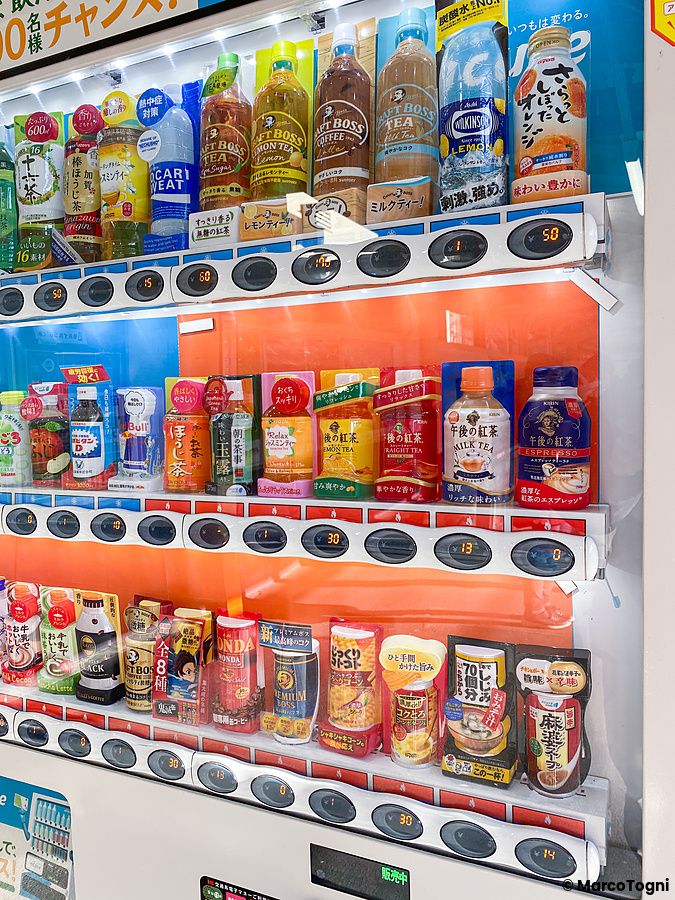
From October on, about half the drinks in a machine get a red label underneath. It means that drink comes out hot, seriously hot, to the point where you can barely hold the can. The others keep the blue label for cold drinks.
Operators go by the outdoor temperature and start switching over when it drops below 25°C. It doesn’t happen overnight: over a few weeks more rows switch to hot one at a time, and in spring the whole thing runs in reverse.
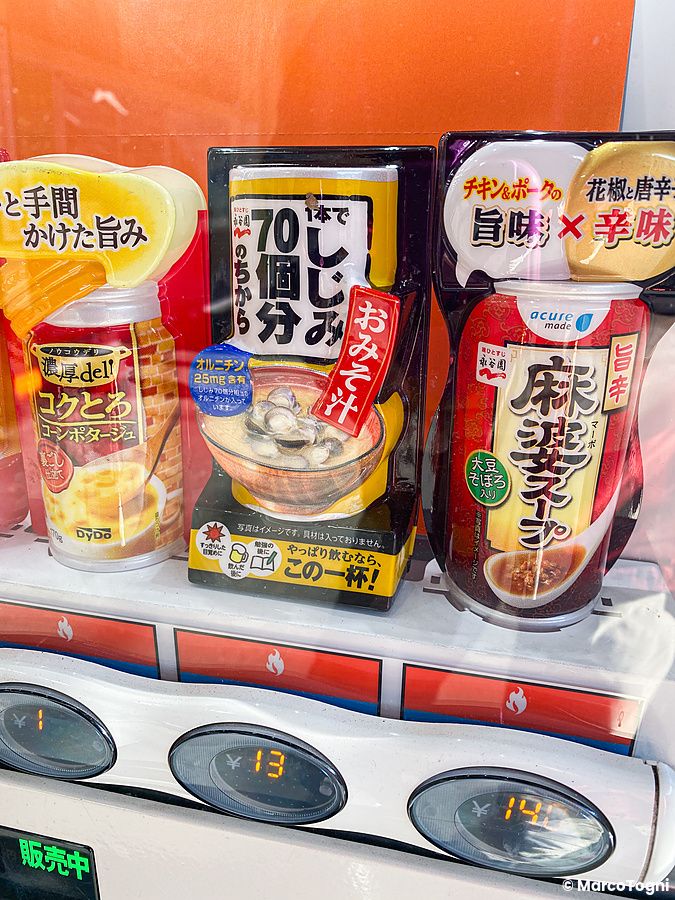
Hot canned coffee is the go-to on winter mornings, but the one thing I’d tell you to try at least once is corn soup. It’s thick and sweet, and it has a famous flaw: the kernels get stuck at the bottom.
The makers came up with two answers. One is a ridge inside the can that helps the kernels slide out. The other is a tip that works with other brands too: turn the can upside down before you open it, then rotate it slowly once it’s open. It sounds silly, but it works.
The sweet red bean drink divides people. Some think it tastes like sweetened soup, but I like it precisely because it warms your hands while you wait for the train on an open-air platform.
Unusual machines
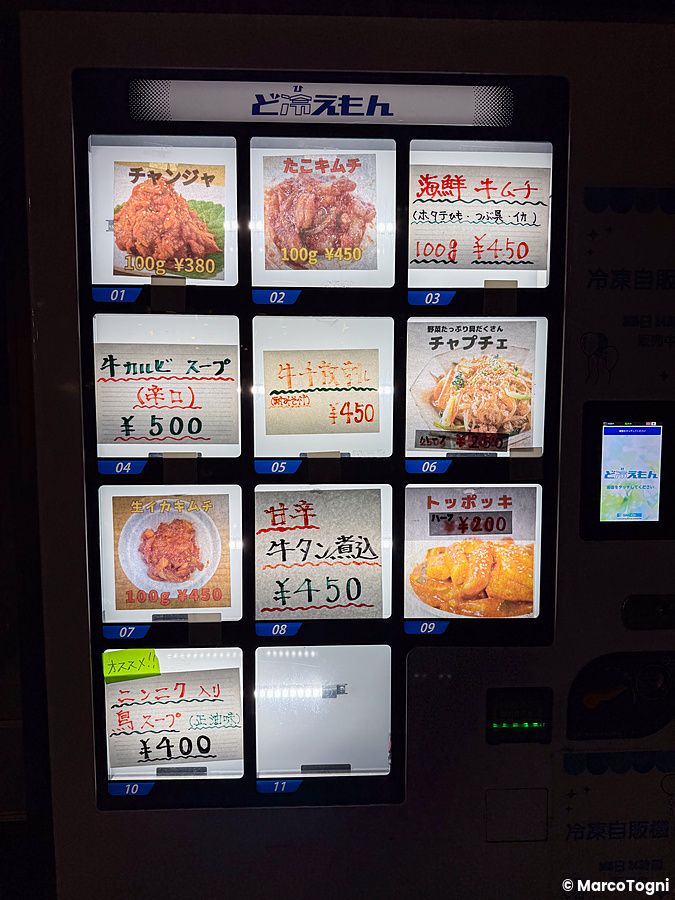
Beyond drinks, you’ll find all sorts of things, and what you find changes from one neighborhood to the next. Areas with lots of restaurants have frozen food machines as tall as a wardrobe, selling gyoza, single portions of ramen, curry and dishes from the restaurants on that street to take home.
Then there’s everything else, which you usually stumble on by chance: bottles of concentrated fish broth, fresh eggs outside a farm, a farmer’s vegetables in little compartments with spring-loaded doors, cut flowers, T-shirts, and umbrellas outside stations when it rains.
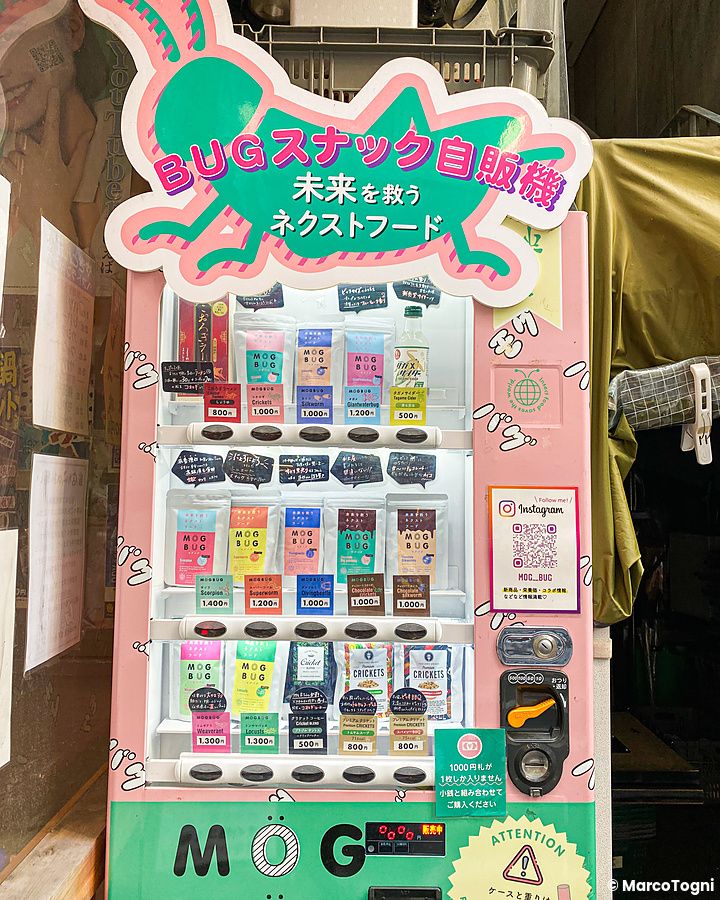
Machines selling edible insects do exist, but there are only a few, and they’re almost always in spots designed to get noticed, not in the parking lot around the corner.
A practical tip if you go looking for them: don’t plan a whole day around hunting down rare vending machines, because they get moved and taken away all the time. Enjoy them when you come across them, and keep an eye on highway service areas, where you’ll find quite a few.
The used underwear myth
Now for the question everyone asks me, often after a couple of beers and with a knowing look: is it true there are vending machines selling used underwear? No. You won’t find them, you won’t stumble across one by accident, and they don’t exist as a normal part of everyday life.
The legend didn’t come out of nowhere, though, and that’s the interesting part. In the early 1990s there was a phenomenon known here as burusera, with adult shops in the big cities buying and reselling used school uniforms and underwear. Out of that scene came a handful of machines as well, almost always set up next to the ones selling adult magazines and videos along roads on the edge of town.
They didn’t last long. The police went after them on two fronts: the secondhand goods law, which requires a license for anyone who buys used items to resell them, and child protection laws, since the girls behind that merchandise were often underage.
Today anyone who wants to sell that kind of item has to stay within the rules for the adult industry, with permits and registered shops, and none of it is left on the street. Even the old adult magazine and video machines, which you could still see a few decades ago in parking lots along main roads, have almost completely disappeared.
The part I find funny is something else. If you ask a Japanese person about those machines, nine times out of ten they’ll give you a puzzled look, because they’ve never seen one in their life. The myth spread almost entirely outside Japan, bouncing between foreign newspapers and travel forums until everyone took it as fact.
If you do see underwear in a vending machine, it’s new and packaged, things like socks or T-shirts, there for people who need them at the last minute.
Alcohol and cigarettes
Beer machines on the street have almost disappeared. The old ones, with no age check at all, were taken out. Today only a few machines are left that ask for ID or a card to verify your age, plus some tucked away in the hallways of hotels and traditional inns.
Cigarettes work in a similar way, but the rules are stricter. The machine checks your age by reading a Japanese ID like a driver’s license or a My Number card, so visitors from abroad can’t buy them that way. You just go to a convenience store and pay at the register, no hassle.
Countryside inns still offer one small but genuine pleasure: you come out of the hot spring bath in your yukata, feed coins into the machine at the end of the hallway and sit on the bench with a beer or some cold milk. For me, that scene beats plenty of tourist attractions.
Emergency vending machines
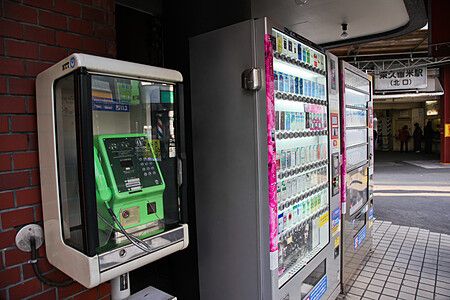
Some machines have a second job, and it’s good to know they exist. They’re installed under agreements between drink companies and local governments, and if there’s an earthquake or another disaster they can be unlocked remotely to hand out whatever’s inside for free.
Some have a lit display that shows local information on normal days and official disaster alerts during an emergency. Others have a manual key, so staff can open them and get the bottles out even when the power goes out.
You don’t need to go looking for them, since apart from a small label they look like any other machine. What’s worth keeping in mind is the bigger picture: in a country where the ground shakes often, even a machine selling canned drinks was designed as part of the infrastructure, not just as a place to buy something.
Retro vending machines
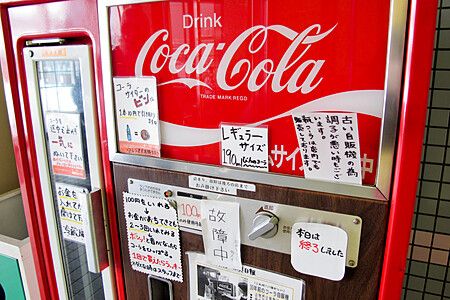
There’s a small crowd of fans who travel around Japan to photograph and use machines from the 1970s and 1980s, the ones that serve real hot food. The best-known stop is in Sagamihara, Kanagawa Prefecture, just outside Tokyo, in a yard that officially sells used tires.
The owner started collecting the machines as a hobby, repaired the ones that arrived broken without any outside help, and now has more than a hundred of them lined up. You can eat there around the clock: udon and soba in bowls, ramen, curry rice, hamburgers, toasted sandwiches.
Every time it’s the same little ritual, and it puts a smile on your face. You feed in your coins, the machine makes a noise like an old washing machine, a counter ticks down, and a few seconds later the hatch opens and there’s a steaming bowl inside with a ladleful of broth in it.
It’s not fine dining, I’ll be honest with you. It’s salty broth and soft noodles, 1980s trucker food. But it’s one of the few things that show you what Japan was like before convenience stores, and the place has filled up with families and kids precisely because it doesn’t look like anything modern.
The unwritten rules
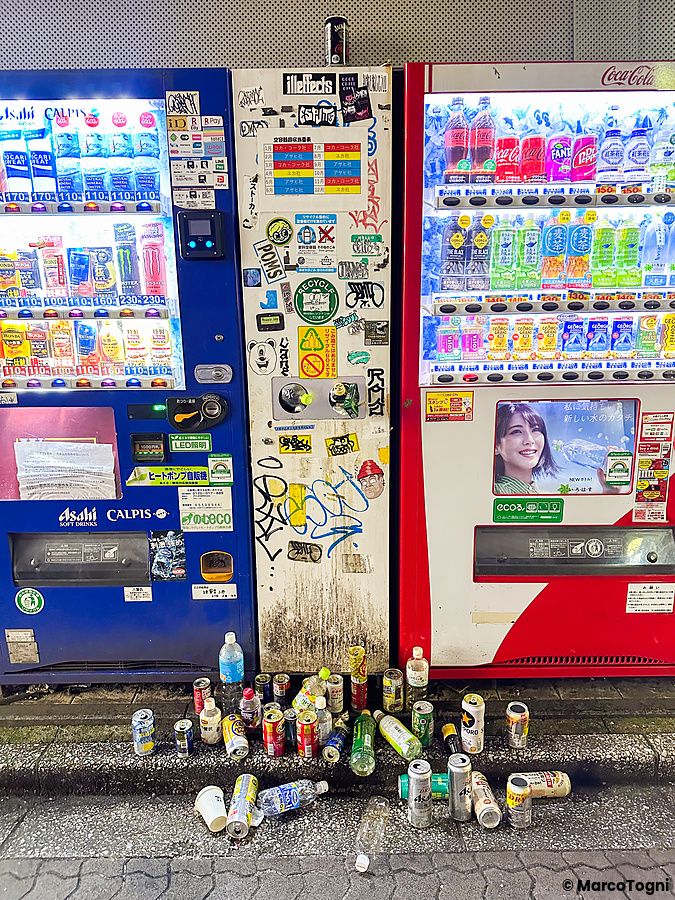
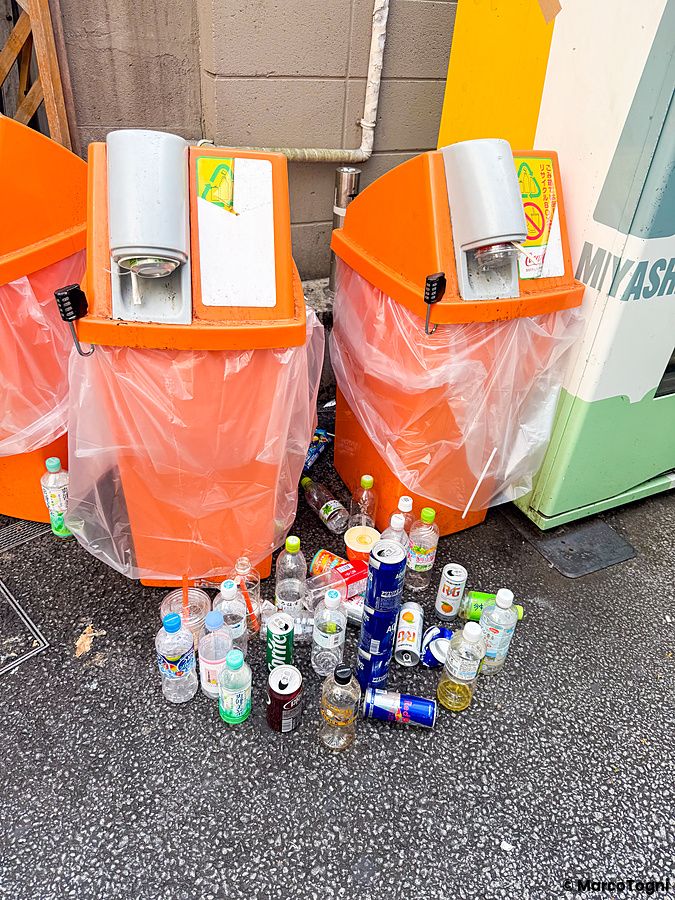
Buying is easy, and the rest you pick up by watching other people. The basic rule is that the bin next to the machine isn’t just any trash can. It’s the bin for that machine’s empties, and it’s for cans and bottles, not tissues or sandwich wrappers.
If it’s full or there isn’t one, you take the bottle home with you. It seems inconvenient, and at first it is, but it’s the reason the streets are so clean.
A few more things that will save you some embarrassment:
- Drink right there or close by, because walking while eating or drinking isn’t something people do much here, and in crowded places it bothers people.
- Always grab your change from the little slot at the bottom, which is deep, so coins are easy to miss. Leaving a few behind is the most common mistake.
- If the machine stands in front of a house or a shop, don’t lean on it or hang around chatting for half an hour. That space belongs to someone.
- Plastic bottles go in the round hole and cans in the can bin, and on machines with a narrow opening you should slide the bottle in without forcing it.
If you’re traveling with kids or short on time, the machines are also the fastest way to get bottled water before a long walk, and buying two instead of one saves you from desperately hunting for the next machine halfway up a hill.
A bit of history
What usually surprises people is how far back all this goes. The first Japanese patents date back to the late 1800s, and the oldest surviving machine is from 1904. It sold stamps and postcards, and today it’s kept in a postal museum.
The big leap came much later, when the 100-yen coin became part of everyday life toward the end of the 1960s and the railways started using machines to sell tickets. From then on the machines kept spreading right up to the turn of the century.
There’s also an energy side to all this that you don’t see, but it’s there. Keeping millions of machines switched on takes a lot of electricity, so manufacturers rely on energy-efficient lighting, sensors that turn the lights off when it’s sunny, and systems that chill the drinks overnight and use that stored cold to keep them cool during the day.
My advice
If I had to pick one image to sum up everyday life here, I’d pick a lit-up vending machine on an empty street at two in the morning, its motor humming and nobody around. It’s nothing spectacular, but it says more than plenty of postcard shots.
So on your trip, try stopping for a minute. Get a hot tea in winter and drink it right there, watching people go by. And if someone back home asks you about that panty vending machine everyone’s heard of, by now you know what to tell them.