 793 m
St. Mary's Cathedral793 m
Modern and fascinating.
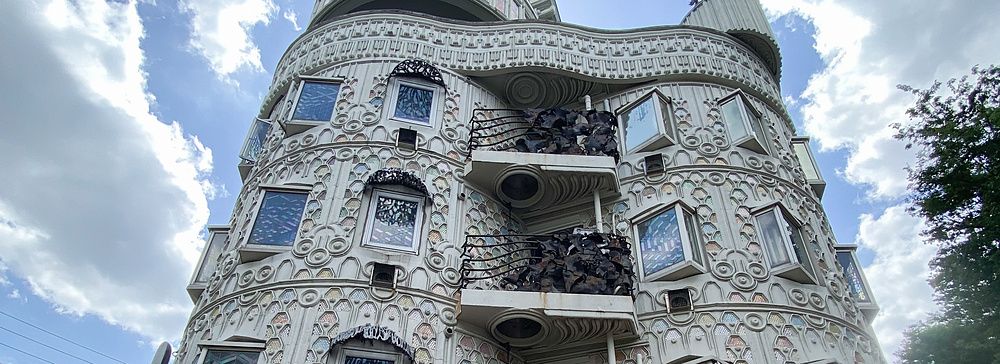
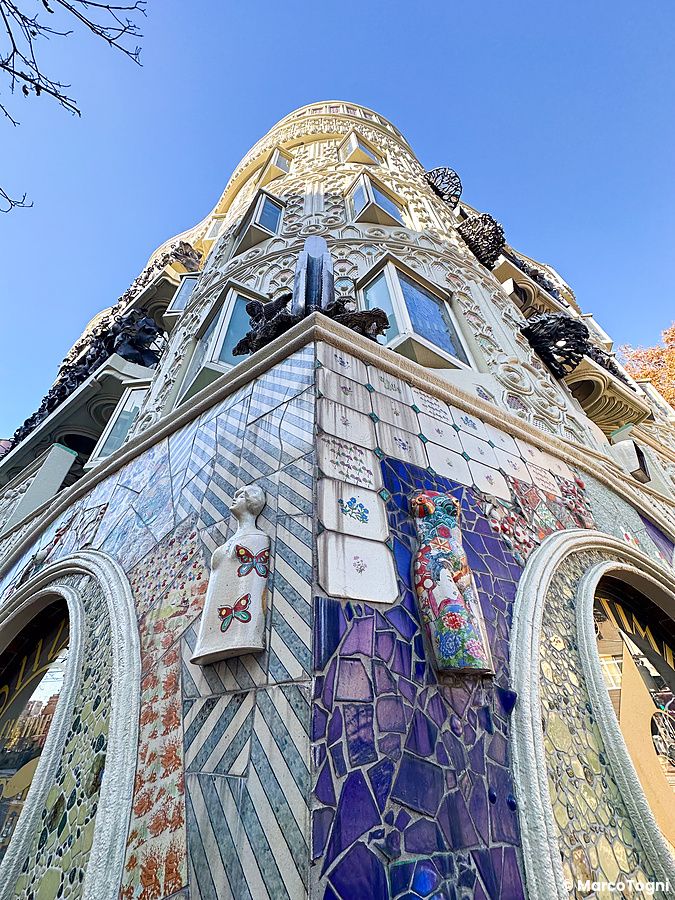
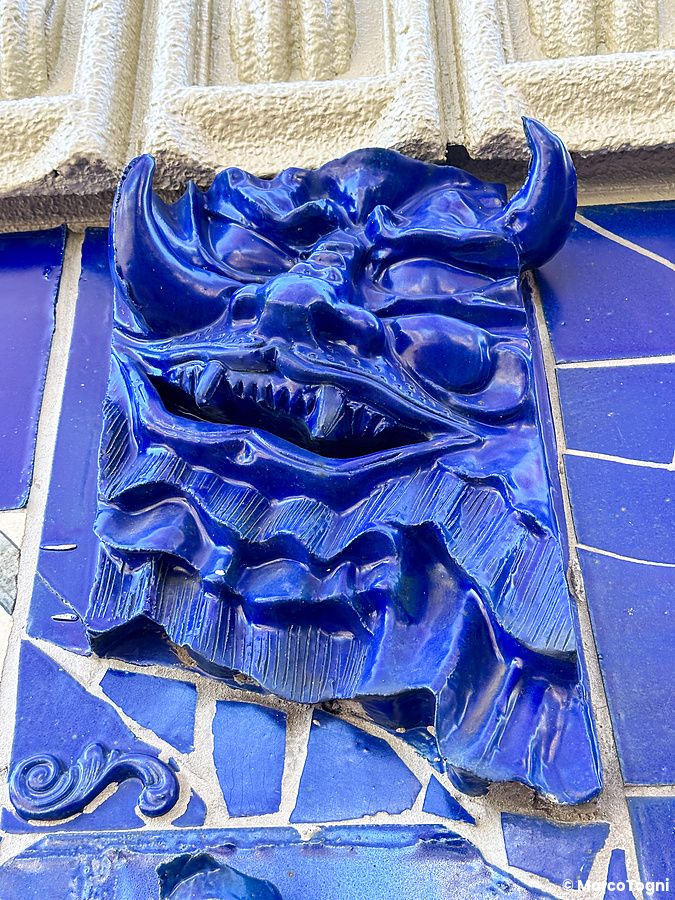
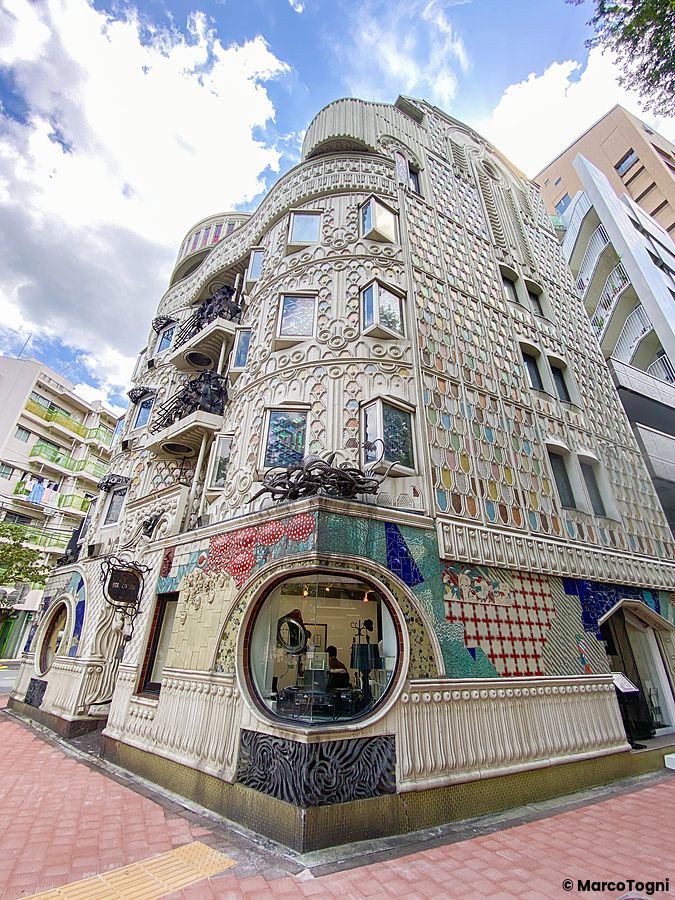
An apartment building in Waseda, next to the university, with a facade covered in faces, female figures, scale-like tiles that change color with the light, and wrought-iron railings shaped like leaves. It’s called Waseda El Dorado. Ordinary people live there, and nobody on the Tokyo tourist circuit ever comes by.
It isn’t worth a special trip, but if you’re in the area I strongly recommend stopping by. You look at the facade from the sidewalk, then walk in as far as the lobby, which is the best part. It’s for anyone with a soft spot for weird architecture, and for anyone who’s done the usual temples and wants to see something different.
From the outside it looks like a decorated cake dropped in among Waseda’s gray buildings. No two tiles in the whole building are the same, and nothing came out of a catalog. Even the porthole windows on the balconies were made to order.
The architect behind it is known here as the Japanese Gaudí, but he only designed the structure. Everything else he left to about a dozen artists, who handled the sculptures, tiles, mosaics and stained glass. It also goes by Dorado Waseda in Japanese, which is handy to know when you search for it on a map.
It isn’t a museum. The upper floors are rental apartments, and on the ground floor there’s an antique shop, a gallery and a hair salon, all with their storefronts set into these curving walls.
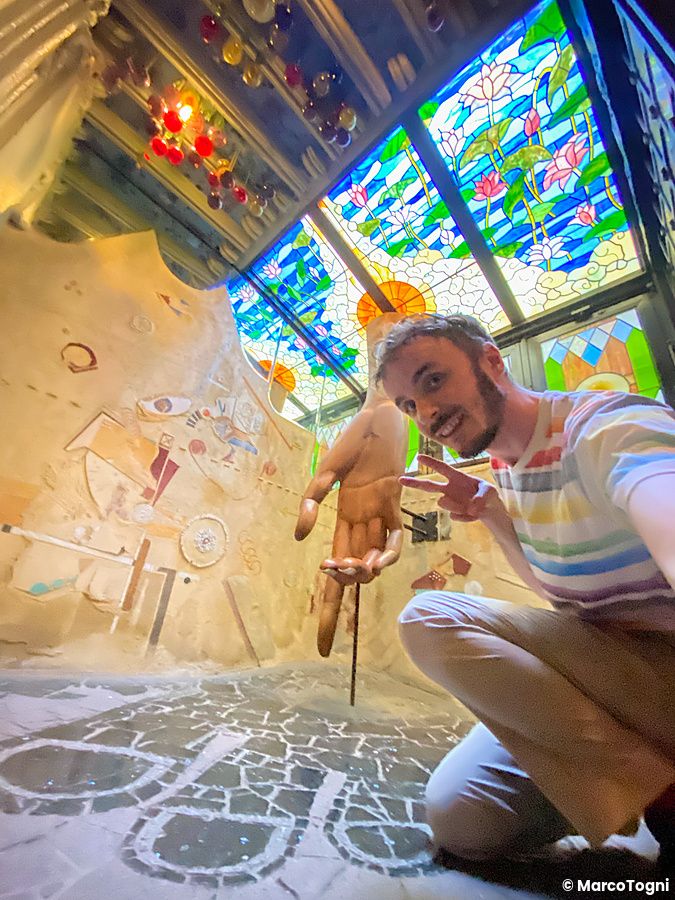
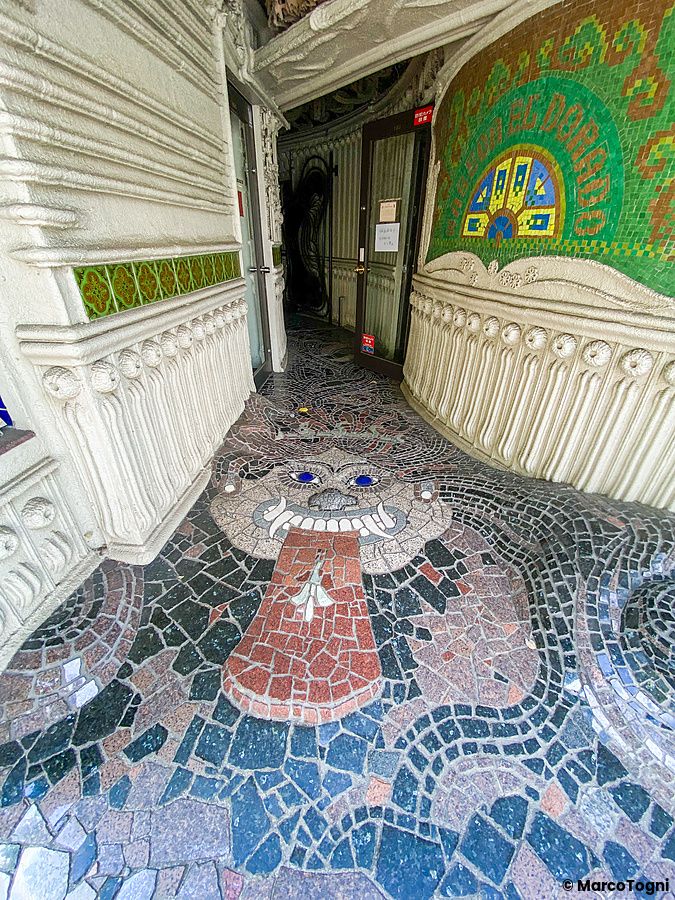
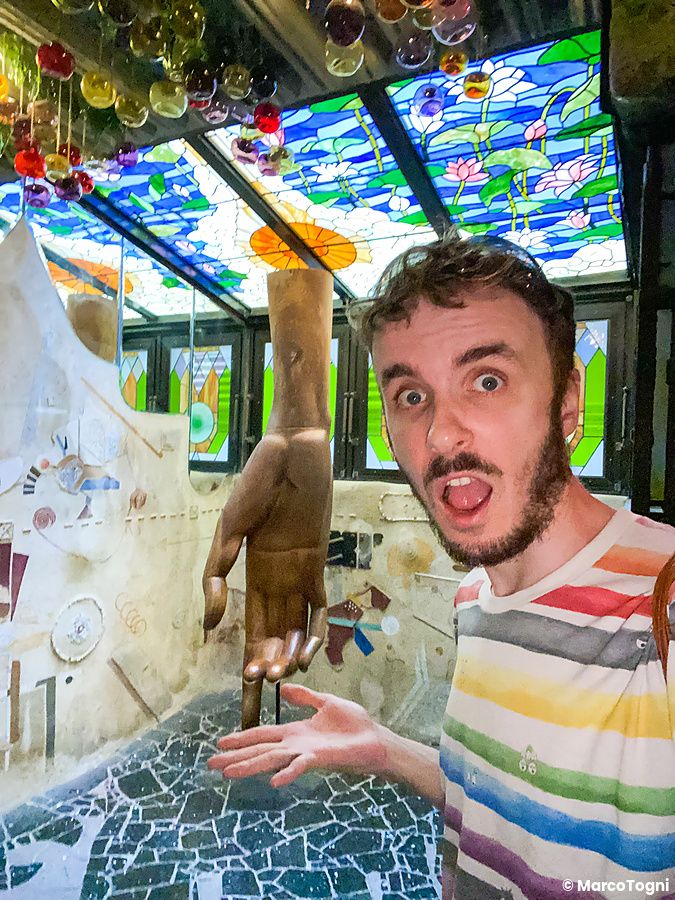
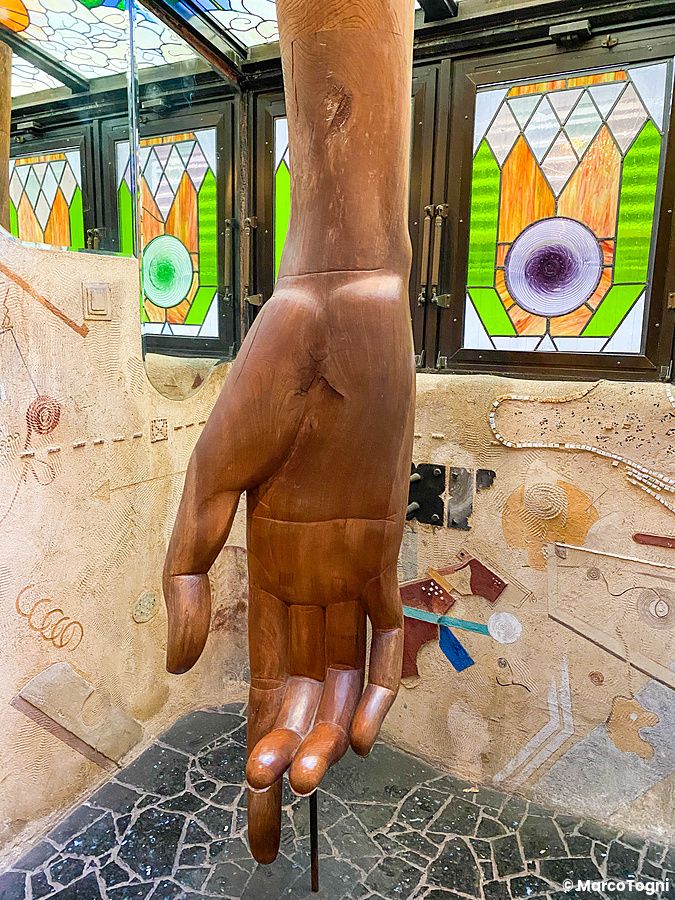
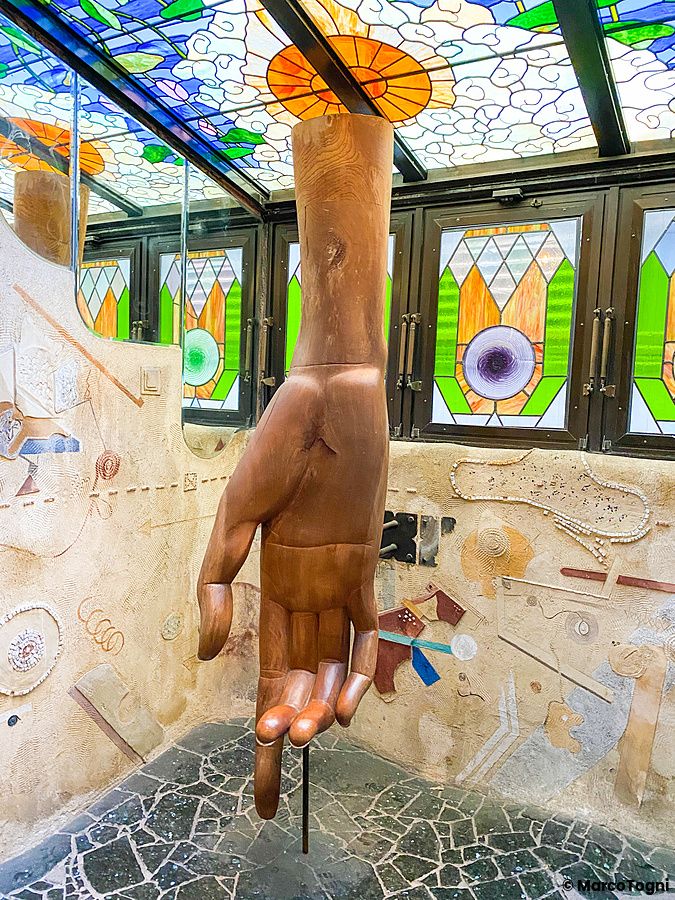
Anyone can walk in as far as the lobby, and that’s where you stop. Just to the right of the hand is the door with the automatic lock that leads up to the apartments, and everything beyond it is home to the people who live here. It’s a fair place to draw the line, and the part you’re allowed to see is also the most richly decorated, because the corridor and the lobby are where the artists got the most carried away.
The lobby isn’t big. Three people fill it, and when a resident comes home with groceries you have to step aside to let them through.
The light in the entrance corridor is dim, coming from the lamps and the colored glass at the far end. I love it, but if you’re uncomfortable in enclosed, slightly dark spaces, it might get to you, because with the ceiling rippling and the walls bulging it feels like walking inside a body.
If you’re looking for something to fill a whole morning, you’ll be disappointed. This is a building to take in slowly and explore detail by detail, with no rooms and no route to follow. People who hate kitsch might turn their noses up too, because here the excess is deliberate.
In person it delivers far more than the photos promise. In pictures it just looks like an eccentric building, but standing in front of the walls you realize every centimeter has been handcrafted, and the longer you look, the more you find.
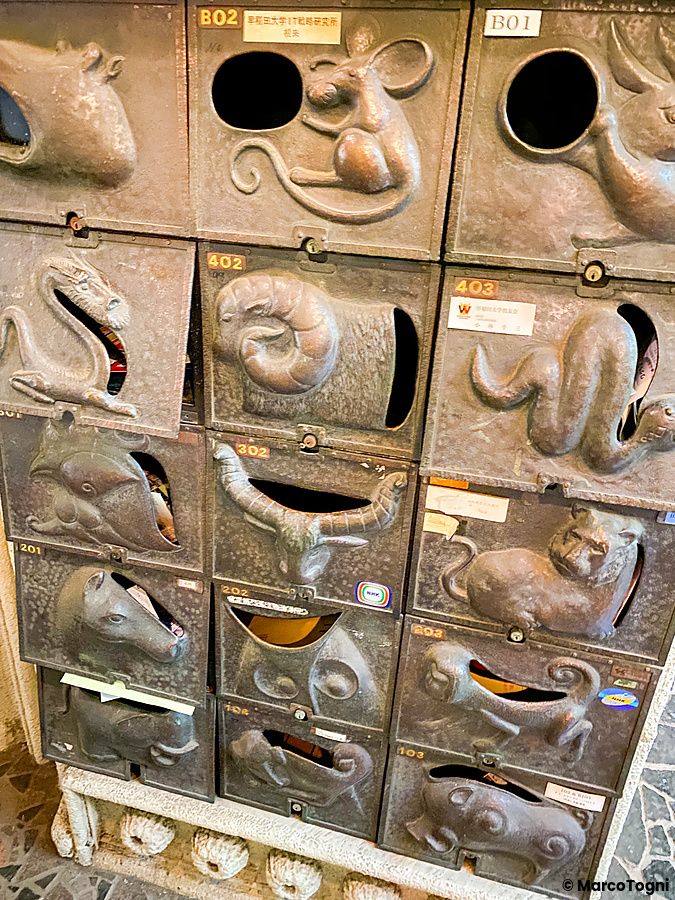
I stop by every time I’m around Waseda, even if it’s just to step back into the lobby and look at the hand under the stained glass. I always find something I missed the time before: a face tucked between the tiles, or an animal on the mailboxes I hadn’t noticed.
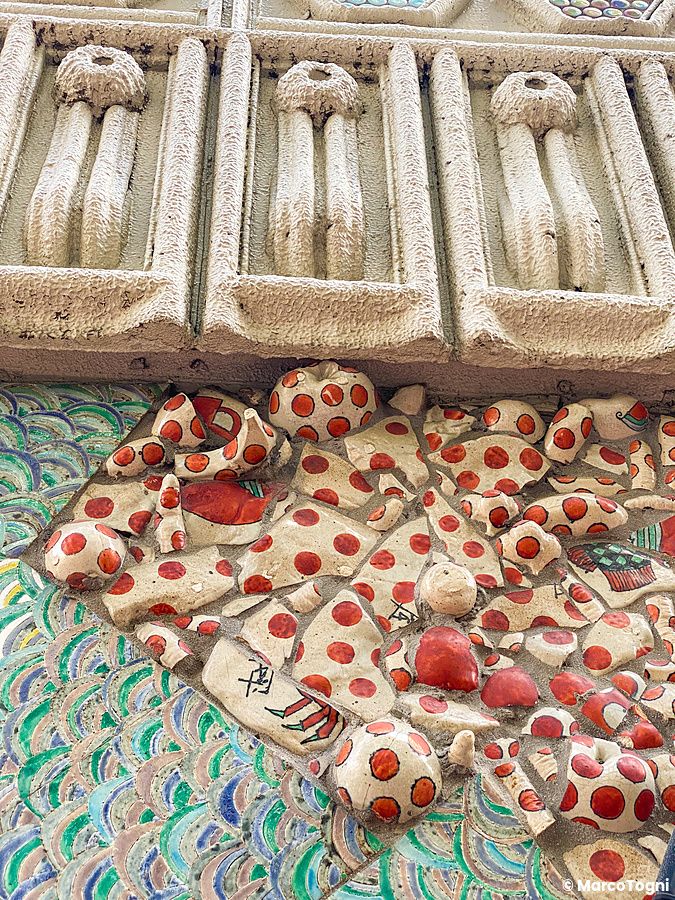
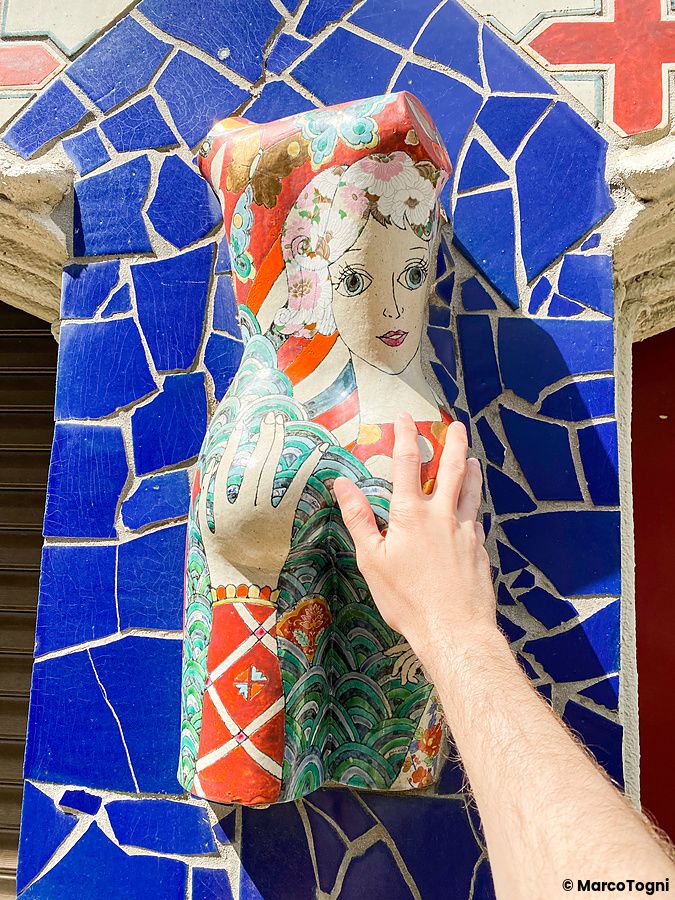
Go during the day, and ideally when it’s sunny. The facade tiles were made to shine, and in direct light they change color as you walk along the sidewalk. The stained glass in the lobby only lights up in daylight, too.
On overcast days the facade loses a lot of its impact and looks almost white, but the corridor doesn’t change. So on rainy days you can focus on the inside.
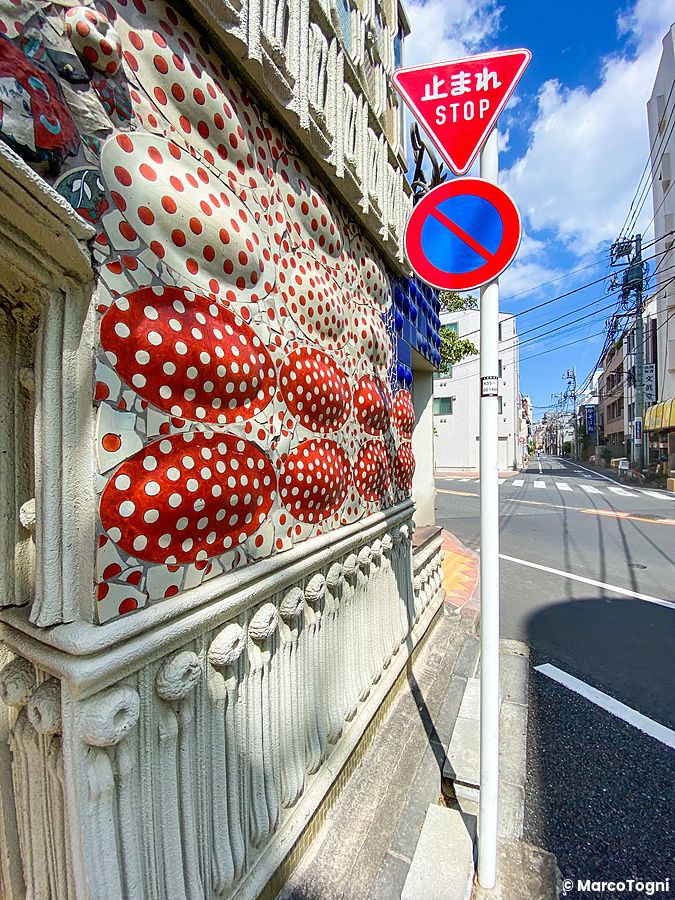
You won’t find real crowds. At most you’ll run into a couple of architecture fans with cameras around their necks, or a few university students stopping to look.
I’d avoid early mornings and evenings, when the people who live here are heading out to work or coming home. In mid-morning or early afternoon it’s easier to linger in the lobby without feeling in the way.
The seasons make no difference. There are no trees here to see in bloom or in fall colors, and the building looks the same in January as it does in August.

To get the whole building in the frame, you have to cross the street and stand on the opposite sidewalk. From there you can fit in the rounded corner with the turret on top and the leaf-shaped balconies stacked one on top of the other, while from directly below you only see bits of wall.
For details it’s the opposite. Get close to the tiles and the faces near the entrance, where the reliefs are at eye level and you can clearly see the colored scales.
Inside, the photo everyone takes is from the corridor toward the hand, with the stained glass behind it. There’s no line, but if someone’s already there, wait for them to finish, because the lobby isn’t big enough for two groups.
A sign at the entrance asks you to take your photos quickly and leave room for others. Apart from that, the rules are the same as in any apartment building. Keep your voice down, because every sound in the corridor echoes all the way up to the apartments.
Don’t stand in front of the automatic door, and keep people out of your shots as they go in or out. If a resident walks by, step aside and give a quick nod. Remember that you’re in their home.
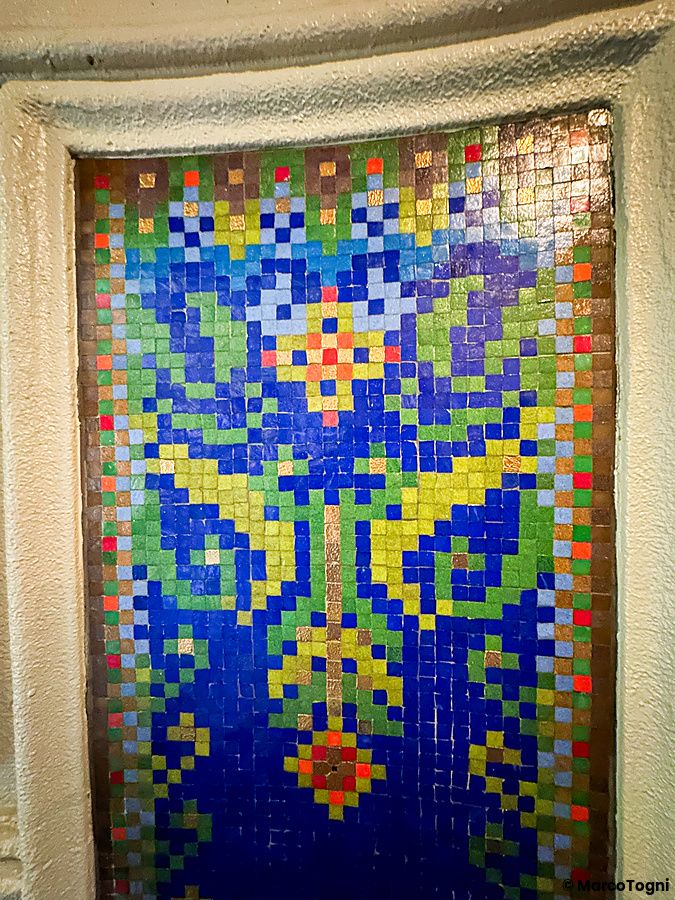
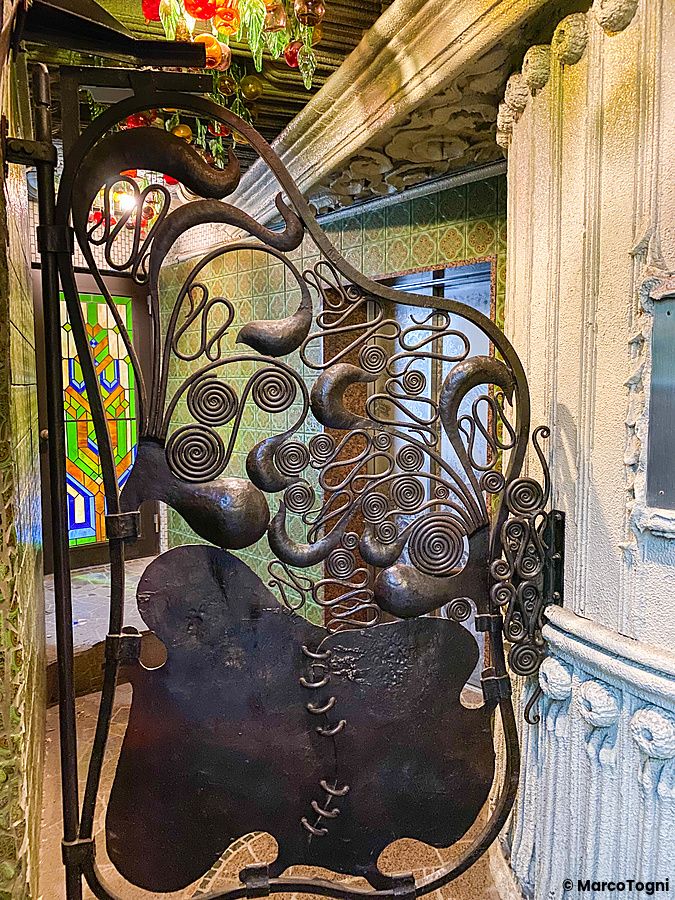
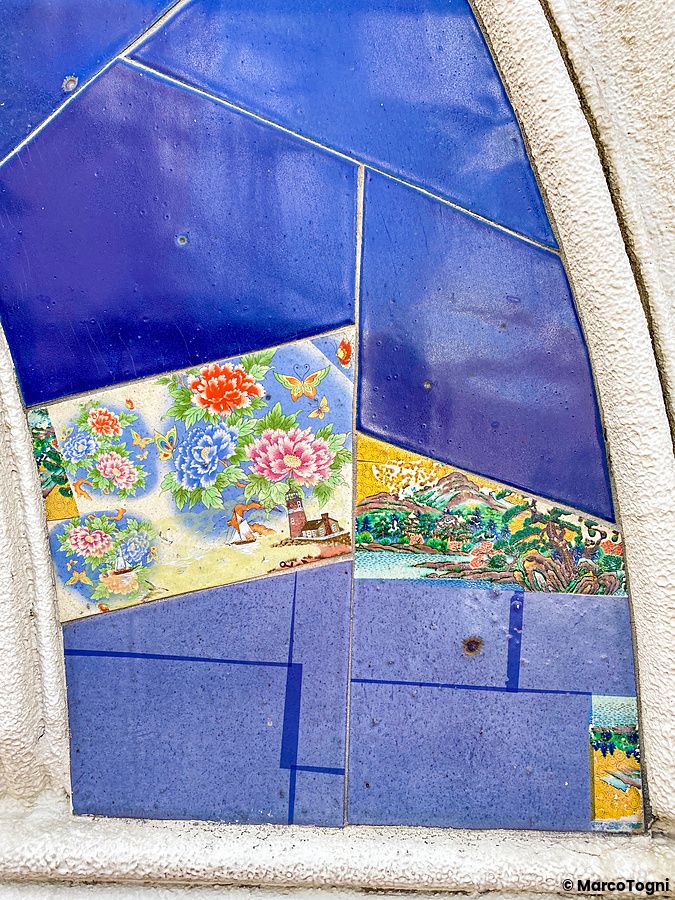
You don’t come here for a monument. You come for a building where people actually live, decorated like a work of art from the floor to the mailboxes. If you’re in Waseda or nearby, you have to make the detour, because there’s no other apartment building in Tokyo where every tile and every railing is one of a kind. But if you’re only in Tokyo for a few days and this neighborhood isn’t on your route, don’t rearrange your plans to come all the way out here, or you’ll be left wondering whether you wasted your time.
The easiest way is the Tozai subway line. Get off at Waseda Station and in about 5 minutes on foot you'll be outside the building, right by the university campus.
If you're coming on the Toden Arakawa streetcar, allow about ten minutes on foot from the Waseda terminus.
This place is on MarcoMaps
Waseda El Dorado
My map of Japan: over 4,000 places I've tried myself, each with photos, rating, and hours. Filter by category and rating, find veg-friendly spots and places near you with GPS. No sign-up, right from your phone.

