What to Eat in Osaka
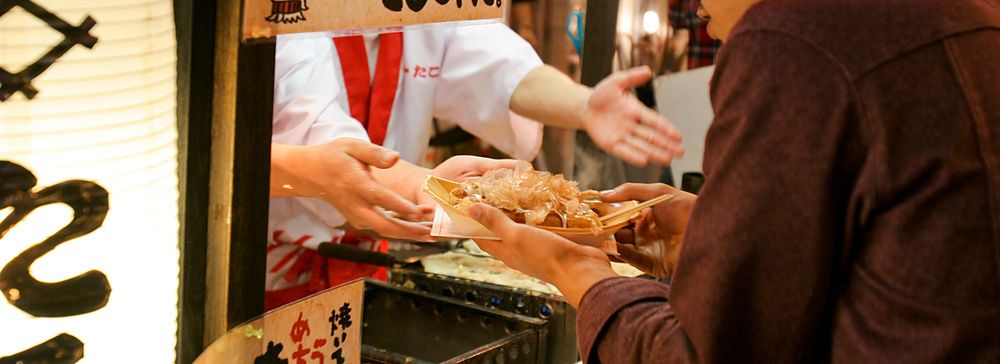
Osaka is where people come to eat. That’s not just a line: for Japanese people it’s always been that way. You go to Kyoto for the temples and to Tokyo for everything, but you go to Osaka for the food. This is the city of kuidaore, “eat yourself into ruin,” and here it’s a way of life, not just a saying. You notice it as soon as you walk the streets. The air smells of sweet sauce and grilled food, lines form in front of the stalls, and everywhere you look people are eating: standing up, on the go, or sitting for hours.
This is my list of what to eat in Osaka: the dishes you shouldn’t miss, the ones that are worth the trip on their own.
Contents
Takoyaki
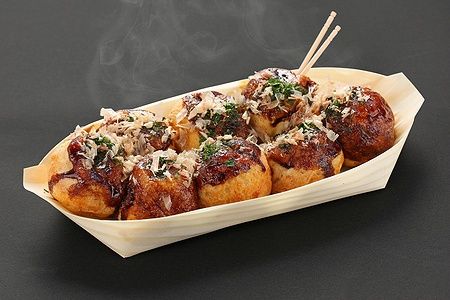
The first dish you have to try is takoyaki, the balls of batter with octopus inside. You’ll find them everywhere, and I mean everywhere: street stalls, specialty shops, even restaurants that serve them in more elaborate combinations. Proper takoyaki are soft inside, almost creamy, with a light crust on the outside. They shouldn’t be too dry or rubbery.
Inside there’s a piece of octopus (tako), green onion, pickled red ginger and tenkasu (little tempura balls). They’re topped with takoyaki sauce, mayonnaise, aonori (green seaweed) and katsuobushi (dried bonito flakes). What surprises a lot of people is that in Osaka they don’t always come that way. Many stalls let you choose how they’re seasoned, from plain salt to ponzu, and several places serve them in dashi, so you dip them bite by bite the way you do with akashiyaki. The negi-mayo version is a big favorite too, with a mountain of green onion and mayo on top.
One last warning: straight off the griddle they’re scalding inside, much hotter than they look. Blow on them before you bite, or you’ll burn the roof of your mouth and feel it for the rest of the day.
Kansai-style okonomiyaki
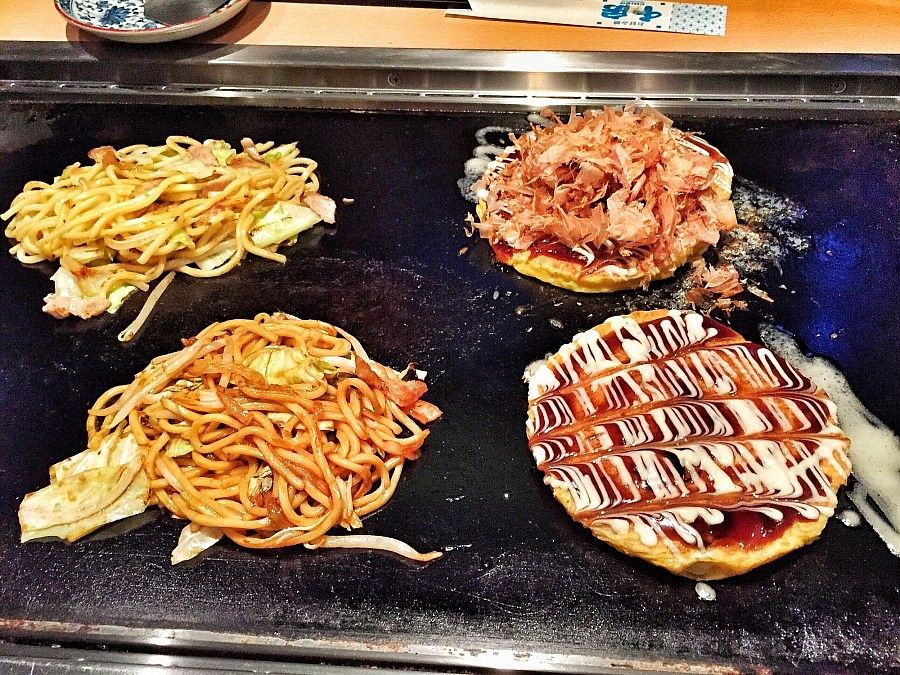
Okonomiyaki is another of Osaka’s signature dishes, and here it’s made differently than in Hiroshima. It’s a kind of thick “pancake” made with shredded cabbage, flour, eggs and whatever other ingredients you choose. In Osaka everything gets mixed into the batter, which is then cooked on a hot griddle and topped with okonomiyaki sauce, mayonnaise, aonori and katsuobushi.
The list of possible ingredients is huge: pork belly, squid, shrimp, mochi, cheese… and every place has its own versions. I recommend eating it somewhere with a griddle on the table, so you either cook it yourself or watch them cook it in front of you. That’s part of the experience.
Chibo is a good chain to try it at, but the local places in the more residential neighborhoods make more authentic, less touristy versions. If you want to go beyond the classic, Osaka has two variations worth ordering. Modanyaki is okonomiyaki with a nest of yakisoba inside, much more filling and basically a full meal on its own. Negiyaki is thinner and swaps the cabbage for a mountain of green onion, often with a bit of beef, and you eat it with soy sauce instead of the thick sauce. It’s lighter and tastier than you’d expect.
Kushikatsu
Kushikatsu means deep-fried skewers: meat, fish and vegetables on sticks, breaded and fried, then served with a savory brown sauce in a communal dish. The one rule you can’t break is no double dipping. Once you’ve bitten into a skewer, it can’t go back in the sauce. That’s why they give you raw cabbage on the side, so you can use a leaf to scoop up more sauce. At the same counter, keep an eye out for doteyaki too. It’s beef tendon cooked for hours in miso until it turns incredibly tender, served in a small bowl with a little green onion on top. Sweet and savory, it’s the natural partner for fried skewers, and in kushikatsu places almost everyone orders it with their first beer.
Shinsekai is full of long-established places, and the best known is Daruma, but there are plenty of little restaurants where you eat well without spending much. What I like about kushikatsu is that you can keep ordering as you go, one skewer at a time, so you get to taste a bit of everything.
Kitsune udon
After a day of fried food and thick sauce you’ll want something more delicate too, and kitsune udon was born right here in Osaka. It’s soft udon in a light, clear dashi broth, very different from the dark broth you get in Tokyo, topped with a big sheet of fried tofu cooked with sugar and soy sauce. The tofu is sweet and juicy, and it melts into the broth as you eat.
The best-known place is Usami-tei Matsubaya, the old Minami restaurant credited with inventing it, but you’ll find it at any neighborhood udon-ya. It’s the dish that sets you right again after you’ve eaten too much, and people in Osaka order it more often than you’d think.
Rikuro's cheesecake
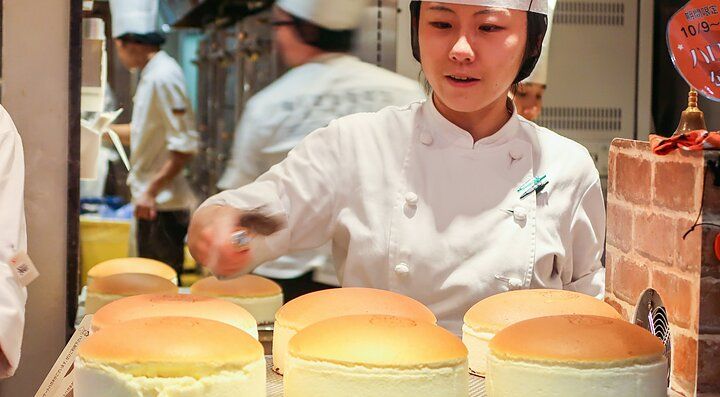
Rikuro’s cheesecake is a tourist attraction in its own right, and it’s one you shouldn’t miss. Soft, tall and incredibly light, it has won over thousands of people, not just with its looks but with a texture so unusual it almost seems to disappear in your mouth.
It’s not your classic American cheesecake, or any kind of dense cheesecake. It’s almost like a cloud, and fresh out of the oven it smells of butter and eggs. There are small bits of raisin inside too, but the flavor stays very delicate. Warm, it’s soft and airy, best eaten fresh out of the oven, maybe while it’s still steaming in the box. The lines you see at the Namba and Umeda shops are there for a reason: the cakes come out of the oven at set times, and people wait patiently for that exact moment.
But it changes completely from one day to the next. Put it in the fridge and eat it the next day, and it turns denser and creamier, tasting less like egg and more like a traditional cheesecake. It’s almost like getting two different desserts out of the same cake, which is one more reason to buy a whole one and enjoy it both ways.
A whole cake costs about 1,100 yen, which is next to nothing.
551 Horai butaman
If you’ve taken a train in Osaka even once, you’ve probably caught that unmistakable smell of steamed meat, sweet onion and soft, fluffy dough. That’s the butaman from 551 Horai, white steamed buns filled with ground meat and spices, sold in every station in Kansai.
These buns are a classic snack to eat on the go, piping hot and fluffy. The filling is generous and slightly sweet, with that typical taste of Chinese food adapted to Japanese palates. They’re sold in pairs in a small cardboard box that keeps them warm, and they’re one of the few street foods you can easily find in upscale department stores like Hanshin and Daimaru too.
Besides the classic butaman, they also make gyoza, shumai and spiced nikuman, but the butaman are still the real star. If you like steamed buns, these are some of the best in Japan, with a perfect texture and an addictive flavor.
Ikayaki
Ikayaki is the dish tourists don’t know about and everybody in Osaka eats. It’s not the whole grilled squid you see at food stalls. Here it’s more like a really flat crepe: batter and pieces of squid cooked between two red-hot plates that press them flat, then brushed with sauce and folded in half.
It comes out just chewy enough, greasy and full of flavor, and you eat it standing up in two minutes. The classic place to get it is the basement food court of the Hanshin department store in Umeda, where there’s almost always a line. Ask for the version with egg, the one they call deluxe. It’s much richer and worth the short wait.
Best areas and restaurants
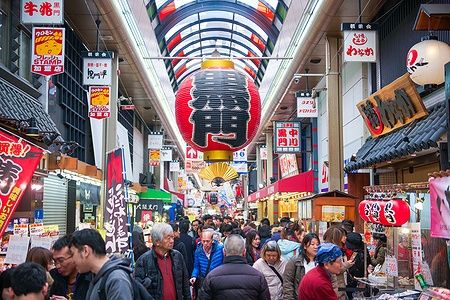
I’ve also written a detailed article on where to eat in Osaka, and I’d recommend reading it. The short, obvious answer is Dotonbori. A big part of the city’s food scene is packed in here: stalls, famous restaurants, long-established places and chains serving some of Osaka’s most typical dishes. Yes, it’s a touristy area and often crowded, but it’s always worth a walk around, especially in the evening, when the neon signs are reflected in the canal and the air is full of food smells.
This is where you can try takoyaki, okonomiyaki and kushikatsu in every variation, and you’ll also find excellent ramen and sushi places. The great thing about Osaka is that it’s famous for street food, yet it also has top-quality restaurants for less than you’d pay in Tokyo. And if you want a quick bite, there are great chains like Ichiran for ramen or Sushiro for conveyor belt sushi, a style that’s still going strong here.
Another area I recommend is Kuromon Ichiba, the city’s best-known covered market. It used to be just for locals and now it’s full of tourists, but it’s still a great place to eat fresh fish. You can try freshly sliced raw tuna, sea urchin served straight from the shell, or crab grilled over charcoal. Prices aren’t rock-bottom anymore, but if you’re after something really good to eat on the go, this is the place.
Of course, there are countless places to eat well in Osaka, and they can’t all fit here.
Take a look at my article on all the best restaurants in Osaka.