Where to Eat in Nikko
Most travelers do Nikko as a day trip from Tokyo, visiting the sacred area around Toshogu Shrine, Kegon Falls and not much else. Even if you leave in the morning, you don’t have much time to see the whole area, so there’s no point hunting down restaurants that are hard to get to. Instead, here are a few tips on what to eat. The local specialty is Yuba Tofu, the skin that forms on the surface of heated soy milk, and it’s a real delicacy.
Contents
Grilled fish skewers
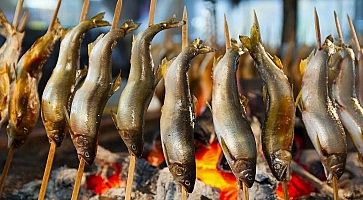
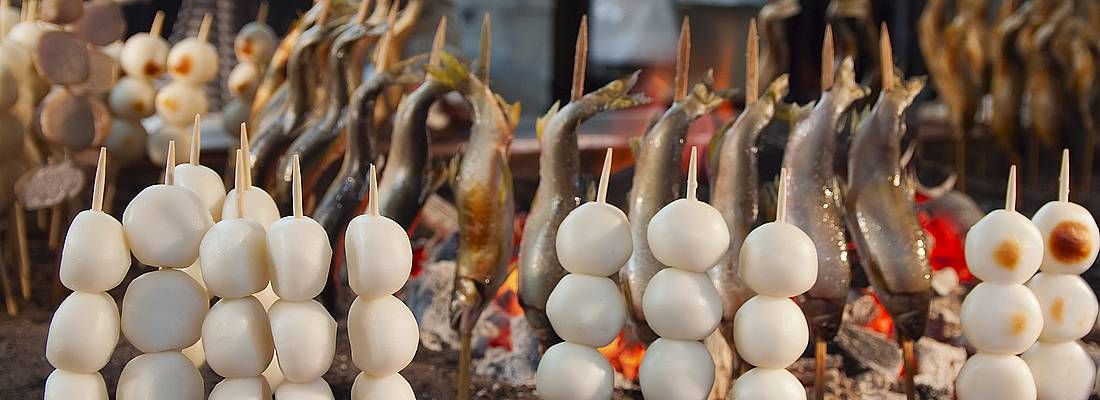
If you like fish and want to try something a bit “wild” and very Japanese, go for the skewers of fish grilled over hot coals and seasoned with salt. You’ll find them in a few spots, including a small stand right in front of the Kegon Falls ticket office. You can eat the whole thing, bones and head included. Some places grill several kinds of fish, though the first time you try them you might not notice much difference. I’d go for the ayu, a fish with sweet-tasting flesh.
Cost: about 500 yen per fish.
From the bridge to the station
You’ll find some restaurants along the main street, which runs about 2 km from Shinkyo Bridge to Nikko Station. There isn’t a huge selection, but there are several places serving soba, meat dishes, yakitori and plenty more.
Nikko yuba
Nikko yuba isn’t the same as Kyoto yuba, and that’s exactly why it’s worth trying here. In Kyoto they lift the skin from the edge, so it stays thin and flat. In Nikko they pull it up from the center with a stick, so it folds over on itself and comes out double-layered and thicker.
It’s often rolled into small rounds too, and because it’s more substantial, it holds up well when fried or cooked in broth. That’s why it shows up on menus around here in so many different dishes, from yuba sashimi to soups to tempura.
Hongu Cafe
Hongu Cafe sits in the woods between Toshogu Shrine and Shinkyo Bridge. It’s a lovely place with a wooden interior, and you have to take your shoes off to go in.
They have a few savory dishes, but I mainly recommend it for a cup of coffee and a good dessert while you relax in a very traditional setting. It’s a little hidden, so check the map to find it. There’s a reason it feels the way it does: the cafe is in a building more than 300 years old that used to house the shrine’s priests, and it stands near Futarasan Hongu. The floor and the counter are made from the wood of sacred cedars, and from the terrace you can see Shinkyo Bridge and the Daiya River.
Cost: around 1,000 yen.
Hippari dako
This restaurant has an English menu. It specializes in yakitori, but there’s lots more on the menu too: ramen, yakisoba, yuba tofu and more.
The food is good, the place is very authentic, and it’s perfect for a quick bite when you don’t want to waste much time. It’s on the street I mentioned earlier, the one running from the red bridge toward the station, and it’s easy to find.
Cost: 1,500 yen per person.
Oku Nikko Hotel Shikisai
Hotel Shikisai is on the shore of Lake Chuzenji. I recommend it if you want to spend more than one day in Nikko and do something a little different from the usual day trip. The restaurant is only open to hotel guests. I’m mentioning it both because the rooms are gorgeous and because I ate well there: excellent dishes made with fresh ingredients, including yuba tofu, ayu and much more.
Cost: room and dinner, around 15,000-20,000 yen per person.
Natural-ice kakigori
In summer, Nikko has a specialty you’ll find in only a few other places in Japan: kakigori made with natural ice. The ice forms in winter in outdoor ice ponds in the middle of the cedar forest, then it’s cut into blocks and stored until the hot weather comes. Some producers here have been making it since the Taisho era, in the early 1900s.
Natural ice can be shaved into much finer flakes than factory-made ice, so the kakigori comes out as fluffy as snow. You’ll find it at some cafes and dessert shops in town, mostly in the warmer months, and it’s perfect for a break after touring the shrines.