Working in Japan Without a Degree
You can work in Japan without a degree. I’m saying it up front so we can get it out of the way. There’s a lot of nonsense online, like the idea that without a university degree or ten years in the field nobody will even let you through the office door. That’s not how it works.
To move here and work, you don’t need a perfect résumé. You need a visa that lets you work, and there are far more of those than people tell you about. Some depend on studying, others on your personal life, and others on working in specific industries like food service or fashion. Each one has its own requirements and hurdles.
Contents
Where the myth comes from
The idea that you need a degree starts from a grain of truth, but people only tell you half the story. Among foreigners with office jobs in Japan, the most common work visa is gijinkoku, short for the Japanese name of the visa for engineers, humanities specialists and international services. It’s the visa you hold if you work in IT, design, translation, marketing or international sales.
A degree is the easiest way to get this visa, and that’s where the line everyone repeats comes from. The catch is that gijinkoku is only one of many permits, and even gijinkoku has alternatives to a degree.
Another thing I see a lot is people mixing up what employers ask for and what immigration asks for. Many Japanese companies, especially small and midsize ones, don’t care much about your education. They look at how well you speak Japanese, whether you’re reliable and whether you can do the job.
The real obstacle is bureaucracy, meaning the visa. Once you understand that, the right question is no longer whether you can work without a degree, but which visa you can get.


Getting gijinkoku without a degree
You can get the gijinkoku visa without a degree too, and the law sets out four ways to do it. None of them is a shortcut, but they’re all real and plenty of people use them.
- A diploma with the senmonshi title from a Japanese senmon gakko, a state-recognized vocational school with programs of at least two years. It meets the education requirement in place of a degree.
- At least ten years of documented experience in the job you’ll be doing, which is the standard threshold for technical and office work. The years you spent studying that subject at school can count toward the total.
- At least three years of experience for jobs tied to international services, like translation, interpreting, design or public relations. That’s a lot less than ten, and almost nobody knows about this option.
- In IT, some official certifications recognized by the Japanese government can stand in for a degree.
The ten years of experience are the other half of the myth. The rule exists, but it’s just one of the options, and not the easiest one either, because proving those years with pay stubs, contracts and letters from past employers is a slog.
Honestly, when someone without a degree wants an office job, I almost always tell them to look at the first option.

The senmon gakko route
A senmon gakko is a vocational school you go to after high school, built to teach you a specific trade. There’s one for almost everything: IT, graphic design, animation, fashion, cooking, pastry, tourism and hospitality, business, beauty, languages.
Programs usually last two years, and if the school is recognized, you graduate with the senmonshi title. That’s exactly what you need to apply for the gijinkoku visa once you’ve found a job.
I like this route precisely because it solves several problems at once. While you study, you’re already living in Japan on a student visa, your Japanese gets better every day, and you learn a trade that companies here recognize. Many schools also have an office that helps students find work, and companies are used to hiring straight from those schools.
On a student visa you can also apply to immigration for a separate permit that lets you work part-time up to 28 hours a week during the school term. It won’t cover all your living costs, but it helps a lot with rent and groceries.
And if you graduate without a contract, it’s not over. Graduates who keep looking for work can switch to a job-hunting visa with a letter of recommendation from their school. It usually gives you up to one more year to find the right job, and during that time you can keep working part-time with the same kind of permit.
The biggest limit is language, because classes are taught in Japanese. To enroll, most schools ask for N2 on the JLPT, the official Japanese proficiency test, or a period of study at a recognized language school in Japan.
If you’re starting from zero, the usual path looks like this: a language school first, then the senmon gakko, then the job. Expect it to take about three or four years in total before you have a proper contract. You also need to have completed twelve years of schooling in your home country. Whether a regular high school diploma covers that depends on your country’s school system.
Costs and pitfalls
I’ll be upfront about the money: this isn’t a cheap route. A language school usually costs a few hundred thousand yen a year, while the first year of senmon gakko, including enrollment fees and tuition, often comes to around 1,000,000–1,500,000 yen, with big differences from one program to another. Hands-on programs that need a lot of equipment, like cooking or some healthcare fields, sit at the high end.
On top of that there’s the cost of living, and for the student visa you have to prove you have enough money to support yourself. Always check current prices directly with the schools before you decide.
A few details can make the difference between a visa that gets approved and one that gets rejected:
- Pick a school that actually awards the senmonshi title. Not every vocational school does, and without it the road to gijinkoku is closed.
- Think about the job you want from the start. For senmon gakko graduates, immigration checks very carefully that the job matches what you studied. If you study graphic design and then get hired as an accountant, your visa could be rejected.
- Don’t treat the school as just an excuse to get a visa. Attendance is tracked, and with too many absences renewing your student visa becomes a problem.
- Keep an eye on your part-time hours, because going over 28 hours a week can hurt your visa renewal and your switch to a work visa.

The tokutei gino visa
The tokutei gino, roughly a visa for workers with specific skills, was created to bring foreign staff into Japanese industries that are short of workers. That means restaurants, hotels, elderly care, cleaning, construction, farming, food manufacturing, car maintenance and similar fields.
A degree has nothing to do with it. You need to pass two tests: a skills test for the job you’ll be doing and a Japanese test, usually JLPT N4 or an equivalent basic test created specifically for this visa.
The Japanese level required is low, which makes this one of the most accessible routes there is. With the first tier of the visa you can stay five years at most in total, and you can’t bring your family.
Some industries have a second tier that’s harder to get, but it can be renewed indefinitely and lets you bring your family. With that, you can really plan your life in Japan for the long term.
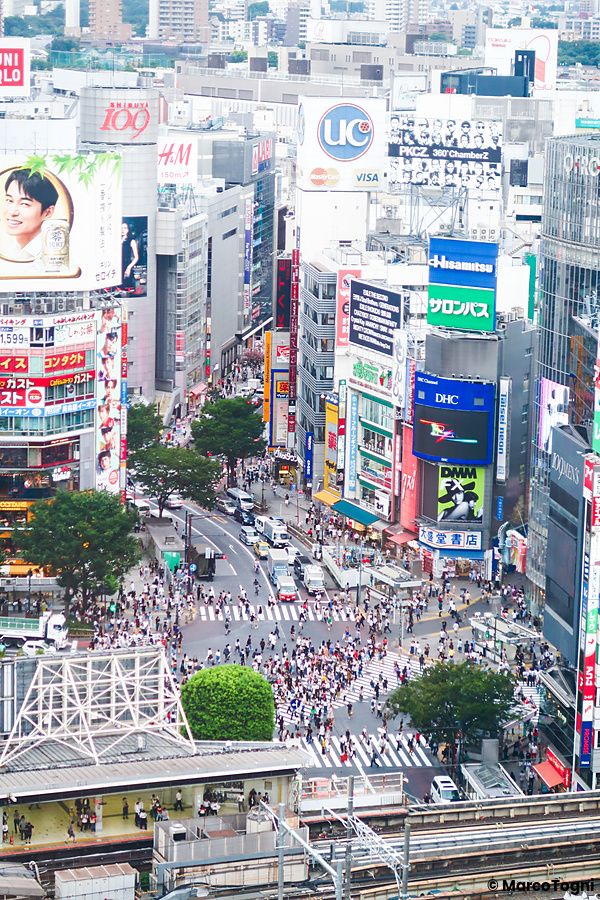
These jobs aren’t for everyone, though. They’re often physical, with long shifts and pay in the lower-middle range by Japanese standards. A lot of people picture a job in Japan as sitting at a desk in an office in Shibuya, but with this visa the reality is a hotel kitchen in a hot spring town or a nursing home far from the big cities.
Still, if you like the industry and, say, you’ve already worked in a restaurant or a hotel, I think it’s an underrated option worth taking seriously.
Cooks and skilled trades

Cooks who specialize in a foreign cuisine have their own visa, called ginou. It’s the visa many Italian, French, Indian, Thai and Chinese chefs use to work in Japanese restaurants.
You don’t need a degree for this one either, but you need a lot of experience: usually ten documented years cooking that country’s food, and time at a culinary school can count toward it. The restaurant hiring you has to be big enough and have a proper menu, and with this visa you can only work as a cook, not wait tables or work the register.
The same visa covers other very specific trades, like sommeliers, sports instructors, pastry chefs and artisans in crafts typical of a foreign country. These are niches, but if you have years of experience in one of these fields, it’s worth looking into, because there’s demand for people who really know their trade.
The marriage visa
The marriage visa is the easiest one to explain. If you marry a Japanese citizen, you get the visa for spouses of Japanese nationals, and with it you can do any job, full-time or part-time, in any industry and with no education requirements.
You can wait tables, start a business, work for a company, and change jobs whenever you like. Something similar applies if you marry a foreigner with permanent residency in Japan.
Obviously this isn’t a route you can plan as a strategy, and immigration checks that the marriage is real. They ask for documents, sometimes photos and details on how you met, and if they have doubts they can interview you both.
In practice, though, it’s how a huge number of foreigners live and work in Japan without ever having to worry about a degree. If you’re in a relationship with a Japanese person and already thinking about getting married, know that on the work front every door is open to you.
It’s a different story if you’ve come with a foreign spouse who works here on a work visa. On a dependent visa you can only work part-time, up to 28 hours a week, and only with a separate permit, just like students.
Modeling and entertainment
There’s also a visa for fashion and entertainment work. It’s called kogyo, and it covers models, singers, dancers, actors, musicians and professional athletes. For models, there are basically no education or experience requirements. What matters is having a Japanese agency that signs a contract with you and acts as your sponsor.
Several agencies in Tokyo work almost exclusively with foreign models on ads, catalogs, runway shows and photo shoots. Contracts usually last a few months, and they can be renewed if the work goes well.
This isn’t a path for everyone, because you need the right physique, a portfolio and an agency willing to pick you. Still, it’s a good example of how wrong it is to think Japan is closed to you without a degree.
The same goes for musicians playing at venues or hotels, dancers at theme parks and street performers hired for events. Here too, everything depends on who hires you, not on your education.
The working holiday visa
A working holiday is the easiest way to live and work in Japan for a limited time. Japan has agreements with many countries, and the visa is meant for young people, usually between 18 and 30, with some differences depending on your nationality.
It lasts up to a year, depending on your country’s agreement, and it lets you take temporary jobs to support yourself while you’re here, with no education requirements. The only clear ban is on working at nightlife venues with adult entertainment, like host clubs and similar places.
I don’t see it as a permanent solution, because once the year is up, the visa can’t be renewed. But in my opinion it’s the best trial run before you make big, expensive decisions like language school followed by a senmon gakko.
A year here shows you whether you actually like living in Japan and not just visiting it, how much it costs to live outside the tourist neighborhoods, and how much more Japanese you need. The most common jobs on this visa are in hotels, hostels and guesthouses, in restaurants and, in winter, at ski resorts.

Where to start
The first step is figuring out which path fits your situation instead of picking one at random. I often tell people to sit down with a sheet of paper and answer a few very concrete questions:
- How old are you? If you’re under 30, a working holiday is the cheapest way to try it out.
- What’s your level of Japanese, or how much time are you willing to put into learning it? Almost every stable path depends on it.
- Do you already have a long track record you can document in a field like cooking, design or translation? If so, you might already qualify for a work visa.
- How much money do you have for school? Language school and a senmon gakko together are a big expense before you start earning anything.
- Are you OK with physical work or jobs in fields like hotels and restaurants? If so, tokutei gino gets you here much faster.
Whichever path you choose, Japanese is what makes the difference, far more than a piece of paper. Without a degree but with good Japanese, you can find work. With a degree and zero Japanese, finding work outside a few fields like IT is often harder than people think.
And be wary of agencies that promise a guaranteed job and visa in exchange for money. Before you sign any contract, check that the job really matches the visa you’ll be getting. If you’re still unsure about a lot of things, a gyoseishoshi, a licensed specialist who handles immigration paperwork, can tell you in a consultation whether you qualify.
What I’d do
If I didn’t have a degree and wanted to build a stable working life here, this is what I’d do: a working holiday for a year if my age allowed it, then language school and a senmon gakko in a field I really liked and that companies were hiring in. It takes longer and it costs money, but by the end you’ve got a trade, the language and a solid visa.
Tokutei gino, on the other hand, is the fastest route if you’re not afraid of working with your hands. Marriage and the visas for models and performers are special cases, but they exist and they work perfectly well for people who qualify.
So the next time you read that you can’t work in Japan without a degree, well… you’ll know the real story. Which path would you choose?