
Working in Japan Without Speaking Japanese
You can work in Japan without speaking Japanese, but you need to know exactly where to look and what you’ve really got going for you. I’ve been getting this question in one form or another for years, more often than almost any other: I have a degree, I don’t know a word of Japanese, can I move to Tokyo and find a job?
I always answer with another question. What would you think if a young Japanese guy told you he wanted to move to Milan and work there without knowing any Italian? Could he pull it off? Maybe, but it’s hard. Some doors are open, especially with the right visa and the right line of work, but plenty of others stay closed without the language.
Contents
A Japanese person in Italy
The Italy comparison isn’t a joke. I think it’s the most honest way to frame the situation. A Japanese person who lands in Bologna without any Italian might find work at a company that does business abroad, in a Japanese restaurant, or teaching Japanese. They’re unlikely to get hired at city hall, at a bank, or behind the counter of a shop downtown.
It’s the same in Japan, only a bit more rigid. Hardly anyone speaks English in everyday life, meetings are in Japanese, and so are emails to clients. Almost every local company, from small businesses to big corporations, works in Japanese, period.
So if you arrive without the language, you’re not competing in the whole job market, just in a very small slice of it. There are fields where English is enough, but in every one of them the competition is international. You’re up against people from all over the world, and they’re often native English speakers.


The visa comes first
Before you even get to the job, you need to think about the visa, because without permission to work you can’t put in a single hour. The most common work visa for office jobs is the one Japan calls “Engineer/Specialist in Humanities/International Services,” and the law doesn’t require any level of Japanese. What it does require is a university degree, or many years of documented experience in the field: usually ten, dropping to three for some jobs tied to other countries, like translation or dealing with foreign clients.
You can’t get this visa on your own. The company hiring you acts as your sponsor and files the application with immigration, which means you first need a real job offer. You don’t show up on a tourist visa hoping to find something and then sort out the paperwork in an afternoon.
Then there are visas where Japanese is a formal requirement, and this is where a lot of people kid themselves:
- The skilled worker visa, used for construction, food service, elderly care and other sectors short on staff, requires a basic-level Japanese exam, roughly N4.
- There’s a visa designed specifically for people who graduated from a Japanese university and work closely with Japanese clients, and it requires the highest level there is, N1.
- Medicine, nursing, law, accounting and every other profession with a Japanese licensing exam are effectively closed off, because the exam is in Japanese.
IT and tech
If you work in IT, yours is the field where English really opens doors. Japan has a fairly serious shortage of developers and tech staff, and Tokyo has a number of companies, both foreign ones and Japanese ones with international teams, where English is the working language. Software development, cloud, data, AI: these are the areas with the most listings that don’t require Japanese.
Companies like these also tend to pay better, and the way they work is closer to what you’re used to, with less mandatory overtime and less hierarchy.
There’s one limit, though, that catches almost everyone who writes to me by surprise. Nearly all the jobs without Japanese are for experienced people, because these companies get applications from all over the world and can afford to be picky. If you’re a recent graduate looking for your first job, your chances drop quite a bit.
My advice is to get a few years of solid experience back home, ideally at a company with international clients or offices, and then apply. A résumé showing three or four years of experience with in-demand technologies counts for much more than a Japanese course you’ve just started.

Teaching English
Teaching English is the classic first job for foreigners in Japan. Conversation schools called eikaiwa, private after-school programs and agencies that place assistant language teachers in public schools all hire year-round. You don’t need Japanese; in fact, they often ask you not to use it in class.
The catch is that almost all of them want native English speakers. You still need a degree for the visa, though it can be in any subject, and many schools only hire people with passports from English-speaking countries or who went to school in English for many years.
Finding a school that will take a non-native speaker with truly excellent English and a high-level certification isn’t impossible, but those are exceptions. Then there’s the pay: teaching English in Japan pays enough to live on, not enough to save, and there isn’t much room to move up.

Ski season jobs
In winter, something happens in the ski resorts of Hokkaido and Nagano that you won’t see anywhere else in Japan. Huge numbers of skiers arrive from Australia, Asia and Europe, and during those months the language you hear most on the street is English.
Hotels, ski schools, rental shops, restaurants and bars look for English-speaking staff for the season, roughly from late November to March. Typical jobs include front desk, kitchen and wait staff, ski rental, shuttle driving, cleaning and, if you’re certified, teaching skiing or snowboarding.
Hourly pay is low, but many employers provide housing or meals, so if you spend next to nothing you can put a bit aside. Almost all of them, though, only hire people who already have a working holiday visa. They rarely sponsor a regular work visa, and when they do it’s usually for qualified ski instructors or people who come back for several seasons.
I like recommending it precisely because it’s one of the few ways to spend a few months in Japan working without speaking the language. Just don’t expect a career: once the snow’s gone, so is the job.

The working holiday visa
If your country has a working holiday agreement with Japan and you’re within its age limits, this visa is the easiest way to give it a try. Depending on the agreement, it lets you stay in Japan for up to a year, traveling and working to support yourself, without needing a company to sponsor you.
You apply at the Japanese embassy or consulate in your country. The requirements depend on the agreement, but you’ll often have to be living there when you apply, and you may only be able to get the visa once in your life. Among other things you’ll usually need a résumé, a letter explaining why you’re applying, a rough plan of what you want to do, health insurance and proof that you have enough money to support yourself at the start.
Some jobs are off-limits on this visa, namely anything connected to the nightlife industry: adult venues, host and hostess clubs, certain bars. Be careful, because some listings look like ordinary server jobs and then the place turns out to be exactly that kind of venue.
With a working holiday visa and no Japanese, the realistic options are jobs during the winter season, at hostels and guesthouses for foreign travelers, at some restaurants in very touristy areas, and odd jobs for companies that work with tourists. I’ll be honest with you: it’s a great way to find out whether you still like Japan when you’re working there, not just visiting as a tourist, before you sink years into moving there.
The student visa
Another route a lot of people take is enrolling at a Japanese language school and coming over on a student visa. It’s not a work visa, but with a special permit from immigration you can work up to 28 hours a week, rising to 40 during school holidays.
Typical part-time jobs are in kitchens, konbini, hotels and restaurants. Here too, without some Japanese your options are limited, but studying Japanese is exactly what solves that, month by month.
The real advantage is something else: being in Japan already lets you interview in person and look for a full-time job. If you find one and meet the requirements, you can switch visas without going home.
Keep in mind, though, that the schools cost money and attendance is mandatory. If you stop going to class, you risk losing your visa.
Italian restaurants
Japan has a huge number of Italian restaurants. There’s a dedicated visa for cooks of foreign cuisine, and Italian food is one of the cuisines that qualify, but it requires at least ten years of documented experience as a cook, including time spent at culinary school. It’s not the way in for someone who’s done a few seasons as an assistant cook.
For waiters, bartenders and front-of-house staff, there’s no dedicated visa. The skilled worker visa does cover food service, but as I mentioned, it requires the basic Japanese exam.
In most Italian restaurants in Japan, the staff is Japanese, and often so is the chef, who trained in Italy and speaks a few words of Italian. In the kitchen, though, everything runs in Japanese.
An experienced Italian cook is appreciated, but they still have to understand the orders, talk to suppliers and follow local hygiene rules. Anyone who walks into a kitchen without the language struggles for the first few months, even with ten years of experience behind them.


Working remotely
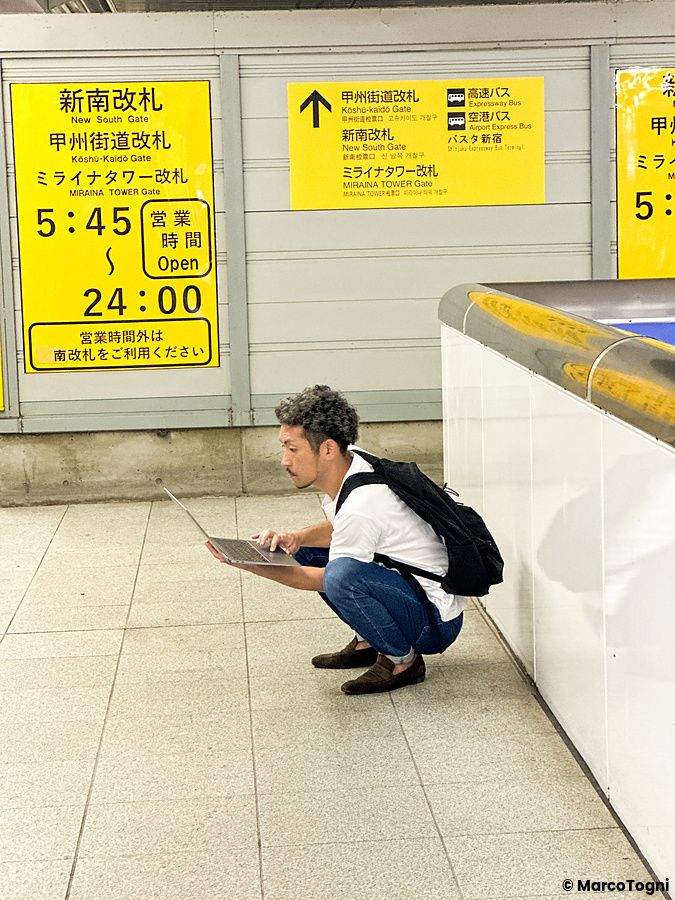
A lot of people ask me whether they can just keep working for a company back home from Tokyo, laptop in hand. It’s an appealing idea, but a tourist visa doesn’t allow you to work, even if your salary comes from abroad and you never meet a single Japanese client.
Japan does have a digital nomad visa, which lets you stay for up to six months while working remotely for a foreign company. The requirements are tough: you need a very high annual income and private health insurance, and there’s no way to turn the visa into long-term residence.
In my opinion it only makes sense if you already make good money and want to spend a long stretch in Japan without looking for a local job. If your dream is to actually move here, it’s not the answer, because after six months you go home.
Another route is slower but solid: join a multinational in your own country and ask for a transfer to its Japanese office. People sent over by their company arrive with a visa, a salary and often help with housing too, and in these cases Japanese is almost never a requirement.
Life outside the office
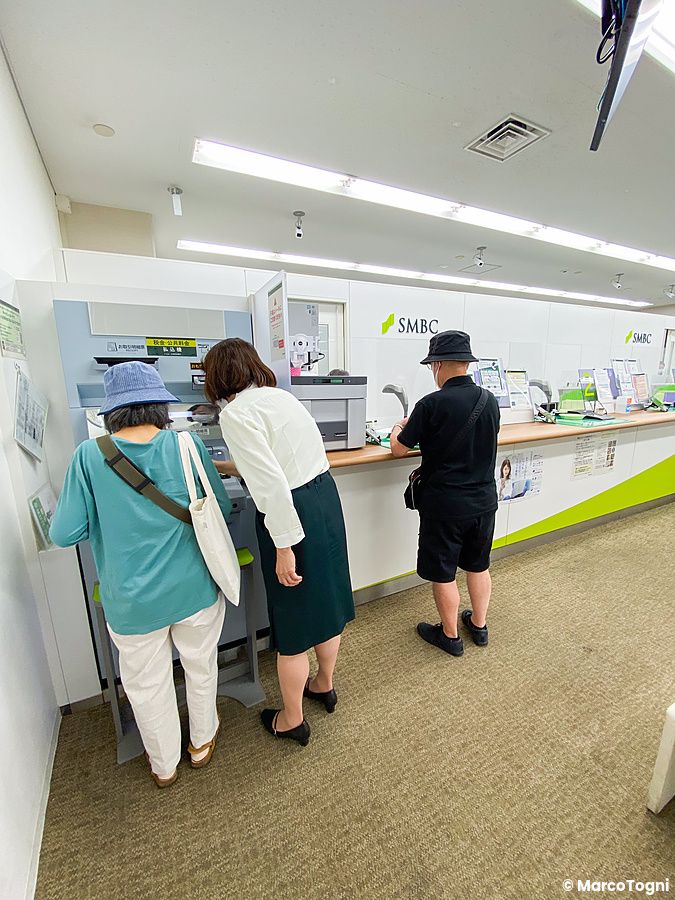
Even if you find a job that’s entirely in English, your day doesn’t end at the office. Renting a place, opening a bank account, registering your address at city hall, seeing a doctor, signing up for a phone plan: all of it happens in Japanese, on Japanese forms.
Tokyo has real estate agencies for foreigners and a few services in English, but as soon as you leave the big city, English almost completely disappears. And finding a place to live as a foreigner, without speaking Japanese and without a guarantor, is hard enough on its own.
Then there’s your career. At an international company you can move up without Japanese, but past a certain point you feel the difference: the people who talk to clients, go out to dinner with business partners and follow the conversations in the hallway are the ones who get considered for the more senior roles.
Honestly, I always tell people who write to me to start studying anyway, even if the job doesn’t require it. You don’t need to reach N1 before you leave, but being able to read hiragana and katakana, understand a menu and chat a little with your neighbor makes life here a lot less tiring.
Where to look
English-language job listings in Japan are mostly found on a handful of sites. I’d start with these:
- GaijinPot Jobs, the best known among foreigners, with lots of teaching and tourism listings, plus jobs where you use English.
- CareerCross and Daijob, which lean more toward office jobs and bilingual roles, although many listings there also ask for Japanese, so it pays to filter carefully.
- TokyoDev and Japan Dev, built for developers, with companies that work in English and listings that often state clearly how much Japanese you need.
- LinkedIn, where foreign companies in Tokyo post their openings and where a well-written profile in English also catches recruiters’ attention.
- The websites of individual ski resorts and of the agencies that recruit for the winter season, which start accepting applications several months before the snow arrives.
When you read a listing, always check two things: whether the company sponsors the visa, and how much Japanese it really expects. Plenty of listings say you don’t need Japanese and then, a few lines down, list business-level Japanese as a preference. That means that between two equally strong résumés, they’ll hire the candidate who speaks it.
Applying from abroad is normal, and first interviews are almost always online. Be ready for a long wait, though: between the offer, the visa paperwork and your departure, it often takes several months.

My advice
Back to the young Japanese guy who wants to work in Milan without speaking Italian: if he’s a good programmer with a few years of experience, he’ll probably make it. If he’s just out of college and wants any job he can get, I’d tell him to learn some Italian first.
Japan works the same way. If you’re still under the working holiday age limit for your country, in your shoes I’d start with a working holiday, to see what life here is like and start learning the language on the ground. If instead you have an in-demand skill and a strong résumé, look for an international company and get them to sponsor your visa.
Either way, you’ll need Japanese sooner or later, and starting now saves you time.