
Yaesu
Yaesu is the side of Tokyo Station you should get to know first. It’s the east side, the one without the red-brick facade: new skyscrapers, offices and, under your feet, an entire floor of shops and restaurants that stretches almost all the way to Ginza.
Unlike Asakusa, this isn’t a neighborhood you visit. It’s a place you pass through. You catch the shinkansen here, pick up one last gift before heading home, or get on an overnight bus.
It’s still worth knowing how it’s laid out, because you’ll end up here anyway and it’s easy to get lost.
Contents
Restaurants
Shops


Nightlife & fun
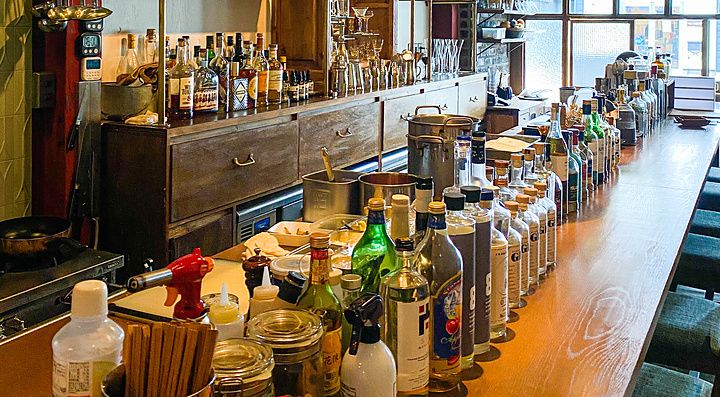
Cocktail Works
Mixology, gin, and Italian food.
Nearby neighborhoods


The five exits
On the Yaesu side, the ticket gates nearly all have similar names, and that’s where the mix-ups start. From north to south you’ve got Yaesu North, Yaesu Central North, Yaesu Central, Yaesu Central South and Yaesu South, plus an underground central exit one floor down.
If you need to get your bearings fast, keep this in mind:
- Just aim for Yaesu Central. The other exits are only a few minutes’ walk away along the same concourse.
- The Central North and Central South exits are only for the shinkansen, so if you don’t have a shinkansen ticket, you can ignore them.
- Yaesu North takes you straight into the department stores attached to the station.
- The underground exit is the one you want for the shopping floor and the buses, and when it rains it saves you from going outside.
I see people make the same mistake all the time. They come looking for the red-brick facade everyone talks about, end up here and can’t figure out why all they see is skyscrapers. The facade is on the other side, in Marunouchi, and crossing the station on foot with a suitcase takes a good ten minutes.
The underground mall
Tokyo’s largest underground shopping mall runs beneath Yaesu. It opened in the mid-1960s and over the years has grown to almost 180 shops and restaurants. The corridors have names and numbers like streets, and about twenty exits lead up to street level toward Kyobashi, Nihonbashi and Ginza.
I mainly use it for two things. One is grabbing a quick bite without lining up at places packed with tourists. The other is walking under cover when it’s raining, or in July, when the streets above are unbearably hot. A bowl of ramen or a plate of curry costs around 1,000–1,500 yen, about what you’d expect at a station like this. If you don’t know where to start, two spots are set up for exactly that: Tokyo Ramen Yokocho, with seven ramen shops side by side, and Tokyo Curry Quartet, with four different curries along the same corridor. Walk around, check out the storefronts and pick one at a glance.
One of the corridors has a memorial to Jan Joosten, a Dutchman who reached Japan in 1600 on a ship that had survived a disastrous voyage. He became an advisor to Tokugawa Ieyasu and got a house on the edge of Edo Castle’s moat. In Japanese his name got mangled, first into Yayosu and then into Yaesu.
What I find funny is that his house was on the opposite side, toward Marunouchi. The name crossed the tracks and stuck over here.
Overnight buses
Yaesu’s bus terminal is underground, beneath the new skyscrapers across from the exit, and once it’s finished it’s set to become the largest in Japan. Its buses cover everything from Chiba’s beaches to Tohoku, Tokai and Kansai. The overnight buses to Kyoto and Osaka leave in the evening and drop you off early the next morning, for a fraction of what the shinkansen costs.
Inside there are waiting areas with about a hundred seats, lockers, ticket counters and two konbini, and the terminal stays open from before dawn until well into the night. If you’re traveling light and want to save yourself a night in a hotel, I think it makes sense to leave from here rather than from less convenient terminals.
Above you, in the Tokyo Midtown Yaesu tower, there are offices, a luxury hotel at the top and, on the lower floors, a public elementary school. It’s the kind of thing that only seems normal in Tokyo.
In the evening the office workers clear out and the streets go quiet, but down below there are still people around until late. Don’t come to Yaesu for the views. You’ll come because you have to pass through, so you might as well know your way around.
Getting There
Yaesu is the east side of Tokyo Station. If you arrive by JR train or shinkansen, go through the Yaesu ticket gates and you're already in the neighborhood, with the skyscrapers in front of you.
If you're coming by subway, your best bet is to get off at Nihombashi and walk about 5 minutes south. You can also head straight into the Yaechika underground passage, which takes you all the way to the station's ticket gates without going outside.
Useful Info
Name: Yaesu
Closed: The shops in Yaechika are open year-round but may close for a few days at the end of the year, during Golden Week and during Obon.
Tips: If you still need one last gift, don't go up to street level. On the station's basement floor, on the Yaesu side, Tokyo Character Street has the official stores for the most popular characters. It's the right place to get everything done in one go before you board the shinkansen.
Getting there:
- Tokyo Station (JR, shinkansen): Yaesu North, Central and South exits, or the Yaesu Underground Central Exit
- Nihombashi Station (Ginza, Tozai and Asakusa subway lines)
Map
MarcoMaps100% free
This place is on MarcoMaps
Yaesu
My map of Japan: over 4,000 places I've tried myself, each with photos, rating, and hours. Filter by category and rating, find veg-friendly spots and places near you with GPS. No sign-up, right from your phone.
- 4,000+ places
- Rating, photos, and hours
- Veg friendly
- Near me (GPS)
- Favorites without login
- Works offline

