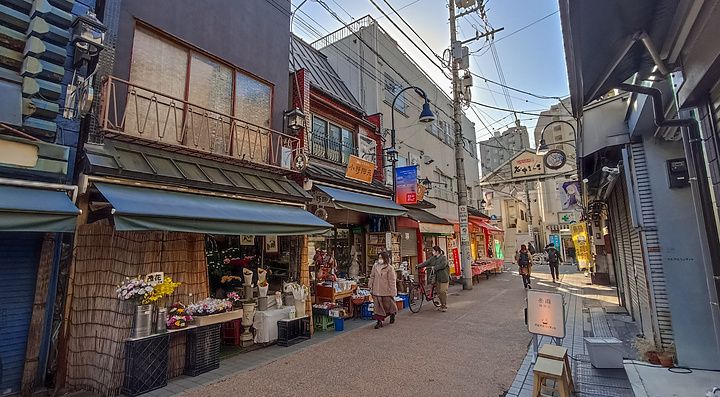
 567 m
Yanaka Ginza567 m
Old shops, street food and cats.
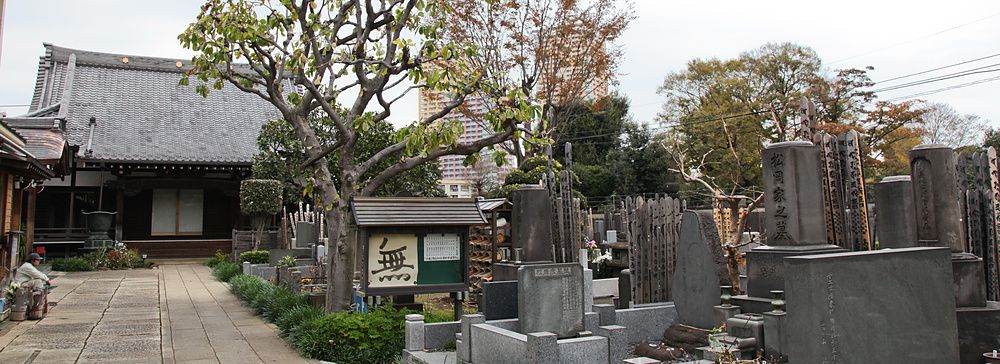
A cemetery in Yanaka, the old neighborhood north of Ueno, where you walk among thousands of stone graves under cherry and ginkgo trees, with cats sleeping on the headstones and locals cutting through on their way to buy groceries. Yanaka Cemetery is best known for its cherry-lined avenue in spring, but to me it shines all year round.
Come here if you’ve already seen the big temples and want to understand how people live in a corner of Tokyo that’s stayed low-rise and slow, or if you just like walking with nowhere in particular to go. If you want sights to check off a list, you’ll be disappointed.
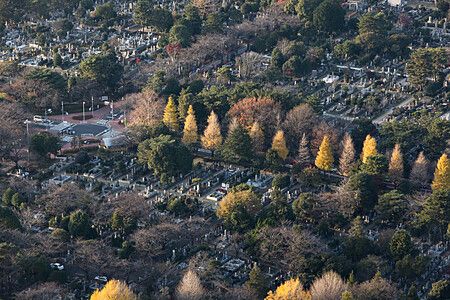
This isn’t a park with a cemetery inside it. It’s a real cemetery, still in use, with fresh flowers on the graves and families coming by to clean the headstones. There are about seven thousand graves spread over roughly ten hectares, and you can tell as you walk around: the paths cross each other, widen out, dead-end at a hedge, and pick up again somewhere else.
Here’s what I’d look for:
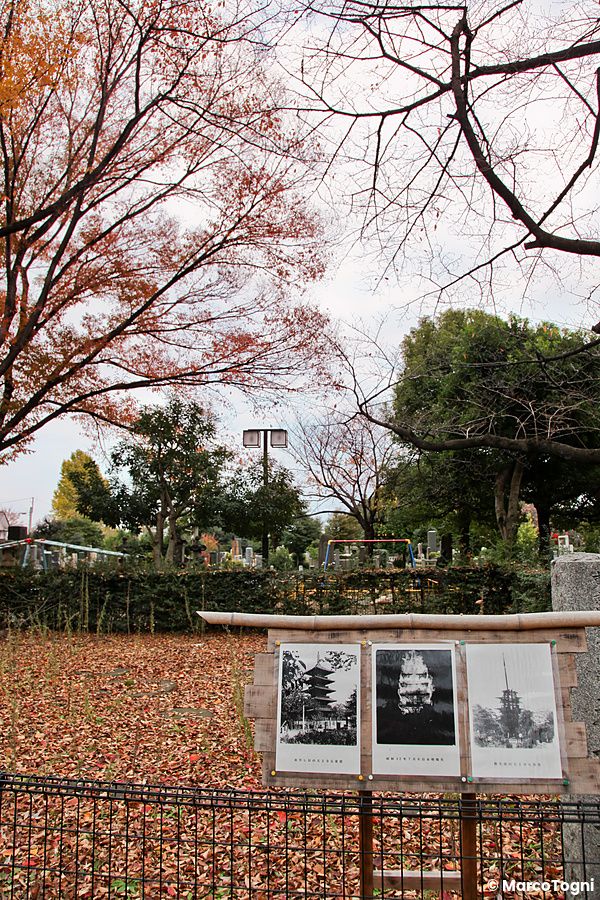
Don’t wander around looking for a tower: that fenced-off patch is all that’s left of the pagoda. That’s exactly why I like it. With the photos in front of you, you can picture the tower and get a sense of how tall it was compared to everything around it today. It was the pagoda of Tennoji Temple, rebuilt in 1791 after a fire, and the writer Koda Rohan set his best-known novel, The Five-Storied Pagoda, there.
It burned down in 1957, and not by accident. Two lovers set it on fire so they could die together, a double suicide that caused a huge stir at the time. It’s never been rebuilt.
The shogun’s grave, on the other hand, is more of a curiosity than something to see: you stand outside the railings and can barely make out the mound. A few minutes’ walk away is the grave of Shibusawa Eiichi, the industrialist considered the father of Japanese capitalism, whose face is now on the 10,000 yen bill. There’s a specific link between the two. Shibusawa had once served Yoshinobu, and in old age he worked to restore the shogun’s reputation, overseeing a major biography of him.
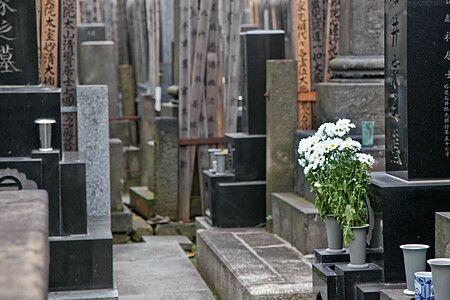
What sticks with you are the everyday details of the graves. In front of the headstones there are vases of flowers, or a can and a small bottle left as an offering, and here and there you’ll find the wooden buckets and ladles families use to pour water over the stone when they visit.
The cats are always around. They curl up on the low walls, between the stones, and under the hedges, and they’re much more relaxed than the ones on the neighborhood’s shopping streets, because there are fewer people and some of the locals come by to feed them.
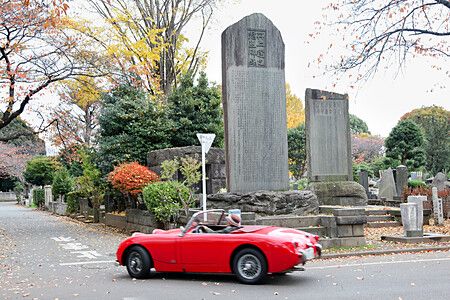
And then there are the cars. Some of the cemetery’s roads are open to traffic, and watching a car roll slowly past two tall stone monuments tells you a lot about Yanaka. Here the cemetery is also a neighborhood street, and nobody gives it a second thought.
When I have guests from Italy, this is one of the places I take them, especially if they want to see a different side of Tokyo, away from the skyscrapers. People expect a gloomy cemetery and instead find men on bicycles, cats, fresh flowers, and huge trees. Ten minutes in, they’re still talking quietly, but not out of awkwardness anymore, just because it comes naturally.
Spring is the most famous season, and for good reason: the main avenue turns completely pink for a few hundred meters, and at full bloom the cemetery gets more crowded than at any other time of year. On weekends you’ll be walking among people with cameras and local families, but it’s still far more pleasant than the city’s big parks, because nobody picnics here, so there are no tarps spread out and no beer bottles.
If you can, go early on a weekday morning. The petals fall onto the headstones and the only people around are out walking their dogs.
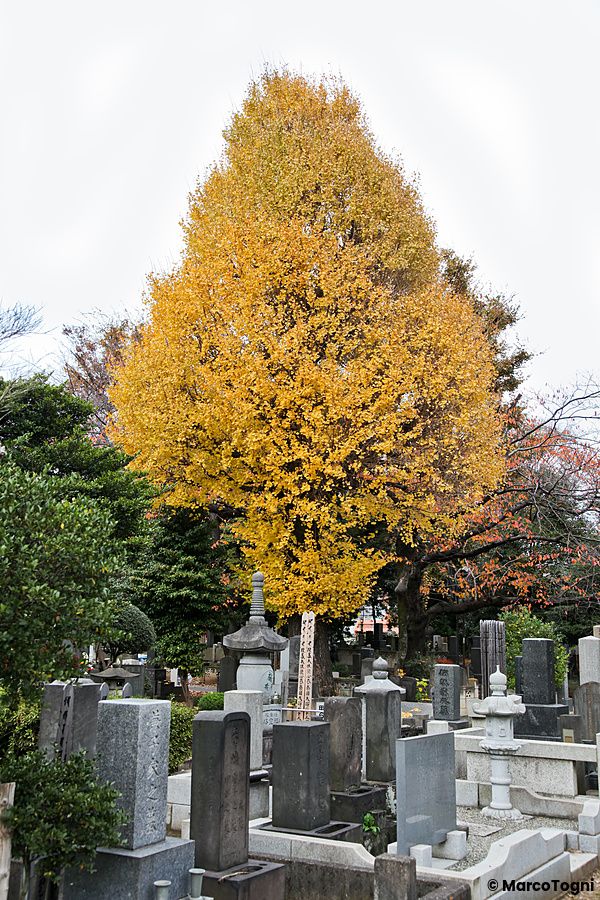
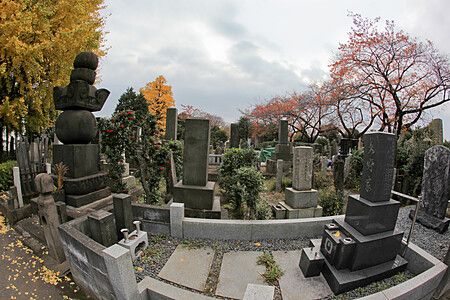
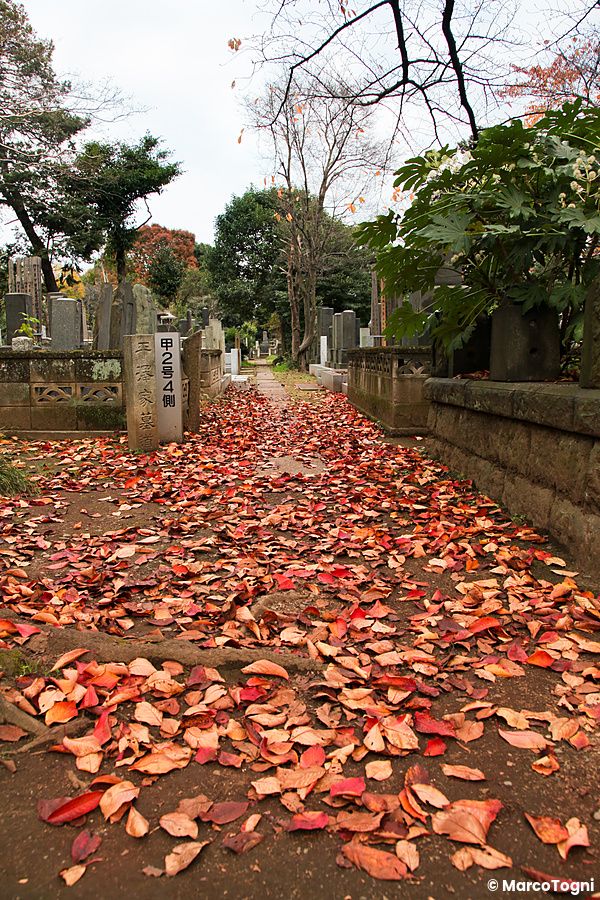
I like autumn even better. The ginkgo trees change color and the side paths fill with red and brown leaves that crunch underfoot.
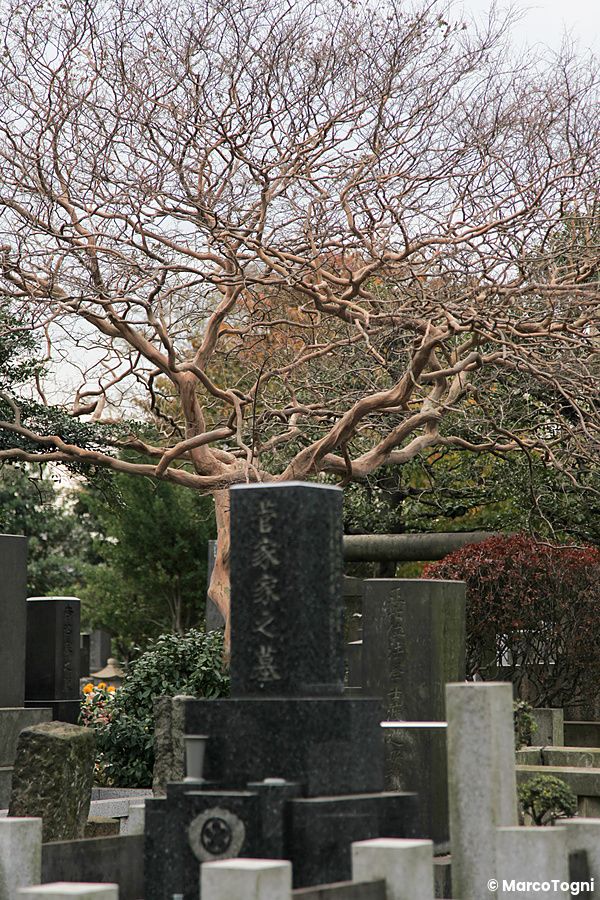
In summer it’s green and shady, with cicadas drowning out every other sound. In winter, with the trees bare, you can see the shapes of the graves better, along with the branches tangled above the headstones.
Late afternoon, when the sun is low and the light filters through the trees, is my favorite time here. Skip it on days of heavy rain, though: the paths are dirt and gravel and fill up with puddles.
The cemetery is completely flat, up on a small rise, so there are no stairs to climb. The main avenue is wide and paved, easy to manage even with a stroller, while the paths between the graves are narrow and made of packed dirt, so you’ll need to watch your step there.
There’s no marked route. Your best bet is to start on the main avenue and then duck into the side paths at random, doubling back whenever you feel lost.
Remember that people come here to visit their dead. No food on the graves, no photos of families praying, no climbing on the low walls, and no touching the offerings. It sounds obvious, but with cats asleep on the headstones you’ll be tempted to get too close.
It’s an easy place to visit with kids, especially if they love animals. Looking for cats among the graves keeps them busy for a long time. Just explain first that it’s a cemetery and they can’t climb on the graves.
The photo everyone wants is the main avenue in spring, taken from the middle of the road looking straight down it. At full bloom it’s crowded, so you’ll need patience, or a very early start.
In autumn, find a big ginkgo among the graves and step back far enough to get the gray headstones in the foreground and the yellow of the tree in the center. On an overcast day the light is soft and there are no harsh shadows on the stone.
The notice board with the pagoda photos, with dry leaves around it and the fence behind, also makes a good picture because it tells a story without needing any explanation.
You don’t come here for a landmark. The most famous one burned down long ago, and the most important grave can only be seen through a gate. You come for the details: the fresh flowers, the buckets and ladles, the cats on the low walls. For me it’s one of the places in Tokyo that stay with you the longest.
It’s worth the detour for anyone who feels like taking their time and looking around. But if you’re short on time and want to see big, colorful buildings, you’re better off spending it somewhere else.
From Nippori Station, take the West Exit and walk up the short slope toward Tennoji Temple. In about 5 minutes on foot you're on the cemetery's main avenue.
From Sendagi, on the Chiyoda subway line, it's about a ten-minute walk through the back streets of Yanaka.
If you're coming from Ueno, you can also walk there in 15-20 minutes through the temple area behind the park.
This place is on MarcoMaps
Yanaka Cemetery
My map of Japan: over 4,000 places I've tried myself, each with photos, rating, and hours. Filter by category and rating, find veg-friendly spots and places near you with GPS. No sign-up, right from your phone.


Yanaka Cemetery - nearby you will find:

