522 m
Standing Sushi522 m
Good, cheap standing sushi.
 ©Ilona Bradacova - Shutterstock
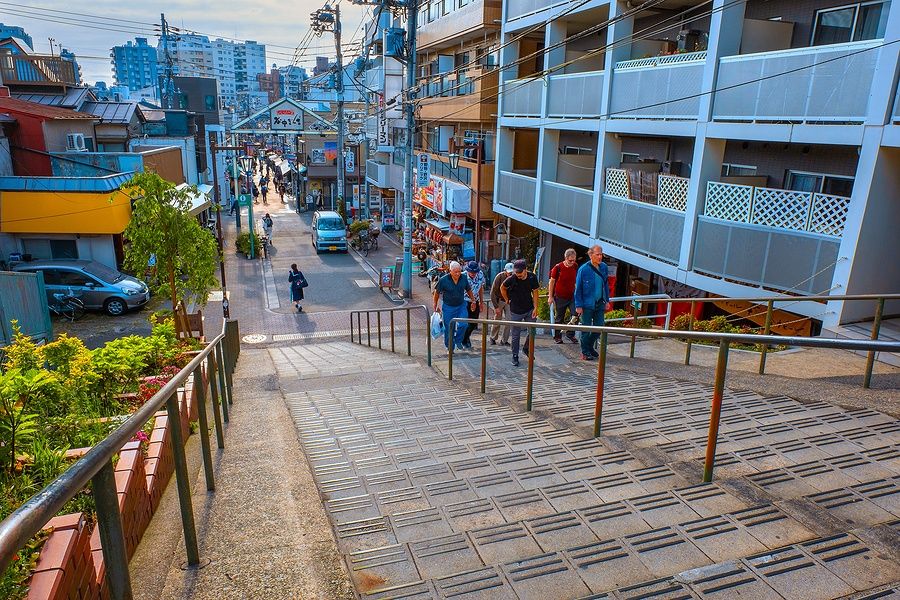
A street of small shops running downhill through Yanaka, in northern Tokyo, with a flight of steps at the top where you can see the whole street below you: colorful signs, shop awnings and power lines cutting across the sky.
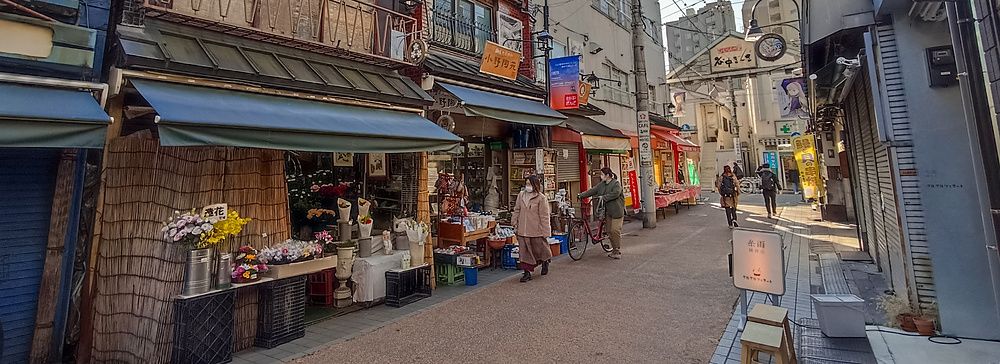
Yanaka Ginza is known for this view from above and for a row of neighborhood shops that have stayed the way they always were, with butchers that do their own frying, shops selling sweets and ceramics, and cat-themed stuff everywhere.
Come here if you want to eat something standing up without walking far, if you like poking around small shops, or if, after the big temples and the skyscrapers, you want to see what low-rise Tokyo looks like.
It all starts at the steps leading down to the shops: 36 wide, shallow steps, with the street opening up straight ahead. From the top you look out over row after row of low roofs, the shop awnings and the tangle of power lines crisscrossing the street.
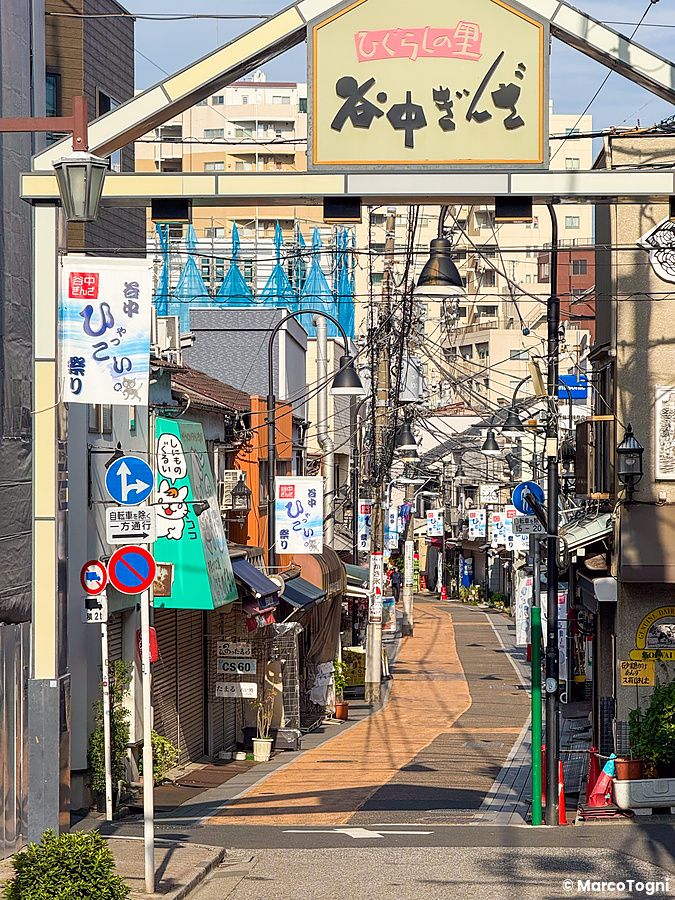
Then you walk down and pass under the metal gate with the street’s name on it. For the next 170 meters you walk on two-tone pavers, past about sixty shops packed in side by side.
The first thing to know is how small it is. From one end of the street you can already see the other, so if you’re picturing a big market to get lost in, it’ll catch you off guard. The fun is in stopping every ten steps, not in the walk itself.
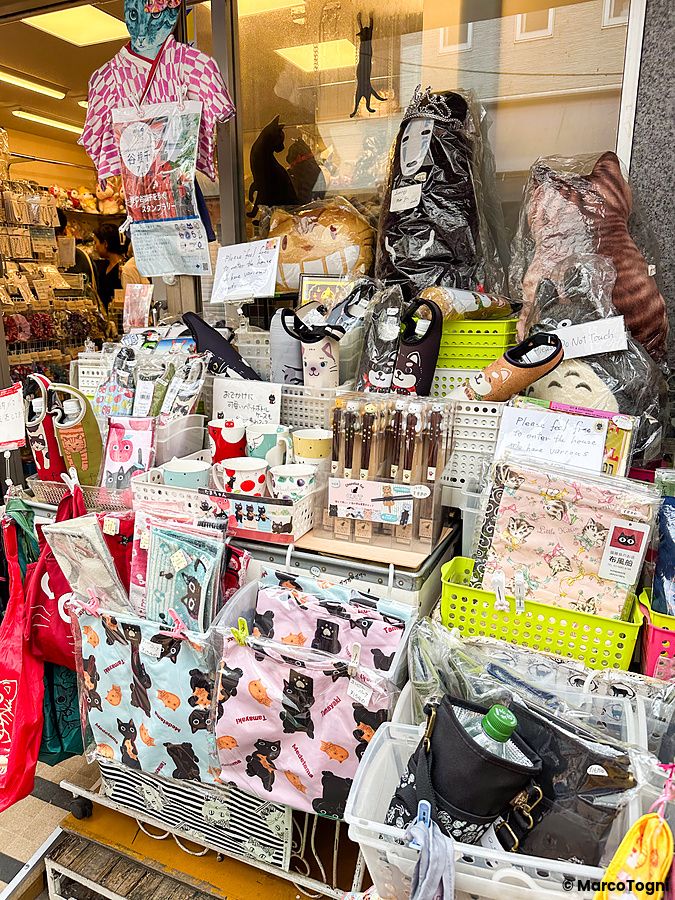
Second, you’ll hardly find any real cats anymore. The ones you see are wooden on the rooftops, ceramic on the shelves, printed on mugs and napkins. If you came hoping to pet one asleep on the steps, you’ll have to make do with the statues.
Third, the street is narrow, and the shops ask you not to eat while walking. Stop in front of the shop instead and take your trash with you, because there are no trash cans around. Nobody will scold you, but with people squeezing right past you and a piece of fried food in your hand, you’ll figure out why on your own.
When someone comes to visit me from Italy, I bring them here before any of the famous sights, because a single street shows you what a Tokyo neighborhood is like better than a tour of the monuments: the butcher frying, the lady buying vegetables, the tea shop with a scale on the counter, and tourists, all on the same sidewalk. It’s one of the few places in the city where the old shops are still in business and doing what they’ve always done, not just serving as a backdrop for photos.
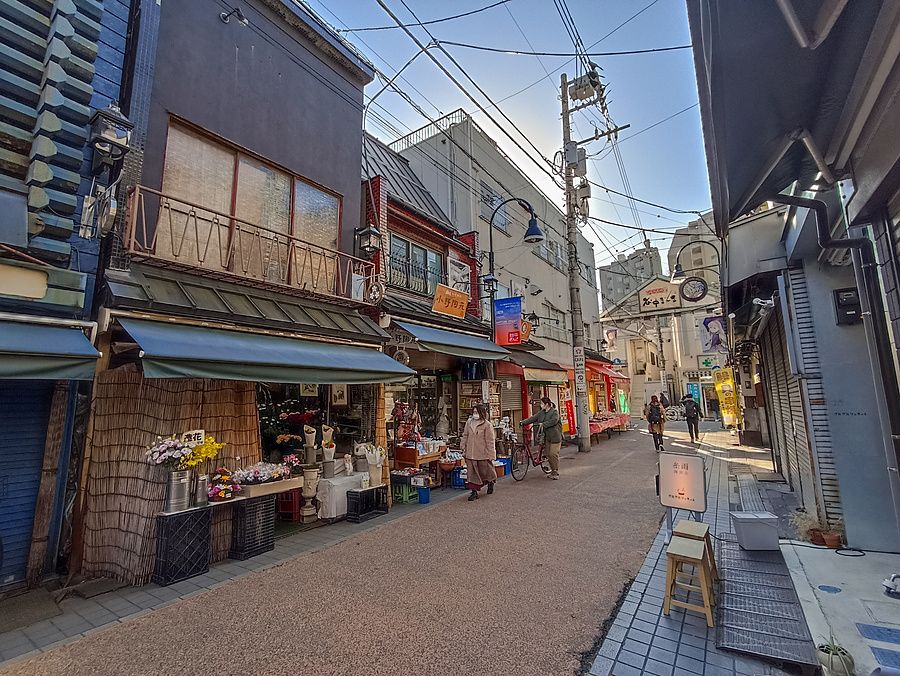
The easiest time is late morning or early afternoon on a weekday. The shops have their awnings out, there are people around but you can walk at a normal pace, and there are just two or three people in line at the butcher shops.
Weekends are a different story. You come down the steps and find yourself walking in single file. A bottleneck forms at the bottom of the steps and in front of the fried-food counters, where the line takes up half the street and everyone else squeezes past sideways.
Early in the morning the shutters are still down, and all you get is the slope, the power lines and the signs. It’s nice for photos, but half the reason to come here isn’t there yet.
Late afternoon is when the street is at its liveliest, with fried food coming out hot and the steps full of people standing and looking down.
The seasons matter less than you’d think, because here the scenery is the shops, not the trees. In summer, though, the street is exposed with no shade, and the paving throws the heat right back at you. On those days you keep the walk short and end up looking for somewhere to sit.
When it rains, the problem isn’t getting wet, it’s the umbrellas. On a street where people already brush past each other without them, they turn the walk into a kind of contact sport.
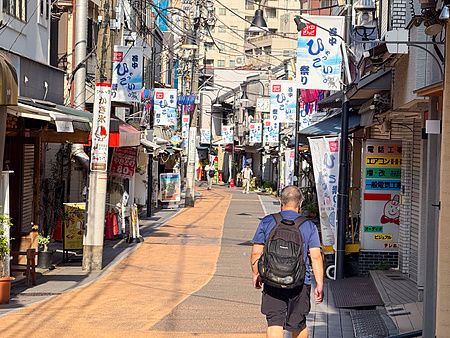
The only effort is the steps at the start, and you’ll hardly notice them. The rest is flat and easy going, except that there isn’t much room, so you move at the pace of whoever’s in front of you.
With a stroller or a wheelchair, the steps are the only really awkward spot. The street itself is manageable, but at busy times it turns into an obstacle course of lines and baskets of goods set out in front of the shops.
The shops are tiny inside and two or three customers fill them up, so plenty of people buy from the doorway and move on. Nobody rushes you, either. The shopkeepers are used to foreigners: they show you things, use gestures to explain what’s inside the patty, and you get it just fine anyway.
If you’re looking for the wooden cats, look up. Almost all of them sit on rooftops and above the shop signs, and people walk right under them without noticing. Hardly anyone manages to find all seven, but it’s the best game to play here with kids.
The main spot is obvious: at the top of the steps, with your back to the road you came in on, the street running downhill and the gate down at the bottom of the frame. Stand off to one side rather than in the middle of the steps, because there’s always someone coming up the middle.
The other shot I recommend is the reverse, from the bottom looking up toward the steps, with the shop signs on both sides narrowing toward the top. It works best in the morning, when the light hits the street at an angle and the crowds haven’t arrived yet.
A word of warning about the sunset, because it’s the reason so many people come up here, and plenty of them leave disappointed. Tall buildings have gone up on either side of the steps and block a good part of the sky, so these days you only catch glimpses of the low sun at the end of the street that you see in the old photos. The view from above is still there, but the sun in the frame isn’t.
You don’t come here for a monument. You come for a street and what goes on in it: shopfronts open to the sidewalk, a patty eaten in front of the butcher shop, wooden cats on the roofs, and the slope that lets you take it all in at a single glance. It’s worth the detour even if you’re not exploring the rest of Yanaka, because between something fried, a cat-tail donut and the view from the steps, you leave with a piece of Tokyo you won’t find in the skyscraper districts.
If you want a big market to spend the afternoon in, or you’re expecting a full sunset at the end of the street, be ready for a bit of a letdown. But if you’re happy just walking slowly and eating a couple of things standing up, it’s one of the best walks in Tokyo for so little effort.
The best way is to arrive from the top. At Nippori Station, take the West Exit and head left up the gently sloping road. In about 5 minutes on foot you're at the top of the steps, looking down on the street.
If you come by subway to Sendagi Station, you'll enter from the bottom of the street instead. In that case, walk the whole way uphill to the steps, so you get the view from above at the end.
This place is on MarcoMaps
Yanaka Ginza
My map of Japan: over 4,000 places I've tried myself, each with photos, rating, and hours. Filter by category and rating, find veg-friendly spots and places near you with GPS. No sign-up, right from your phone.


Yanaka Ginza - nearby you will find: