
 320 m
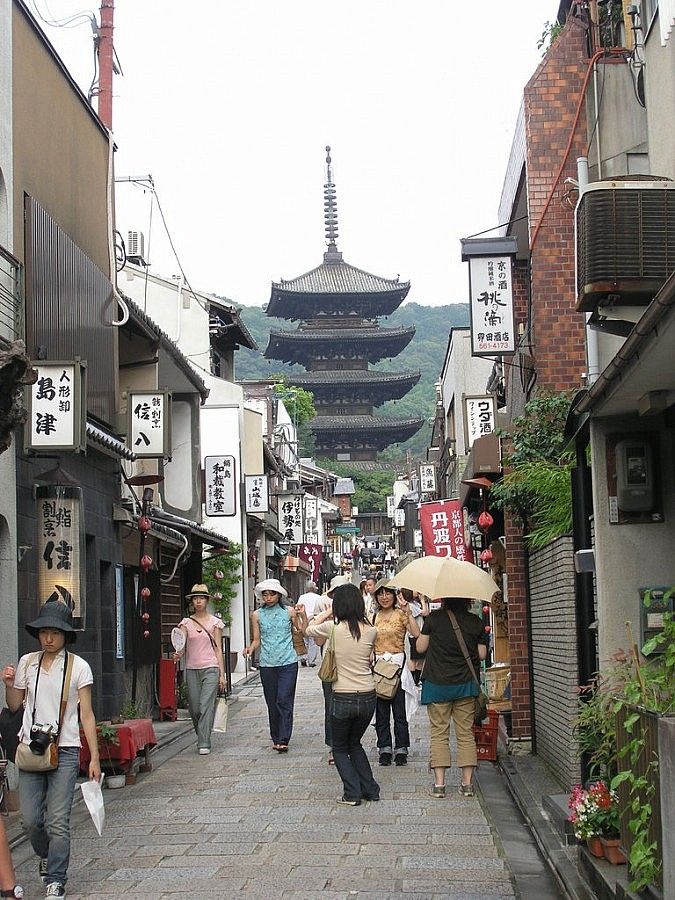
Hanamikoji Dori320 m
The geisha street.
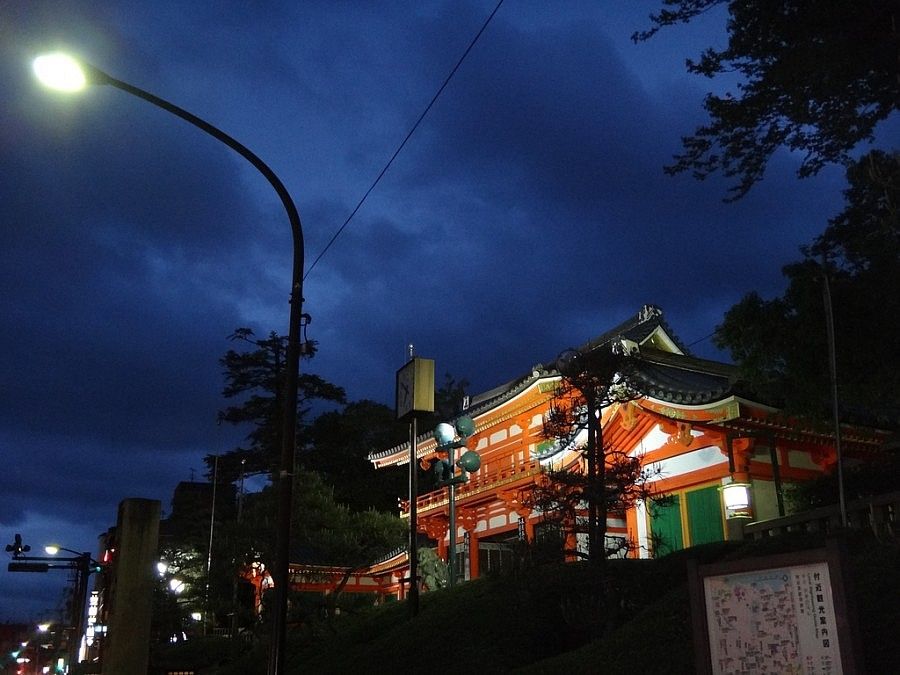
A beautiful Shinto shrine tucked away among the streets of Kyoto’s Gion district, and one that’s well worth a visit. Yasaka Shrine was originally called Gion, and it took the name Yasaka in the Meiji era, when Shinto shrines and Buddhist temples were separated. Give yourself time to explore, because the complex covers a very large area and includes several buildings and gates, a dance stage and the main hall.
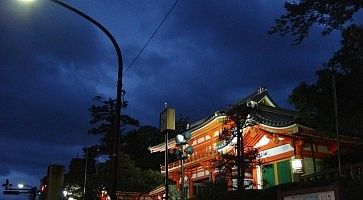
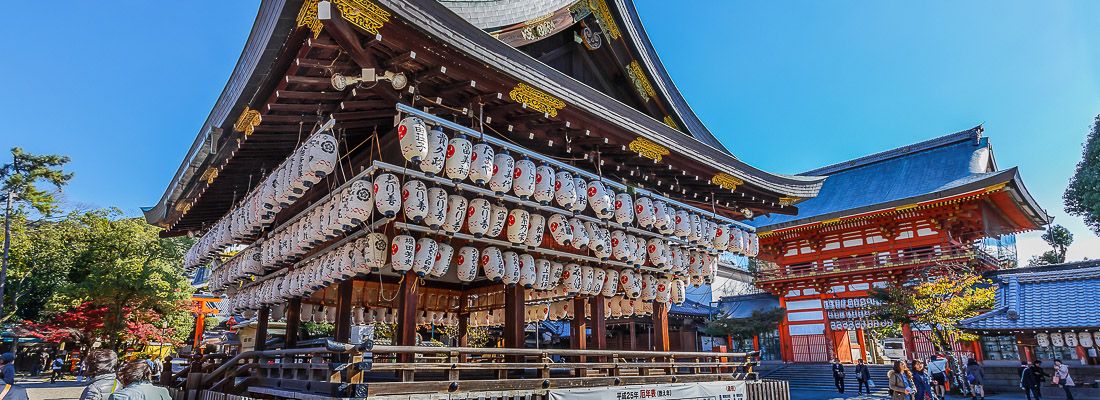
It’s one of the most important places in Kyoto’s history and culture. Every July the Gion Matsuri, the city’s most famous festival, starts here, and in the evening the hundreds of lit lanterns create an atmosphere that’s worth the trip on its own.
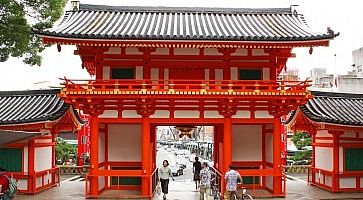
The shrine closes off the far end of Shijo Street, so you'll almost certainly arrive on foot from Gion. From Gion-Shijo Station it's just five minutes up the street, and the big red gate rises in front of you at the end. If you're on the Kawaramachi side, it's an eight-minute walk from Hankyu's Kyoto-Kawaramachi Station, crossing the Kamo River.
From Kyoto Station, your best bet is the 206 bus, which takes about twenty minutes and drops you at the Gion stop, right in front of the entrance.
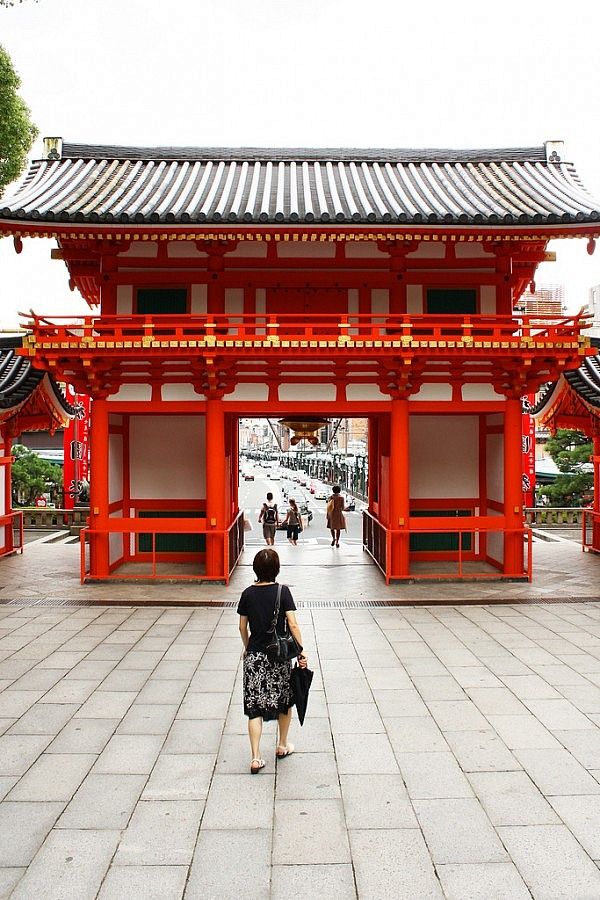
If you're coming from Kiyomizu-dera, you can make it a nice walk of 20–30 minutes through the backstreets of Higashiyama and come in through the south gate.
This place is on MarcoMaps
Yasaka Shrine
My map of Japan: over 4,000 places I've tried myself, each with photos, rating, and hours. Filter by category and rating, find veg-friendly spots and places near you with GPS. No sign-up, right from your phone.


According to legend, the shrine’s story goes back roughly a hundred years before the Heian period, since construction is thought to have started in 656. The shrine grew steadily in importance in the early Heian period, especially after Emperor Murakami decided that imperial messengers should report all the most important news and events to the kami, the deities who protect Japan. The emperor drew up a list of shrines, and in 994 the Gion shrine was added to it.
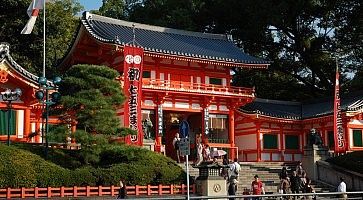
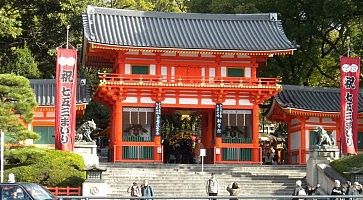
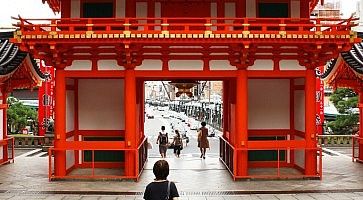
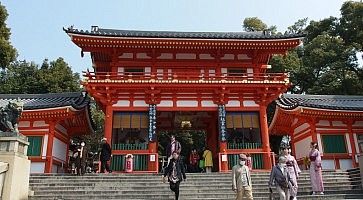
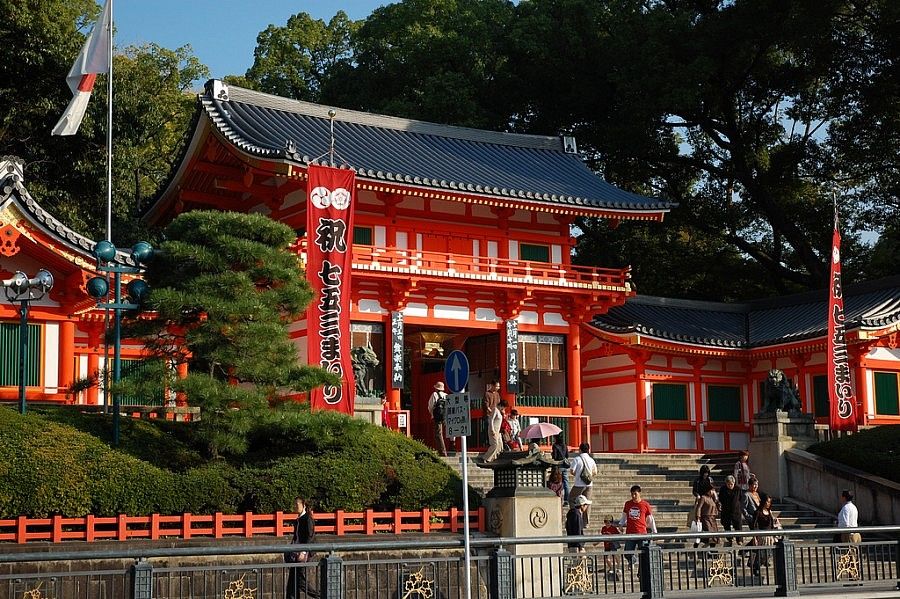
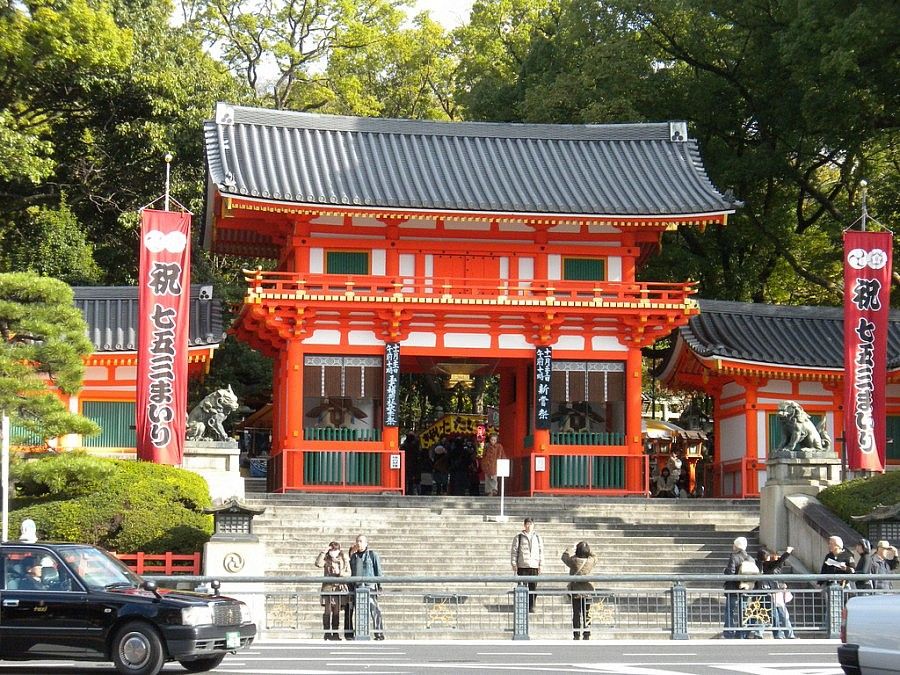
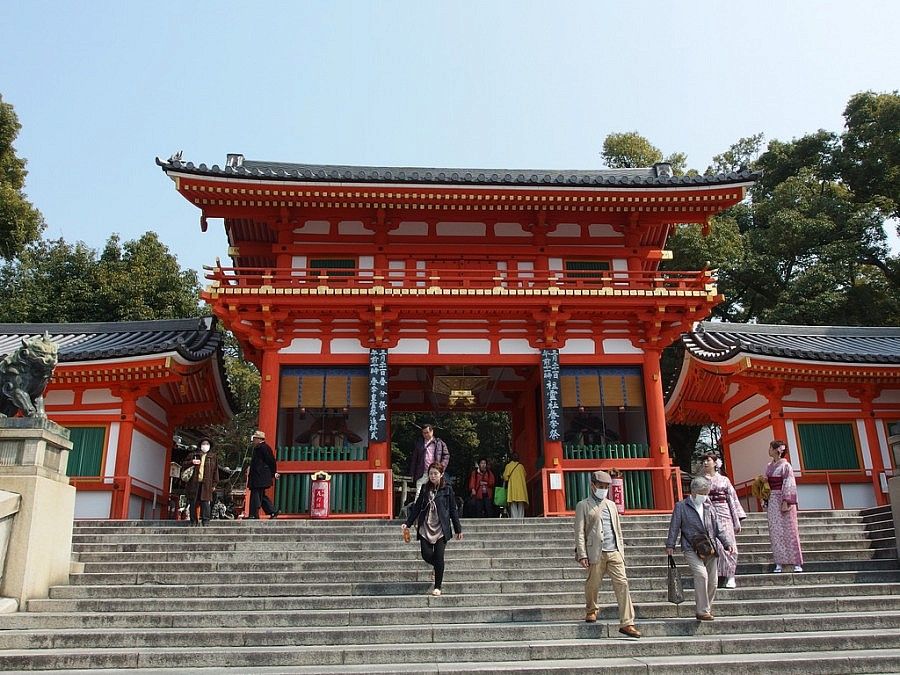
The most impressive way in is through the big vermilion gate at the end of Shijo Street. It’s a two-story gate you can spot from far away, and it has become the symbol of the whole area. Once you’re through it, you’ll find yourself in a large open plaza, often lined with food stalls.
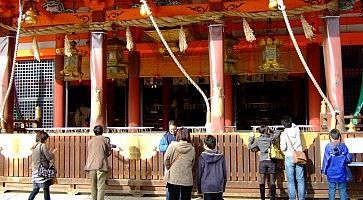
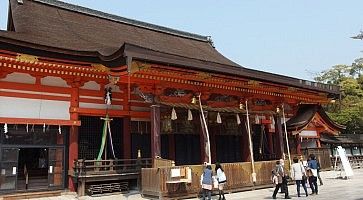
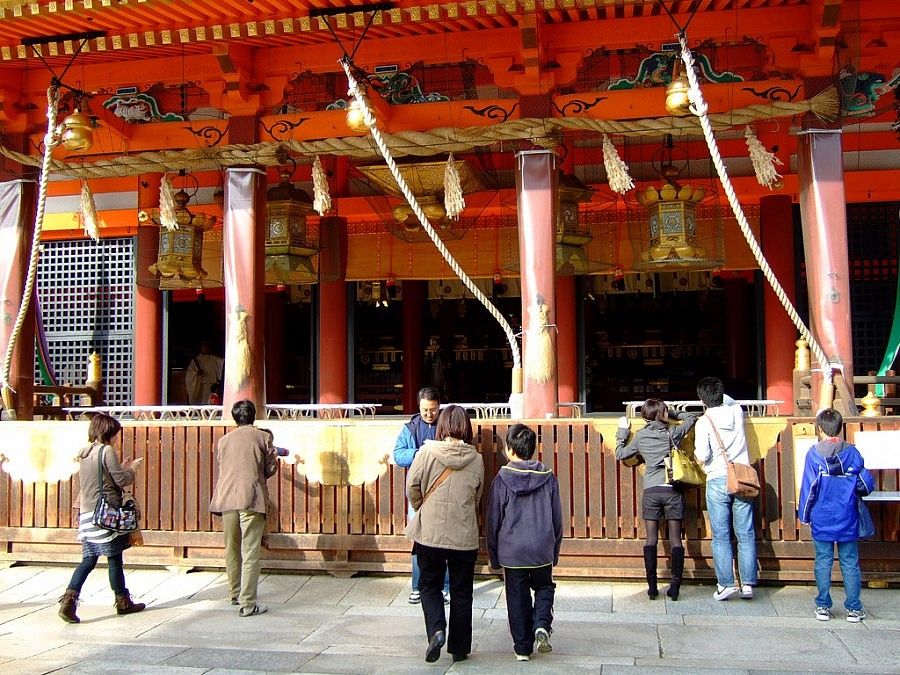
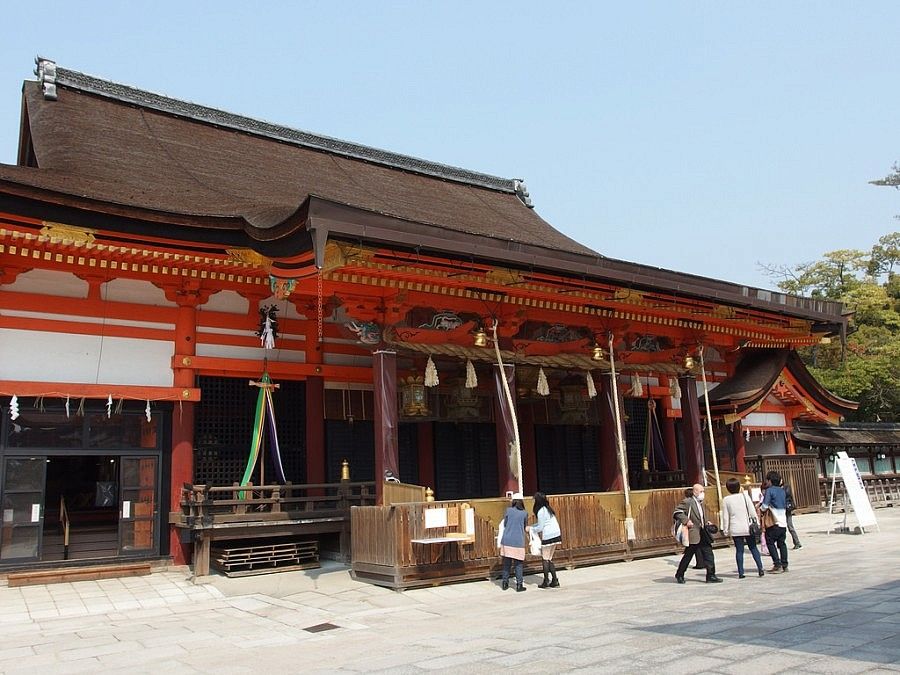
At the heart of the complex is the main hall, rebuilt in 1654 by the shogun Tokugawa Ietsuna in a distinctive style called gion-zukuri, where the worship hall and the hall of the deities share a single roof. It’s been designated a National Treasure, the highest status a historic building can receive in Japan, and legend has it that a pond with a dragon living in it lies hidden under the floor.
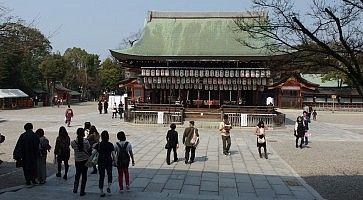
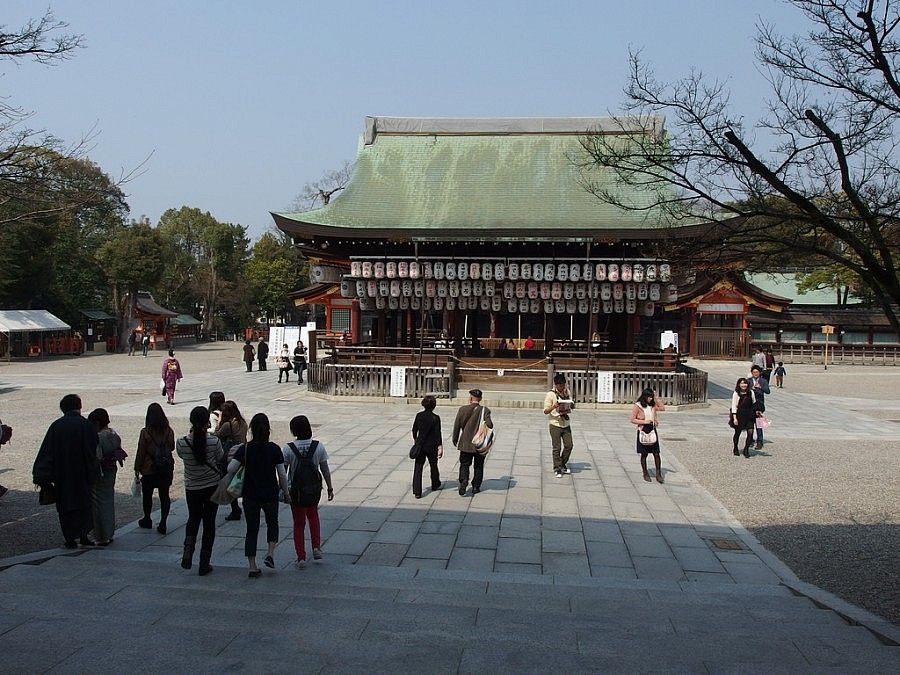
You can’t miss the dance stage in front of the hall. Hundreds of white lanterns surround it, each bearing the name of the Gion restaurant, teahouse or shop that donated it, and when they light up in the evening the whole plaza is transformed.
A visit to Yasaka Shrine is a chance to learn more about Japanese mythology through the stories of some of the most important deities in Japanese culture.
The shrine honors several mythological figures, including Susanoo-no-mikoto, Kushiinadahime-no-mikoto and Yahashira-no-mikogami. A particularly important one is the god Susanoo-no-mikoto, who represents the Kunitsukami, the deities who live on earth, as opposed to the Amatsukami, who dwell in heaven. Susanoo-no-mikoto’s legendary deeds are very well known in Japan. After defeating his sister Amaterasu-Omikami, he grew more and more proud and arrogant, and went on to commit a series of crimes. He was banished from heaven, but in the end he turned his fate around by overcoming one hardship after another. The myths tell how he slew Yamata-no-orochi, an eight-headed serpent that symbolized catastrophe, and rescued Kushiinadahime-no-mikoto, who later became his wife.
His may be one of the most gripping and fascinating stories of all, and perhaps that’s why Susanoo-no-mikoto is so loved in Japan, to the point that the country is full of shrines dedicated to him.
The shrine is also the setting for many events and performances. One of the best known is the Gion Matsuri, which takes up the entire month of July. If you’re in Kyoto then, make sure you don’t miss it! All month long there are ceremonies and spectacular events that let you relive the atmosphere of the era when the festival began.
The festival has a long, fascinating history and means a great deal to the Japanese, because it began at an extremely difficult time for the people. It was first held back in 869, when plague was spreading through Kyoto and the rest of the country. The epidemic decimated the population, and the people of Kyoto, convinced it was caused by a curse from Gozu-Tennou, came together to call on the god Gion to free them from the plague. They made 66 Hokos, spears with pointed tips. According to ancient beliefs, these spears were home to evil spirits, which is why they were often thrown into the river during rituals. The number 66 wasn’t random: it was the number of Japan’s provinces at the time of the plague. Carrying the spears and a mikoshi, a small replica of the shrine, the people of Kyoto filled the city’s streets in a long procession, and that procession marked the start of the Gion Matsuri.
Beyond the Gion Matsuri, the shrine’s calendar is packed. At the end of June, Yasaka and other shrines hold Nagoshi-harae, a Shinto ceremony that marks the end of the first half of the year. People taking part pray for well-being and happiness in the second half.
In April you’ll see big crowds passing through the shrine on their way to Maruyama Park, a favorite with locals. They gather there to see the wonderful cherry blossoms, which give the whole landscape a colorful, romantic touch.
If you’re in Kyoto for the traditional Japanese New Year, Yasaka Shrine is one of the favorite spots for people who want to ring in the new year outdoors and watch the rituals and ceremonies held here. The most unusual is okera mairi. On New Year’s Eve a sacred fire burns at the shrine, fed with okera herb, and worshippers carry it home on braided cords that they have to keep twirling the whole way so the flame doesn’t go out. That flame is then used to cook zoni, the soup eaten on the first day of the year, and tradition says it keeps illness away for the next twelve months.
Yasaka Shrine - nearby you will find:
320 mThe geisha street.
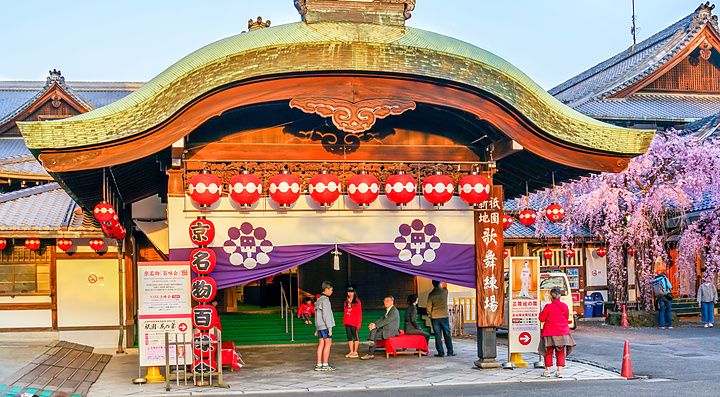 357 m
Where to see the Miyako Odori.
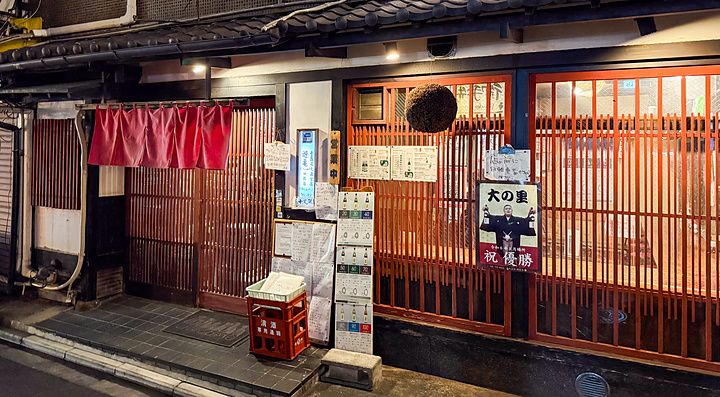 395 m
Traditional izakaya at good prices.
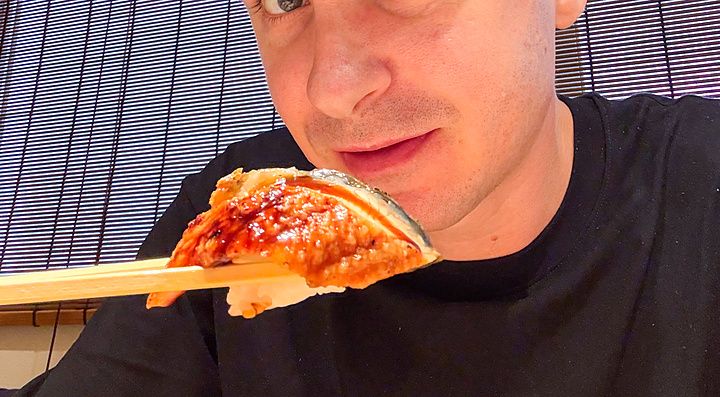 796 m
Cheap sushi and izakaya dishes.
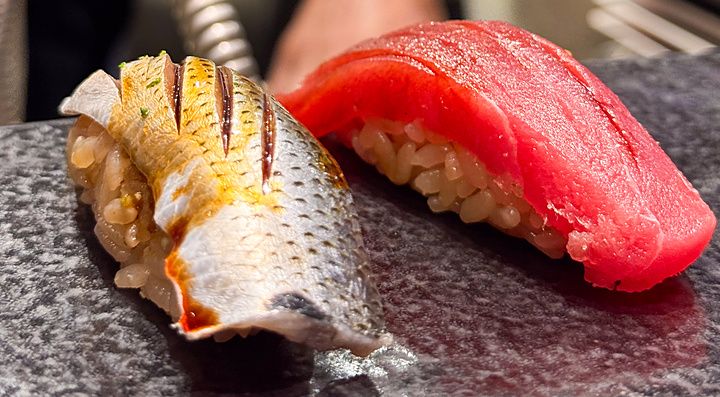 802 m
Chain with excellent sushi.
 837 m
Two traditional streets.