Yokohama
Yokohama is Japan’s second-largest city, about half an hour by train from Tokyo. It’s fairly laid-back compared to the chaos of Tokyo, and it’s easy to see in a day: the Minato Mirai waterfront with its skyscrapers and Ferris wheel, the largest Chinatown in Japan, the red brick warehouses and two museums all about ramen.
If you can, get there in the afternoon and stay into the evening, because the bay looks its best at sunset. These are the places I think are really worth your time.
Contents
Restaurants
Shops


Nearby neighborhoods

Machida
Shin-Yokohama
Minato Mirai
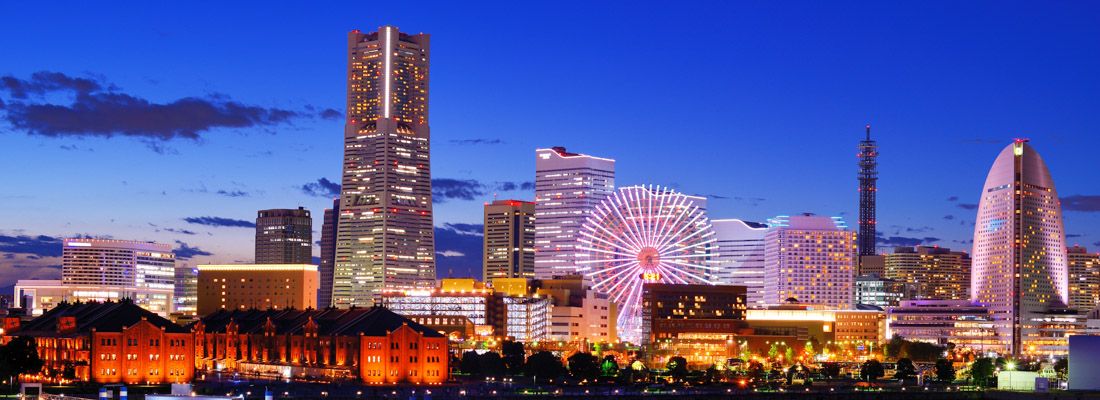
Yokohama’s harbor district is called Minato Mirai, and you’ll sometimes see it written as “Minato Mirai 21.” The planners wanted a model district built for the future, so they put the century they had in mind, the twenty-first, right in the name. In practice, Minato Mirai is one long walk along the water. You head down to the piers and keep going until you reach Akarenga, the red brick warehouses from the early 1900s that now house shops, with markets set up out front depending on the season.
The Yokohama Air Cabin gondola runs overhead, crossing the canal and giving you a different angle on the skyscrapers. The best time to be here is at sunset, when the lights come on one after another and the bay turns into the postcard view that ends up in everyone’s photos.
Landmark Tower
At 296 meters, the Landmark Tower is one of the tallest buildings in Japan and towers over the whole area. It was completed in 1993 and is full of shops and businesses.
You can ride up to the 69th floor in one of the fastest elevators in the world, and on a clear day you can see Mount Fuji from the top. The best months for spotting Mount Fuji are in winter, when the sky over Japan is blue and free of haze. The elevator climbs the 69 floors in about 40 seconds, and your ears pop the way they do on a plane, so the ride up is half the fun.
Once you’re up there, you can walk all the way around the floor. The best side is the one facing the bay, with the Ferris wheel, the piers and ships that look like scale models. If you can, go up late in the afternoon. Look for Fuji on the horizon first, then stay while Minato Mirai lights up.
Cosmo Clock 21 Ferris wheel
The Cosmo Clock 21 opened in 1999, and at 112.5 meters it was the tallest Ferris wheel in the world for about 24 hours. The next day the Odaiba Ferris wheel opened, and even though it held fewer people (384 versus the Cosmo Clock 21’s 480), it reached 115 meters. Not long after, the Odaiba wheel lost the title too, since builders in several countries have spent recent years competing to put up taller and taller Ferris wheels. The Odaiba wheel is gone now: it closed for good in 2022 and was taken down along with the rest of Palette Town, while the Cosmo Clock 21 is still turning over Yokohama Bay.
Cruises and boat rides
Yokohama has plenty of short cruises that give you views of Minato Mirai from the water. The Sea Bass boats do a loop around the harbor and also run as a water bus between Yokohama Station and the sightseeing areas. The Marine Rouge is a restaurant boat offering lunch, sunset and dinner cruises. If you’re lucky, you’ll see Mount Fuji behind the Landmark Tower and the Ferris wheel, which makes for one of the most beautiful views of modern Japan.
Helicopter rides
Through AIROS Skyview, you can book flights over Yokohama by day or at night, taking in Minato Mirai and the bay. The shortest ride lasts 20 minutes and starts at 98,000 yen per private flight for up to three passengers. It’s not cheap, but it’s still the most exciting way to see the city.
Flights leave from the Yokohama-Minami Heliport, about 25 minutes by car from Minato Mirai, so plan for the travel time as well.
Chinatown
Yokohama’s Chinatown is home to Japan’s largest Chinese community, and it’s packed with shops and restaurants where you can try real Chinese food.
Ramen Museum
Not far from Shin-Yokohama Station is the Ramen Museum, devoted to the most popular Chinese dish in Japan: ramen, cheap noodles in broth served in hundreds of different ways.
It covers the history of ramen and of instant ramen, which became a hit all over the world, especially the kind made by Nissin, a company that exports freeze-dried ramen to every continent.
Admission is 450 yen for adults and 100 yen for kids. Bowls of ramen cost around 1,000 yen, but there are also smaller portions so you can try several kinds.
Everything inside the museum is themed, of course, and the section rebuilt to look like Shitamachi, Tokyo’s old working-class neighborhoods in the late 1950s, is especially charming.
It’s a very pleasant museum to visit.
Getting to Yokohama
There are lots of ways to get to Yokohama from Tokyo.
If you want to stick to JR lines, take the Yamanote Line to Shinagawa and change to the JR Yokosuka Line, which gets you to Yokohama in 20 minutes.
From Shibuya, the Tokyu Toyoko Line takes about 25 minutes to Yokohama. From Shinjuku, you can take the JR Shonan Shinjuku Line, which reaches Yokohama in 30 minutes.
There are many other ways to reach Yokohama, but these give you the best balance of cost and speed.
Also in this section
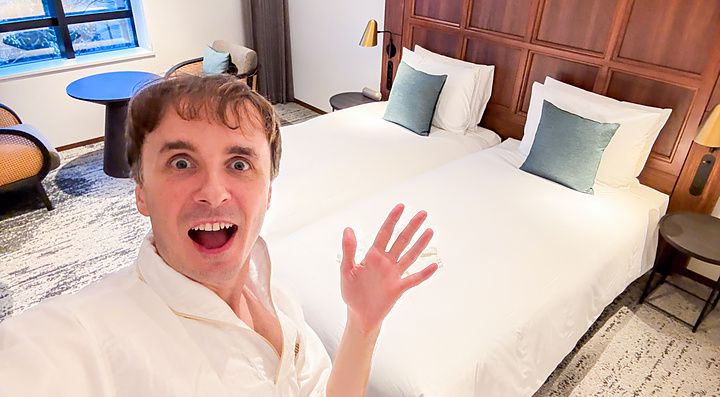
The Gate Hotel Yokohama by Hulic
Corner rooms, rooftop terrace and breakfast.
Name: Yokohama