Yonaguni Island
An island at Japan’s far western edge, out in the Yaeyama group, where the land ends in rock walls that drop straight into the sea and horses graze freely on the grass up top. Yonaguni comes down to three small villages, one road that loops around the island, two sheer capes, a rock ledge above the main village and a few huge sea stacks standing just off the coast.
Then there’s what lies underwater: the squared-off slabs everyone calls the underwater ruins and, in the colder months, hammerhead sharks.
I’d recommend it to people who’ve already done Japan’s cities and want to see how empty and windswept the country gets where it runs out. I’d recommend it much less to anyone looking for easy beach days and something to do in the evening.
What to see
You can get around the whole island on the one road, and every few kilometers there’s a reason to pull over. There are six main sights, all of them outdoors and all facing the sea.
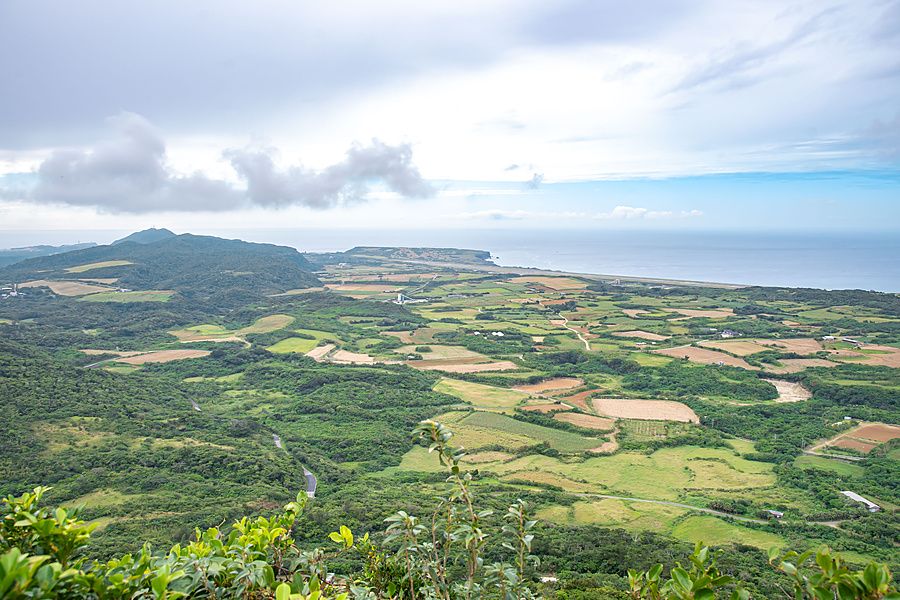
- Irizaki: the western cape and the westernmost point in all of Japan, with a lighthouse, a stone marker and a viewing deck where you can see half the island and the open ocean. This is where the sun sets last in the whole country.
- Agarizaki: the cape at the opposite end, a huge meadow above a drop of about a hundred meters to the water, with horses and cows wandering freely almost to the edge.
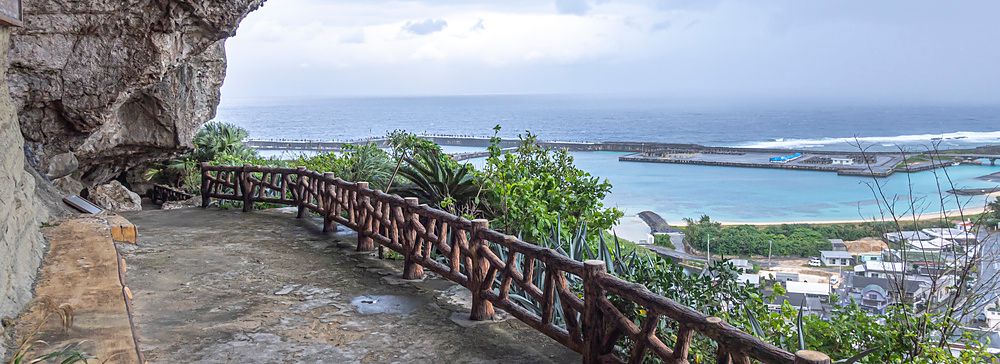
- Tindabana: a natural ledge carved into the rock 85 meters above the village of Sonai, with the rooftops below you, Nanta Beach and the sea opening out ahead.
- Sanninudai and Tachigami-iwa: on the southeast coast, big squared slabs of rock like a broken floor, a candle-shaped rock about thirty meters tall and another that looks like a battleship, with waves crashing against them.
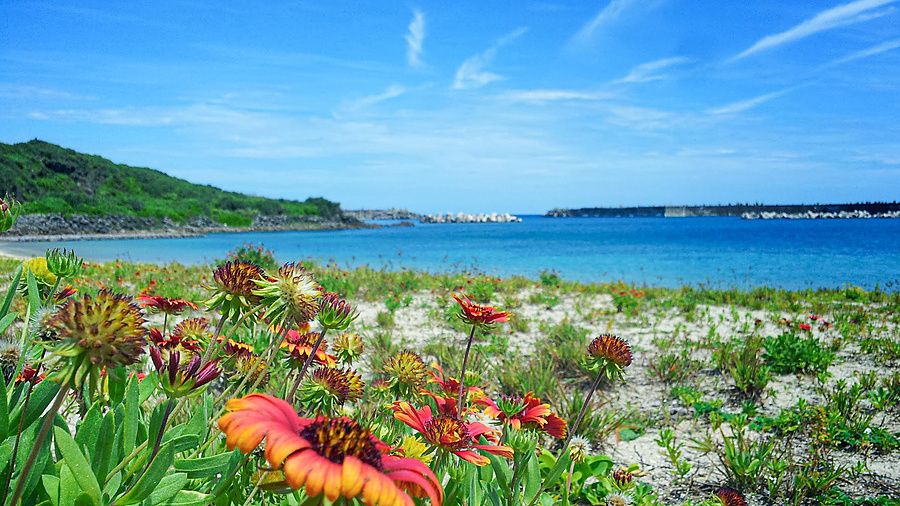
- Rokujo: a strip of white sand closed in by rocks; you look down on it from the top of a cliff. The color of the water down there is the most beautiful thing on the island.
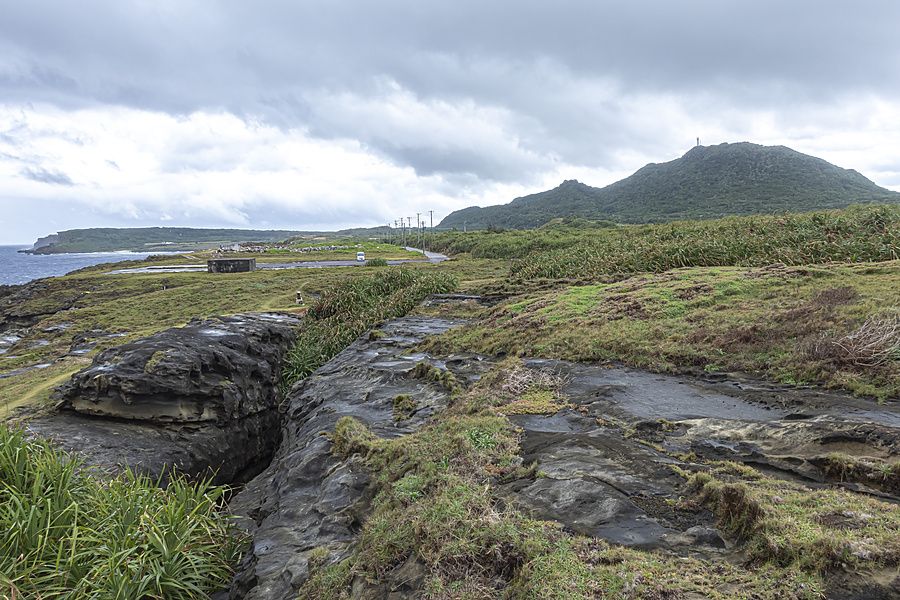
- Kubura Bari: a crack in the rock about fifteen meters long near the fishing port, with one of the darkest stories in Japan behind it: pregnant women were forced to jump across it to keep the population down.
The underwater ruins are the big draw, and they’re also the most likely letdown. On the glass-bottom boat you look through a narrow rectangle, and when the sea is rough you can make out little or nothing. Plenty of people come back to shore feeling sick. If you’re not a certified diver, think of the ruins as a bonus, not the reason for the trip.
You can see Taiwan from Irizaki, but only when the air is clear, and that happens very few times a year. If you show up sure you’ll see mountains on the horizon, be prepared for nothing but water.
At Rokujo, getting down to the sand means climbing down steep, slippery rocks, and you can’t swim there anyway. That beach is strictly for looking at.
What stays with you from Yonaguni isn’t a monument but the landscape itself: tall grass bent by the wind, black cliffs, small potbellied horses watching you go by, and nobody around for kilometers. There are no souvenir shops, you’re through the villages before you notice them, and on the eastern road you might not see a single car.
When people who’ve already seen Ishigaki and Taketomi ask me which Yaeyama island to pick next, I always say this one, because it’s the only place where Japan stops being orderly and turns into wind, rock and animals roaming free.
When to go
The best part of the day is the end of it. At Irizaki the sun drops straight into the sea and the sky keeps glowing for quite a while afterward, and since the cape faces west, nothing blocks the view. At that hour you’ll find three or four people and a couple of cars at the viewing deck, no more.
Early in the morning, go to the other end of the island instead, to Agarizaki. The horses are already out on the grass, the air is still and the light hits the rock walls from a low angle.
From December to early May the cold water brings in the hammerheads, and that’s when the island fills up with divers. It’s also the windy season, with gray skies, whitecaps everywhere and days when it’s hard to stay on your feet up on the cliffs.
From late spring to early fall the water is calm and clear, but the heat on cliffs without a single tree is punishing, and there’s the risk of typhoons, which out here is no small thing.
If you have to choose, the stretch after the rainy season and before the worst of the heat is your best bet: deep blue water and wind you can live with.
The day of the week makes no difference to crowds. There are no lines and no full parking lots, and even on long weekends there’s room for everyone at the viewpoints. What matters is the weather: under cloudy skies the water turns gray, and half the reason you came disappears.
Walks and cliff edges
At Tindabana the climb is short, a couple of hundred meters of uphill trail that passes under an overhanging rock, and that stretch with the boulder over your head is the best part. At the top the ground is almost flat and there’s somewhere to sit, but there’s no barrier of any kind. The rock just ends, and below it is a sheer drop.
That goes for the whole island, not just Tindabana. At Agarizaki and Irizaki you walk on grass and rock right up to unfenced edges, and gusts hit out of nowhere. If you have small children with you, hold their hands and keep well back from the edge.
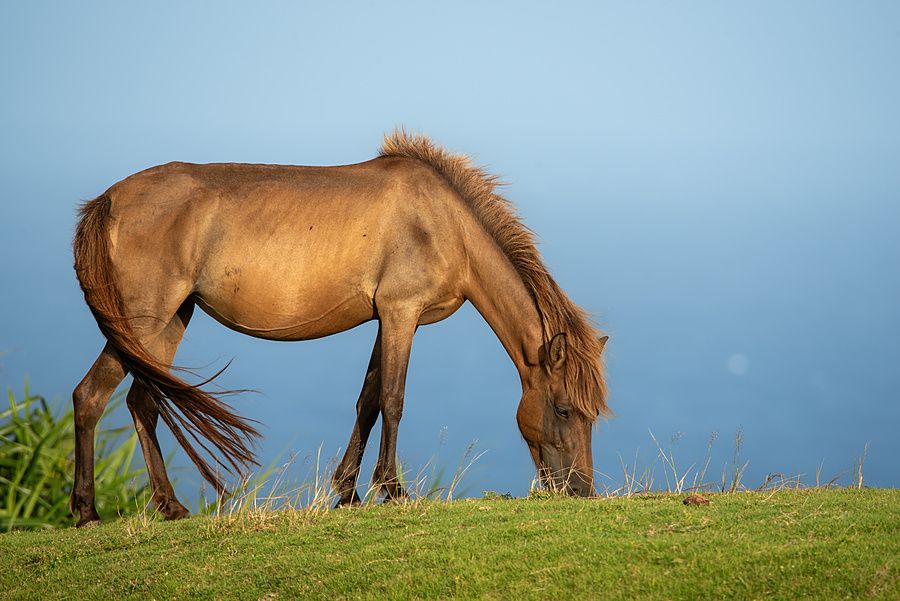
The meadows on the capes are working pastures, with uneven ground, holes and dung everywhere, so wear closed shoes, not sandals. The horses are gentle and let you come close, but they’re still free-roaming animals, so don’t touch them or chase them for a photo. They’re Yonaguni-uma, a breed that originated here and stayed small, and they’re protected as a natural monument by the town of Yonaguni.
They used to pull plows and carry loads in the fields. Today they have no work left to do and spend their days grazing freely.
There’s almost no shade at any of the viewpoints, so you really do need water and a hat.
The photo you’ll take home is the one of the backlit horses with the sea behind them, shot from the Agarizaki meadow in the first hour of light. The second is Tachigami-iwa from the viewing deck above the southeast coast, when the waves explode against its base.
Swimming and diving
Off Irizaki the current is strong, you go down to around thirty meters and drift, and you need experience. This isn’t a dive for the newly certified. When the school comes through, though, you’ll have dozens of hammerheads right over your head.
The stone slabs of the underwater ruins are a tank dive too, and diving is the only way to grasp how big they are: well-defined steps, right angles and walls that look as if they’ve been cut. Whether people actually made them is far from proven, though. Geologist Masaaki Kimura of the University of the Ryukyus considers them a carved monument, while most geologists see them as sandstone that splits on its own along straight planes.
Neither the national government nor Okinawa Prefecture recognizes them as an archaeological site, and that’s why they remain the most uncertain part of the island.
If you’re staying on the surface, it’s a different story. Yonaguni doesn’t have the coral reefs of the other Okinawa islands, so snorkeling is less colorful than you’d expect. There’s no shortage of sand, though.
Nanta, in front of Sonai, is the beach for easy swimming. Naama, inside the harbor bay on the west side, is tiny and always calm, while Dannu, on the north coast, is lovely to look at, but its waves don’t exactly invite you in.
Higawa, in the south, is the quietest beach, and in front of it stands the little wooden house built for a hugely popular Japanese TV series. If the series means nothing to you, take a look at the house from outside and stay on the sand, which is the best part.
At a glance
- Highlight: the cliffs on the two capes with horses grazing freely on top, and the sun disappearing into the sea at Irizaki.
- When to go: early morning on the east cape, last light on the west one. Go in the cold months for the hammerheads, or in early summer right after the rains for clear water, and watch out for late-summer typhoons.
- Best for: people who’ve already seen the cities and want an empty, wild island, experienced divers, and anyone who doesn’t mind spending the day outdoors with the wind in their face.
- Atmosphere: empty roads, wind-bent grass, the sound of waves and wind, and very few people around even at the best-known spots.
Bottom line
You don’t come here for a monument or a museum. You come for the edge of the country, for the blue you see from above at Rokujo, and for the chance to stand on a cliff in the middle of the day without seeing anyone. That’s where the island’s value lies, not in the underwater ruins, which get the most publicity and are the least certain part.
It’s worth the detour if a day of sun, wind and empty roads sounds good to you, and if you want to try your luck at running into the school of hammerheads underwater. If you’re after warm water with a reef just offshore, shops and something to do after dinner, stick to Ishigaki and the islands around it and skip the extra hop.