Yonaha Maehama Beach
A very long beach on Miyakojima’s southwest coast, in the Shimoji area, with powdery white sand and water that shifts from pale green to blue within a few meters.
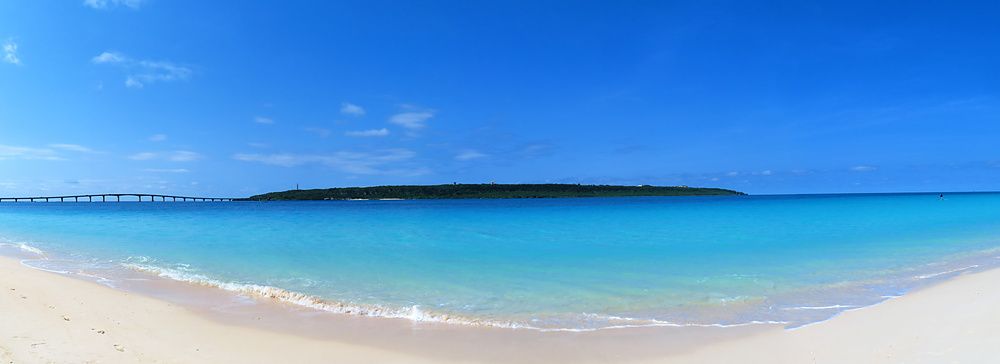
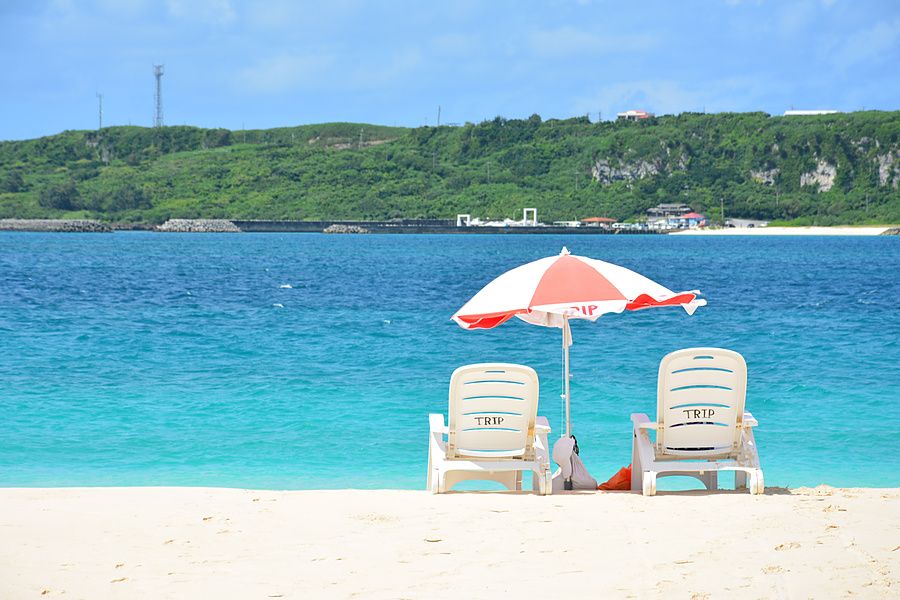
Yonaha Maehama Beach is the island’s best-known beach, with seven kilometers of shoreline facing Kurima Island. In the distance you can see the bridge that links the island to Miyakojima. People come here to spend time in the water, walk and watch the sunset, not for the fish.
It’s the right place if you’re traveling with small children, if you want a day at the beach and nothing else, or if you’re looking for a stretch of sand where you won’t see anyone for half an hour.
Contents
What you’ll see
The white sand isn’t what grabs you first. It’s the color of the water twenty meters from shore, where you can see the bottom as clearly as in a swimming pool and the bands of green and light blue change as the seabed drops away. The length does the rest, because the sand runs on as far as you can see in both directions.
- The shoreline in front of the kiosks: very shallow water for dozens of meters and firm sand underfoot. This is where almost everyone stops.
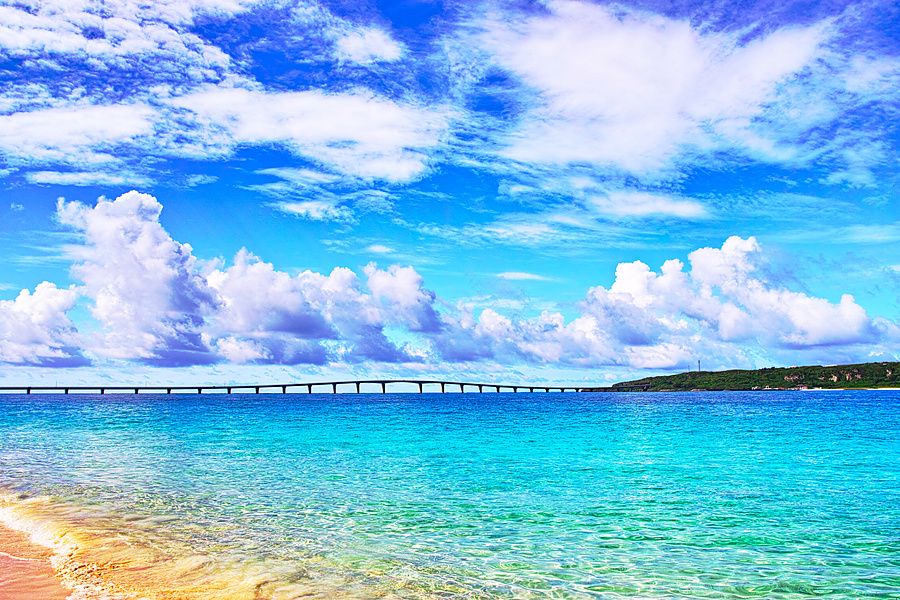
- Kurima Bridge: you can see all of it from the south end of the beach, a white line almost two kilometers long laid across the sea.
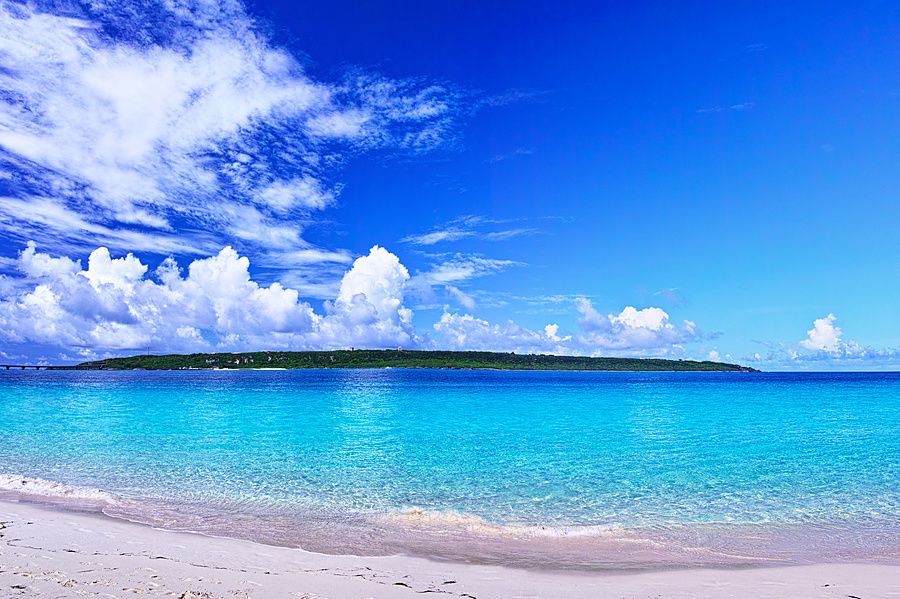
- Kurima Island across the water: low and green, with pale cliffs above the water.
- The kiosks on the sand: a few stalls selling food and local products and renting out umbrellas, canoes, SUP boards and jet skis.
- The stretch to the north: walk ten minutes and all that’s left is your own footprints, the sound of the water and a few little crabs.
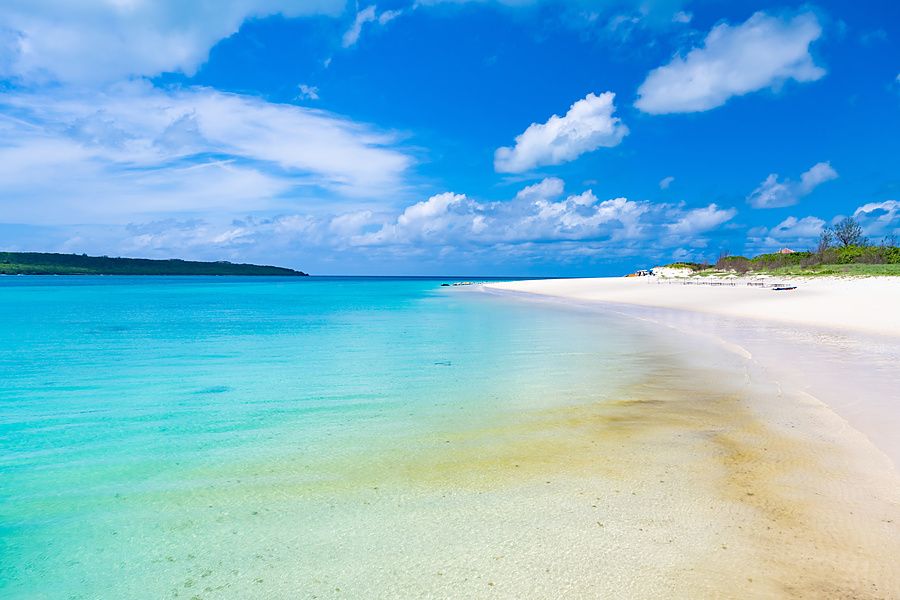
It’s not the beach for snorkeling. The bottom here is sand, not coral, and you’ll see hardly any fish. If you’re picturing a colorful reef, you’ll find that at other beaches on the island. People come to Maehama to swim, and with a mask and snorkel you’d just end up floating over a white, empty bottom.
Everyone bunches up in one spot: the hundred meters in front of the kiosks and the hotel that sits on the beach. If you just walk five minutes along the sand to the right or left, you’ll have the beach practically to yourself, with the same sea and the same color.
There isn’t a scrap of natural shade, though, and that’s the biggest drawback. There are no trees and no rocks, and the sunlight bounces back up at you off the pale sand as well as the water. Without an umbrella, a canopy or a swim shirt, in summer you’ll last an hour before you run for cover.
All that said, for me it’s still the most beautiful beach in Japan, and the reason is simple. The water here is such an intense color that it looks fake, and it stretches out in front of you for kilometers with no buildings crowding the shore. It lives up to the photos exactly, which rarely happens with famous beaches.
I come back every time I’m on Miyakojima, and almost always toward evening. I sit at the water’s edge with Kurima Bridge on my right and stay there until the sun goes down. When people come to visit me, I bring them here on the first day, so they understand straight away why people come all the way to Miyakojima.
When to go
The worst time to come is early afternoon in the hot months. There’s a line for the showers in front of the kiosks, jet skis zip back and forth, and you have to squeeze your towel in between the umbrellas.
Early morning is a different story: smooth, unmarked sand, still water and two or three people in all. It’s also when the pale green of the shallows shows up best, with the sun still low behind you.
The best time, though, is the end of the day. The sun sets over Kurima Island, the sea turns gold and the island’s outline goes dark. Almost everyone heads back to their hotel while this is happening, so on a clear evening you can watch it from the sand with hardly anyone around.
Swimming season runs from spring to fall, and the water is warmest and the color is brightest once the rainy season is over. In winter you won’t be going in, but the beach is still there, and seeing it empty under the January sun has its own appeal. It’s windy, you walk around in a sweatshirt and there isn’t a soul.
The weather makes a big difference here. When the sky is overcast, that blue simply disappears and you’re left looking at a gray sea like any other, so if you have several days on the island, save Maehama for the clearest one.
When the wind blows from the south or west, the waves pick up and the sea gets choppy, the water near the shore turns a little cloudy, and swimming is less fun. In spring the island’s triathlon starts and finishes right on this beach, with more than a thousand athletes taking part. On those days the island is packed, and you won’t find much peace and quiet.
Sun, shade and water
There’s nothing strenuous about this beach. There are no stairs and no trails: from the open area behind the beach you step down onto the sand and you’re already there, so anyone with a stroller or mobility issues can get to the water easily. The only hard part is the heat.
The sand is powder-fine and pale, so you can walk barefoot without burning your feet the way you do on dark-sand beaches, and there are no stones or bits of coral to cut them.
For kids it’s one of the calmest beaches I know. The water stays knee-deep for a long way out, the waves are small and the bottom is clean sand. During swimming season there are jellyfish nets, and someone keeps watch over the water.
Don’t put too much faith in the shallow water, though. Farther out the bottom drops off suddenly and the current starts to pull, so with little ones it’s best to stick to the band where you can still touch bottom. The facilities are basic but you’ll find everything you need: restrooms, changing rooms and cold showers.
If you want something more active, the kiosks on the sand rent out canoes, SUP boards, jet skis and banana boats, and in the busiest months the water in front of the rental area gets crowded. The engine noise stays in that one spot, though, and doesn’t reach the rest of the shore.
Getting the best photo
The photo you have in mind comes from the south end of the beach, the one toward the bridge. From there you can fit the white curve of the shoreline, the green of the shallow water and the bridge running out to Kurima all in one frame.
If you cross over to Kurima Island and look back, you can see the entire beach as one thin white strip, and it’s the only way to really grasp how long it is. The most convenient spot is the Ryugujo observation deck on the Kurima coast, facing Miyakojima. From up there you get the whole beach on one side and the bridge on the other, and the bands of color in the shallows look even sharper than they do from the sand.
The best times are the first hours of the morning and the last hour before sunset, when the light comes in from the side and the water shows all its shades. At midday, with the sun straight overhead, everything looks washed out, white and flat, which is why some photos of this beach are disappointing.
Nobody lines up to take pictures. There’s plenty of room, and you can walk away from the kiosks to get a shot of empty sand with no umbrellas in it.
At a glance
- The highlight: the band of clear, shallow water in front of a strip of white sand that never seems to end.
- When to go: early morning or the last hour of daylight, from April to October for swimming, on a day with clear skies.
- Best for: families with small children, anyone who wants a full day at the beach and anyone looking for a sunset over the water.
- Vibe: relaxed, with a vacation feel near the kiosks; quiet and almost deserted as soon as you move along the shore.
Final thoughts
Maehama comes down to two things: that clear water and kilometers of sand to spread out on. There are no sights to see, nothing to discover and no fish to look at underwater, so anyone who shows up expecting a day of snorkeling leaves disappointed.
If you want to swim, walk on the sand for an hour and wait for the sunset at the water’s edge, though, it’s the beach I recommend most in Japan, and it’s worth the trip to Miyakojima. Bring your own shade and pick the right day, because if it’s cloudy you’ll miss exactly what you came for.
Useful Info
Map
This place is on MarcoMaps
Yonaha Maehama Beach
My map of Japan: over 4,000 places I've tried myself, each with photos, rating, and hours. Filter by category and rating, find veg-friendly spots and places near you with GPS. No sign-up, right from your phone.
- 4,000+ places
- Rating, photos, and hours
- Veg friendly
- Near me (GPS)
- Favorites without login
- Works offline

