Yotsuya
Yotsuya is one of those parts of Tokyo where you still get a feel for the real city, close to the center but without the chaos. It sits squarely between Shinjuku and Tokyo Station, and it’s really easy to get to.
You won’t find skyscrapers to photograph or packed intersections here. What you get instead is a historic university, an old Edo-period moat with cherry trees along the train tracks, and a couple of spots that anime fans recognize instantly. I’ll tell you how to find your way once you’re off the train, when to come, and what else you can fit in nearby on foot.
Contents
Restaurants
Nearby neighborhoods

Aoyama
The university and the backstreet eateries
The liveliest part of the neighborhood is around Sophia University, or Jochi Daigaku, founded by the Jesuits in 1913. It’s a compact campus pressed up against the station, with students coming and going at all hours, and next to it stands St. Ignatius, a huge Catholic church that feels a bit odd to come across in the middle of Tokyo.
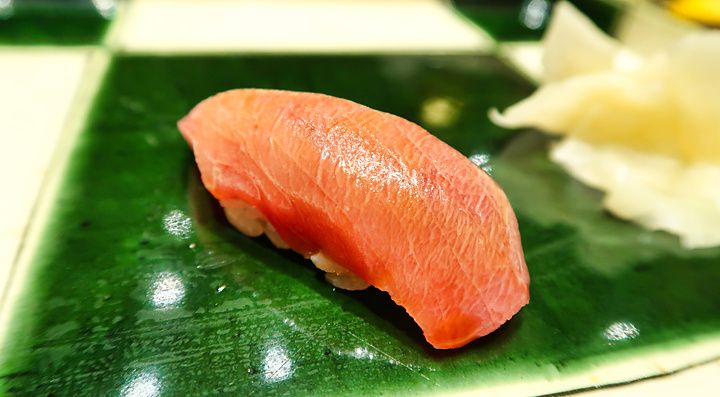
Behind Shinjuku-dori runs Shinmichi-dori, a narrow street of izakaya, ramen shops and little bars that fill up in the evening with office workers and university students. In my opinion, that’s where you’ll find the best food in Yotsuya, in places with signs in Japanese and sliding doors that aren’t set up for tourists at all.
Akasaka Palace
Just south of the station stands Akasaka Palace, the neo-Baroque state guest house that looks a bit like Buckingham Palace. You don’t expect it in such an ordinary neighborhood, and that’s the best part: one minute you’re on a street lined with offices and houses, the next you’re looking at a gilded gate and a facade that belongs in a European capital.
You can tour the main building and the garden. I’d book online, because on busy days people who already have tickets get in first.
The Your Name stairs
About ten minutes’ walk from the station there’s a staircase that lots of people recognize without knowing where it is. It’s the one from the final scene of Makoto Shinkai’s film Your Name, in front of Suga Shrine, where the steps with the red railing meet the sloping street.
The shrine wasn’t built for photos, though. It was founded in 1634, in the Edo period, and it’s dedicated to Susanoo and to Ukanomitama, the Inari deity.
I’ll be honest with you: this is an area where people live and pray. Taking the photo is fine, but keep your voice down and let people coming up the stairs get by.
Oiwa’s Yotsuya
There’s another Yotsuya, the one Japanese people have always known. This is the neighborhood of Oiwa, the heroine of Tokaido Yotsuya Kaidan, Japan’s most famous ghost story, first staged in 1825. In the play, her husband betrays and poisons her, and she comes back as a spirit. A family named Tamiya and a woman named Oiwa really did live here in Samoncho, but the revenge was made up by the playwright, Tsuruya Nanboku.
A few minutes from the Your Name stairs, the small Oiwa Inari Tamiya Shrine and Yozen-ji temple still face each other across the street, and both lay claim to the story. The theater world has an old belief that won’t go away: anyone who stages Yotsuya Kaidan without coming here first is asking for trouble, so actors and crews still visit before their performances.
Cherry trees along the moat
Sotobori Park, a green strip about two kilometers long, starts at the station and follows the old outer moat of Edo Castle all the way to Iidabashi. It runs alongside the JR tracks, with hundreds of Somei-yoshino cherry trees and an easy path for walking or running. As you walk, you realize you’re right on the edge of the moat, with still water below street level on one side and, on the other, the yellow trains of the Sobu Line passing every few minutes, the branches almost brushing the cars.
That’s why the strip turns up in so many spring photos: a train running through all those pink blossoms is a sight you’ll find in few other places in Tokyo.
In spring it’s one of the places I’m always happy to come back to for the blossoms. It’s less crowded but just as beautiful, especially in the evening, when the light fades and the commuter crowds thin out. The rest of the year it’s a quiet walk that takes you at an easy pace toward Ichigaya.
You don’t need half a day for Yotsuya. A couple of hours is enough, and if you have time left over, I’d pair it with a walk along the moat or a quick trip to Shinjuku, which is next door. Don’t come expecting the spectacle of the big tourist areas, because the appeal here is something else: everyday Tokyo, with its students, its small temples and the greenery along the water.
Getting There
Yotsuya sits halfway between Shinjuku and Tokyo Station, and you can get there in a few minutes from much of the city without complicated transfers. At the station, the Yotsuya exit puts you on the Shinjuku-dori side, where the backstreets with the bars and restaurants are.
The Kojimachi exit leaves you right in front of Sophia University and St. Ignatius Church, while the Akasaka exit is the one to take to walk down to Akasaka Palace, five minutes away.
For the Your Name stairs and Suga Shrine, walk about ten minutes toward Yotsuya-sanchome, then turn south into the narrow residential streets. If you're coming by subway, getting off at Yotsuya-sanchome shortens the walk.
Useful Info
Name: Yotsuya
Time needed: A couple of hours, or half a day if you add a visit to Akasaka Palace or the walk along the moat to Ichigaya
Closed: Akasaka Palace is closed on Wednesdays and on days with official receptions, which are announced on the website at short notice
Tips: After your photo on the stairs, go into Suga Shrine and look at the walls of the worship hall. They hold the Thirty-Six Immortal Poets, painted on silk in 1836, and almost nobody notices them. If they're too far away to see well, you'll find reproductions on panels in the courtyard.
Getting there:
- Yotsuya Station (JR Chuo, JR Chuo-Sobu, Marunouchi and Namboku subway lines): Yotsuya, Kojimachi and Akasaka exits
- Yotsuya-sanchome (Marunouchi subway line): the most convenient for Suga Shrine
- Ichigaya (JR Chuo-Sobu, Namboku and Yurakucho subway lines, Toei Shinjuku Line): at the other end of the walk along the moat
Map
MarcoMaps100% free
This place is on MarcoMaps
Yotsuya
My map of Japan: over 4,000 places I've tried myself, each with photos, rating, and hours. Filter by category and rating, find veg-friendly spots and places near you with GPS. No sign-up, right from your phone.
- 4,000+ places
- Rating, photos, and hours
- Veg friendly
- Near me (GPS)
- Favorites without login
- Works offline

