 208 m
Yoyogi Park208 m
Great, especially on Sundays.
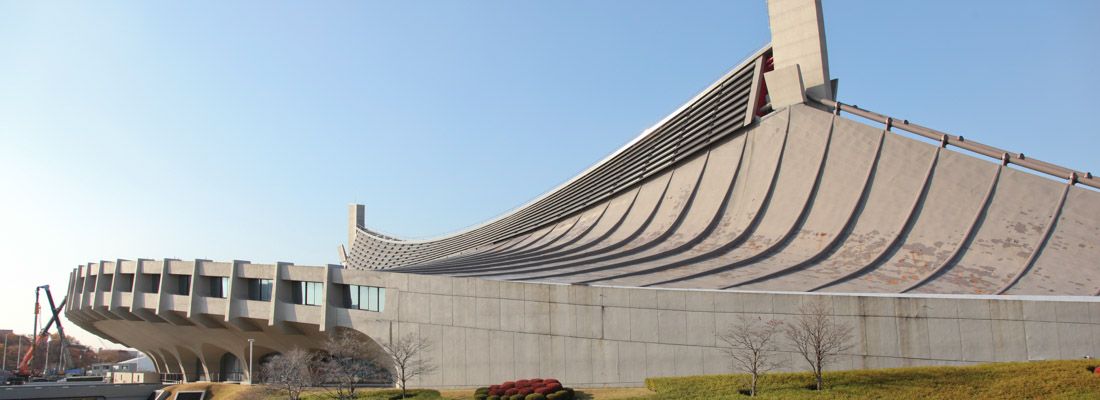
Also known as Yoyogi Sport Center, Yoyogi National Gymnasium is a group of buildings that Kenzo Tange designed for the 1964 Olympics.
More than sixty years after the Tokyo Games, it still looks strikingly modern.
There are two buildings. One hosted the basketball events, the other some of the swimming and diving events, and these days the swimming arena is often turned into a rink for ice skating and hockey too.
It’s not far from Harajuku, the neighborhood known for its eccentric youth fashion, or from Omotesando, the luxury shopping street that arguably rivals Ginza, especially around Aoyama.
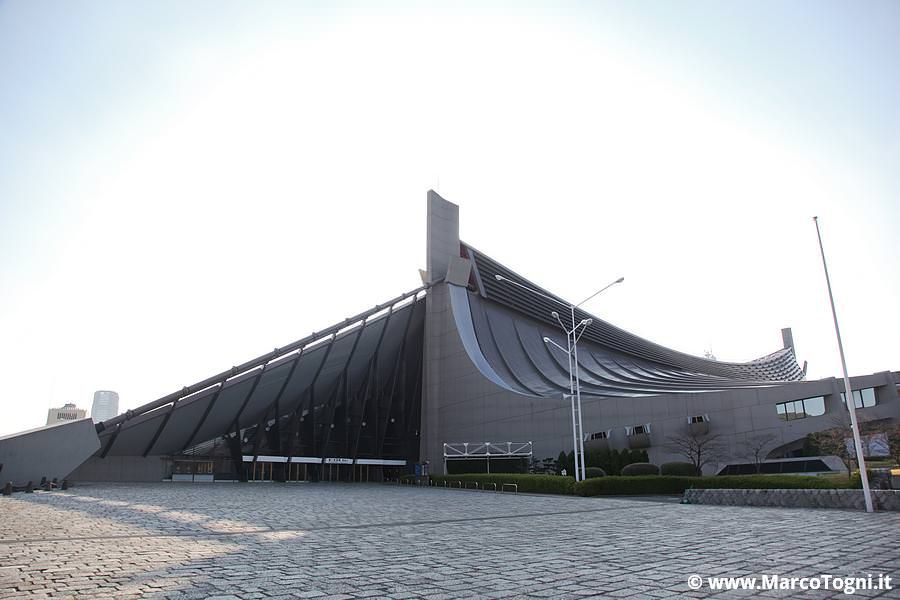
Yoyogi National Gymnasium seen from the entrance on the Harajuku side.
What makes Yoyogi National Gymnasium special isn’t so much its shape as how it stays up. Tange didn’t rest the roof on a row of pillars. He hung it from two steel cables stretched between two concrete pylons about forty meters tall, exactly the way suspension bridges are built. All the other cables drop down from those two main ones, holding up the roof and giving it the saddle-shaped curve that many people see as a nod to the roofs of Japanese shrines.
As a result, there’s not a single pillar inside to break up the space or block the view, which was anything but standard for a building from the 1960s. That solution turned it into a model copied all over the world in the decades that followed, and it’s one of the works that helped win Tange the Pritzker Prize.
The second, smaller arena works on the same principle but with just one pylon. Its roof wraps around the pylon in a spiral, a detail almost everyone misses because they only look at the big building.
The easiest way is to go to Harajuku Station and take the exit by the pedestrian bridge that crosses over the JR tracks. Cross it, turn left right away, and in less than ten minutes on foot you'll be standing in front of it. Just be careful not to wander onto the tree-lined path into Meiji Jingu, which starts right there and goes the opposite way.
If you're coming by subway, get off at Meijijingumae and take the exits toward Yoyogi Park. You come out at practically the same spot, and the walk takes just as long.
This place is on MarcoMaps
Yoyogi national Stadium
My map of Japan: over 4,000 places I've tried myself, each with photos, rating, and hours. Filter by category and rating, find veg-friendly spots and places near you with GPS. No sign-up, right from your phone.


The Yoyogi National Gymnasium buildings went up more than sixty years ago, yet their design is still remarkably modern and architecturally significant.
I took lots of photos of Yoyogi National Gymnasium, and you’ll find a few of them below.
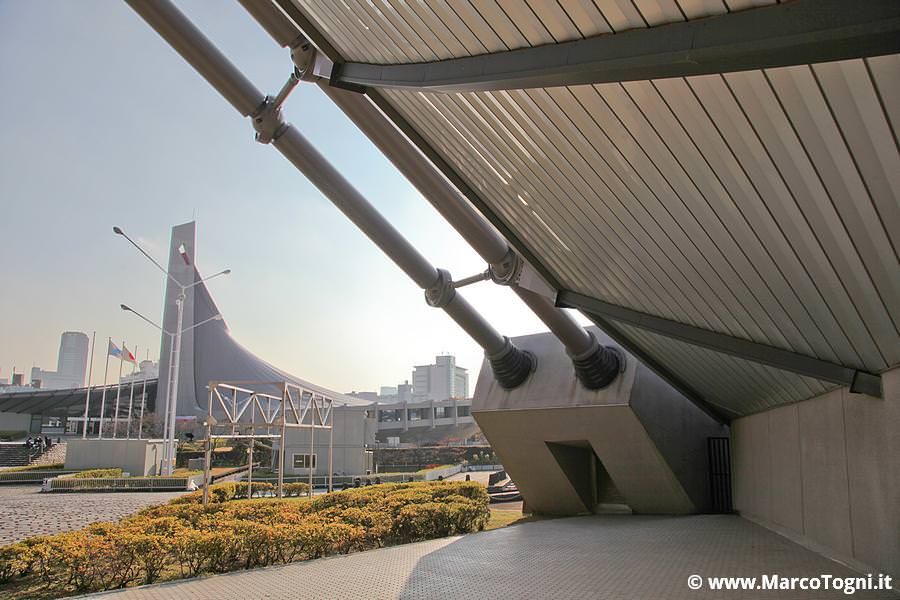
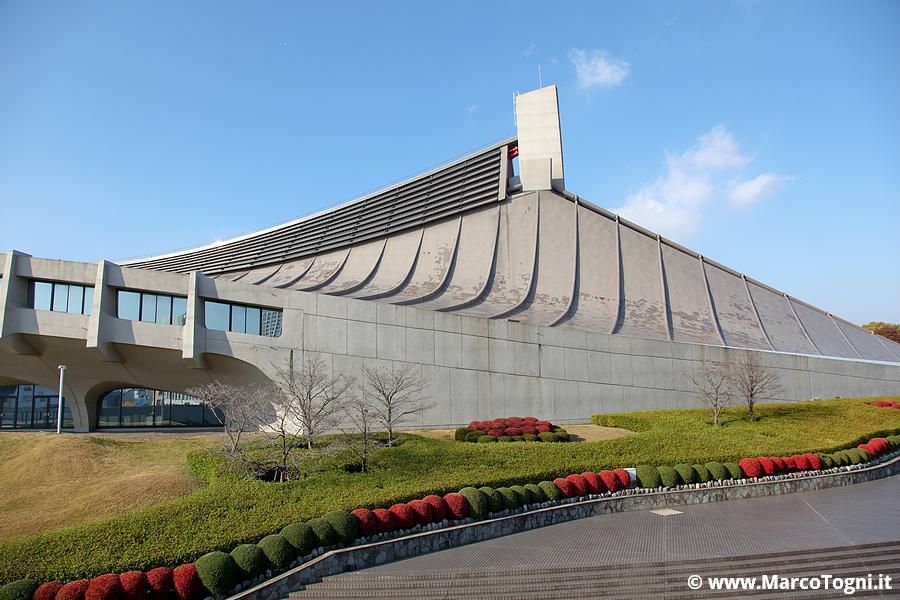
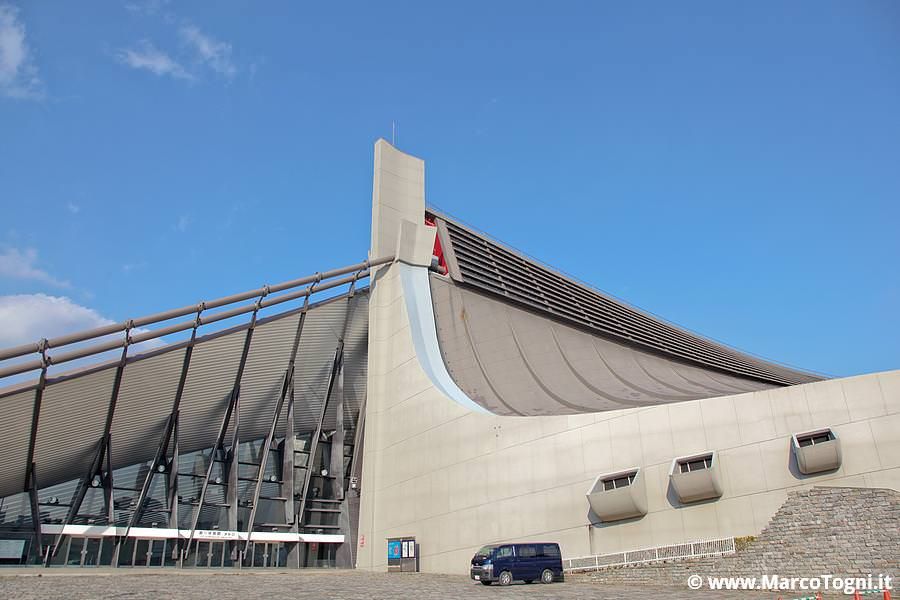
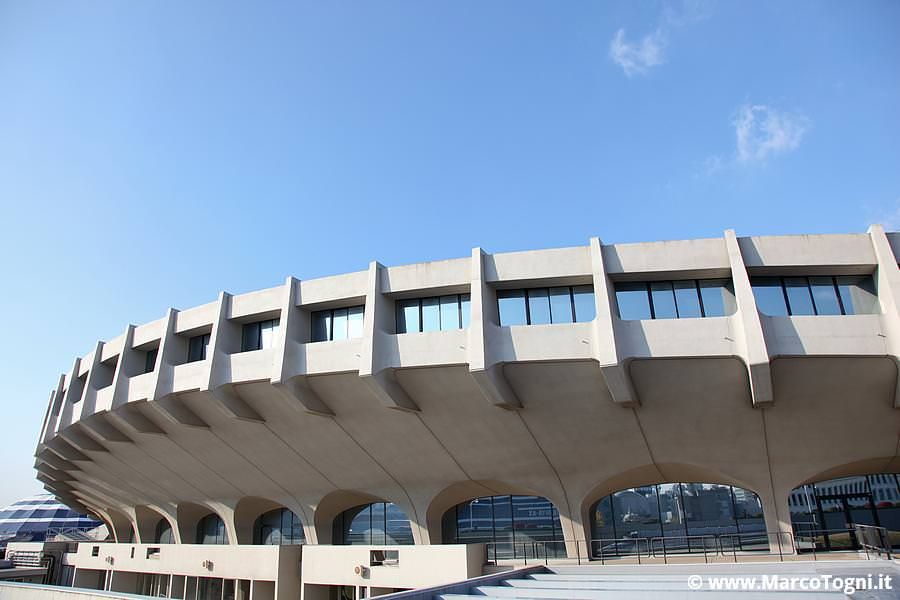
Yoyogi National Gymnasium isn’t a monument you just look at. It’s a working venue, in use all year round. The main arena, with nearly 13,000 seats, is one of the most sought-after concert venues in Japan, where the biggest names in Japanese music play, and it also hosts competitions and games of every kind. The second arena has just over four thousand seats and is used for more intimate events.
Its Olympic story didn’t end in 1964, either: during the Tokyo 2020 Olympics it hosted handball. It’s also one of the very few postwar buildings to be designated an Important Cultural Property, a status that usually goes to castles and old temples.
You can see some drawings on the Great Buildings website, and more drawings on Citylab-Wikia.
Yoyogi national Stadium - nearby you will find: