
Yushima
Yushima is one of those Tokyo neighborhoods you stumble into by chance and then come back to on purpose. It’s just uphill from Ueno, and within a few hundred meters you’ll find a shrine students adore and a handful of side streets that light up with signs after dark.
It’s not a place for big sights, and you don’t need to set aside a whole day. You come mainly for the shrine and for the way the area changes character between afternoon and evening. That’s exactly why I like it: in ten minutes you go from plum branches in bloom to alleys full of tiny bars, and it feels like two different worlds pressed up against each other.
Contents
Shops
Nearby neighborhoods

Suidobashi
Hongo
Older than it looks
The shrine looks brand new, and in a way it is. The main hall was rebuilt entirely of wood, using hinoki cypress and no concrete, the way shrines used to be built. That’s rare in Tokyo, where there’s almost always a modern frame under the paint.
The shrine’s history goes back much further, though. Its origins are traced to 458, and Sugawara no Michizane was only enshrined here in 1355, alongside the deity already worshipped on the site. Since then Yushima has been one of the most important Tenjin shrines in the Kanto region, and its reputation among students goes back centuries.
Students and plum trees
Yushima Tenmangu is dedicated to Sugawara no Michizane, the official and poet worshipped as Tenjin, the god of learning. That explains what you see as soon as you walk in: whole walls covered with wooden plaques called ema, each one carrying prayers for exams.
During university entrance exam season, crowds of teenagers and parents pour in, and what strikes you is the focused silence as they write down their wishes. Honestly, I find it one of the most genuine places in Tokyo, far more so than plenty of postcard temples. Everything around the ema is about good luck: there are charms for passing exams, and even amazake and umeboshi sold for luck in exams. Before leaving, almost everyone stops at the bronze ox near the entrance to rub its head, which has been worn shiny by all those hands.
The other reason to come is the plum trees. Between late winter and early spring hundreds of trees bloom, and the neighborhood puts on a festival for them, with stalls and small outdoor performances. That’s when I’d recommend coming, well before the cherry blossoms show up and bring the crowds with them.
Chrysanthemums in November
If you’re in Tokyo in the fall, the shrine has a second season few people expect. For the first three weeks of November the grounds fill up with chrysanthemums, a couple of thousand flowers arranged into shapes that look like miniature architecture.
There are cascades of flowers, domes of hundreds of blooms grown on a single stem, and above all the kiku ningyo, figures dressed in flowers, something you’ll only find in a handful of places in the city these days. It’s a very different kind of beauty from the plum blossoms, more about gardeners’ patience than atmosphere, and for me it’s the perfect excuse to come back when plum season is still a long way off.
Yushima after dark
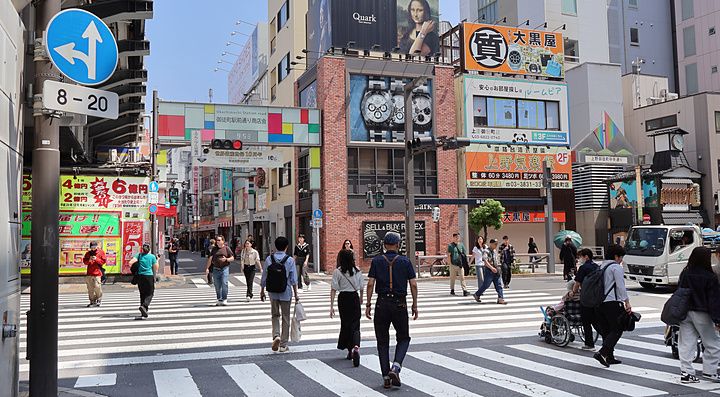
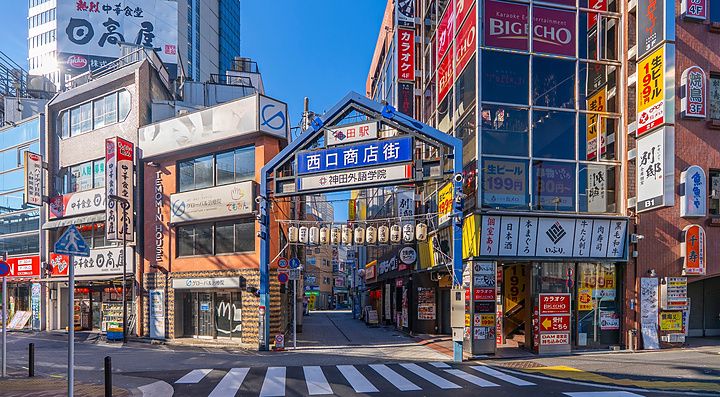
By day Yushima is quiet, almost residential, with the shrine’s greenery and the universities nearby. After sunset the part closer to Ueno wakes up: narrow alleys packed with small bars, lit-up signs, little restaurants with just a few seats, and one of the city’s best-known love hotel areas.
The contrast catches people off guard if they’ve come thinking only about the god of exams, but this double life is exactly what makes the area interesting. A night out here doesn’t cost much by central Tokyo standards, and you eat well without having to seek out any particular place.
Don’t expect big stores, skyscrapers or sights to tick off. Yushima is somewhere to pair with other stops, not visit on its own. I like to fit it into a walk that starts in Ueno, climbs to the shrine and ends with a beer in the alleys, maybe with a detour to Ochanomizu for the Confucian temple. Try coming once in the afternoon and once in the evening, and you’ll see right away why I keep going back at different times of day.
Getting There
If you're coming by subway, the stop you want is Yushima on the Chiyoda Line. From Exit 3 the shrine is two minutes away, and you practically walk right into it.
The nicest way to get there, though, is to walk up from Ueno. If you've just been around the park or Ameyoko, it's about ten minutes on a gentle uphill, and you come out right below the shrine.
From Akihabara the walk is longer, but it takes you past Yushima Seido, the Confucian temple. Either way, keep in mind that the main entrance is a steep flight of stairs. Off to the side there's a gentler slope, and that's the one to take if you have a stroller or tired legs.
Useful Info
Name: Yushima
Time needed: About an hour for the shrine and the plum trees, two or three hours if you stay on for the evening in the alleys
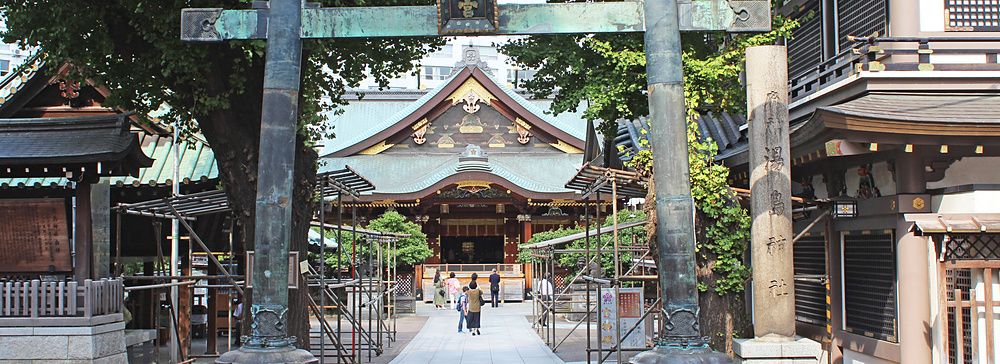
Tips: Look up at the bronze torii over the main entrance. It dates from 1667, and almost everyone walks under it without noticing. If you come during the plum festival, head back after sunset, when the trees are lit up.
Getting there:
- Yushima Station (Chiyoda Line): Exit 3, two minutes from the shrine
- Ueno-Hirokoji Station (Ginza Line) and Ueno-Okachimachi (Oedo Line): five minutes
- Okachimachi Station (JR Yamanote and Keihin-Tohoku lines): eight minutes, slightly uphill
Map
MarcoMaps100% free
This place is on MarcoMaps
Yushima
My map of Japan: over 4,000 places I've tried myself, each with photos, rating, and hours. Filter by category and rating, find veg-friendly spots and places near you with GPS. No sign-up, right from your phone.
- 4,000+ places
- Rating, photos, and hours
- Veg friendly
- Near me (GPS)
- Favorites without login
- Works offline

