
Yutenji
Yutenji is one of those parts of Tokyo I go to just to slow down. It’s only a few minutes from Shibuya, but as soon as you step out of the station the noise fades away and you find yourself among low houses and small shops, on streets where people do their grocery shopping.
There’s no big landmark pulling you in, and it’s not a neighborhood that ends up at the top of anyone’s itinerary. It’s a place to wander without hurrying, good for half a day once you’ve seen the big sights and want to understand how people really live here.
I’ll tell you what you’ll find on the shopping streets, when to come, and why that half-hidden temple among the houses deserves to have the whole area named after it.
Contents
Nearby neighborhoods
Meguro
Gakugei-Daigaku
The shopping streets
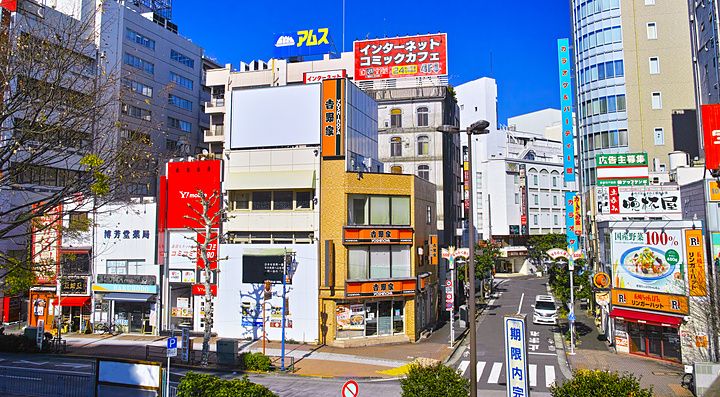
Two main streets run out from either side of the station, and they look a lot alike: narrow, with no traffic, bikes leaning against the walls and shop signs crammed together. My favorite is Sakae dori, 150 meters of small shops that opened after the war. One after another you’ll pass the bookstore, the pharmacy, the doctor’s office and a couple of places to get a drink.
That’s the whole point of Yutenji. Nobody dressed this street up for visitors. It’s where the neighborhood goes about its day. If you stop and watch for half an hour, half the neighborhood will go by: moms with child seats on their bikes, old people pulling their shopping carts, kids getting out of school.
After dark
By day Yutenji is a quiet neighborhood of families with kids and people out doing their shopping. Together, the shopping streets around the station have more than a hundred shops, bars and restaurants, and they put on events like concerts in the square, bean-throwing with oni for setsubun and a costume parade for Halloween.
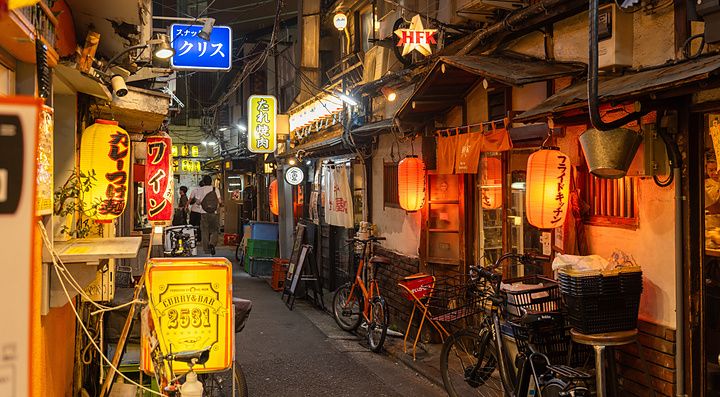
In the evening the neighborhood takes on a different feel. A small cluster of secondhand clothing shops has grown up along the street in front of the station, and several of them open in the late afternoon and stay open late. The scene is more low-key and less touristy than the loud vintage scene in better-known neighborhoods.
Down a little side street nearby there’s something that always makes me smile: an old curry place opened by a train fan, where your plate arrives at the table on a miniature electric train, sound effects and all. The whole thing is simple and cheap, but kids go crazy for it and even the adults end up grinning.
When to go
If you can choose, come toward the end of March. There are cherry trees in the temple grounds, usually in bloom from late March into early April, and here you can do hanami without crowds. Locals walk by, take a look and keep going.
The other good time is August, when the shopping street holds its evening festival and the whole neighborhood comes out onto the street. The rest of the year Yutenji stays much the same, and that’s just fine. It’s not a place where you need to chase the seasons.
The temple and its history
The neighborhood takes its name from Yutenji temple, which is a bit tucked away behind the shopping streets and the houses. It grew up in the mid-Edo period around the monk Yuten, who had close ties to the Tokugawa family. That’s why, for a neighborhood temple, it still has buildings and objects donated by important people of the time.
What makes it special is that it has survived almost intact. It was founded around the 1720s and made it through the wars without much damage, so you can still see a Buddhist temple as it looked three centuries ago. The grounds also hold a grave tied to the ghost story of Kasane, which kabuki theater made famous, and people who care about the story still stop by. The Amida hall was paid for by an adopted daughter of the shogun, and the gate with its two wooden guardians came a few years later. The hall has stood there since the 1720s and the gate since the 1730s, which is a big deal for a neighborhood temple. The monk Yuten is buried in the grounds too, and Tokyo protects his grave as a historic site. The Kasane mound, on the other hand, was put up at the request of some kabuki actors, who had soil from the family grave brought here from the countryside.
For me, Yutenji works best as a half-day visit, maybe combined with two other stops nearby. Don’t expect big attractions or trendy spots. You come here to walk slowly, see everyday life in a corner of Tokyo away from the crowds, and finish with a coffee at whatever little place you happen to pass. That’s exactly why I like it.
Getting There
From Shibuya it's three stops on the Tokyu Toyoko, six or seven minutes, but only local trains stop at Yutenji. Express trains go straight through.
If you get on the wrong train, get off at Nakameguro and go back one stop, or walk the ten minutes through the residential streets, which is the nicest walk when the sun's out.
Yutenji Station is tiny and the shopping streets start on both sides, so any exit works. For the temple, take the east exit and walk seven or eight minutes toward Komazawa dori.
Useful Info
Name: Yutenji
Time needed: Half a day: three or four hours for the shopping streets and the temple
Closed: Monday: the curry place with the toy train is closed. When Monday is a public holiday, it's open and closes the next day instead
Tips: The secondhand clothing shops here keep almost nocturnal hours. Quite a few open in the afternoon and stay open late. If you're into vintage, get here around 17:00 and keep your evening free, so you can see the old shops and the temple first without rushing.
Getting there:
- Yutenji Station (Tokyu Toyoko): local trains only
- Nakameguro Station (Tokyu Toyoko, Tokyo Metro Hibiya): a ten-minute walk
Map
MarcoMaps100% free
This place is on MarcoMaps
Yutenji
My map of Japan: over 4,000 places I've tried myself, each with photos, rating, and hours. Filter by category and rating, find veg-friendly spots and places near you with GPS. No sign-up, right from your phone.
- 4,000+ places
- Rating, photos, and hours
- Veg friendly
- Near me (GPS)
- Favorites without login
- Works offline

